
1. Your partner has ordered the trolley conductor to drive away. If you order her to step out of the vehicle, and you briefly set foot on the track, you can repeatedly shoot her in the head and send the trolley careening out of control, possibly taking out another commie liberal, and the president will hail you as a hero. What do you do?
2. You’re at a crossroads and the only way to save your governor’s career and reputation is to take one for the team. Out of nowhere the frazzled ICE agent you’ve been threatening for days steps onto the trolley track. You can choose to sacrifice yourself in a final heroic act, slamming into that threat, keeping the governor safe and leaving your child an orphan. Do it now, or let Trump’s chaos reign. What’s your move?
The original trolley problems aimed at making you think. It was a philosophical puzzle used to explore moral reasoning, utilitarianism and deontology. Both versions above turn the trolley problem into a caricature. One paints federal force as the unstoppable threat that must be violently halted, the other paints civil disobedience as the lethal danger that must be neutralized. Each is designed to elicit tribal fervor.
These caricatures work on Facebook not because they clarify moral structure but because they flatter the reader and stage moral theater. The audiences already know who the villain is and get to enjoy the feeling of having seen through it all. Smug sarcasm supplies the laugh track.
What’s most depressing is the way such “humor” gets conscripted. Old fashioned wit punctured pretension and left everyone a bit exposed. This humor is ritualized sneer, a war cry that signals membership. Moral superiority and righteous indignation arrive prepackaged.
Whichever side you pick, your rage is justified. Anger becomes proof of righteousness. If I can mock you, I don’t need to understand you. If I can make others laugh at you, I don’t need to persuade them. Emotional reward comes first, the argument is decorative trim. I am furious. Therefore the offense must be enormous. My fury is not only justified but morally required. Anger stops being a response and becomes evidence. The hotter it burns, the stronger the proof. On Facebook this logic is amplified.
Philosophy, ethics, and moral reasoning slow things down. Facebook collapses time, context, and agency into a single cinematic moment. Pull the lever and cue the likes. Facebook rewards train people out of moral curiosity. Once sarcasm becomes the marker of insight, asking a genuine question is read as weakness. The platform punishes those who don’t escalate.
If something is free, the product is you. Facebook loves your self-justifying rage because rage compresses so well. A qualified objection is no match for indignation. Agreement becomes a reflex response. Once anger functions as proof, escalation is inevitable. Disagreement cannot be good faith. Arguments cease to be about the original claim and switch to the legitimacy of self-authenticating anger itself.
Facebook provides the perfect stage because it removes the costs that normally discipline rage. There’s no awkward pause, just instant feedback and dopamine.
To be taken seriously, you have to be outraged. You have to perform belief that the stakes are absolute. If your performance is good, you convince yourself. Likes makes right. Everything is existential. Restraint is complicity. The cycle continues. Facebook counts the clicks and sells them to Progressive Insurance, Apple, and Amazon.
___
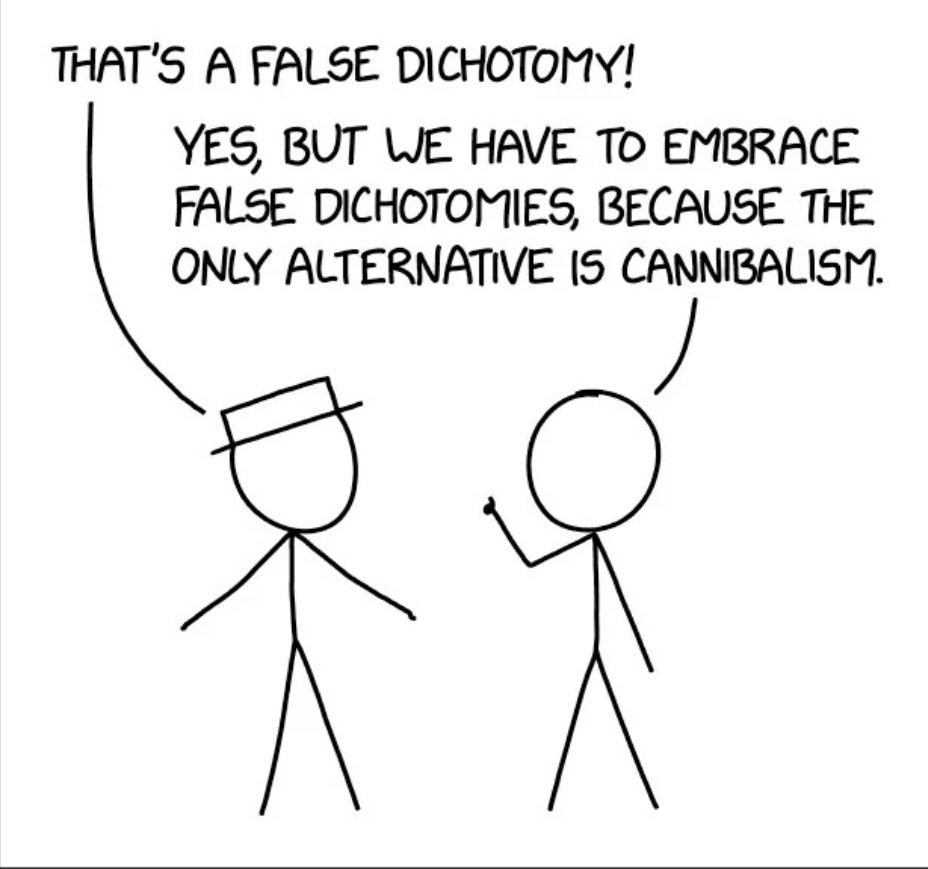
Via Randall Munroe, xkcd
 The Multidisciplinarian
#1 by Atty at Purchasing on January 23, 2026 - 6:44 am
It’s easier to be loud or ‘take a stand’ in a crowd compared to standing alone with reflection and reasoning. We easily see the effects when we look outside of ourselves at like Germany under the third reich – normal people saying doing in the crowd what they wouldn’t ordinarily do. [Or maybe I would if no one is looking, who knows?]
Harder to reflect on my own social habits where right and wrong, who’s in and who’s =out=, and what to do about it….These ‘crowds’ start to follow what they see and hear whether in the senior square or the senior citizen coffee shop; the garden club or the church pew; to sort out their own framework and world view from within the motion of the crowd. But not necessarily what is said and done on their own.
“Like. Share. Subscribe.”
#2 by Bill Storage on January 23, 2026 - 9:24 am
“Who to follow:”
#3 by Bill Storage on January 23, 2026 - 9:32 am
Real-world polarizing events create surges in relevant ad spending. Major news events like the October 7, 2023 attack on Israel and subsequent Gaza events have led to sharp increases in political-based advertising on Meta platforms. Ad dollars tied to Israel-related topics rose 450% in that period compared to the prior year.
Meta’s researchers showed that the system favors divisive content. Proposed fixes to reduce outrage amplification were opposed because they threatened engagement metrics.
Is it too simplistic to say Meta is truly evil, even compared to media outlets?
#4 by Atty at Purchasing on January 24, 2026 - 8:41 am
Consolidation of power – whether it’s so-called capitalist, so-called socialist/populist/communist, so-called church, or bureaus within all of the above – such consolidation never ends well.
Did I mean “never?” No, =never ever=
Defund and dismantle Church and State