Posts Tagged Imperial
New Marble Portrait of Augustus
Posted by Bill Storage in History of Art on May 24, 2025


For 23 years Laura Maish and I have been shooting photos of republican and imperial portraits. We’ve accumulated 30,000 photos of ancient marble and bronze heads.
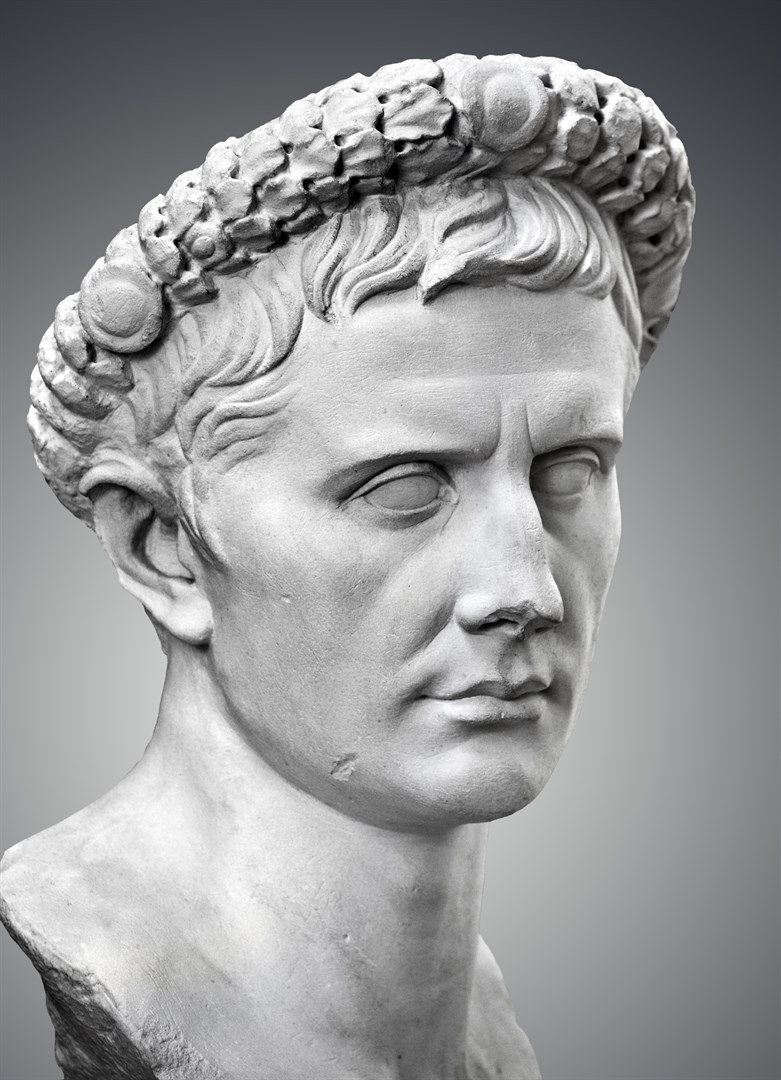
Our latest addition, just photographed this week in Rome, is the below Alcudia-type head of Augustus discovered in 2019 along Via Alessandrina in Rome Mercati di Traiano and recently put on display in the Trajan’s Market museum. This typology, named after a similar portrait found in Alcudia, Spain, dates to 40–38 BCE and depicts Octavian in his early twenties. This type aligns with Augustus’ adoption of the title Divi Filius (Son of the Deified*) following Julius Caesar’s deification. Alcudia-type portraits of Augustus are rare, so this was a significant find.
* This is often incorrectly translated as “Son of the Divine.” Divus (from which Divi comes) refers specifically to a mortal who has been deified after death, not to an eternal or inherently divine being (like a traditional god such as Jupiter). Deus, by contrast, refers to a god or divine being in a more traditional, eternal sense.


This Alcúdia type bust portrays Augustus with a youthful face, featuring a broad forehead, sharp brow, and almond-shaped eyes with thin lids. The facial modeling is restrained, part realistic individualism and part classicizing elements inspired by Greek sculpture, particularly the works like the Doryphoros of Polykleitos. His expression is calm and dignified, reflecting the Augustan ideal of serene authority.
A defining feature is the distinctive arrangement of hair, with thick, comma-shaped locks combed forward, often with a pronounced central “clip” formed by two locks curving to the right and one to the left. The hair over the forehead is voluminous, with some strands undercut for a three-dimensional effect, and it closely follows the skull, contrasting with later types like the Prima Porta, where the hair is more simplified. As with the other Alcúdia-type portraits the rest of the hair is smoother and less detailed compared to later Augustan portraits.
This piece appears to be carved from Parian marble. I could not find any info on it and I’m unskilled in petrography. It is some kind of high-quality, fine-grained, homogeneous lychnite.
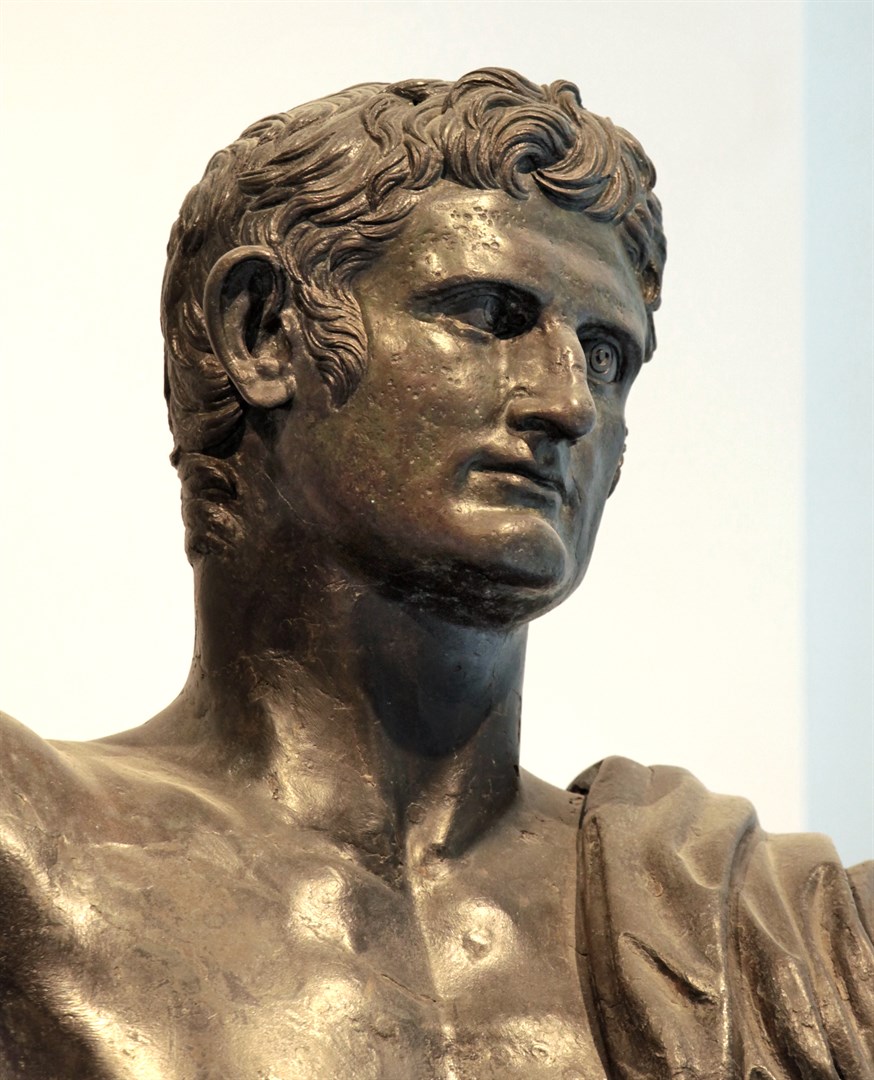
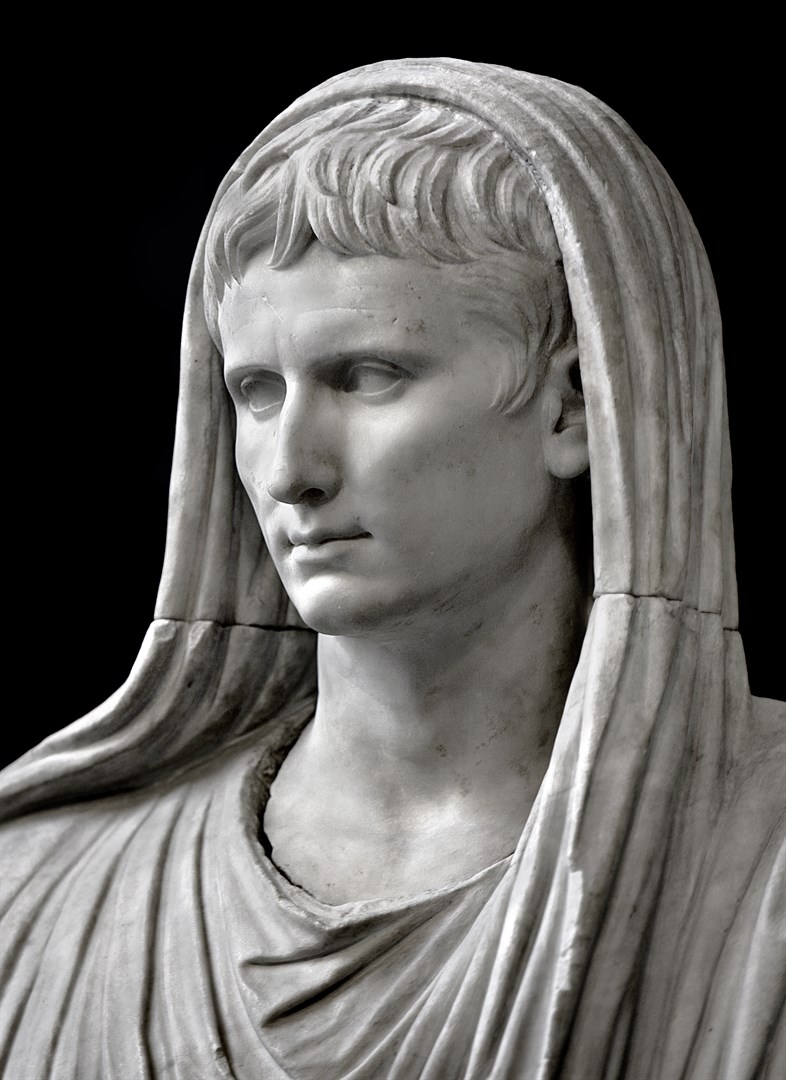
Visit this page for photos of many more portraits of Augustus.

 The Multidisciplinarian