Posts Tagged art
The Lancellotti Discobolus
Posted by Bill Storage in History of Art on June 9, 2026
Engineering meets art history
The Discobolus of Myron is one of the most famous sculptures in the world, despite the fact that it no longer exists.
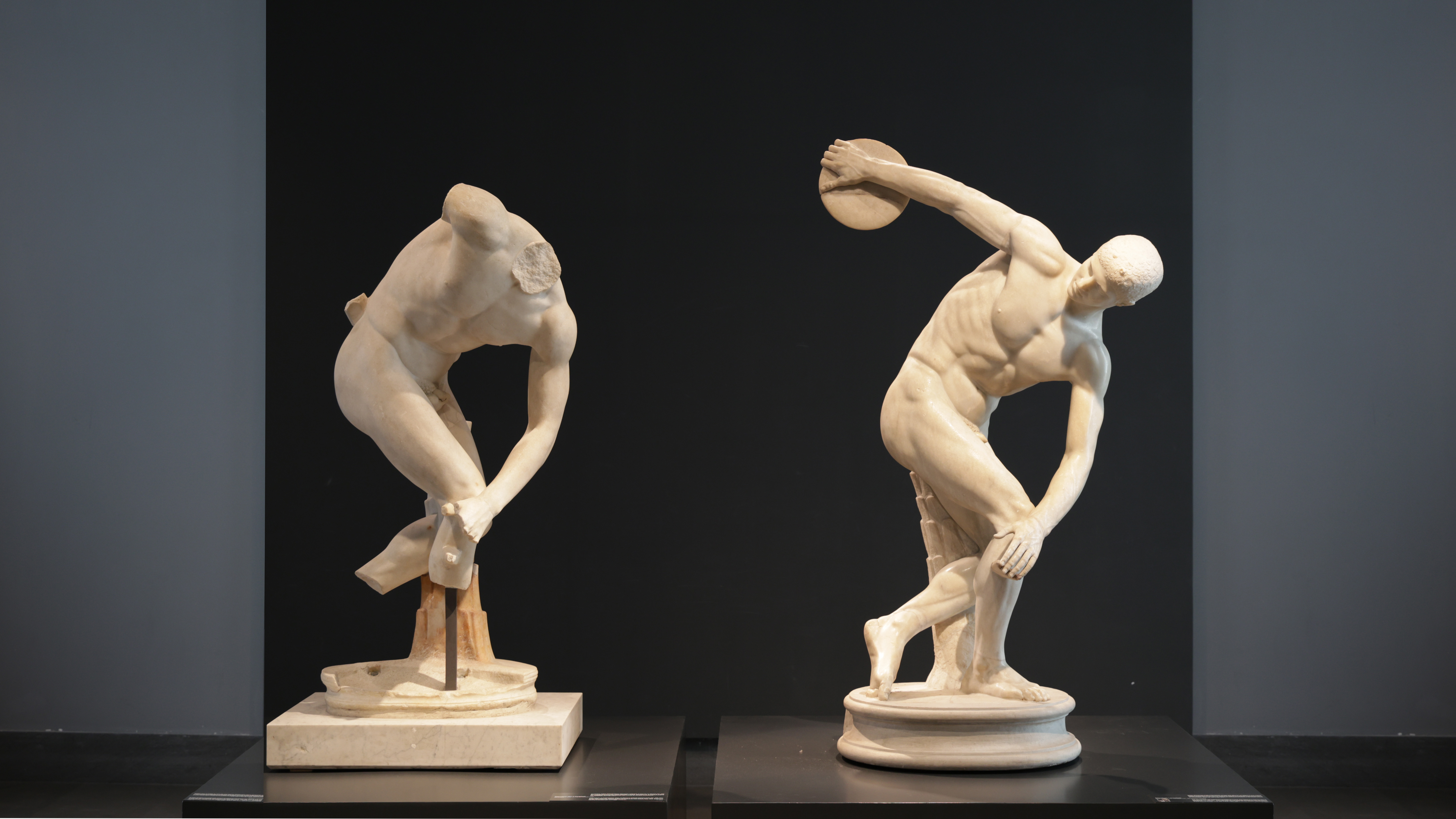
What you see here are two Roman marble copies of an original Greek bronze, made perhaps four hundred years earlier. As I stand in Palazzo Massimo, looking at the famous Discobolus Lancellotti and the more damaged version to its left, It seems to me that “copy” doesn’t tell the whole story.
How do we know it’s a copy if the original is lost? We don’t. Not really. But a few pieces of evidence support it. Multiple Roman statues survive showing nearly the same composition with variations. Ancient writers, especially Pliny the Elder, mention a famous Discobolus by Myron. From this, scholars infer a lost Greek prototype.
But that inference depends on assumptions. That Roman versions derive from a single famous original. That the literary references correspond to these sculptures. That the similarities are too strong to be coincidence,
and that Roman sculptors were reproducing admired earlier works rather than improvising freely and copying each other.
Reasonable conclusions, but not certain. Classical archaeology, seems to me, often speaks with a certitude that conceals how inferential the whole enterprise is. The “original Myron Discobolus” is a scholarly composite. The original survives as an intellectual reconstruction.
The nearly-complete Discobolus Lancellotti looks so perfect that people instinctively assume it must be the “best” copy. But the fragmentary version beside it in some ways preserves more truthful structural details. In particular, traces of the massive support on the hip show how difficult the pose really was in marble. Bronze could suspend limbs in space. Marble – not as much. The cleaner version partly hides the engineering problem.
The first thing that strikes you about the Discobolus is motion. Or rather, suspended motion. The body is wound tight, almost like a spring under torsion. The torso twists against the hips. The shoulders oppose the legs. We see stored rotational-energy.
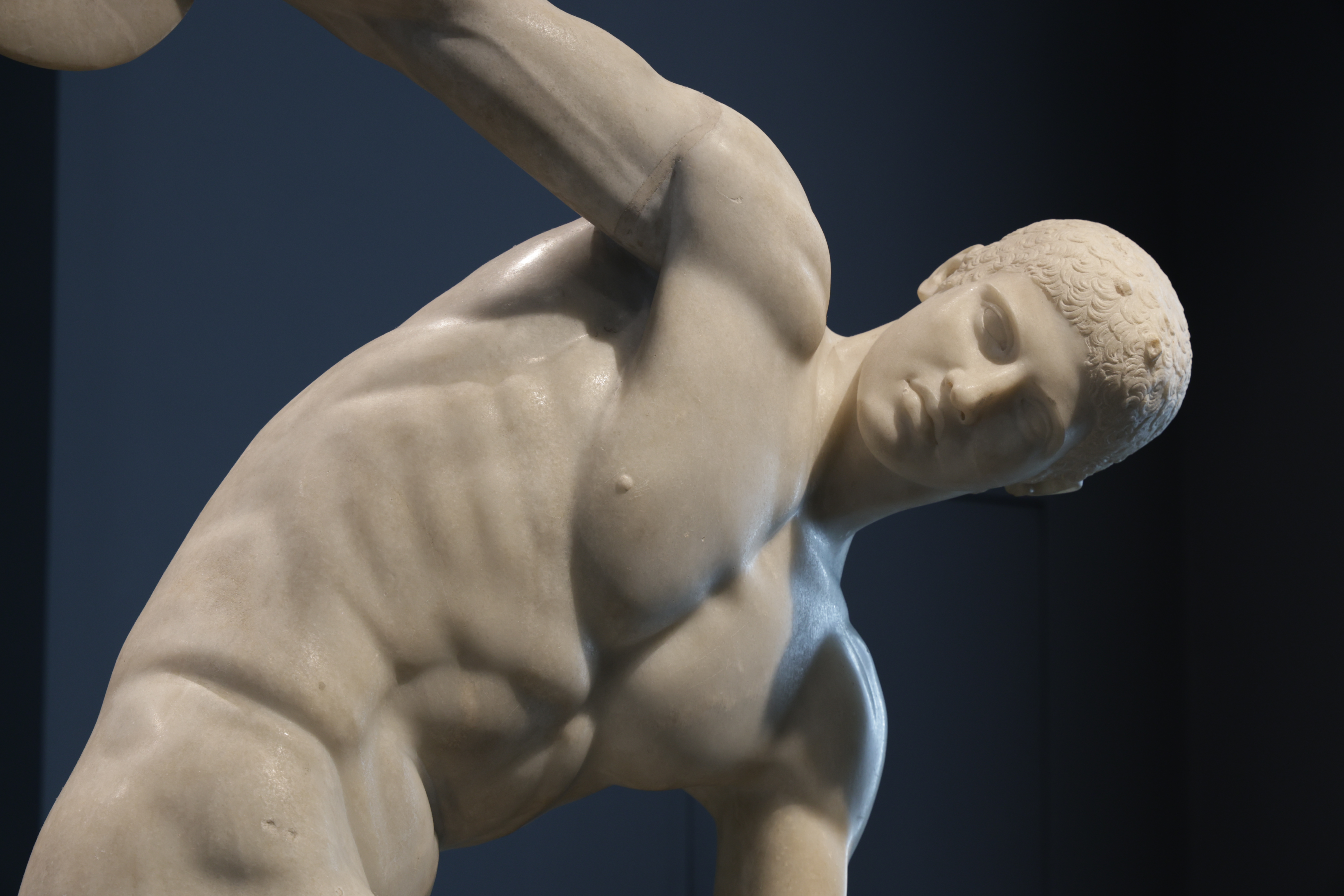
But the face remains calm, almost indifferent. Modern athletes grimace and strain. Our culture likes that. Greek classical sculpture often suppresses it. The ideal athlete is not simply powerful. He is self-controlled. Emotionally disciplined. The body may be near maximum exertion, but the face refuses to surrender composure. It feels uncanny to modern viewers. Pliny criticized the lack of facial expression. Cicero wrote that “Myron’s works are not yet very close to the truth.”
The Discobolus doesn’t look like someone throwing a discus. He looks like the idea of controlled effort. I’m guessing that’s what Myron intended. This pose is deeply awkward in marble. The original bronze allowed limbs to extend freely into space. Thin structures are possible in bronze.
Marble is less forgiving. It wants support, and mass underneath the stress points. Roman sculptors adapting Greek bronzes had to add engineering solutions into the composition. Tree trunks, struts, and short connecting bridges. The damaged copy exposes more of that hidden problem. It looks slightly less like a perfect Platonic form and more like a negotiation with gravity.
We are taught to think of these sculptures as serene embodiments of timeless ideals, floating above ordinary technical concerns. But ancient sculptors were also engineers. They had to deal with leverage, fracture points, and concepts like center of mass.
A Roman copyist translating bronze into marble was solving a physics problem, and altering the sculpture in the process.
And we should clarify this idea of Roman copyists. By the imperial period, elite Roman culture was saturated with Greek art, Greek education, Greek teachers, Greek craftsmen. Many sculptors working in Rome were ethnically Greek, culturally Greek, or trained in Greek workshops and traditions. Some even signed their works with Greek names.
So when we say “Roman copy,” don’t imagine a guy in a toga photocopying ancient Greece. He might speak Greek, train in Athens, and sculpt Italian marble for a Roman patron.
“Roman copy of a Greek original” is misleading shorthand. By the imperial period, elite Greco-Roman culture was deeply entangled. Roman aristocrats consumed Greek art as cultural legitimacy. Entire chapters of Greek visual culture survive because wealthy Romans liked decorating their villas.
This all contributes to why art historians argue about copies. Every copy contains interpretation.
From different angles, this composition changes radically. One viewpoint produces clarity and balance. Another produces compressed confusion. Limbs overlap and his body seems almost tangled. Greek sculpture was increasingly designed for controlled viewing angles.
This Discobolus was discovered in 1781 on the Esquiline Hill. It emerged during the great age of aristocratic Roman collecting, when antiquities were prestige objects.
Like other classical sculptures, the Discobolus was recruited into political ideology. It was in the first load of artwork confiscated during Napoleon’s Italian campaign. Nazi aesthetics seized upon these athletic bodies as evidence of racial ideals, despite the obvious inconvenience that the sculpture was Greco-Roman.
Hitler personally admired the Lancellotti Discobolus. Hermann Göring purchased it in 1938 from Prince Lancelotti. It seems every era reinvents antiquity in its own image. The statue somehow survived.
See it in moving pictures:
The Ugly Nero
Posted by Bill Storage in History of Art on April 1, 2026
This is Nero, the infamous emperor who fiddled while Rome burned – or so the story goes – the story being a modern amplification of disreputable ancient sources.
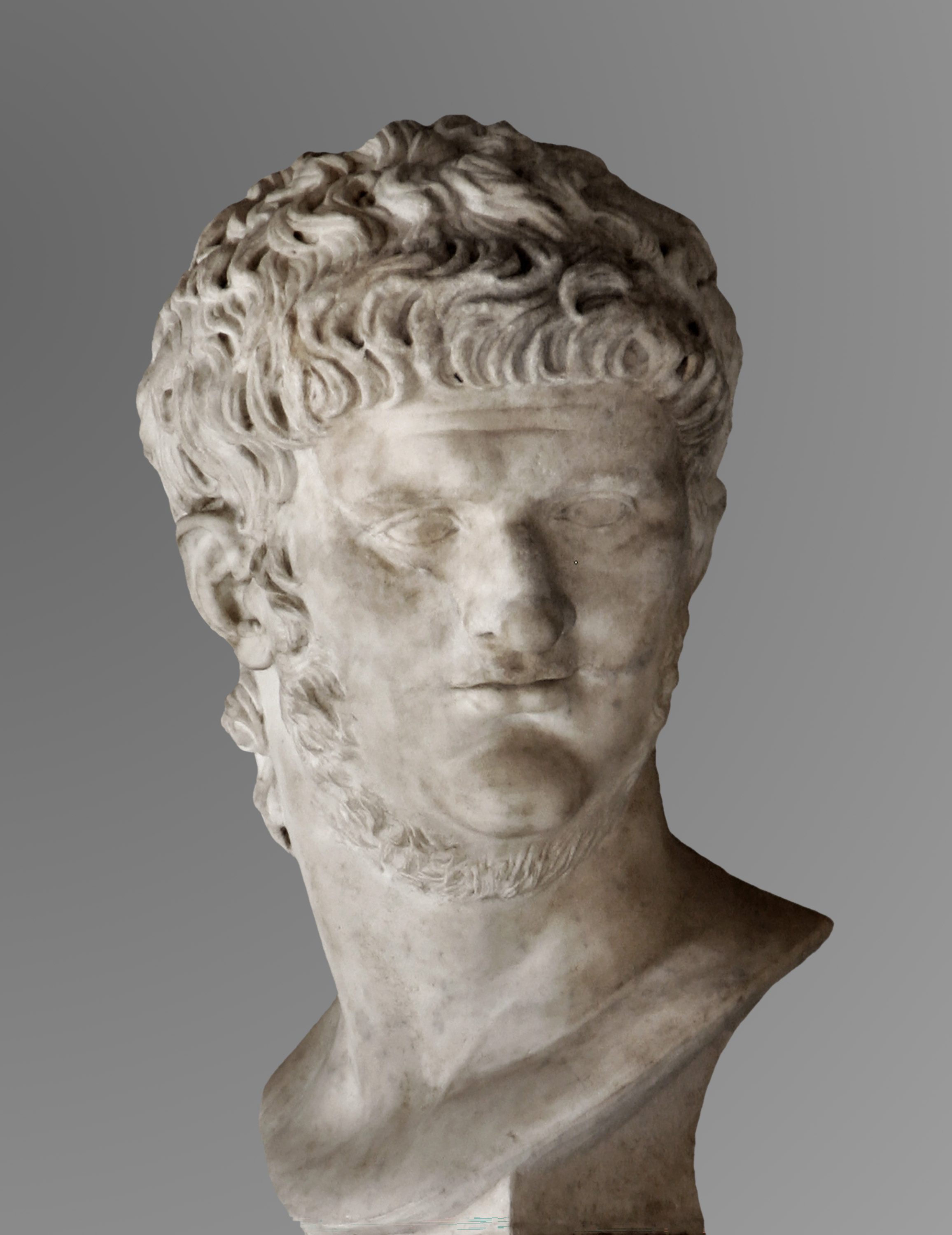
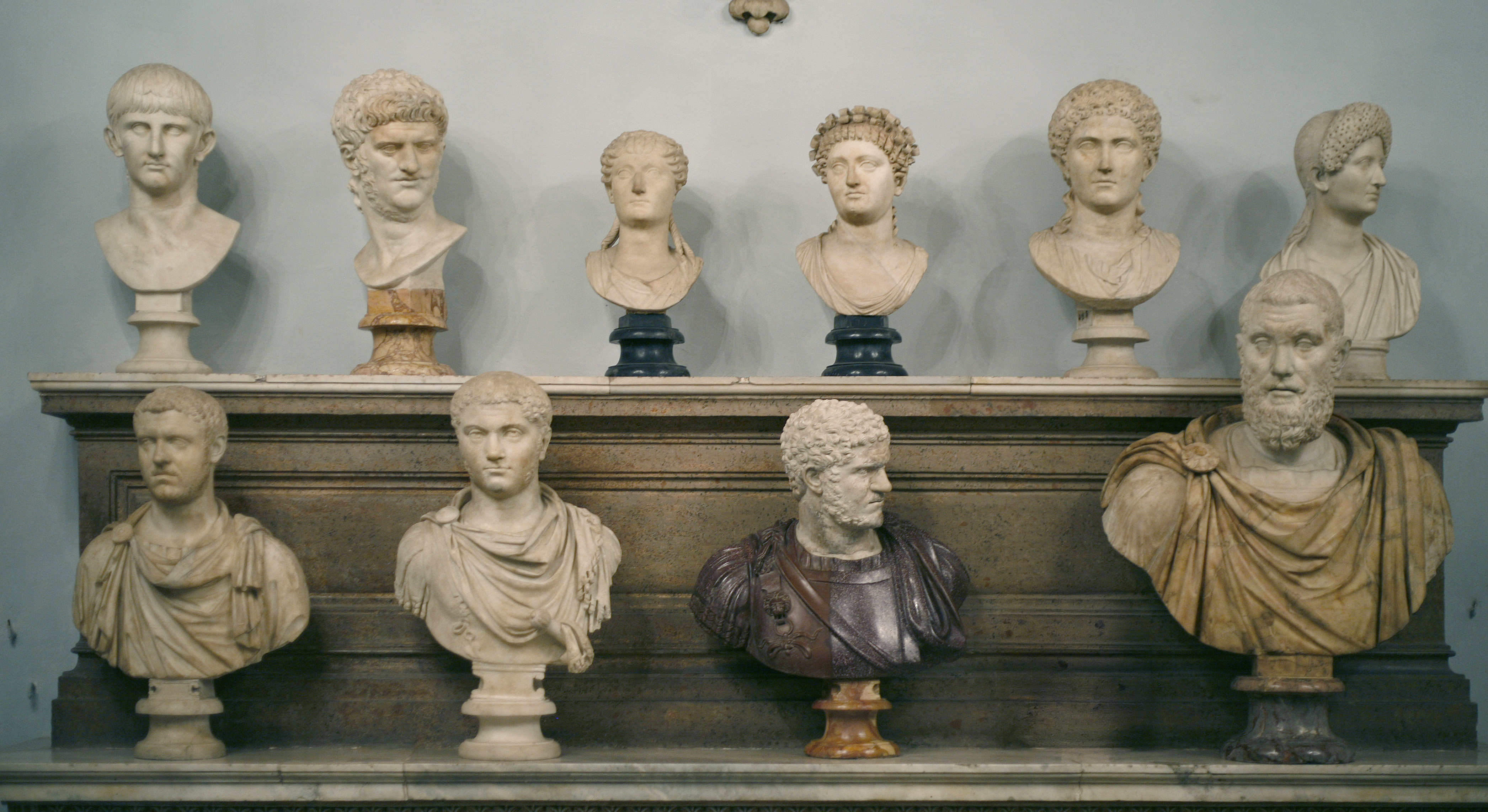
This striking marble bust (Museo Capitolino inventory MC 0427) in the Capitoline Museums’ Hall of Emperors is one of the most photographed portraits of him. It’s certainly the ugliest. But there’s a twist.
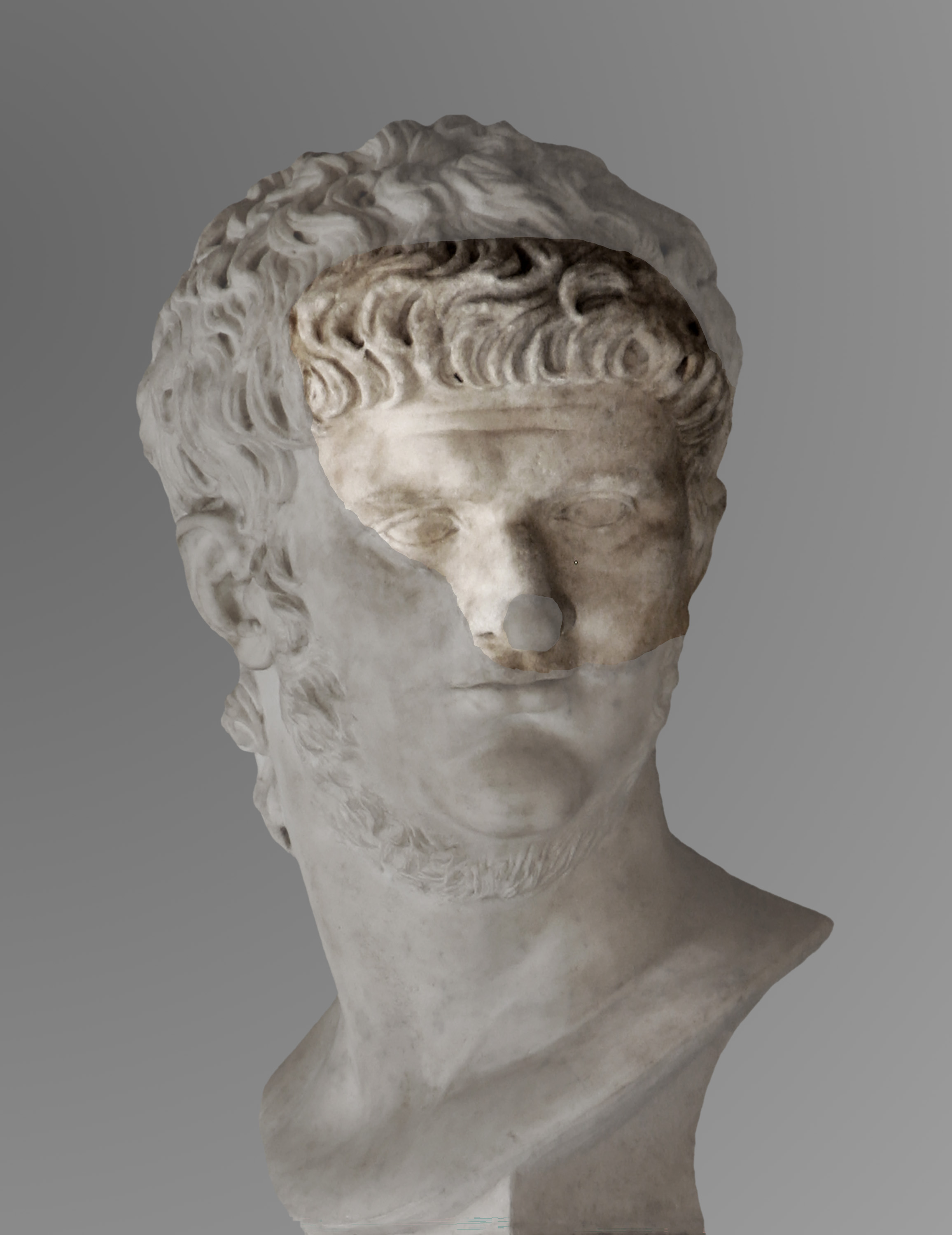
Only this small upper part of the face is actually ancient. It probably originated as a portrait of Nero carved late in his reign, around AD 60 or later. After Nero was murdered, it appears the head was recarved in antiquity to represent Domitian instead.
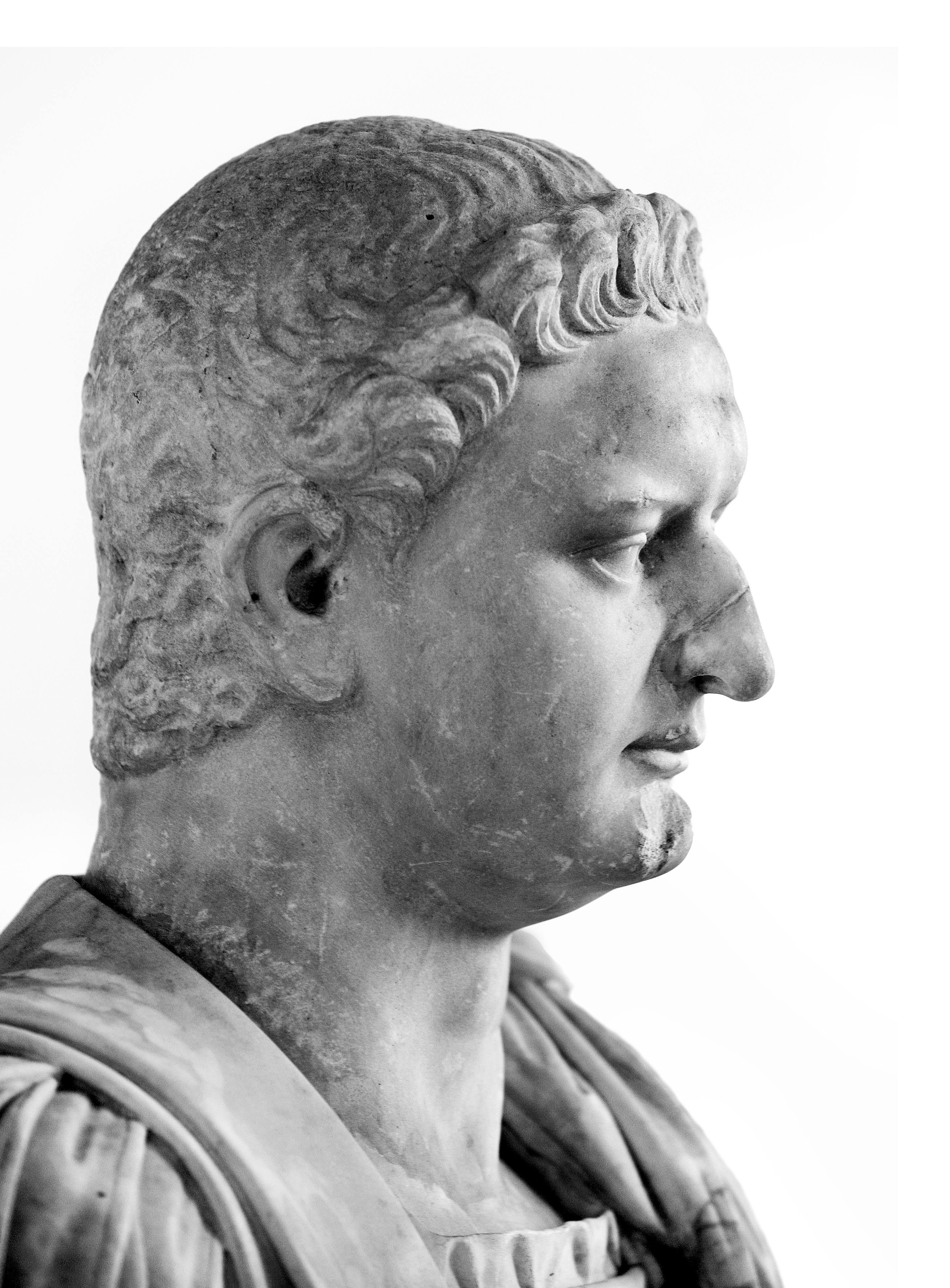
Some time later, it was damaged, leaving just the fragment highlighted here. Then, in the late 16th or early 17th century, Baroque restorers went to work for collectors like those in the Albani circle. The source of the original ancient head is unknown. It passed through the Giustiniani collection before entering the Albani collection, assembled by Cardinal Alessandro Albani in the 1700s. The Capitoline Museums acquired many pieces from the Albani collection in the 18th century as part of the museum’s early formation and expansion.
The Albacini workshop (Carlo Albacini and his son Filippo) was the cutting edge in Rome for restoring and completing ancient sculptures for collectors and the Grand Tour market. A drawing or related work by the Albacinis depicts “a fragment of Domitian restored as Nero,” suggesting their involvement. They completed almost the entire head, neck, and bust in the dramatic style of their time.
The result looks like Nero… Sort of. But compare it to better-preserved portraits of the real emperor and differences jump out. The proportions here are noticeably off – wider, coarser, perhaps deliberately unflattering.
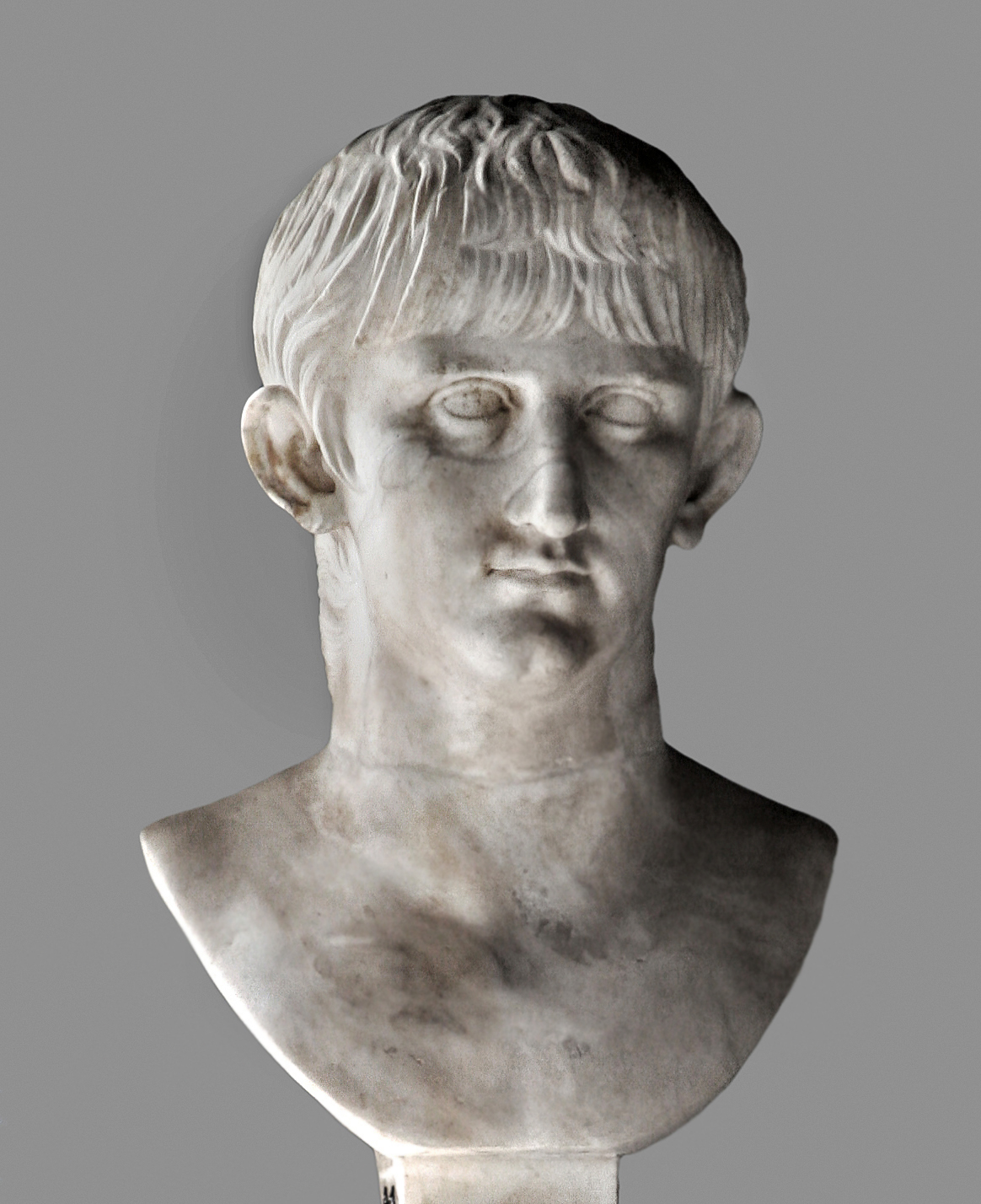
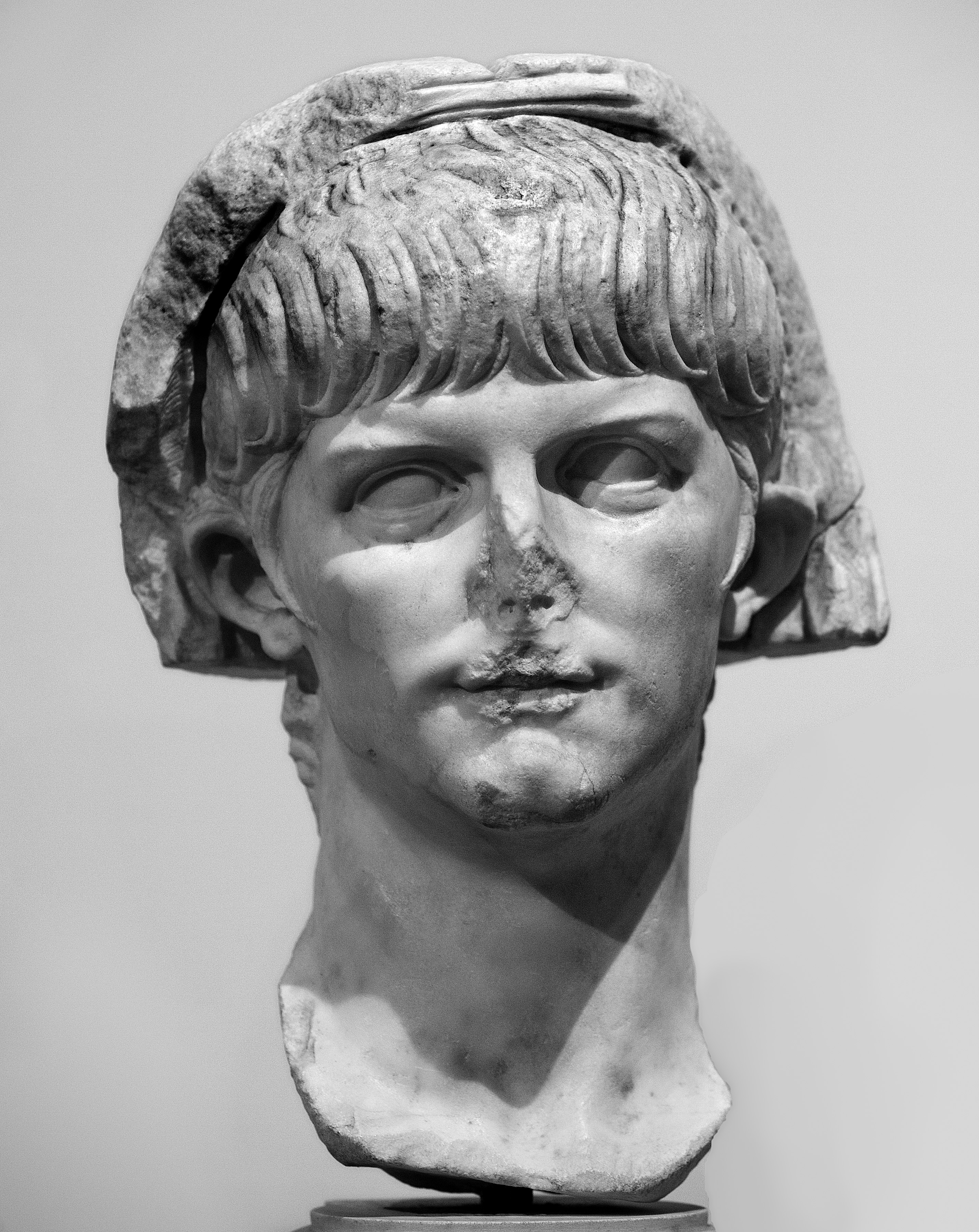
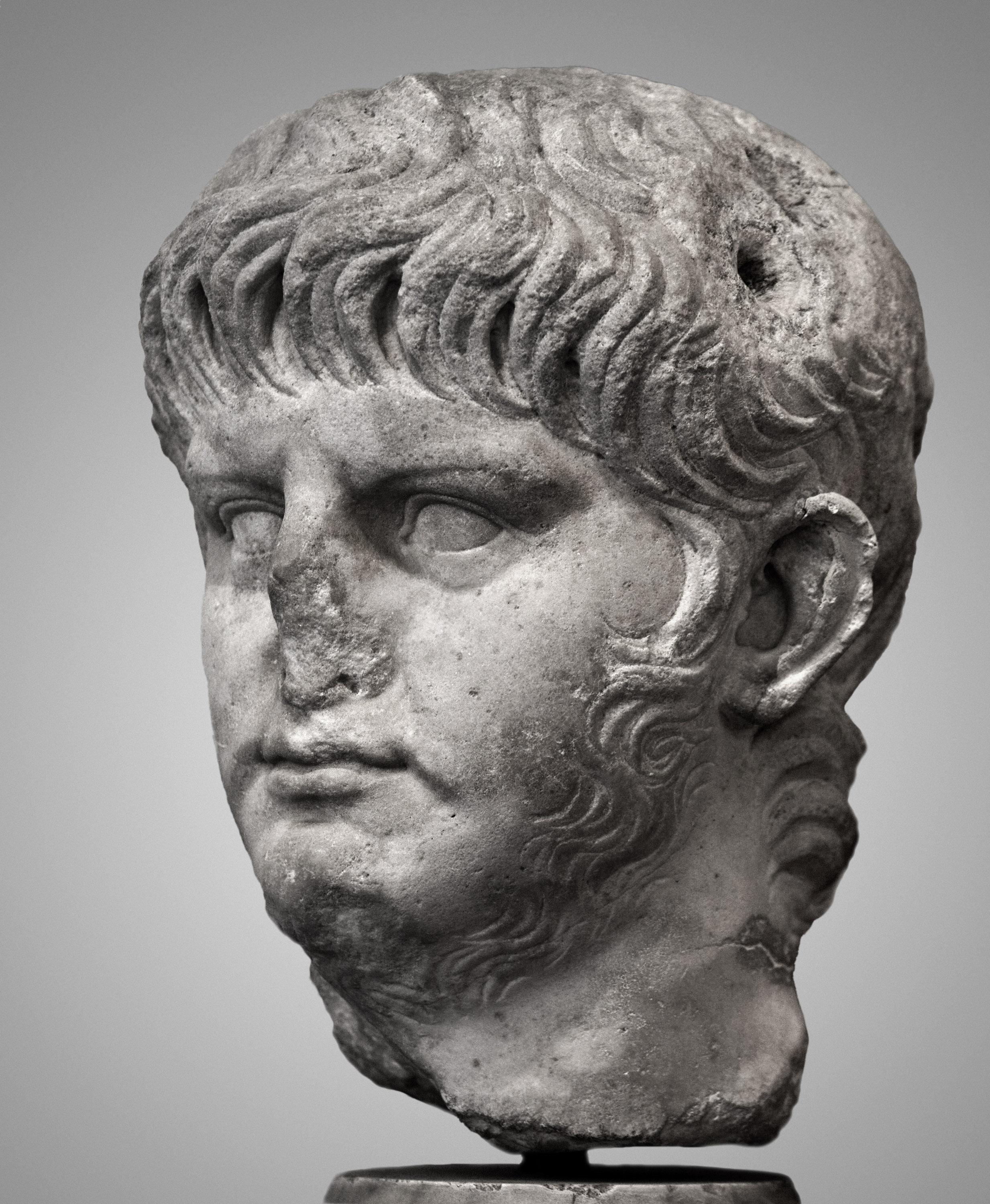
The restored lower face and neck stand out sharply from Nero’s established types. We know this because we took detailed measurements of them and did statistical analyses.
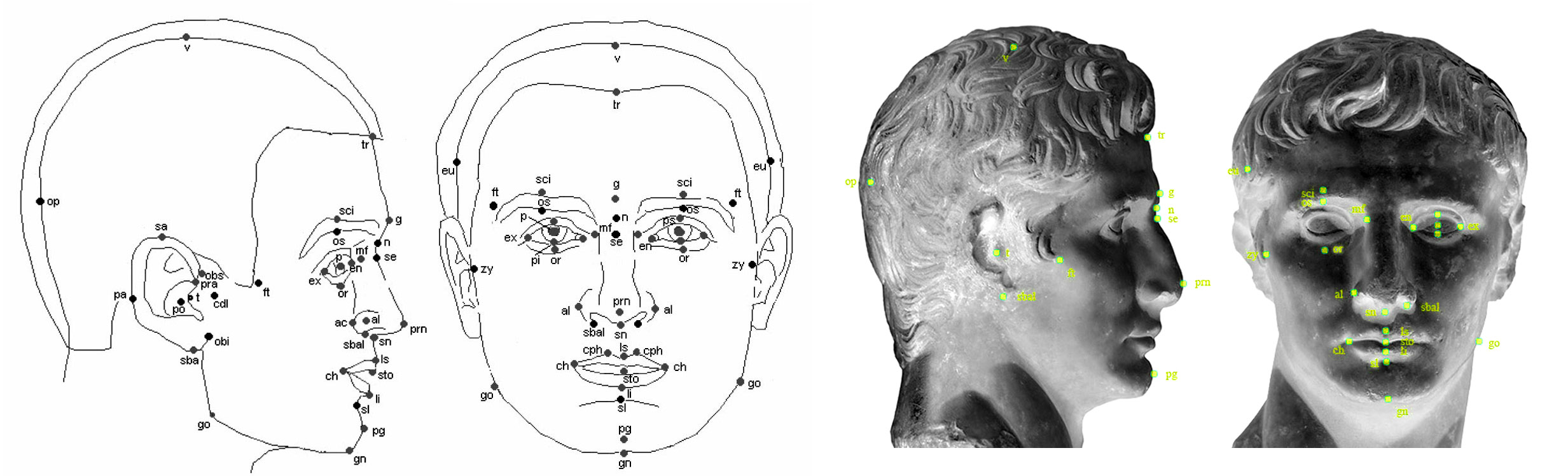
Why make Nero look almost hideous? It probably wasn’t ignorance. Other Nero portraits were known in Rome at the time. More likely, the restorers were channeling Suetonius, who described Nero as physically unappealing, with a thick neck and features that matched the image of a tyrant. Suetonius dies hard, even though we know he just made stuff up. Emperors, in ancient, Renaissance and modern minds alike, it seems, need to have been either great or terrible. Ancient physiognomy – the idea that looks reveal character – probably played a role in the restoration. They may have seen their job as more than just fixing marble. They were shaping a moral story.
This bust is a living record, layered with ancient politics, damage, and Renaissance imagination.
Next time you’re in the Hall of Emperors, look past the label. Roman portraits often tell us as much about the people who carved or restored them as about the emperors themselves.
—
See our YouTube short on this head of Nero
Roxy Music and Forgotten Social Borders
Posted by Bill Storage in History of Art on August 20, 2025
In the early 1970s rock culture was diverse, clannish and fiercely territorial. Musical taste usually carried with it an entire identity, including hair length and style, clothing – including shoes/boots – politics, and which record stores you could haunt. King Crimson, Yes, Pink Floyd, and Emerson, Lake & Palmer belonged to the progressive end of the spectrum.
By the early 1970s, progressive rock (prog, as shorthand began to appear in music press) was musical descriptor and social signal. Calling a band “progressive” implied a certain seriousness, technical sophistication, and intellectual ambition. It marked a listener as someone who prized virtuosity, complexity, and concept albums over pop singles. The label carried subtle class and educational connotations: prog fans were expected to appreciate classical references, odd time signatures, extended solos, and experimental studio techniques. King Crimson was often called avant-garde rock, though Henry Cow deserved the label much more. ELP was called symphonic rock, Pink Floyd was psychedelic rock, and Yes was Epic rock – but they were all prog. And listening to all this stuff made you smart. Or pretentious.

Across the divide, the early 70s saw greaser rock and the emerging ’50s nostalgia circuit. Sha Na Na, the sock-hop revival, the idea that a gold lamé suit was a passport to a simpler age ushered in the Happy Days craze and its music. Few people straddled those camps. A Crimson devotee wouldn’t admit to liking Sha Na Na if he wanted to keep his dignity. Rock music was attitude, self-image, and worldview.
Into that landscape stepped Roxy Music in 1972, and they were utterly bewildering. Bryan Ferry came dressed like a lounge lizard from a time-warped jukebox, crooning with a sincerity that clearly wasn’t parody or caricature. Still, it was far too stylized to be mere mimicry. His band conjured a storm of dissonant non-keyboard electronics, angular rhythms, and Brian Eno’s futuristic treatments. Roxy Music embraced rather than mocked the early rock gestures of Elvis’s era. Ferry gave listeners permission to take Jerry Lee Lewis seriously, even reverently. Lewis was suddenly an avant-garde icon, pounding the keys with the same abandon that Eno applied to his electronics (witness Richard Trythall’s 1977 musique concrète: Omaggio a Jerry Lee Lewis).
That was the radicalism of early Roxy Music, which cannot be grasped retrospectively, even by the most avid young musicologist. Roxy dissolved the borders that the tribes of 1972 held sacred. They showed that ’50s rock, glam stylization, and avant-garde electronics could coexist in an unstable but persistent alloy. The shock of that is hard to grasp from today’s vantage point, when music is not tied to identity and “classic-rock” Roxy Music is remembered for Ferry’s Avalon-era suave crooning.
Oddly, and I think almost uniquely, as the band moved mainstream over the next fifteen years, the noisy, Eno-era chaos was retroactively smoothed into the same brand identity as Avalon. For later fans, there was no sharp rupture; the old chaos was domesticated and folded back into the same style sensibility.
But the rupture had existed. Their cover art reinforced it. Roxy Music (1972) with Kari-Ann Muller posing like a mid-century pin-up, was tame in skin exposure compared to H.R. Giger’s biomechanical nudity on ELP’s Brain Salad Surgery. The boldness of Roxy Music’s cover lay in context, not ribaldry. The sleeve was bluntly terrestrial. For a prog listener used to studying a Roger Dean landscape on a first listen of a new Yes album, Roxy Music surely seemed an insult to seriousness.
When Fleetwood Mac reinvented themselves in 1975, new listeners treated it as rebirth. The Peter Green blues band that authored Black Magic Woman and the Buckingham–Nicks hit machine lived in separate mental compartments. Very few Rumours-era fans felt obliged to revisit Then Play On or Kiln House, and most who did saw them as curiosities. Similarly, Genesis underwent a hard split. Its listeners did not treat Foxtrot and Invisible Touch as facets of a single project.
Roxy Music’s retrospective smoothing is almost unique in rock. Their chaos was polished backward into elegance. The Velvet Underground went the other way. At first their noise was cultish, even disposable. But as the legend of Reed, Cale, and Nico grew, the past was recoded as prophecy. White Light/White Heat became the seed of punk. The Velvet Underground & Nico turned into the Bible of indie rock. Even Loaded – a deliberate grab for radio play, stripped of abrasion – was absorbed into the myth and remembered as avant-garde. It wasn’t. But the halo of the band’s legend bled forward and made every gesture look radical.
Roxy Music remains an oddity. The suave Avalon listener in 1982 could put on Virginia Plain without embarrassment and believe that those early tracks were nearby on a continuum. Ferry’s suave sound bled backward and redefined the chaos. He retroactively re-coded the Eno-era racket. The radical rupture was smoothed out beneath the gloss of brand identity.
That’s why early Roxy is so hard to hear as it was first heard. In 1972 it was unclassifiable, a collision of tribes and eras. To grasp it, you have to forget everything that came after. Imagine a listener whose vinyl shelf ended with The Yes Album, Aqualung, Tarkus, Ash Ra Tempel, Curved Air, Meddle, Nursery Cryme, and Led Zeppelin IV. Sha Na Na was a trashy novelty act recycling respected antiques – Dion and the Belmonts, Ritchie Valens, Danny and the Juniors. Disco, punk, new wave? They didn’t exist.
Now, in that silence, sit back and spin up Ladytron.
New Marble Portrait of Augustus
Posted by Bill Storage in History of Art on May 24, 2025


For 23 years Laura Maish and I have been shooting photos of republican and imperial portraits. We’ve accumulated 30,000 photos of ancient marble and bronze heads.
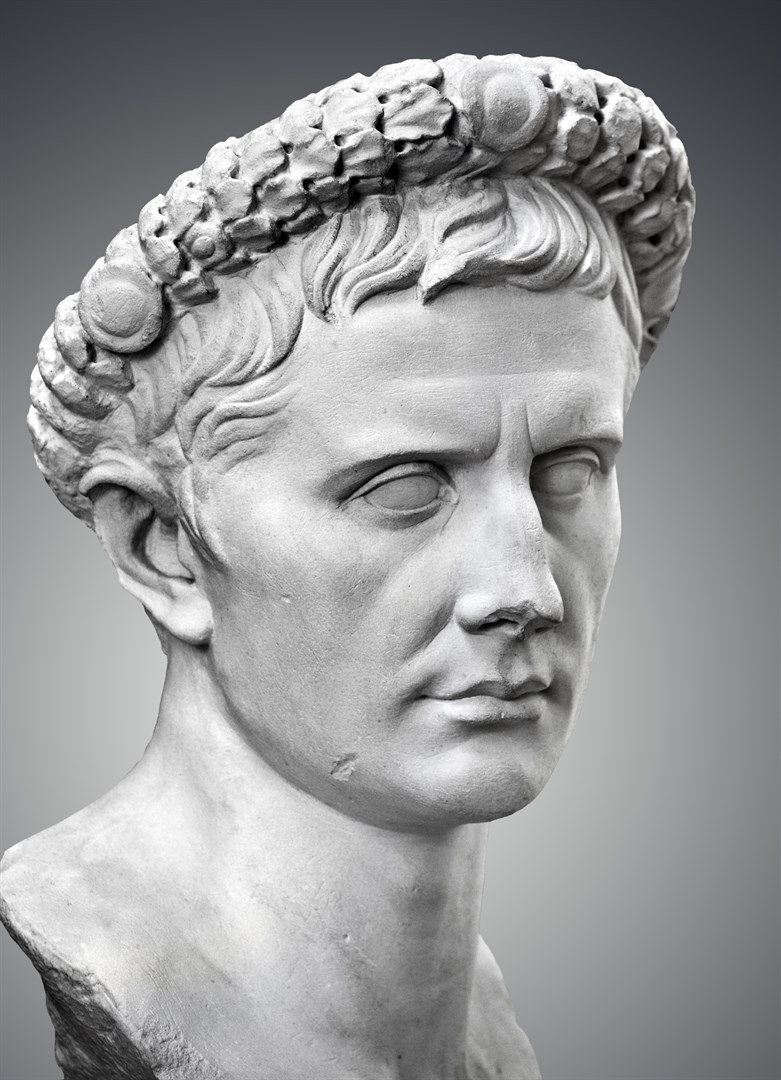
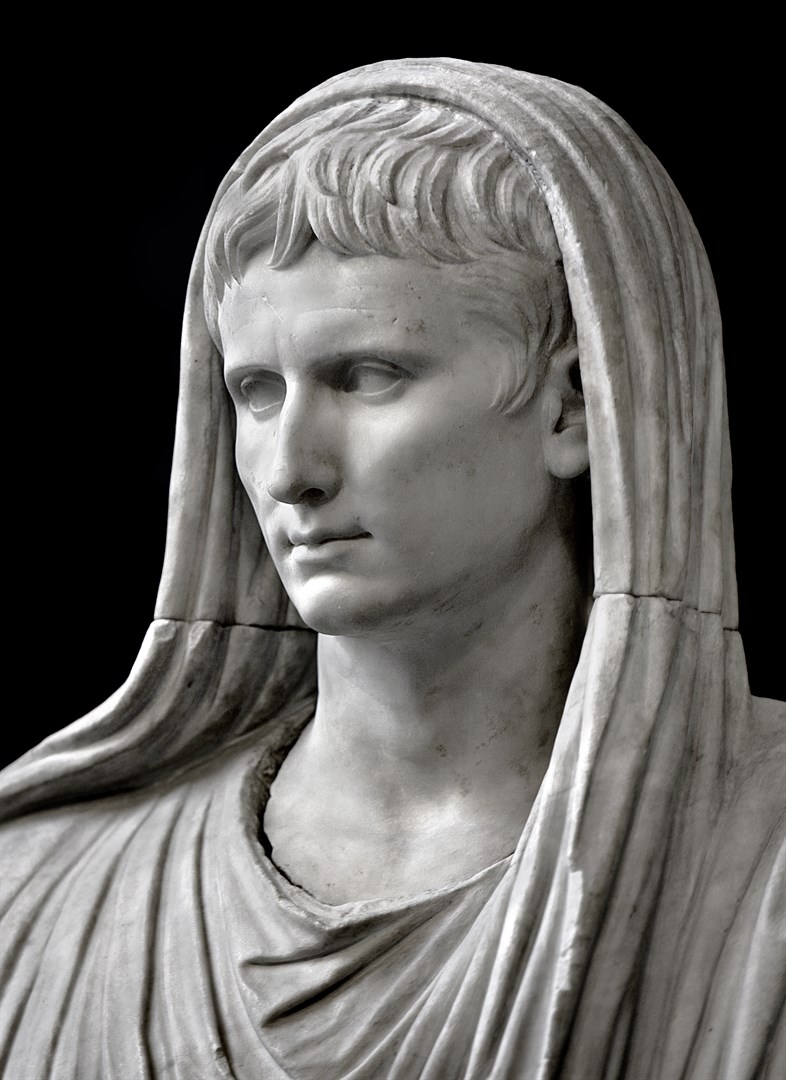
Our latest addition, just photographed this week in Rome, is the below Alcudia-type head of Augustus discovered in 2019 along Via Alessandrina in Rome Mercati di Traiano and recently put on display in the Trajan’s Market museum. This typology, named after a similar portrait found in Alcudia, Spain, dates to 40–38 BCE and depicts Octavian in his early twenties. This type aligns with Augustus’ adoption of the title Divi Filius (Son of the Deified*) following Julius Caesar’s deification. Alcudia-type portraits of Augustus are rare, so this was a significant find.
* This is often incorrectly translated as “Son of the Divine.” Divus (from which Divi comes) refers specifically to a mortal who has been deified after death, not to an eternal or inherently divine being (like a traditional god such as Jupiter). Deus, by contrast, refers to a god or divine being in a more traditional, eternal sense.


This Alcúdia type bust portrays Augustus with a youthful face, featuring a broad forehead, sharp brow, and almond-shaped eyes with thin lids. The facial modeling is restrained, part realistic individualism and part classicizing elements inspired by Greek sculpture, particularly the works like the Doryphoros of Polykleitos. His expression is calm and dignified, reflecting the Augustan ideal of serene authority.
A defining feature is the distinctive arrangement of hair, with thick, comma-shaped locks combed forward, often with a pronounced central “clip” formed by two locks curving to the right and one to the left. The hair over the forehead is voluminous, with some strands undercut for a three-dimensional effect, and it closely follows the skull, contrasting with later types like the Prima Porta, where the hair is more simplified. As with the other Alcúdia-type portraits the rest of the hair is smoother and less detailed compared to later Augustan portraits.
This piece appears to be carved from Parian marble. I could not find any info on it and I’m unskilled in petrography. It is some kind of high-quality, fine-grained, homogeneous lychnite.
Visit this page for photos of many more portraits of Augustus.



I’m Only Neurotic When – Engineering Edition
Posted by Bill Storage in Commentary, Engineering & Applied Physics on October 7, 2025
The USB Standard of Suffering
The USB standard was born in the mid-1990s from a consortium of Intel, Microsoft, IBM, DEC, NEC, Nortel, and Compaq. They formed the USB Implementers Forum to create a universal connector. The four pins for power and data were arranged asymmetrically to prevent reverse polarity damage. But the mighty consortium gave us no way to know which side was up.
The Nielsen Norman Group found that users waste ten seconds per insertion. Billions of plugs times thirty years. We could have paved Egypt with pyramids. I’m not neurotic. I just hate death by a thousand USB cuts.
The Dyson Principle
I admire good engineering. I also admire honesty in materials. So naturally, I can’t walk past a Dyson vacuum without gasping. The thing looks like it was styled by H. R. Giger after a head injury. Every surface is ribbed, scooped, or extruded as if someone bred Google Gemini with CAD software, provided the prompt “manifold mania,” and left it running overnight. Its transparent canister resembles an alien lung. There are ducts that lead nowhere, fins that cool nothing, and bright colors that imply importance. It’s all ornamental load path.
To what end? Twice the size and weight of a sensible vacuum, with eight times the polar moment of inertia. (You get the math – of course you do.) You can feel it fighting your every turn, not from friction, but from ego. Every attempt at steering carries the mass distribution of a helicopter rotor. I’m not cleaning a rug, I’m executing a ground test of a manic gyroscope.
Dyson claims it never loses suction. Fine, but I lose patience. It’s a machine designed for showroom admiration, not torque economy. Its real vacuum is philosophical: the absence of restraint. I’m not neurotic. I just believe a vacuum should obey the same physical laws as everything else in my house. I’m told design is where art meets engineering. That may be true, but in Dyson’s case, it’s also where geometry goes to die. There’s form, there’s function, and then there’s what happens when you hire a stylist who dreams in centrifugal-manifold Borg envy.
Frank Lloyd Wright’s Physics
No one but Frank Lloyd Wright could have designed these cantilevered concrete roof supports, the tour guide at the Robie House intoned reverently, as though he were describing Moses with a T-square. True – and Mr. Wright couldn’t have either. The man drew poetry in concrete, but concrete does not care for poetry. It likes compression. It hates tension and bending. It’s like trying to make a violin out of breadsticks.
They say Wright’s genius was in making buildings that defied gravity. True in a sense – but only because later generations spent fifty times his budget figuring ways to install steel inside the concrete so gravity and the admirers of his genius wouldn’t notice. We have preserved his vision, yes, but only through subterfuge and eternal rebar vigilance.
Considered the “greatest American architect of all time” by people who can name but one architect, Wright made it culturally acceptable for architects to design expressive, intensely personal museums. The Guggenheim continues to thrill visitors with a unique forum for contemporary art. Until they need the bathroom – a feature more of an afterthought for Frank. Try closing the door in there without standing on the toilet. Paris hotels took a cue.
The Interface Formerly Known as Knob
Somewhere, deep in a design studio with too much brushed aluminum and not enough common sense, a committee decided that what drivers really needed was a touch screen for everything. Because nothing says safety like forcing the operator of a two-ton vehicle to navigate a software menu to adjust the defroster.
My car had a knob once. It stuck out. I could find it. I could turn it without looking. It was a miracle of tactile feedback and simple geometry. Then someone decided that physical controls were “clutter.” Now I have a 12-inch mirror that reflects my fingerprints and shame. To change the volume, I have to tap a glowing icon the size of an aspirin, located precisely where sunlight can erase it. The radio tuner is buried three screens deep, right beside the legal disclaimer that won’t go away until I hit Accept. Every time I start the thing. And the Bluetooth? It won’t connect while the car is moving, as if I might suddenly swerve off the road in a frenzy of unauthorized pairing. Design meets an army of failure-to-warn attorneys.
Human factors used to mean designing for humans. Now it means designing obstacles that test our compliance. I get neurotic when I recall a world where you could change the volume by touch instead of prayer.
Automation Anxiety
But the horror of car automation goes deeper, far beyond its entertainment center. The modern car no longer trusts me. I used to drive. Now I negotiate. Everything’s “smart” except the decisions. I rented one recently – some kind of half-electric pseudopod that smelled of despair and fresh software – and tried to execute a simple three-point turn on a dark mountain road. Halfway through, the dashboard blinked, the transmission clunked, and without warning the thing threw itself into Park and set the emergency brake.
I sat there in the dark, headlamps cutting into trees, wondering what invisible crime I’d committed. No warning lights, no chime, no message – just mutiny. When I pressed the accelerator, nothing. Had it died of fright? Then I remembered: modern problems require modern superstitions. I turned it off and back on again. Reboot – the digital age’s holy rite of exorcism. It worked.
Only later did I learn, through the owner’s manual’s runic footnotes, that the car had seen “an obstacle” in the rear camera and interpreted it as a cliff. In reality it was a clump of weeds. The AI mistook grass for death.
So now, in 2025, the same species that landed on the Moon has produced a vehicle that prevents a three-point turn for my own good. Not progress, merely the illusion of it – technology that promises safety by eliminating the user. I’m not neurotic. I just prefer my machines to ask before saving my life by freezing in place as headlights come around the bend.
The Illusion of Progress
There’s a reason I carry a torque wrench. It’s not to maintain preload. It’s to maintain standards. Torque is truth, expressed in foot-pounds. The world runs on it.
Somewhere along the way, design stopped being about function and started being about feelings. You can’t torque a feeling. You can only overdo it. Hence the rise of things that are technically advanced but spiritually stupid. Faucets that require a firmware update, refrigerators with Twitter accounts. Cars that disable half their features because you didn’t read the EULA while merging onto the interstate.
I’m told this is innovation. No, it’s entropy with a bottomless budget. After the collapse, I expect future archaeologists to find me in a fossilized Subaru, finger frozen an inch from the touchscreen that controlled the wipers.
Until then, I’ll keep my torque wrench, thank you. And I’ll keep muting TikTok’s #lifehacks tag, before another self-certified engineer shows me how to remove stripped screws with a banana. I’m not neurotic. I’ve learned to live with people who do it wrong.
art, criticism, engineering, humor, travel
4 Comments