Posts Tagged ancient
The Ludovisi Sarcophagus
Posted by Bill Storage in History of Art on September 22, 2026
This was my script for a video I just posted on YouTube (Subscribe – more of these are coming). I departed slightly from the script when I narrated, but it is close. The video illustrates all the points made in the text, so I see no point in grabbing a large number of stills from it to include here. Just watch the video; I think it came out well. I uploaded 4K video. You can select resolution with the video settings button to ensure you are getting full res.
The best guess is that the Ludovisi Sarcophagus was made in the third century, probably around AD 260.
We don’t know who the man in the middle is. That, beyond the fact that the thing is an incredible piece of art, is one of the reasons the sarcophagus gets so much attention.
He’s on horseback, bareheaded, no weapon, riding straight into a mass of Roman soldiers and defeated barbarians. Everyone around him is caught up in the violence. Men are falling, fighting, and dying.
And he’s pretty much untouched by it. His right hand is raised, as though he doesn’t even need a sword. He isn’t just another soldier. The whole composition points toward him. So naturally, we want to know who he was.
Answering that is tough. 1800 years has taken its toll on the evidence.
The sarcophagus was discovered in Rome in 1621, in a vineyard outside the Porta San Lorenzo. It was acquired by Cardinal Ludovico Ludovisi and became part of his remarkable collection of ancient sculpture. Eventually the collection passed into the Museo Nazionale Romano. You can see it in person at the Palazzo Altemps across the street from Piazza Navona.
Once you’ve concluded that the figure must represent somebody important, then you start studying the face. He seems important because an immense amount of precision work went into it. He has a triangular face, a broad cranium and narrow chin, smooth skin, prominent eyebrows, a moustache and a short beard. His hair is arranged in little comma-shaped locks across his forehead.
The hairstyle looks backward. It recalls earlier Roman imperial portraits the Julio-Claudians, Augustus in particular, and Trajan. But its closest parallels, according to modern scholarship, are in what is called the Gallienic revival, the renewed interest in classical styles during the reign of Emperor Gallienus.
That leads most scholars toward the imperial families of the middle of the third century. Two names in particular come up. Herennius Etruscus and his younger brother Hostilianus, the sons of the emperor Trajan Decius.
Herennius was actually killed fighting the Goths in 251. Hostilianus didn’t die in battle. He died of the plague later that year. And there is something particularly interesting about Hostilianus.
Some of those who’ve proposed that this guy is Hostilian see the curious mark on his forehead as a sphragis, a sign associated with the Mithraic mysteries
And that brings us to the curious mark on his forehead. It is a cross-shaped mark, cut deeply into the marble. It has been interpreted as a sphragis, a sign associated with the Mithraic mysteries. But that interpretation has a complicated history I’ll get to later.
Except for the beard, some coin portraits of Hostilian do look strikingly like the one on the sarcophagus.
More recent scholarship has tended to put the Ludovisi Sarcophagus around 260 rather than 251, partly because of the way its figures are organized across the relief and its relationship to other sculpture of the period. We have to accept that the young commander can’t be securely connected with any known emperor or general.
But I’m not sure nine years should have quite the authority that it sometimes gets. A date of around 260 is just an art-historical judgment.
A sculptor in 260 could have been looking at something made in 240. A sculptor in 251 could have been looking at something made a century earlier. A fashion can begin before we notice it, persist after we think it has ended, or simply refuse to fit neatly into the period labels we give it. The main figure’s face could have been carved forty years after the rest of the sarcophagus.
So I don’t think Herennius or Hostilianus can be dismissed simply because somebody has decided the sarcophagus belongs to 260. But I don’t think either can be identified solely from the resemblance.
It may be a portrait of a member of the imperial family. It may be an important military commander. Or we may be looking at a very wealthy Roman aristocrat whose name has disappeared completely. The quality of the sarcophagus tells us that its patron was somebody near the top of Roman society. But that’s about as far as the evidence can take us.
There’s another possibility we can’t rule out. Perhaps the face wasn’t intended to identify the deceased as a particular emperor or general at all. The sculptor may have been making an ideal Roman commander. He is bareheaded, carries no weapon, and yet he’s riding directly into battle.
Diana Kleiner compared him to the invincible general represented by Alexander the Great, particularly the famous mosaic from the House of the Faun at Pompeii, which itself copies a lost Hellenistic painting.
In that reading, the point isn’t that the subject was Alexander. It’s that he was being made to look like the kind of man who could be Alexander. The dead man didn’t necessarily need to have conquered the barbarians. He needed to be shown as the sort of man who would have.
And then there is the X. It doesn’t look to me like the work of the sculptor who carved the face. It could have been made later in antiquity. It could have been made centuries later. We don’t know when the sarcophagus disappeared from view, when it was buried, or what happened to it before it was found in 1621.
So we know roughly when the sarcophagus was carved. We know exactly when it was dug out of the ground, but we can’t date the X at all. We don’t really even know that it wasn’t added after it was dug up. And since we can’t know how long it was around before being buried we can’t rule out that someone in late antiquity added the X to ward off demons. There is evidence of that sort of thing, right up to modern times.
20th century scholars couldn’t let go of a Tertullian quote. He mentions Mithras in a passage attacking pagan religion. He says that the Devil marks his soldiers on their foreheads. That’s all he says.
Tertullian wrote about 200 AD, and he couches the claim with “if I remember Mithras,” not exactly the voice of a man presenting carefully verified ethnography. He is making a rhetorical point: Satan had preemptively counterfeited Christian sacraments in pagan religion.
Historian Franz Cumont, in 1899, interprets Tertullian’s mark as a “brand.”
In 1959, German archaeologist Hilga von Heintze reads Cumont and starts the business about the Ludovisi Sarcophagus “X” being a Mithraic sign.
Beskow, in 1979, dismatles the long-standing academic belief that initiates of Mithras were branded on their foreheads.
Diana Kleiner, in 1992, accepts von Heintze, misses or dismisses Beskow, and claims, without citation, that coin portraits of Hostilian sometimes have an X. Kleiner did not reply to my inquiry about this.
Years ago I asked historian Richard Gordon, a leading scholar of Roman Mithraism. His answer was blunt. No evidence of Mithraic branding, particularly with an X.
That’s an extraordinary little piece of scholarly history. Because we can watch the idea being constructed, and watch counterevidence being ignored. We have zero evidence of such a Mithraic symbol. And the American Numismatic Society database knows of no Hostilian coinage with an X. So we have an argument that is not only circular, but rests on false starts that reinforce one another.
It also shows us just how self-referential academic scholarship can be. Bad scholarship gets cast in stone. People, especially those who must publish or perish, crave certainty. A Richard Feynman quote seems tailor-made: “We absolutely must leave room for doubt or there is no progress and no learning.”
So here the Ludovisi Sarcophagus becomes interesting for other reasons. It tells us something about ourselves.
But there is one more thing I find interesting. In 1621 the sarcophagus entered a world in which ancient sculpture had enormous value. Cardinal Ludovisi was building one of the great collections of antiquities in Rome. It became famous.
There another unidentified Roman head, over in the Capitoline collection, with an X on his forehead. And he looks quite a bit like you know who.
Frontally, they look pretty similar, considering that one is life sized and one is miniature. When I photographed the two heads in profile and put them side by side, I was struck by an uncanny similarity. The Capitoline head has a reworked nose, so I’ve removed that part of the comparison, because the restoration may well have been based on the sarcophagus.
But look at the rest of the face: the forehead, the brow, the eye, the cheek, the mouth, the chin, the overall profile.
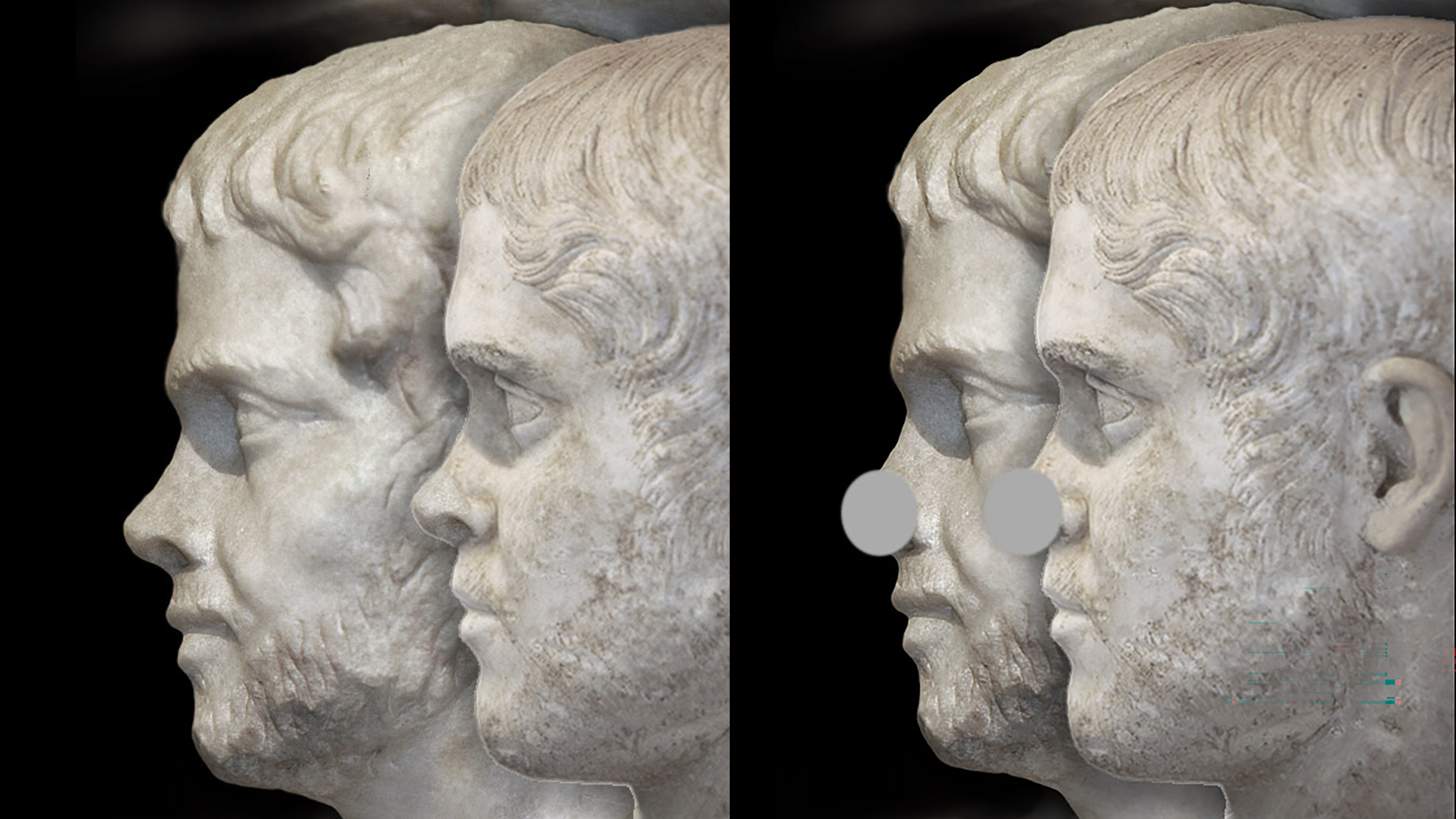
The resulting resemblance could then be taken as independent evidence that the two heads represent the same person. But regardless of the date of the Ludovisi “X”, the X’s are not independent evidence, given what we know of the antique market.
The heads are so similar that I wonder if somebody else noticed the resemblance long ago, possibly after the sarcophagus head got its X but before the Capitoline head did.
Max Vegner, writing in 1979, judged the head to have been extensively reworked. I read the surviving evidence as more superficial than he did. I agree that the X was added later, and that the head was polished after the X was added. When the head was polished by a restorer, the X was already there when that happened. Whether five minutes before, or a thousand years before, we cannot say. I disagree that the locks have been extensively reworked to imitate those of the guy on the sarcophagus. Follow them up to the top of the head. The extent of reworking Vegner proposes would make the thing the equivalent of a complete forgery, which it might be. If it is, it is a very good one.
I’m not saying the two heads portray the same man. They may, or the Ludovisi figure may itself be an idealization. It means only that the two faces are similar enough that someone restoring or selling the Capitoline head might have seen an opportunity to associate it with the much more famous Ludovisi portrait.
I’ve shot thirty thousand photos of Roman heads and have spent enough time looking at recut portraits that I am reasonably confident of that judgment. But it’s a judgment. And I’ve convinced museums to change their claims about recarving and revise their placards. But it’s still a judgment.
All this changes the way I look at the two objects, because there are now several histories to consider. There is the history of the Roman man represented by the sarcophagus. There is the history of the Capitoline head. And there is the history of what later people thought and did about the similarity between them.
We form theories, at least some of which are wrong. One might be right.
And some may be wrong in ways that are now very difficult to see, because they have been written down and copied so many times. The sarcophagus is eighteen hundred years old. The X might be 1,000 years old. The interpretation of the X is 130 years old. The confidence with which the interpretation is now 60 years old. Yet when we encounter the thing today, all those layers arrive simultaneously.
The Lancellotti Discobolus
Posted by Bill Storage in History of Art on June 9, 2026
Engineering meets art history
The Discobolus of Myron is one of the most famous sculptures in the world, despite the fact that it no longer exists.
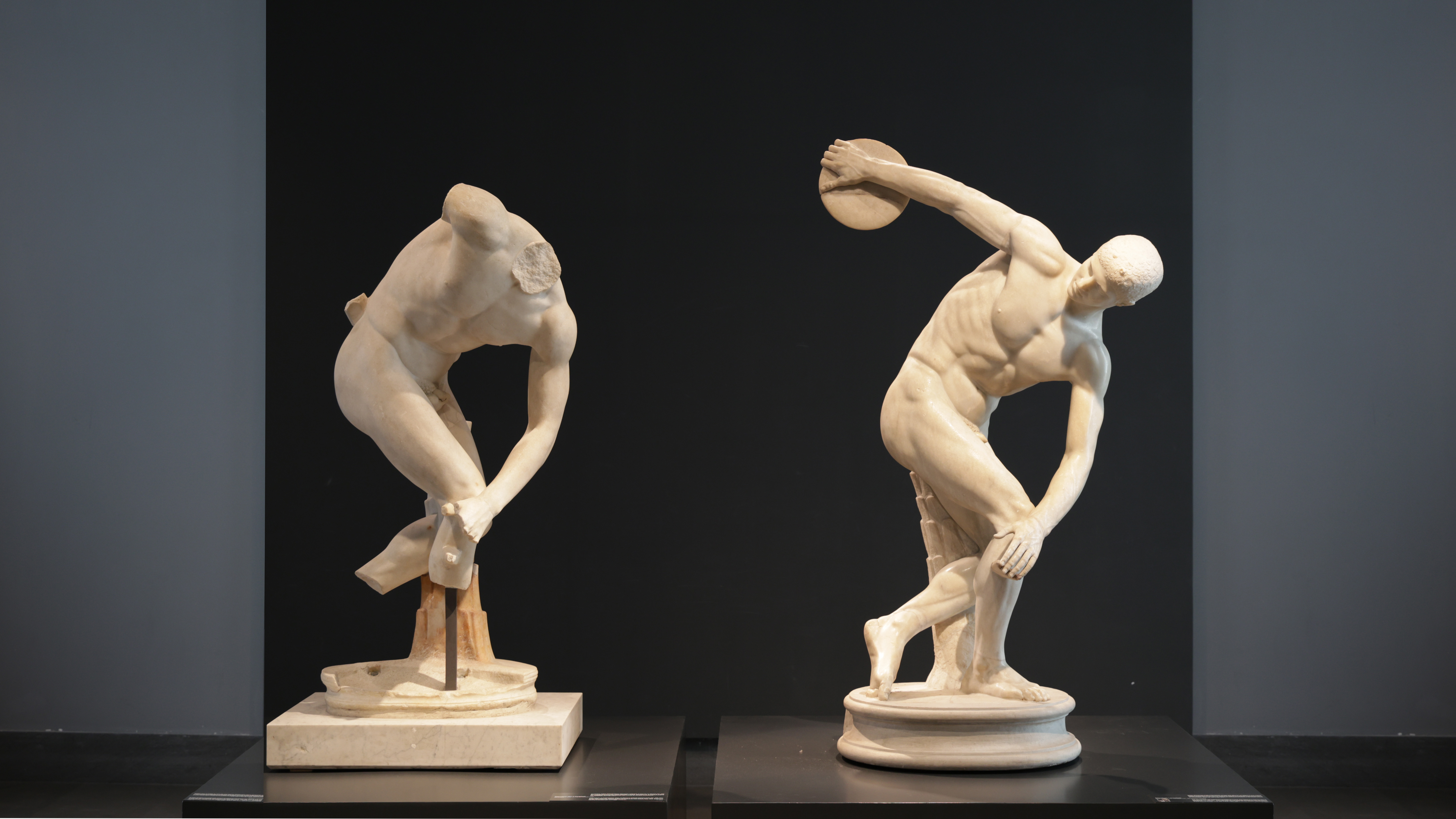
What you see here are two Roman marble copies of an original Greek bronze, made perhaps four hundred years earlier. As I stand in Palazzo Massimo, looking at the famous Discobolus Lancellotti and the more damaged version to its left, It seems to me that “copy” doesn’t tell the whole story.
How do we know it’s a copy if the original is lost? We don’t. Not really. But a few pieces of evidence support it. Multiple Roman statues survive showing nearly the same composition with variations. Ancient writers, especially Pliny the Elder, mention a famous Discobolus by Myron. From this, scholars infer a lost Greek prototype.
But that inference depends on assumptions. That Roman versions derive from a single famous original. That the literary references correspond to these sculptures. That the similarities are too strong to be coincidence,
and that Roman sculptors were reproducing admired earlier works rather than improvising freely and copying each other.
Reasonable conclusions, but not certain. Classical archaeology, seems to me, often speaks with a certitude that conceals how inferential the whole enterprise is. The “original Myron Discobolus” is a scholarly composite. The original survives as an intellectual reconstruction.
The nearly-complete Discobolus Lancellotti looks so perfect that people instinctively assume it must be the “best” copy. But the fragmentary version beside it in some ways preserves more truthful structural details. In particular, traces of the massive support on the hip show how difficult the pose really was in marble. Bronze could suspend limbs in space. Marble – not as much. The cleaner version partly hides the engineering problem.
The first thing that strikes you about the Discobolus is motion. Or rather, suspended motion. The body is wound tight, almost like a spring under torsion. The torso twists against the hips. The shoulders oppose the legs. We see stored rotational-energy.
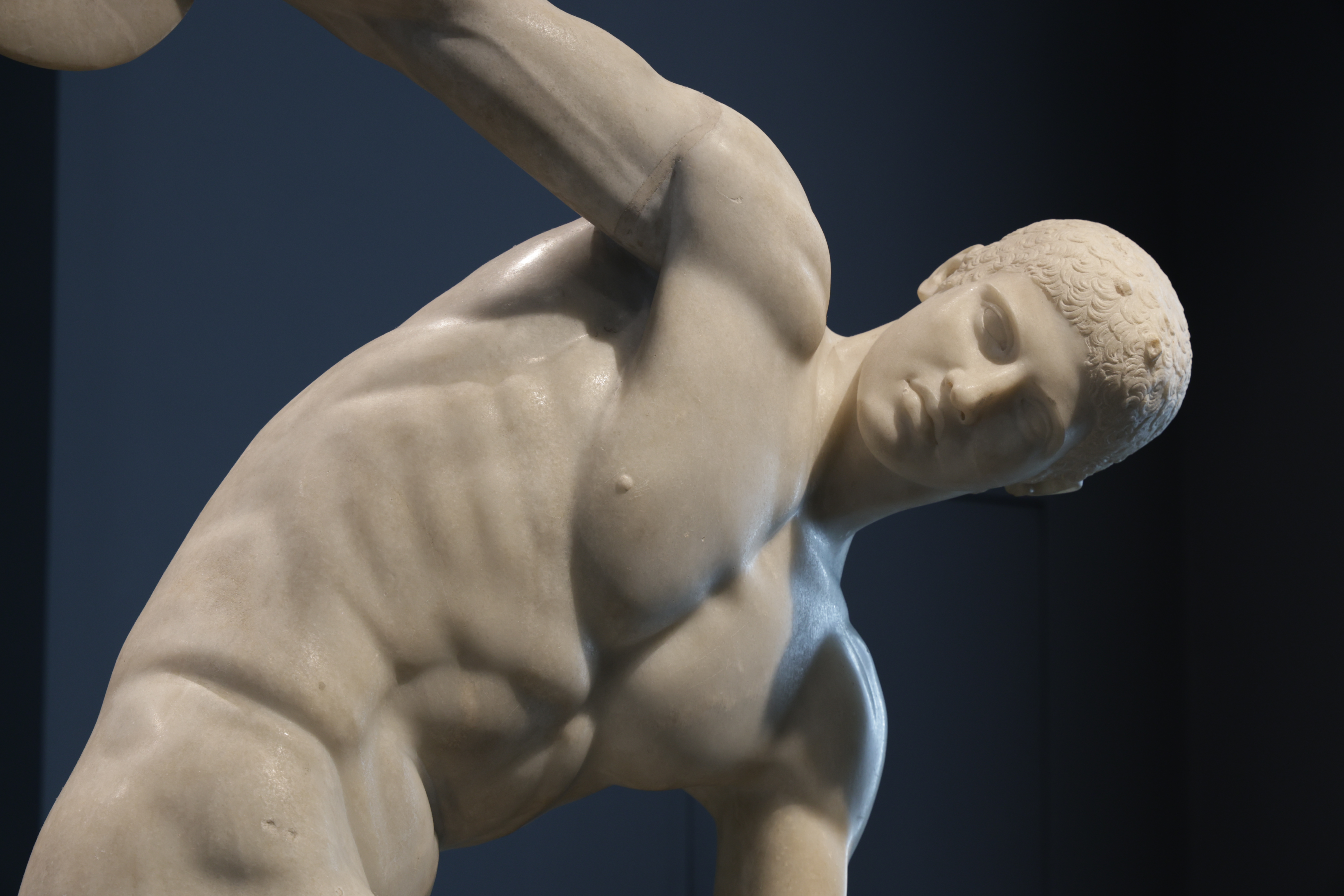
But the face remains calm, almost indifferent. Modern athletes grimace and strain. Our culture likes that. Greek classical sculpture often suppresses it. The ideal athlete is not simply powerful. He is self-controlled. Emotionally disciplined. The body may be near maximum exertion, but the face refuses to surrender composure. It feels uncanny to modern viewers. Pliny criticized the lack of facial expression. Cicero wrote that “Myron’s works are not yet very close to the truth.”
The Discobolus doesn’t look like someone throwing a discus. He looks like the idea of controlled effort. I’m guessing that’s what Myron intended. This pose is deeply awkward in marble. The original bronze allowed limbs to extend freely into space. Thin structures are possible in bronze.
Marble is less forgiving. It wants support, and mass underneath the stress points. Roman sculptors adapting Greek bronzes had to add engineering solutions into the composition. Tree trunks, struts, and short connecting bridges. The damaged copy exposes more of that hidden problem. It looks slightly less like a perfect Platonic form and more like a negotiation with gravity.
We are taught to think of these sculptures as serene embodiments of timeless ideals, floating above ordinary technical concerns. But ancient sculptors were also engineers. They had to deal with leverage, fracture points, and concepts like center of mass.
A Roman copyist translating bronze into marble was solving a physics problem, and altering the sculpture in the process.
And we should clarify this idea of Roman copyists. By the imperial period, elite Roman culture was saturated with Greek art, Greek education, Greek teachers, Greek craftsmen. Many sculptors working in Rome were ethnically Greek, culturally Greek, or trained in Greek workshops and traditions. Some even signed their works with Greek names.
So when we say “Roman copy,” don’t imagine a guy in a toga photocopying ancient Greece. He might speak Greek, train in Athens, and sculpt Italian marble for a Roman patron.
“Roman copy of a Greek original” is misleading shorthand. By the imperial period, elite Greco-Roman culture was deeply entangled. Roman aristocrats consumed Greek art as cultural legitimacy. Entire chapters of Greek visual culture survive because wealthy Romans liked decorating their villas.
This all contributes to why art historians argue about copies. Every copy contains interpretation.
From different angles, this composition changes radically. One viewpoint produces clarity and balance. Another produces compressed confusion. Limbs overlap and his body seems almost tangled. Greek sculpture was increasingly designed for controlled viewing angles.
This Discobolus was discovered in 1781 on the Esquiline Hill. It emerged during the great age of aristocratic Roman collecting, when antiquities were prestige objects.
Like other classical sculptures, the Discobolus was recruited into political ideology. It was in the first load of artwork confiscated during Napoleon’s Italian campaign. Nazi aesthetics seized upon these athletic bodies as evidence of racial ideals, despite the obvious inconvenience that the sculpture was Greco-Roman.
Hitler personally admired the Lancellotti Discobolus. Hermann Göring purchased it in 1938 from Prince Lancelotti. It seems every era reinvents antiquity in its own image. The statue somehow survived.
See it in moving pictures:
The Ugly Nero
Posted by Bill Storage in History of Art on April 1, 2026
This is Nero, the infamous emperor who fiddled while Rome burned – or so the story goes – the story being a modern amplification of disreputable ancient sources.
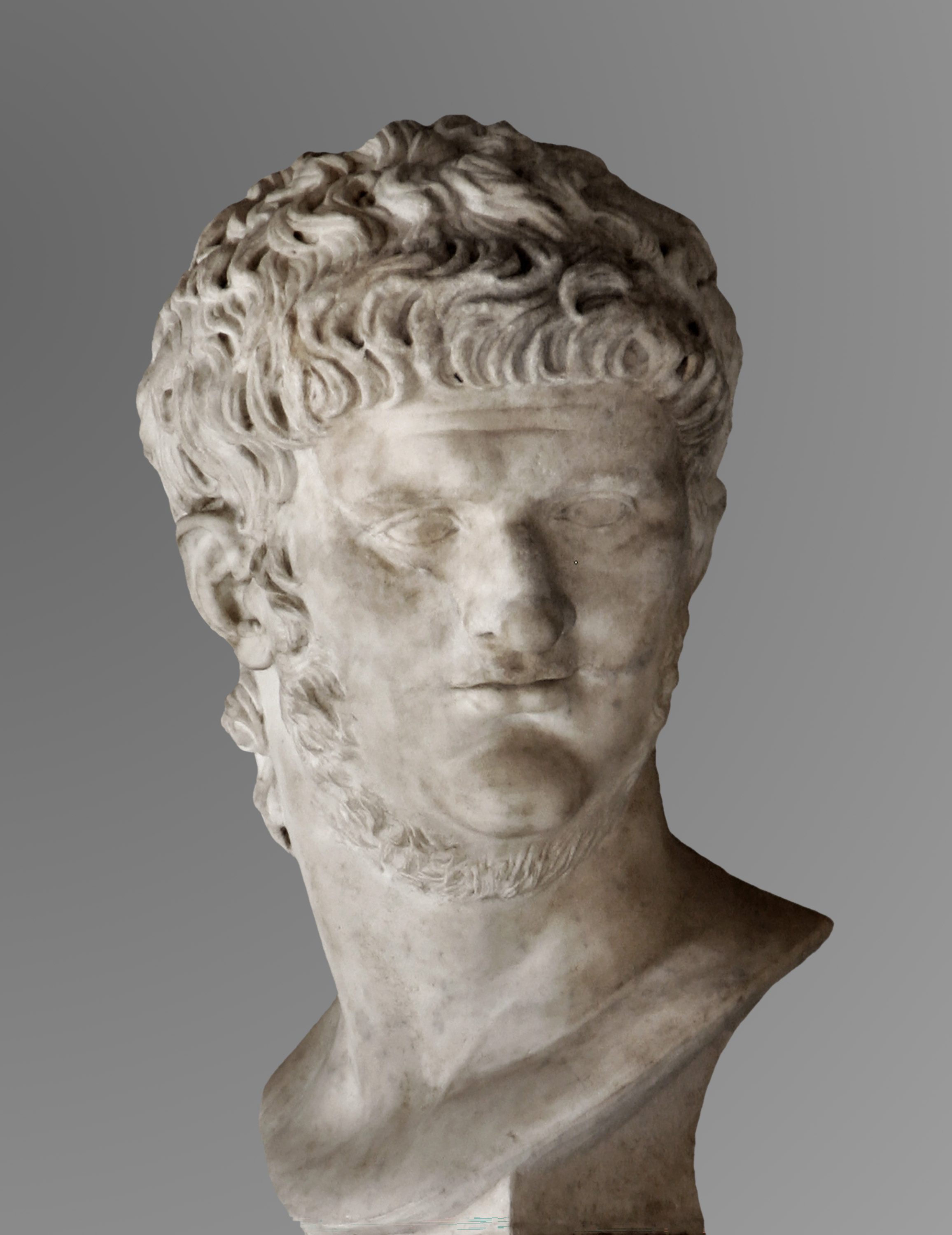
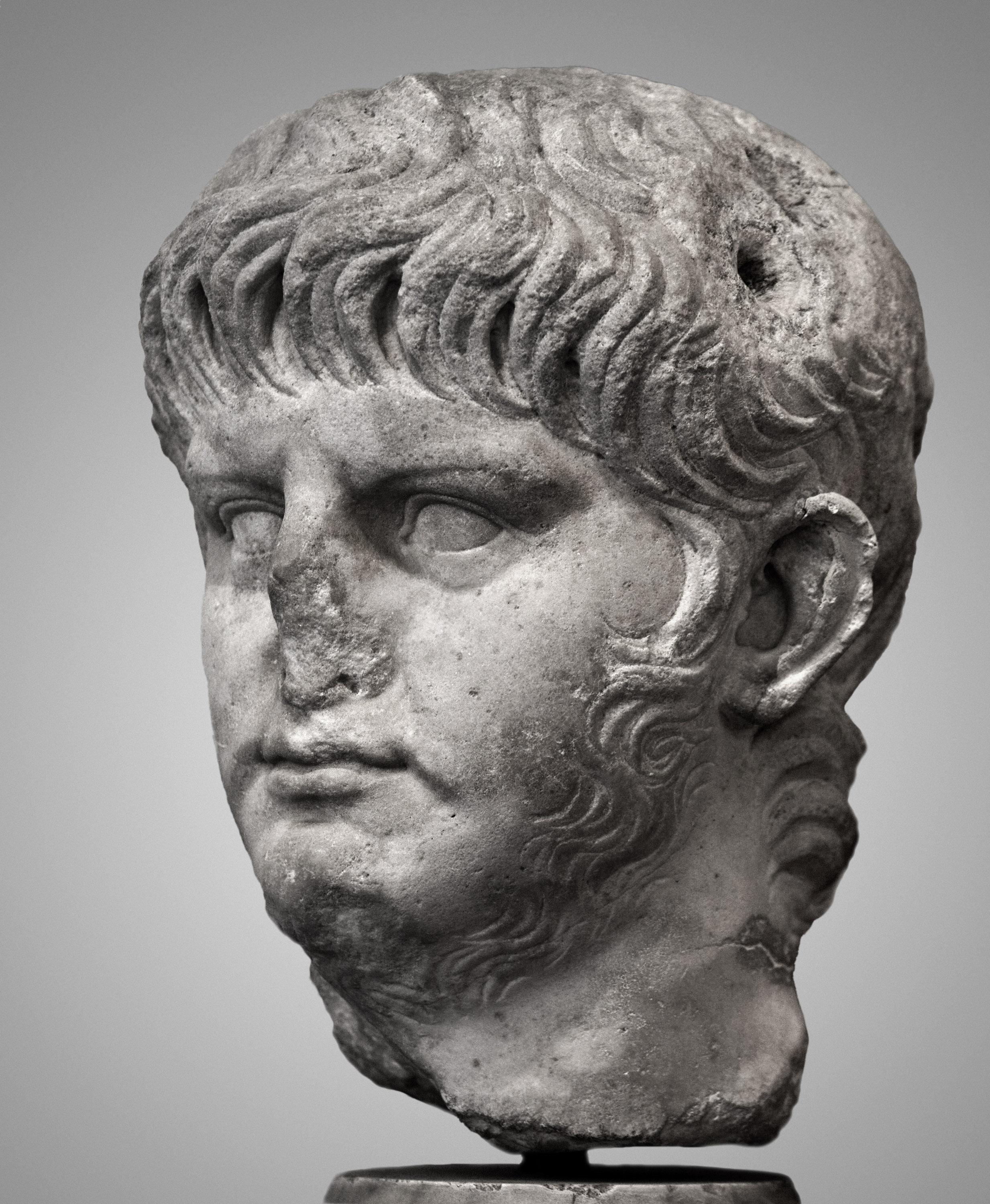
This striking marble bust (Museo Capitolino inventory MC 0427) in the Capitoline Museums’ Hall of Emperors is one of the most photographed portraits of him. It’s certainly the ugliest. But there’s a twist.
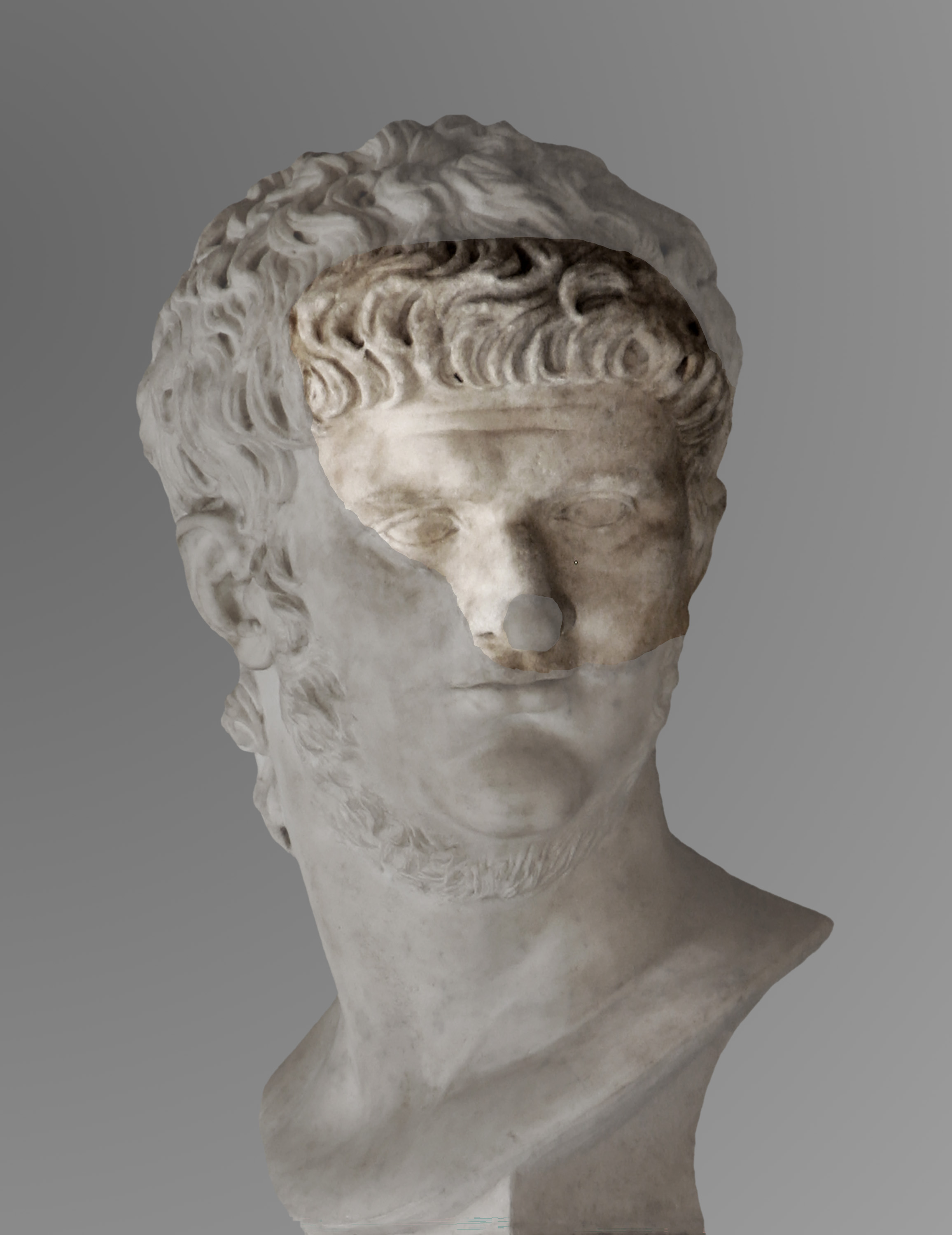
Only this small upper part of the face is actually ancient. It probably originated as a portrait of Nero carved late in his reign, around AD 60 or later. After Nero was murdered, it appears the head was recarved in antiquity to represent Domitian instead.
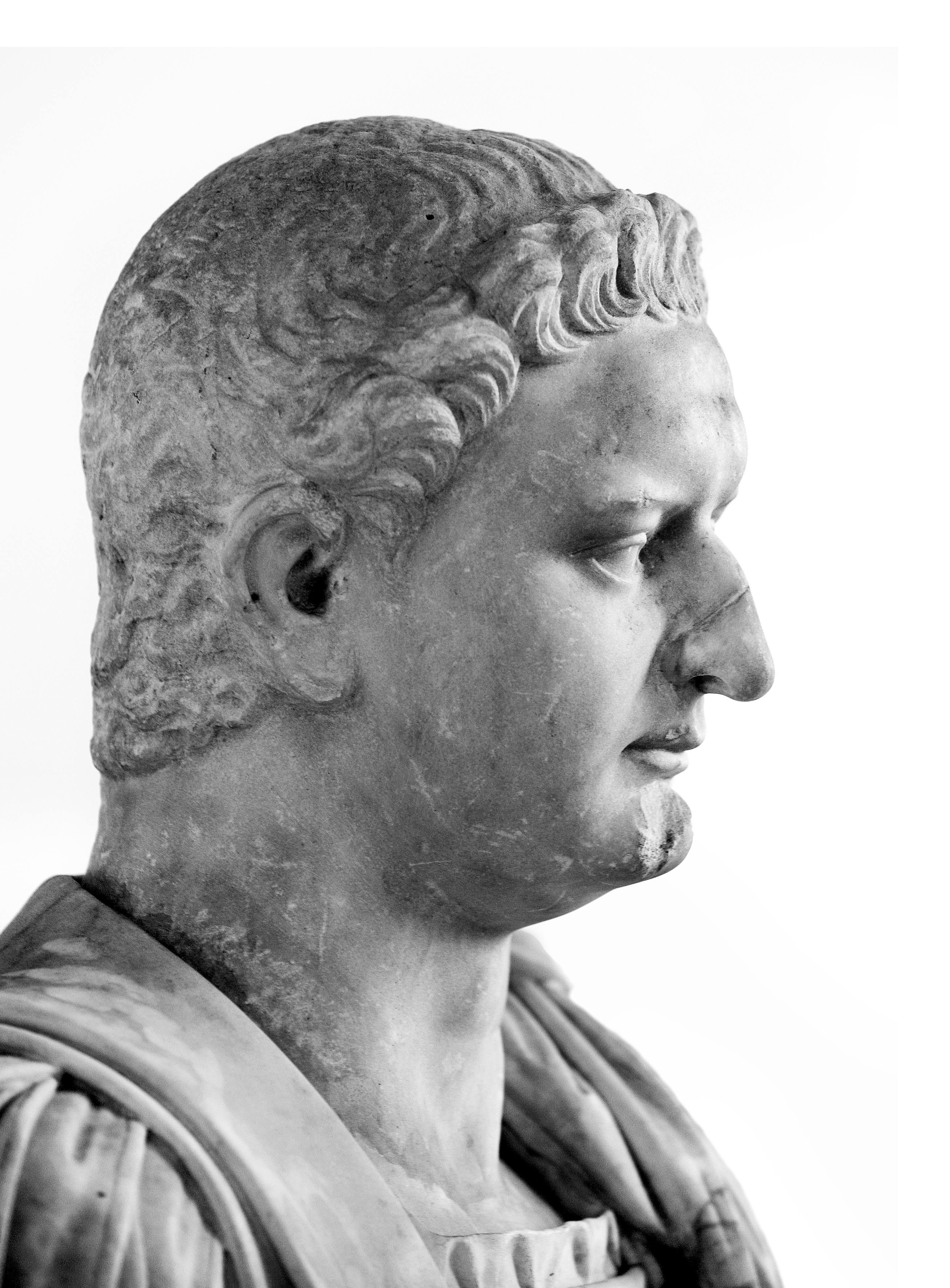
Some time later, it was damaged, leaving just the fragment highlighted here. Then, in the late 16th or early 17th century, Baroque restorers went to work for collectors like those in the Albani circle. The source of the original ancient head is unknown. It passed through the Giustiniani collection before entering the Albani collection, assembled by Cardinal Alessandro Albani in the 1700s. The Capitoline Museums acquired many pieces from the Albani collection in the 18th century as part of the museum’s early formation and expansion.
The Albacini workshop (Carlo Albacini and his son Filippo) was the cutting edge in Rome for restoring and completing ancient sculptures for collectors and the Grand Tour market. A drawing or related work by the Albacinis depicts “a fragment of Domitian restored as Nero,” suggesting their involvement. They completed almost the entire head, neck, and bust in the dramatic style of their time.
The result looks like Nero… Sort of. But compare it to better-preserved portraits of the real emperor and differences jump out. The proportions here are noticeably off – wider, coarser, perhaps deliberately unflattering.
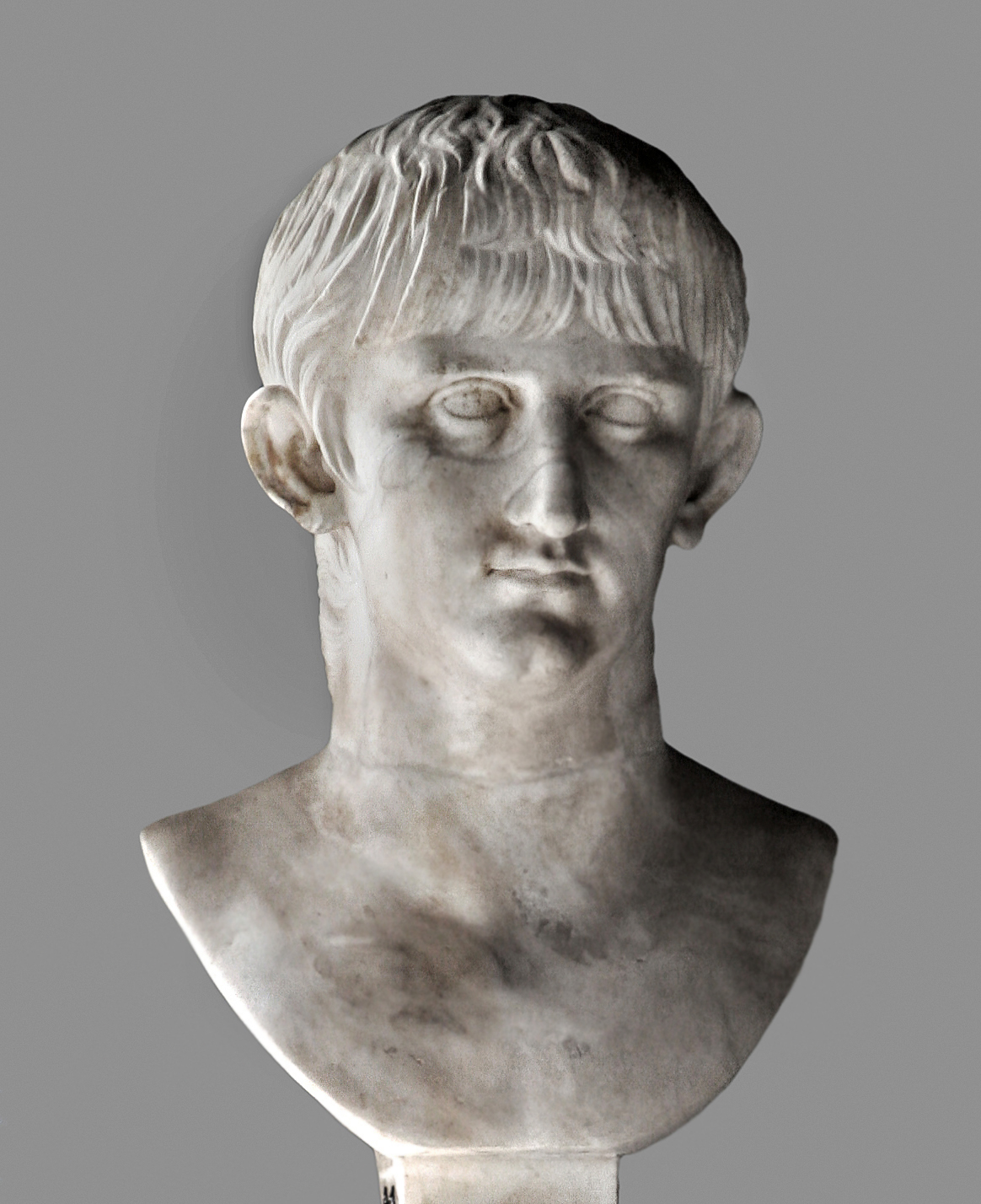
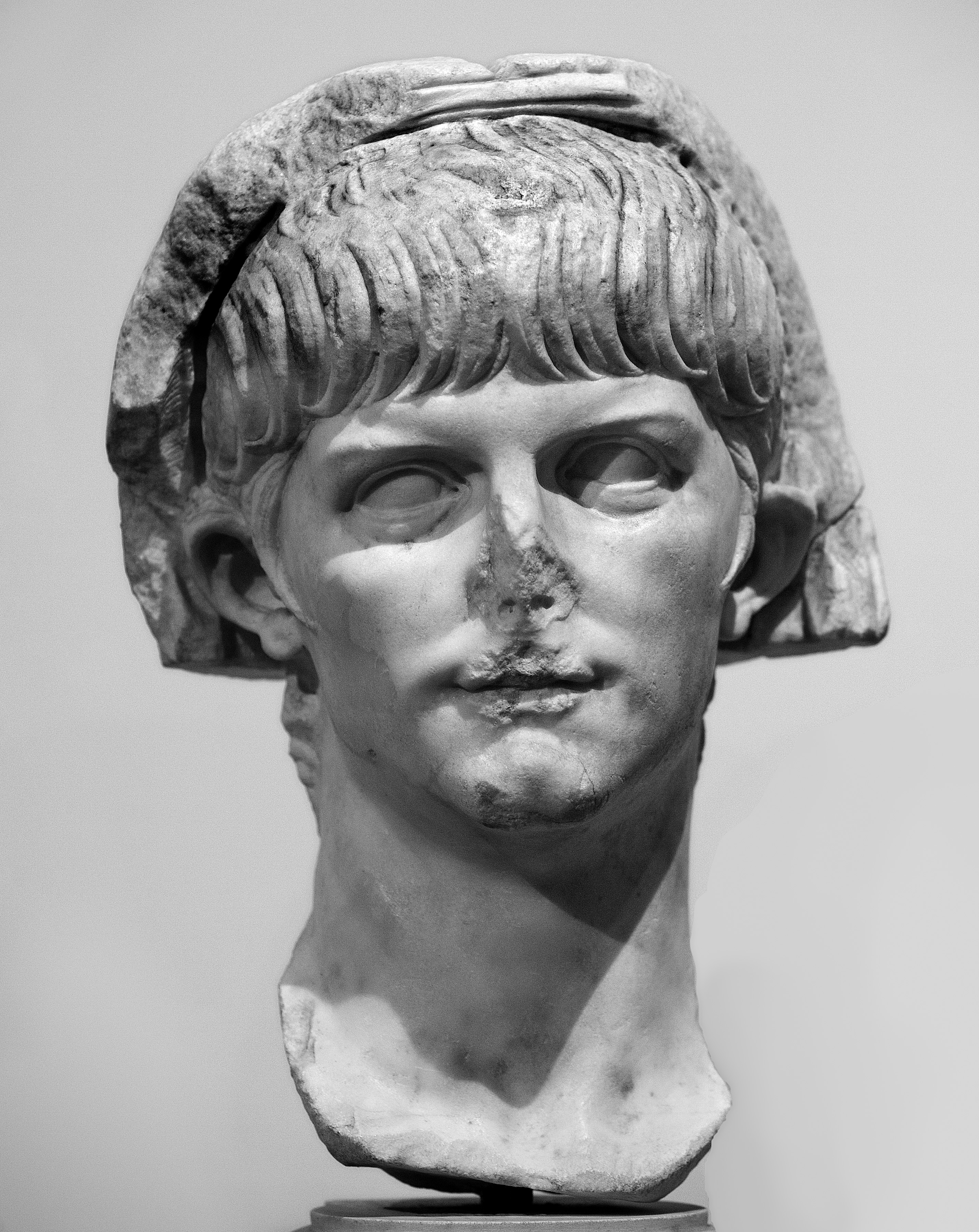
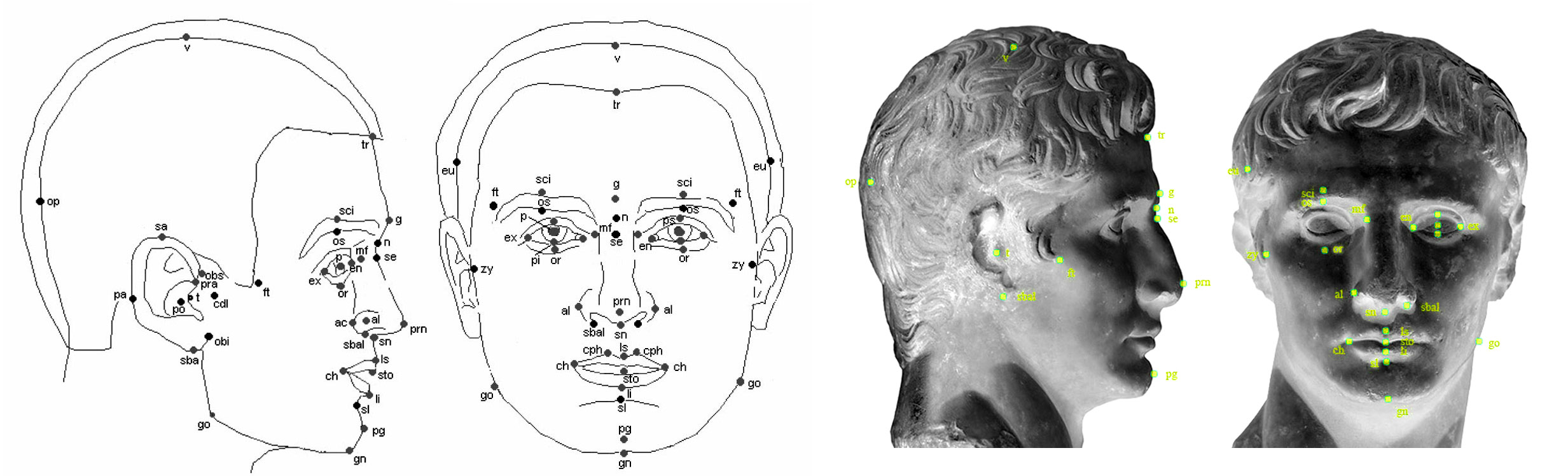
The restored lower face and neck stand out sharply from Nero’s established types. We know this because we took detailed measurements of them and did statistical analyses.
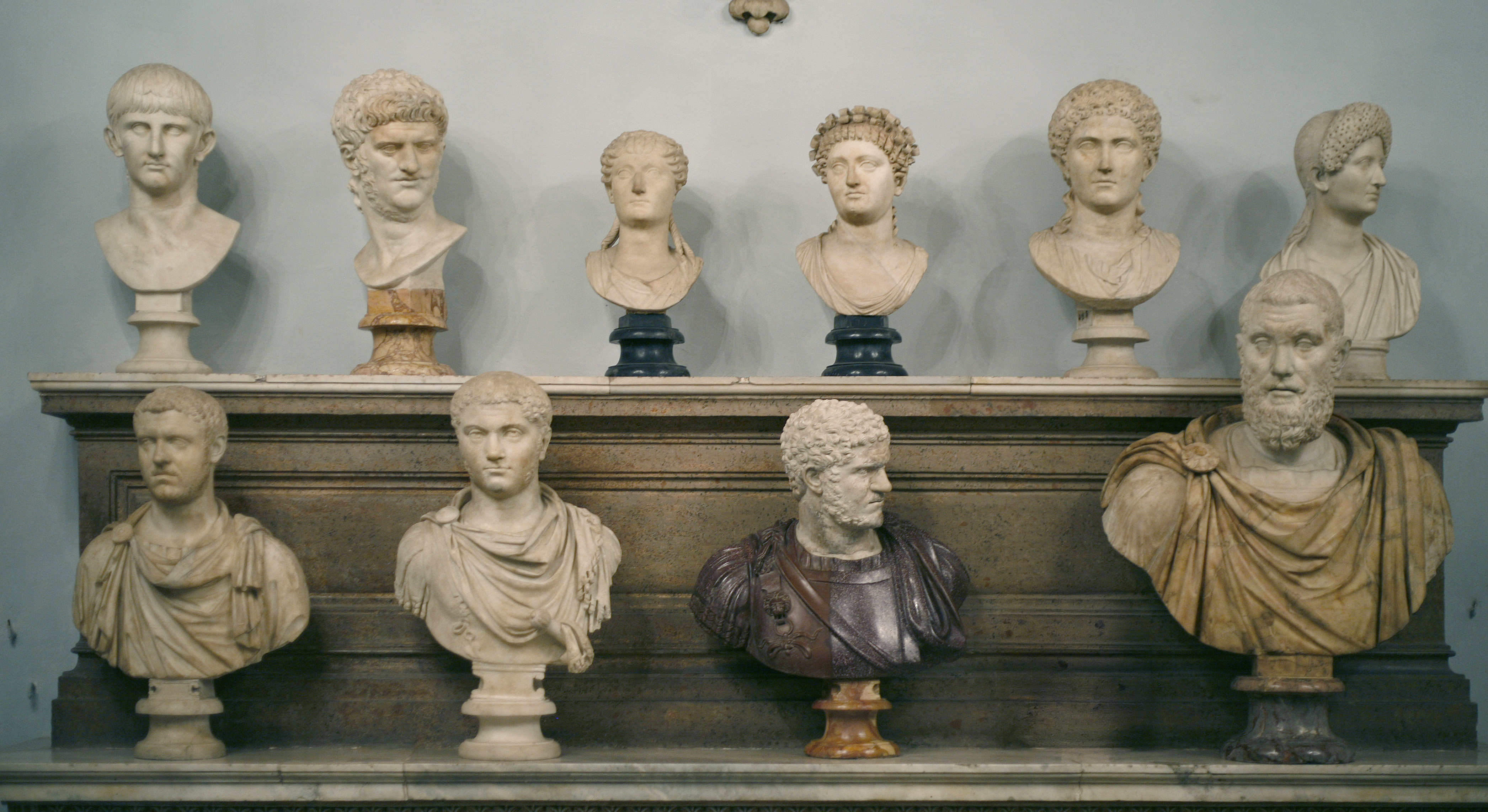
Why make Nero look almost hideous? It probably wasn’t ignorance. Other Nero portraits were known in Rome at the time. More likely, the restorers were channeling Suetonius, who described Nero as physically unappealing, with a thick neck and features that matched the image of a tyrant. Suetonius dies hard, even though we know he just made stuff up. Emperors, in ancient, Renaissance and modern minds alike, it seems, need to have been either great or terrible. Ancient physiognomy – the idea that looks reveal character – probably played a role in the restoration. They may have seen their job as more than just fixing marble. They were shaping a moral story.
This bust is a living record, layered with ancient politics, damage, and Renaissance imagination.
Next time you’re in the Hall of Emperors, look past the label. Roman portraits often tell us as much about the people who carved or restored them as about the emperors themselves.
—
See our YouTube short on this head of Nero
Things to See in Palazzo Massimo
Posted by Bill Storage in History of Art, History of Christianity on November 10, 2025
Mike and Andrea visit Rome this week. Here’s what I think they should see in Museo Nazionale Romano, Palazzo Massimo. Not that I’d try to push my taste on anyone.
The Via Labicana Augustus
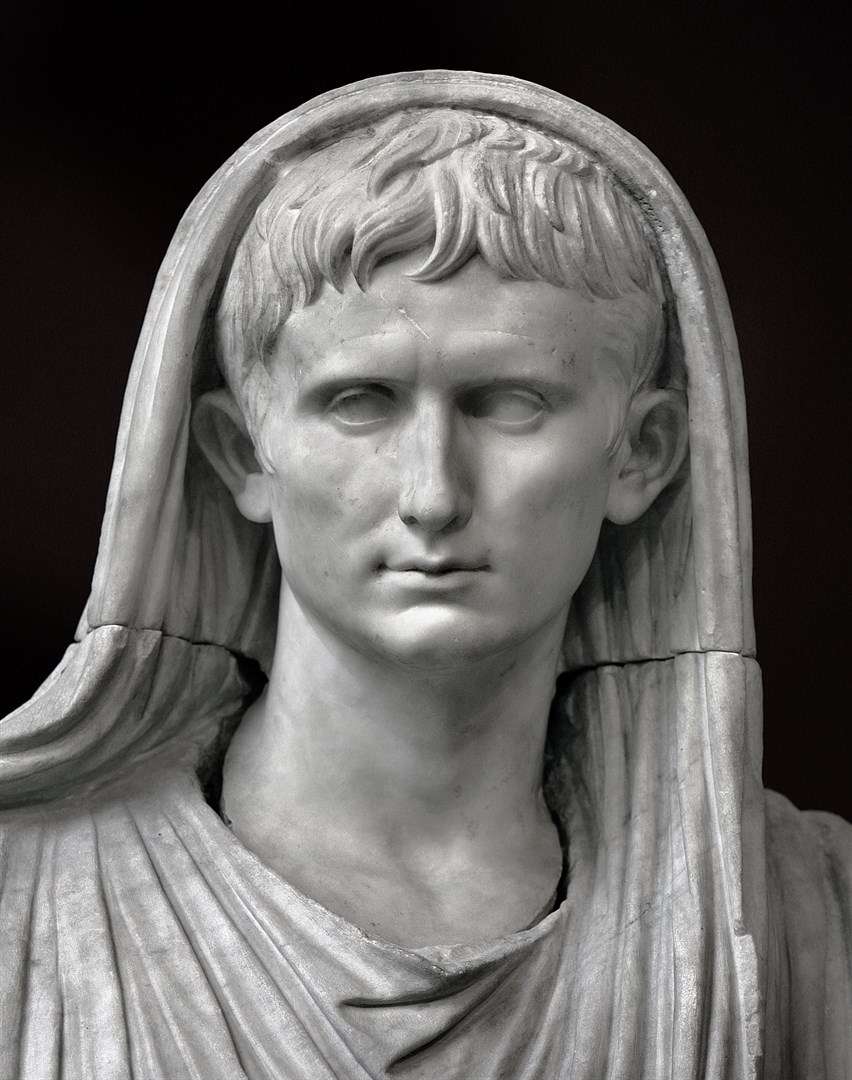
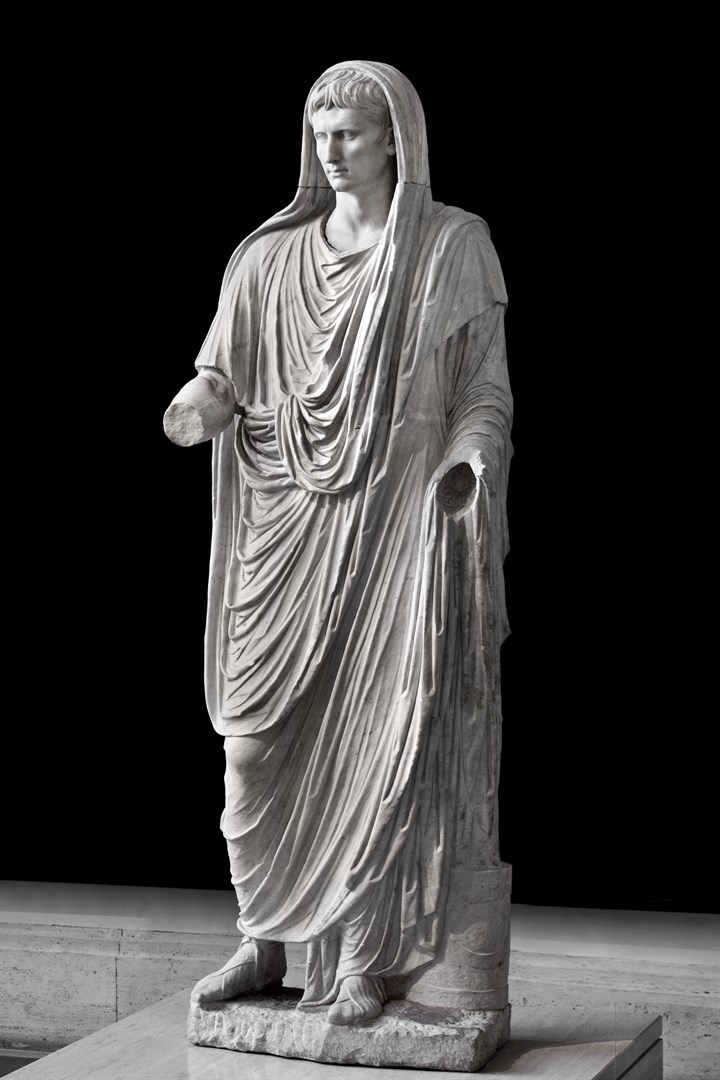
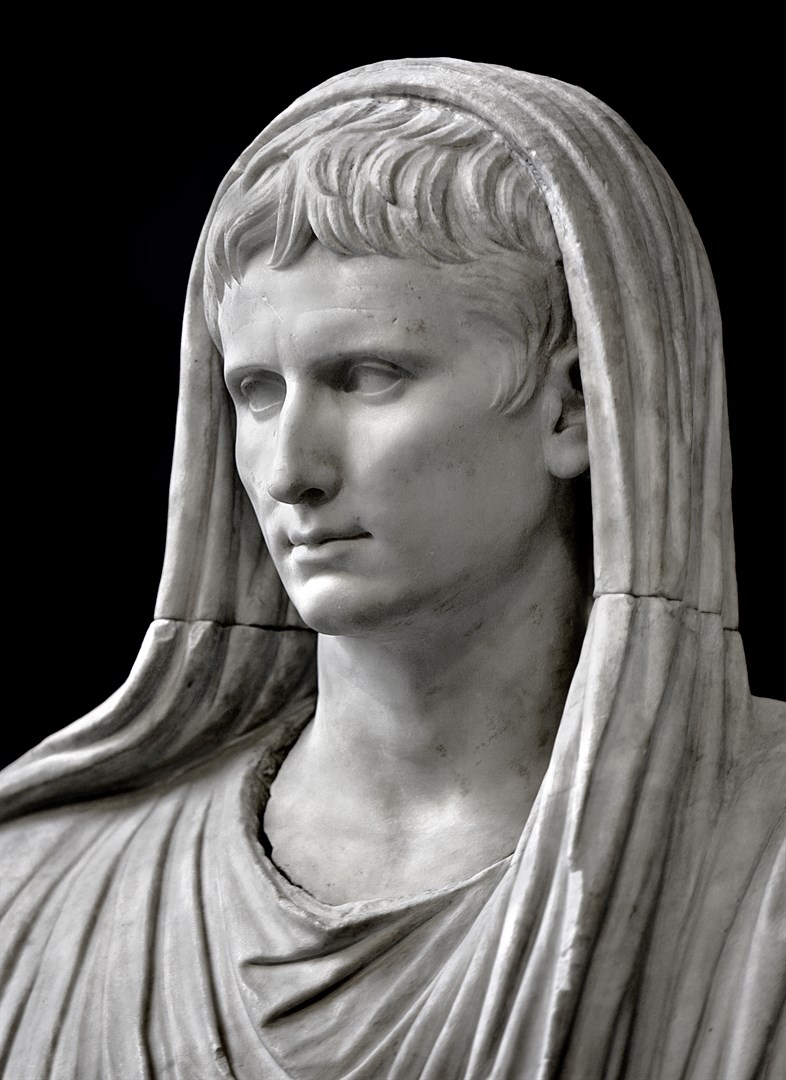
The Via Labicana Augustus was discovered in 1910 near the Via Labicana, southeast of Rome. It probably dates to 12 BCE, the year Augustus became Pontifex Maximus, chief priest of Rome.
The statue shows him veiled, performing a sacrifice, wearing the toga pulled over his head in the ritual gesture known as capite velato. Unlike the heroic, idealized Augustus of Prima Porta, this image presents him not as a godlike conqueror but as the pious restorer of Rome’s religious traditions. The face retains a calm, idealized realism – a softened continuation of late Republican verism – while the body’s smooth drapery and composed stance convey dignity and divine favor.
The piece reveals Augustus’s political strategy of merging personal authority with religious legitimacy. By showing himself as priest rather than warrior, he presented his rule as moral renewal and continuity with the Republic’s sacred traditions, rather than naked monarchy.
The Portonaccio Sarcophagus
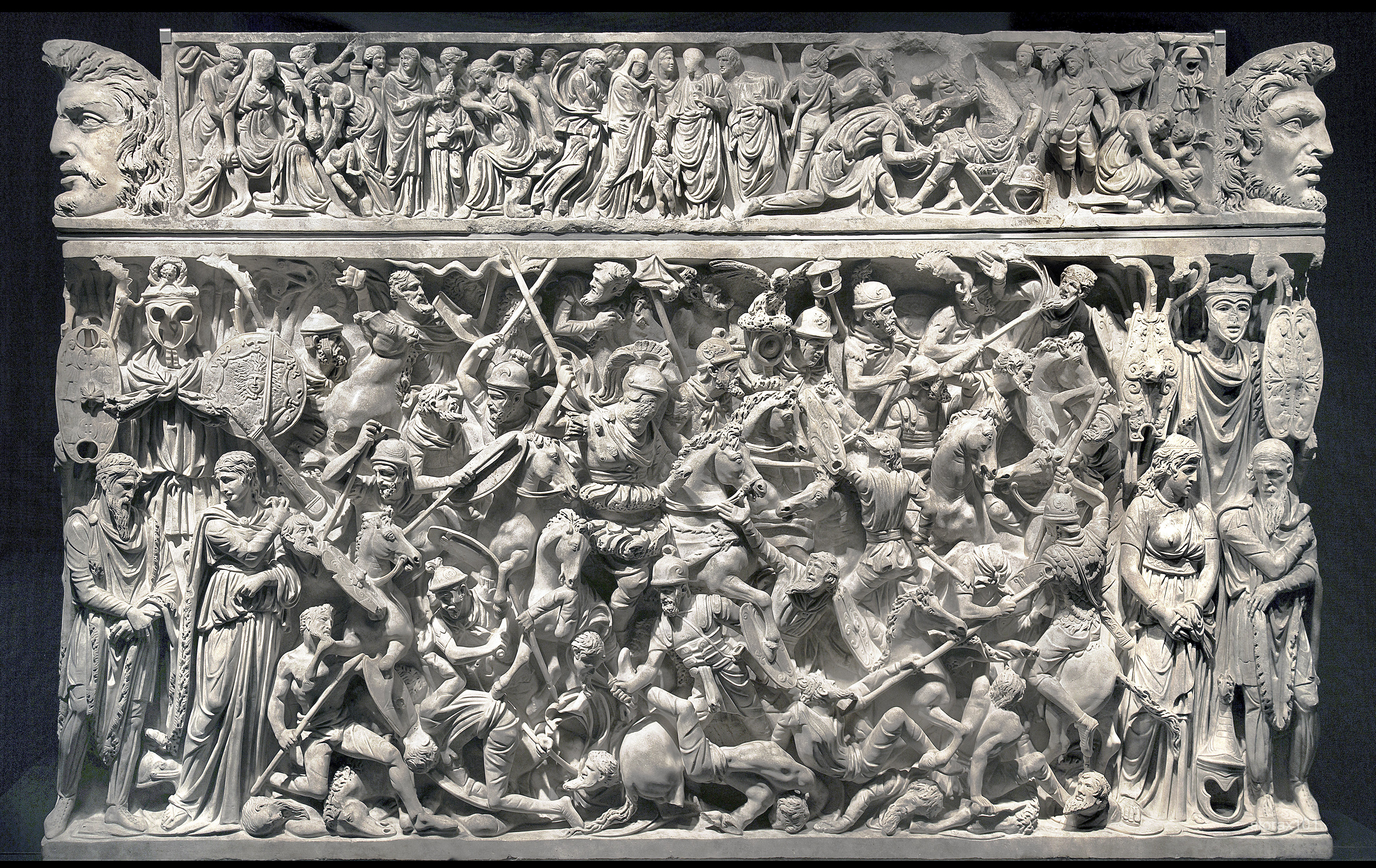
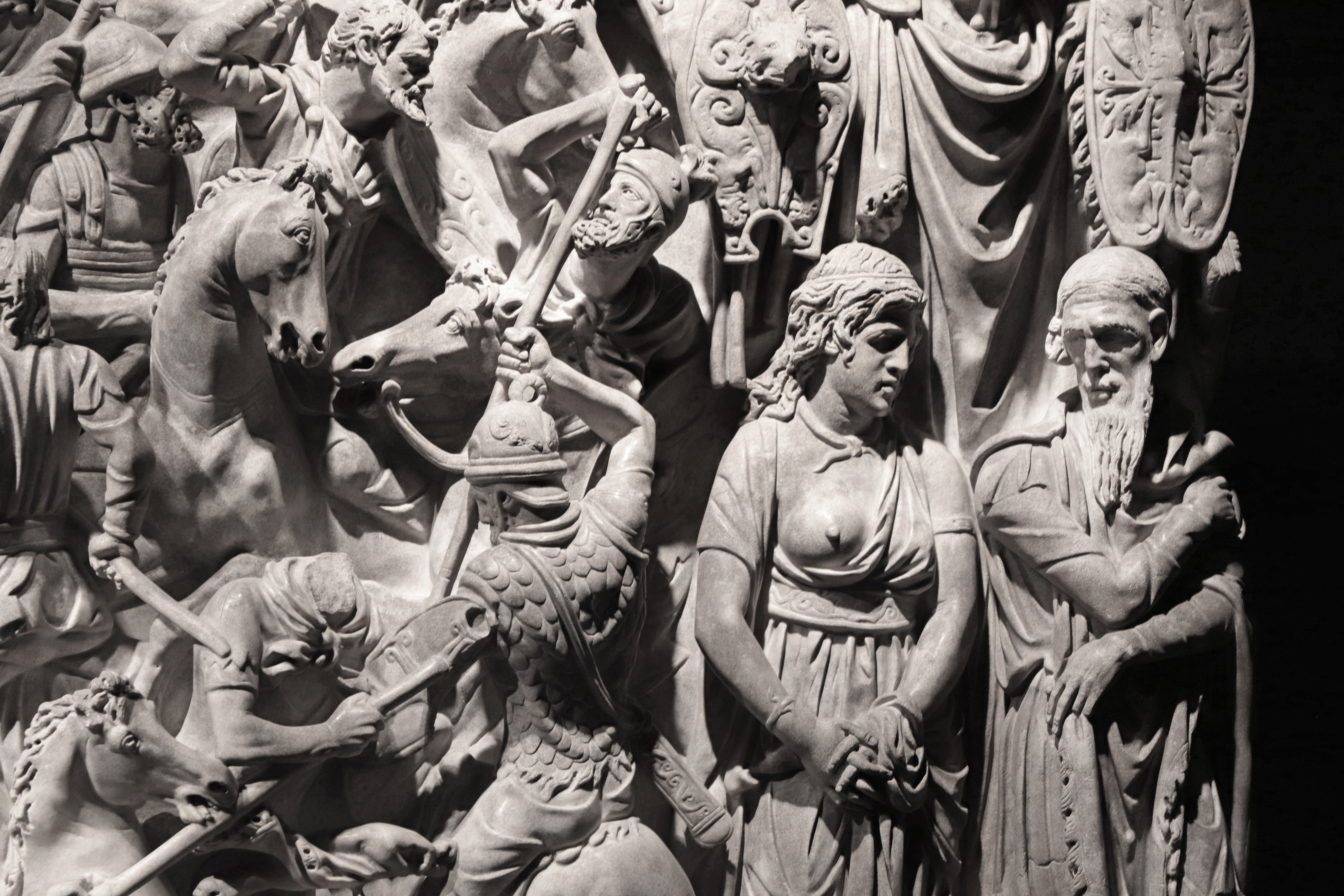
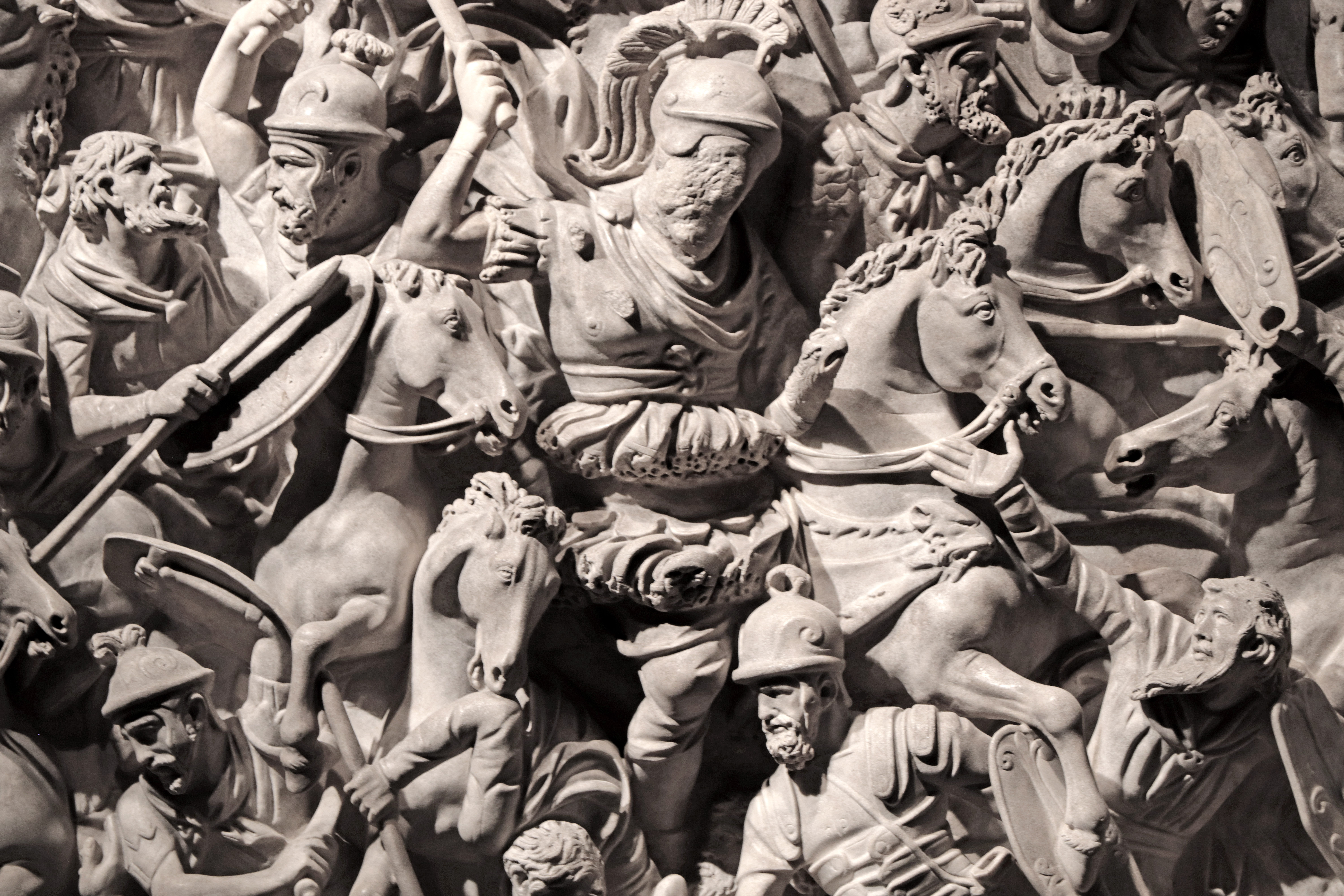
The Portonaccio Sarcophagus, carved in high relief around 180-190 CE, is one of the most elaborate Roman sarcophagi from the late second century CE. It was discovered in a tomb in 1931 near the ancient Via Tiburtina in the Portonaccio area of Rome.
The front is a dense, chaotic battle scene. Roman soldiers clash with barbarians in a tangle of limbs, shields, and horses. There’s no clear spatial depth, just a frenzied mass of combat, carved almost in relief upon relief. At the center stands the Roman general, larger and calmer than the rest, commanding order amid chaos. His face is idealized, yet individualized; his bare head suggests he may have died before receiving a victory crown.
This style marks a shift from the classical order of earlier art to the expressive, almost abstract energy of late imperial sculpture. It reflects the constant warfare and political instability of the era. It likely commemorated General Aulus Iulius Pompilius, who served under Marcus Aurelius.
Colossal Bust of Gordian III
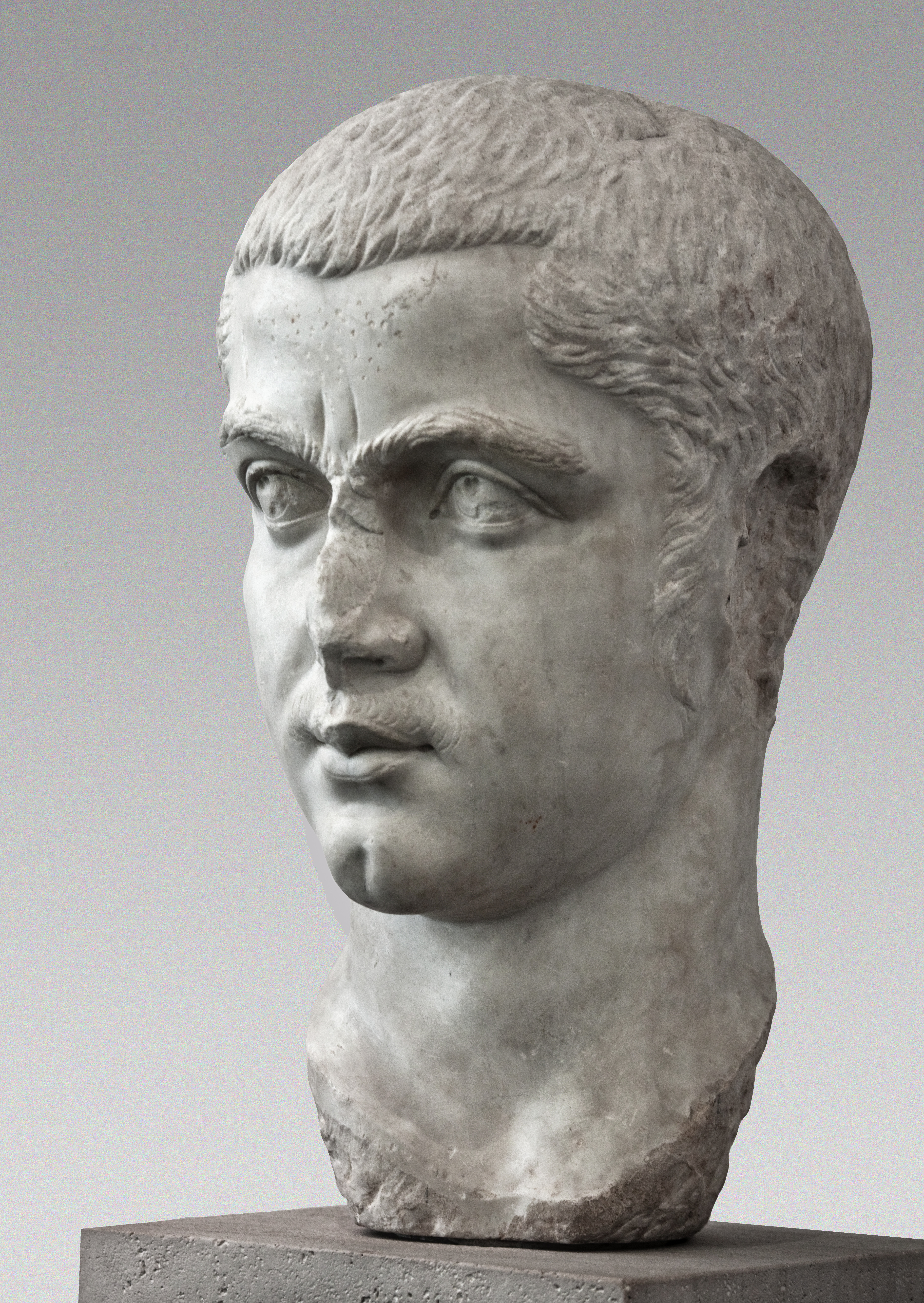
The colossal marble bust of Gordian III presents a striking – if not bizarre – image of the boy-emperor struggling to embody imperial gravitas. Created around AD 244, it reflects the tension between youthful vulnerability and the formal ideals of Roman authority.
Gordian III came to the throne after a cascade of assassinations during the “Year of the Six Emperors.” The sculptor has rendered him with the smooth, unlined face of an adolescent, but framed by the austere, hieratic composition typical of imperial portraiture – short military haircut, heavy-lidded eyes gazing slightly upward, and a thick neck suggesting strength he did could not have possessed. The result is almost tragic: the image insists on imperial permanence while hinting at fragility.
Stylistically, the bust belongs to the late Severan, early soldier-emperor phase, where portraiture shifts from the individualized realism of the Antonines to a more schematic, abstract treatment of features. The deep drilling of the hair and the intense, static expression anticipate the hard linearity of third-century imperial art.
The Charioteers
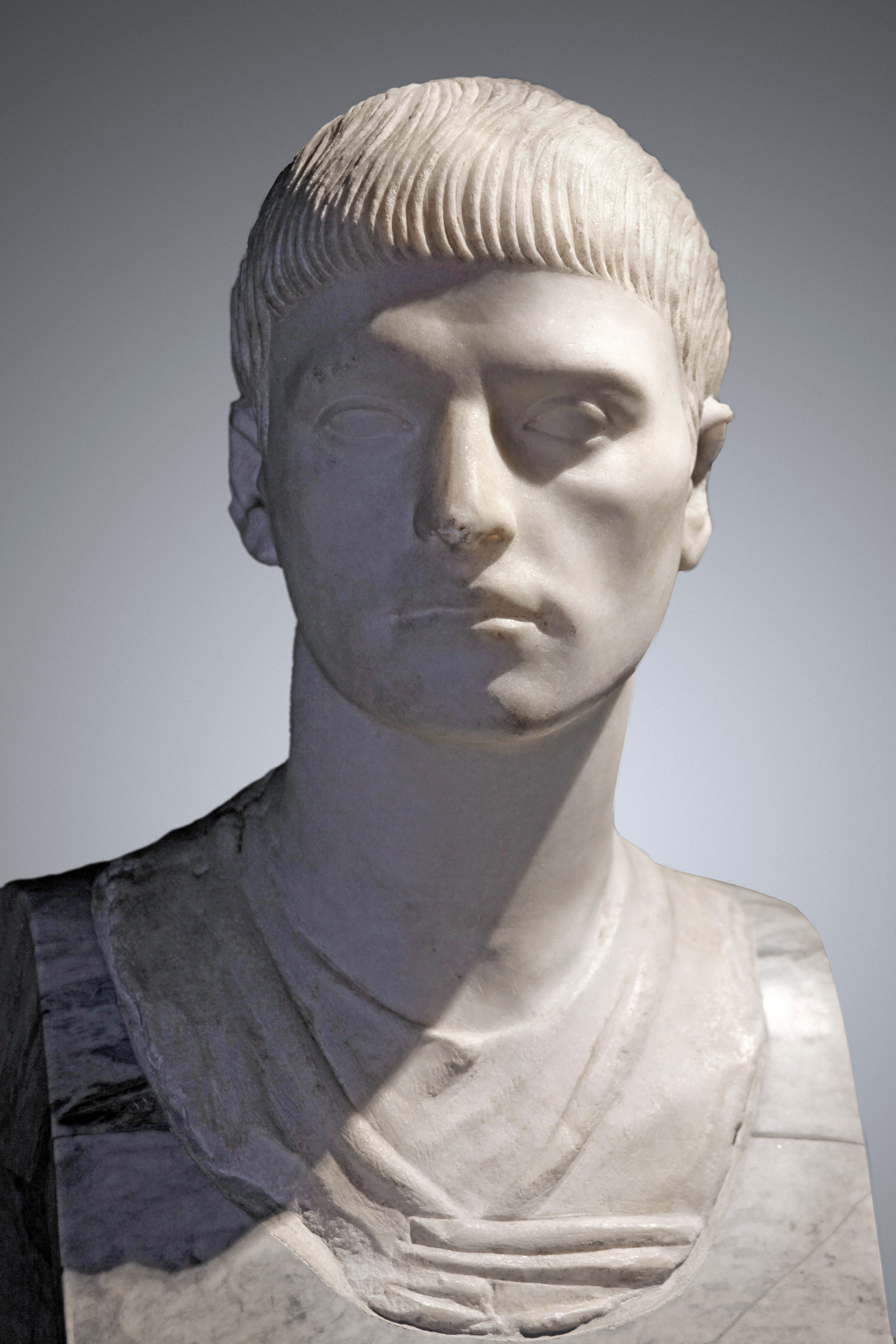
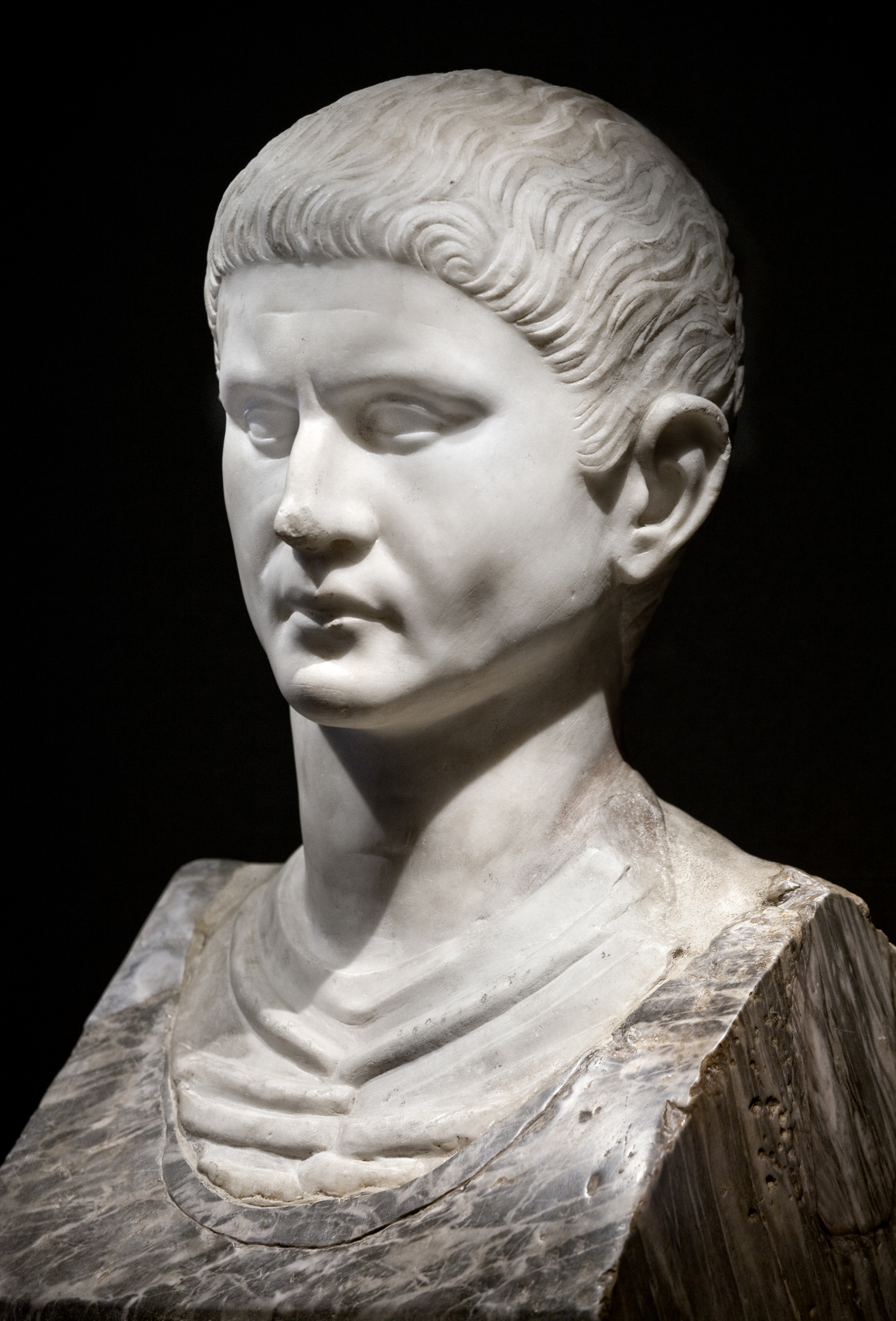
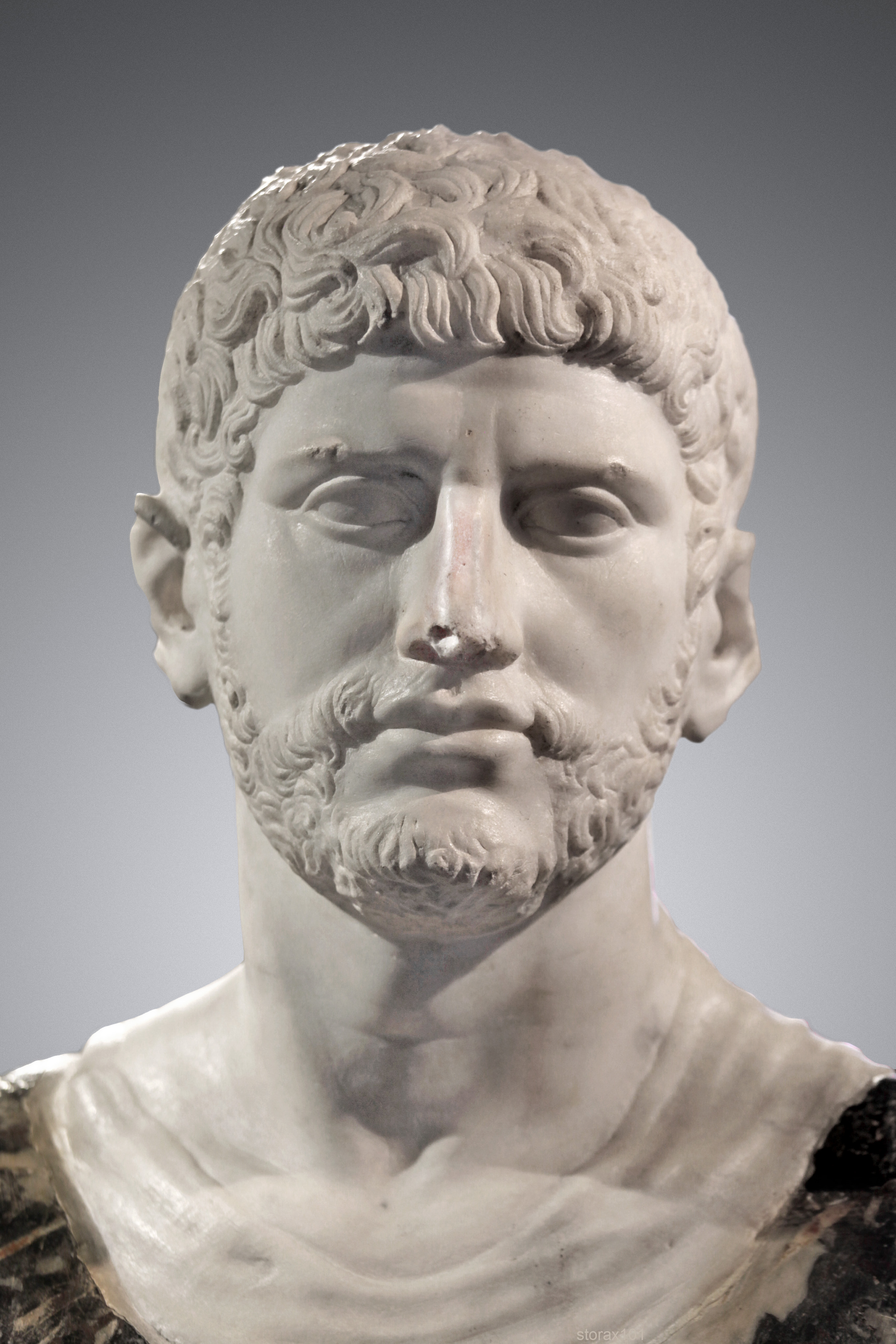
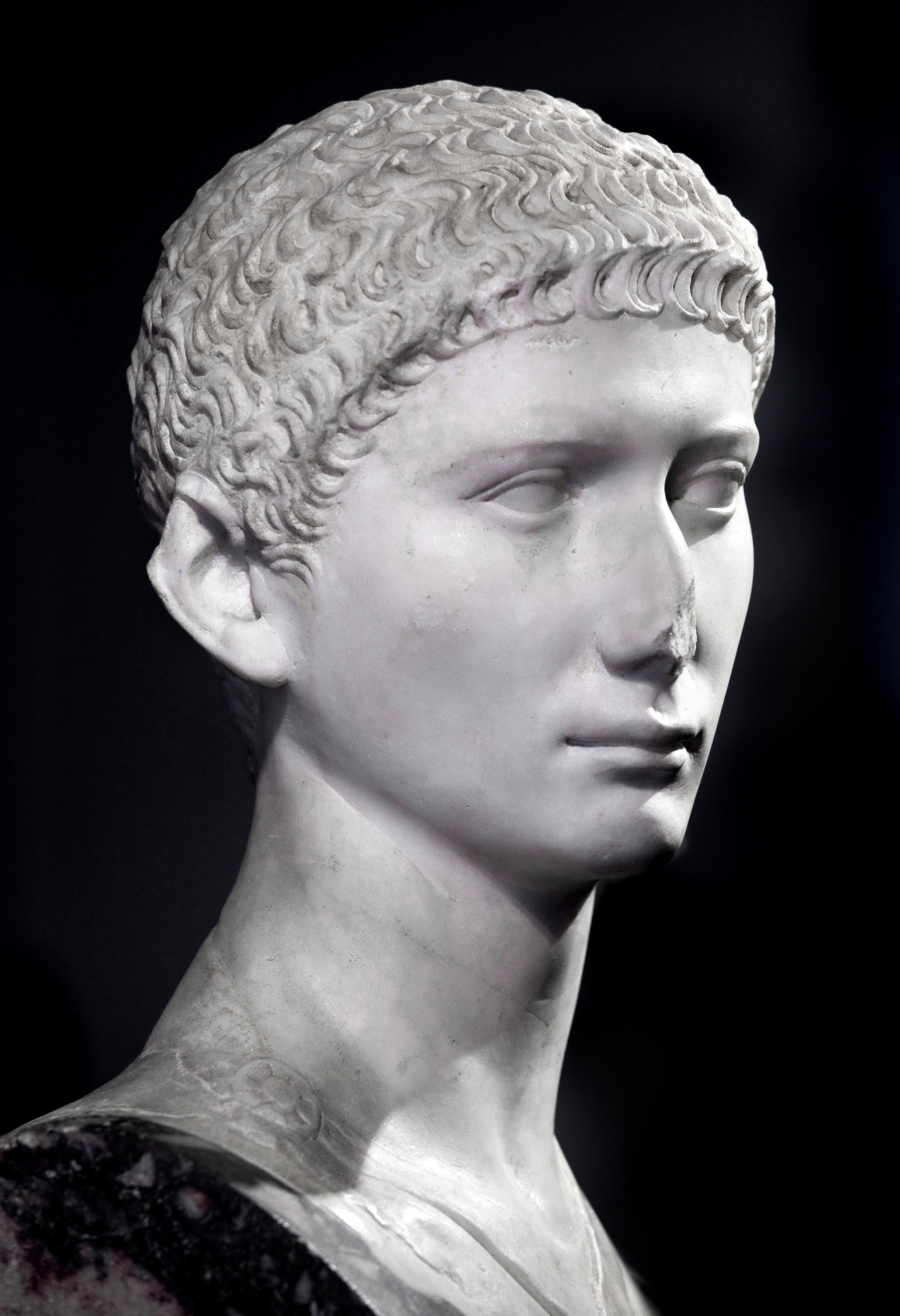
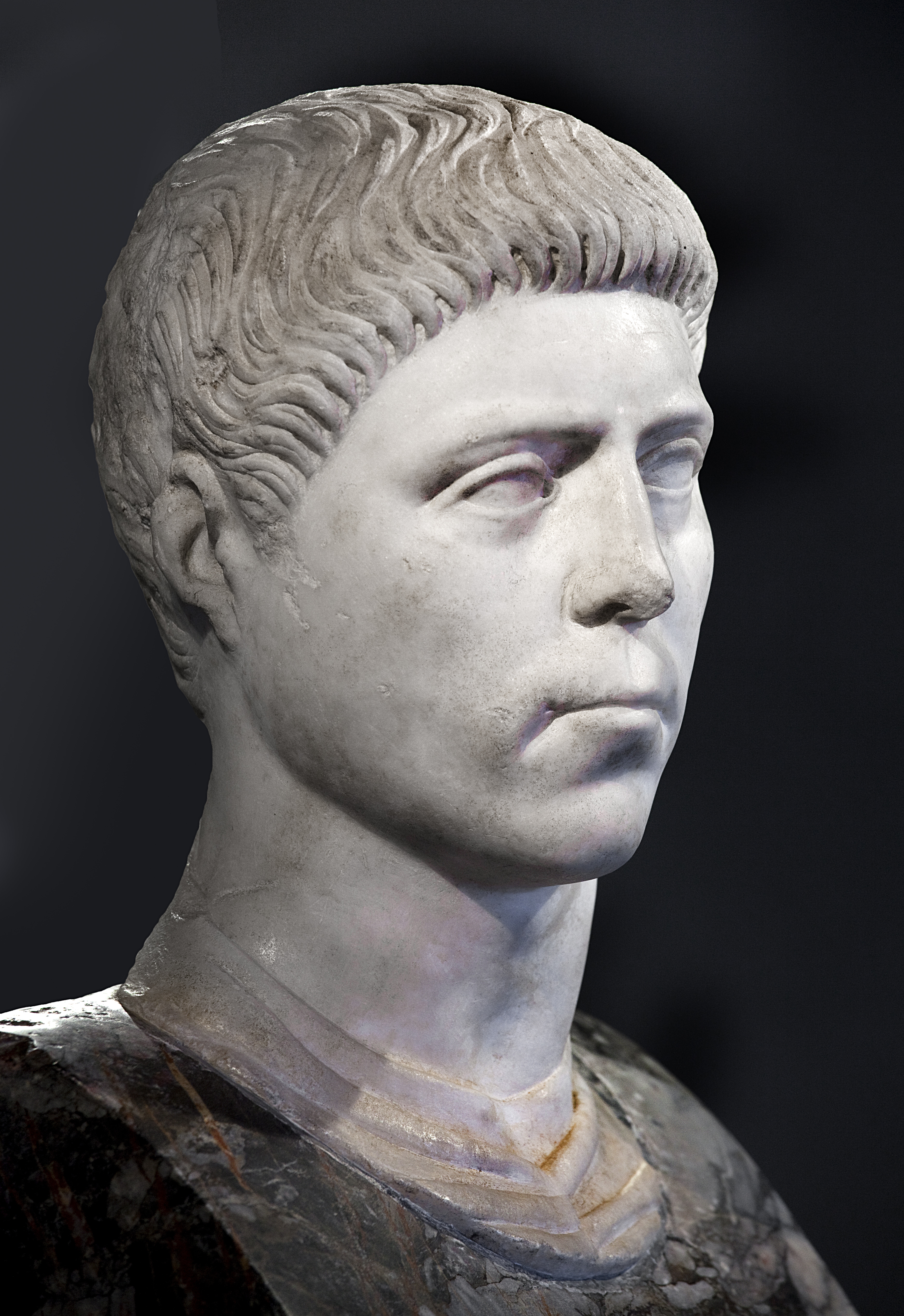
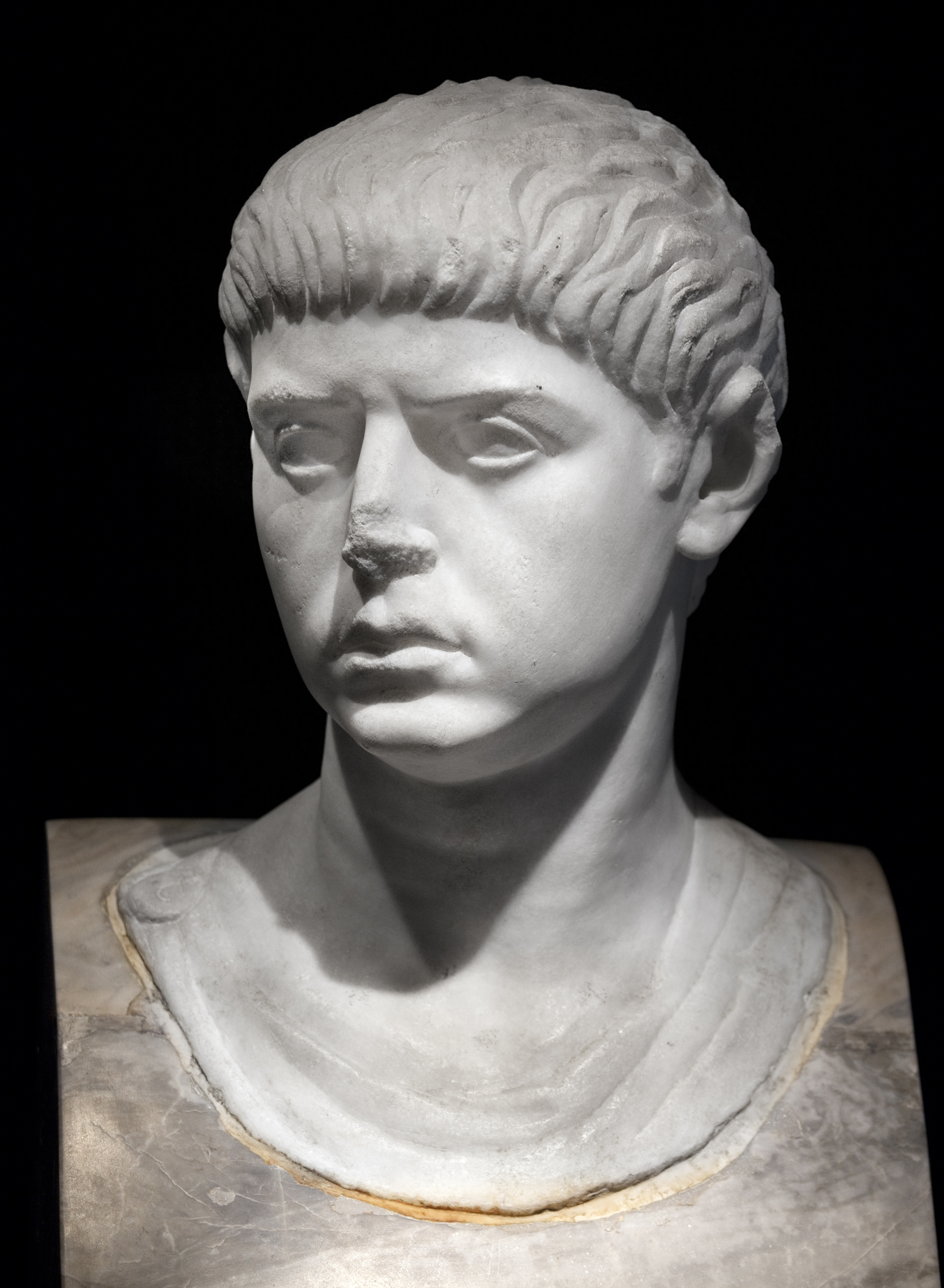
The charioteer portrait busts date from the early fourth century CE and depict professional aurigae – chariot racers who were the sports celebrities of late imperial Rome.
These busts show men with distinctive attributes of their trade: short, tightly curled hair, intense gazes, and tunics bound with leather straps across the chest, used to secure their protective harnesses during races. The faces are individualized, confident, and slightly idealized, conveying both athletic vigor and the proud self-awareness of public fame.
They likely commemorated successful drivers from the great Roman circuses, perhaps freedmen who had risen to wealth and status through racing. The style, with its crisp carving and alert expression, reflects late Roman portraiture’s mix of realism and formal abstraction – an art no longer concerned with classical balance, but with projecting charisma and presence.
Republicans
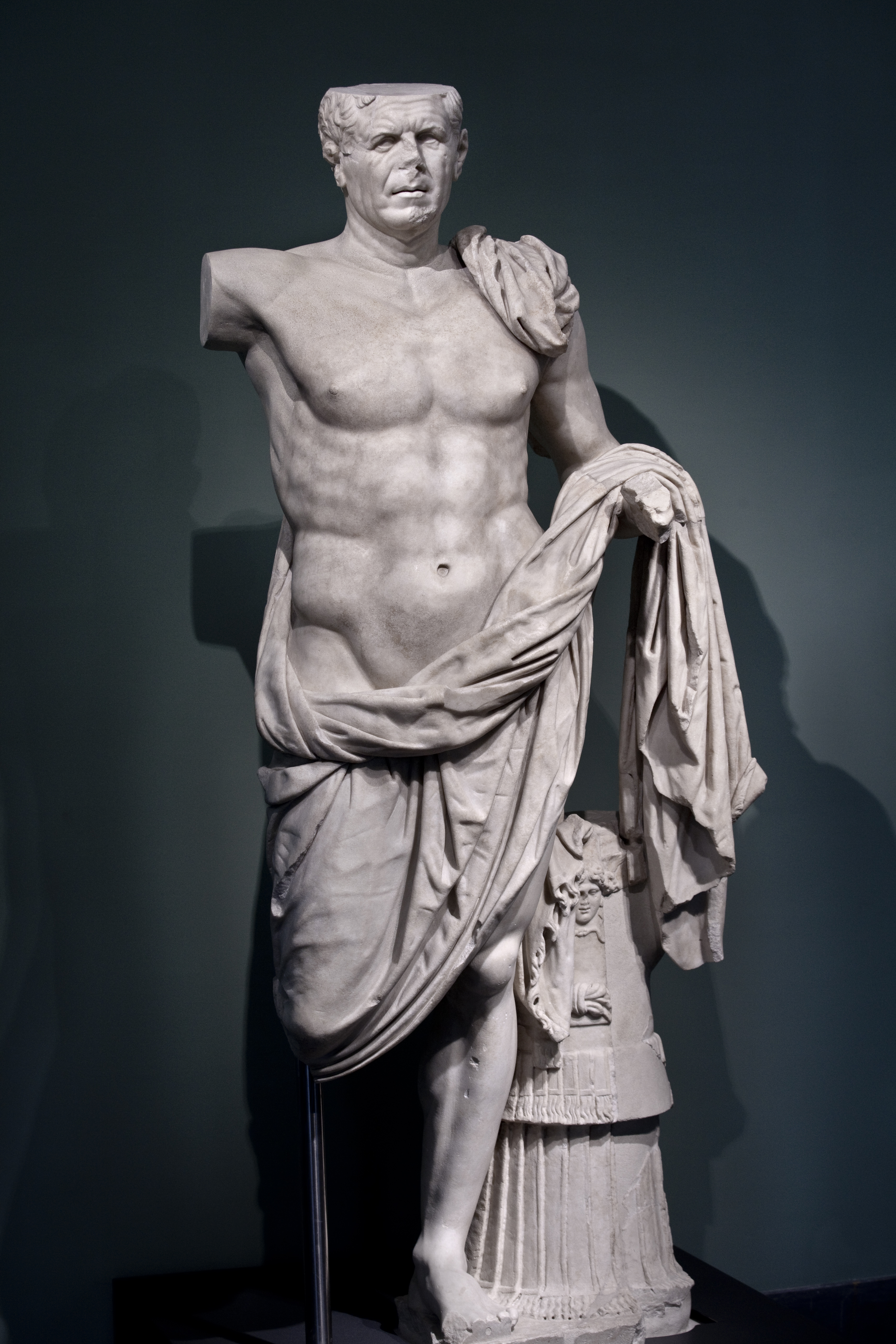
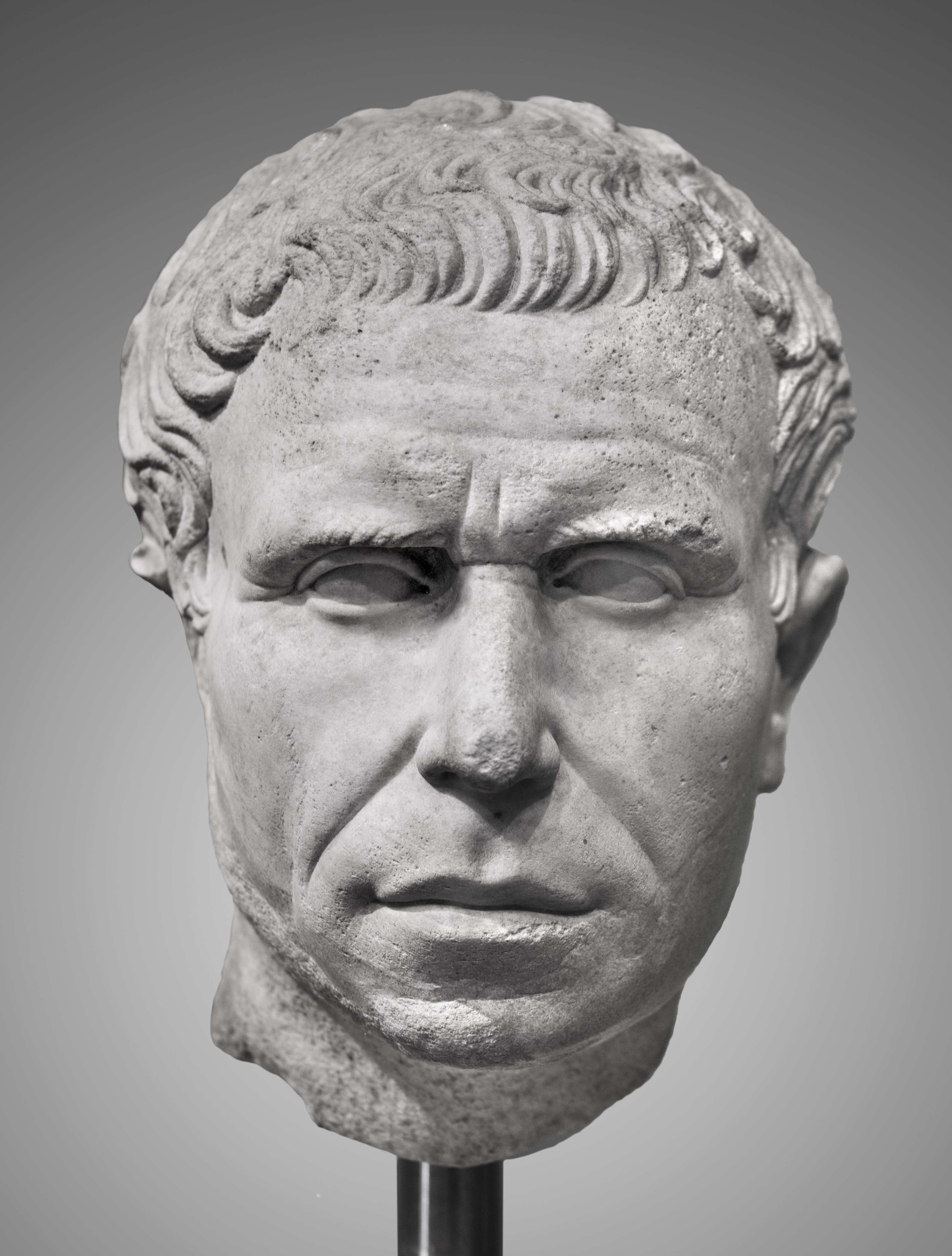
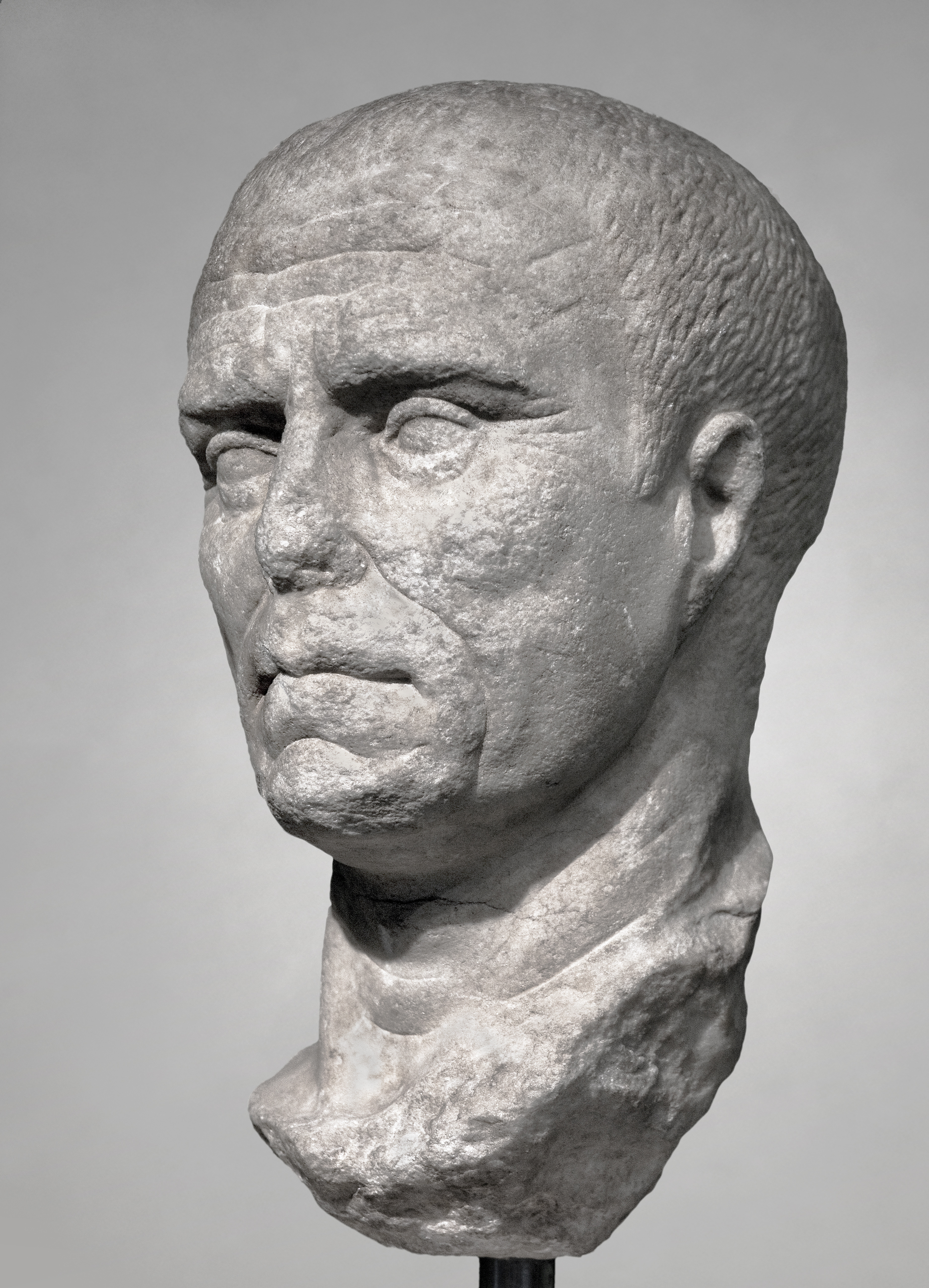
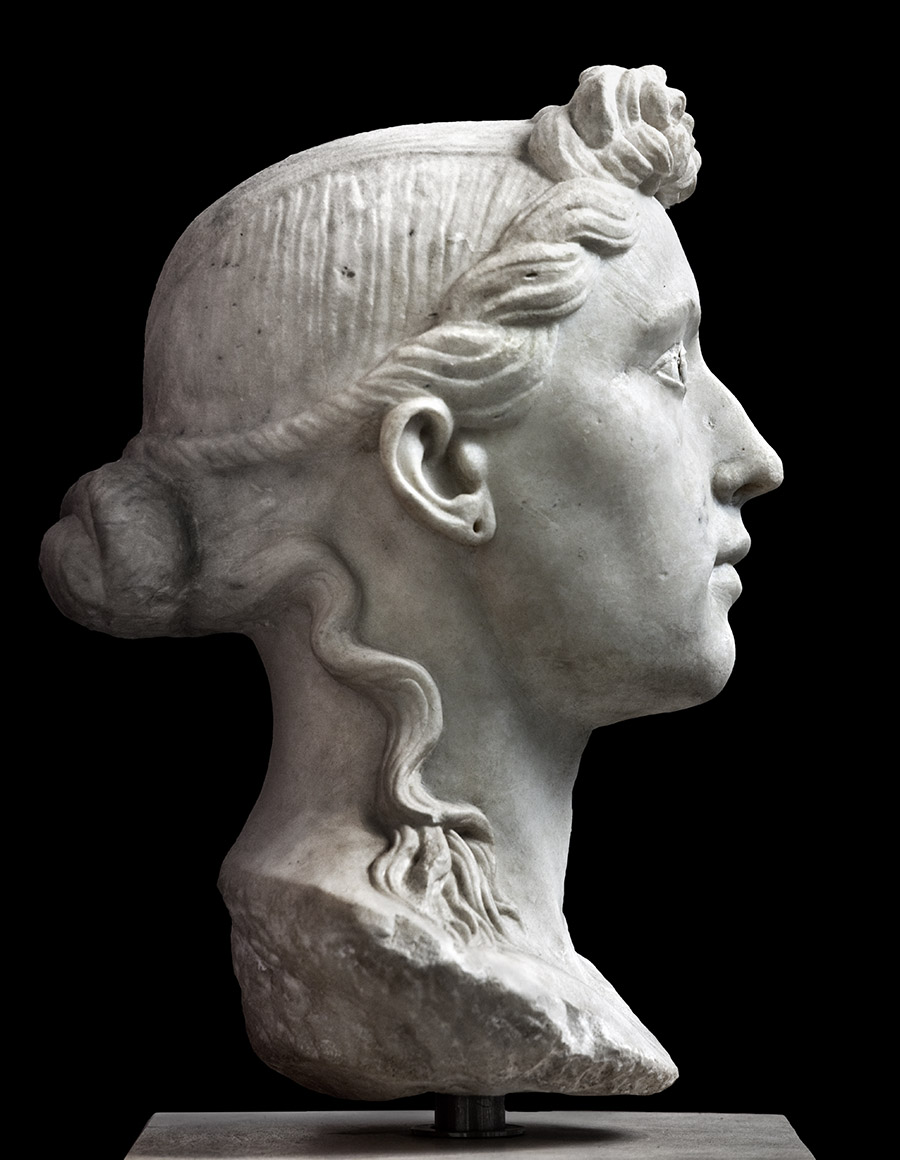
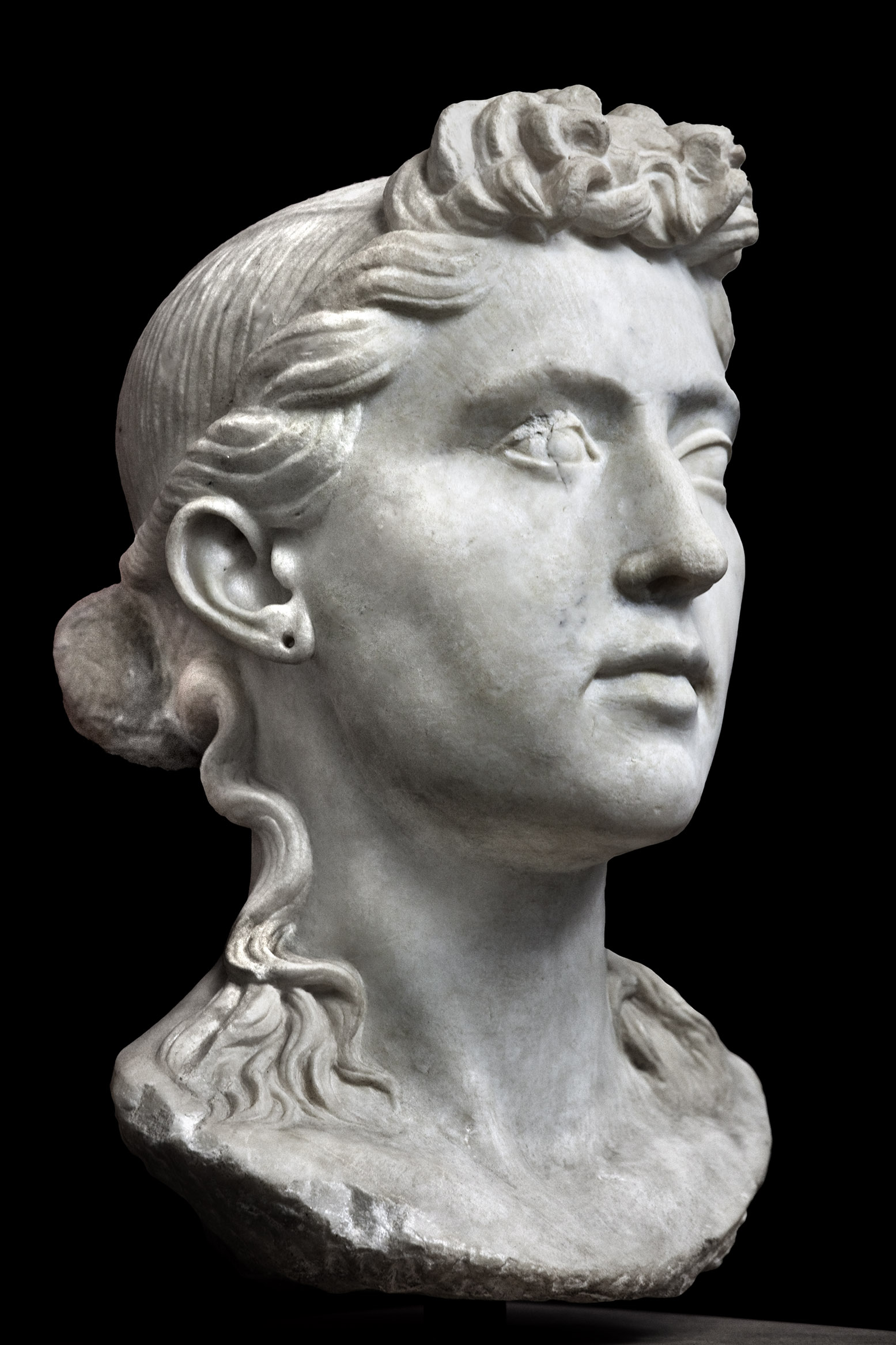
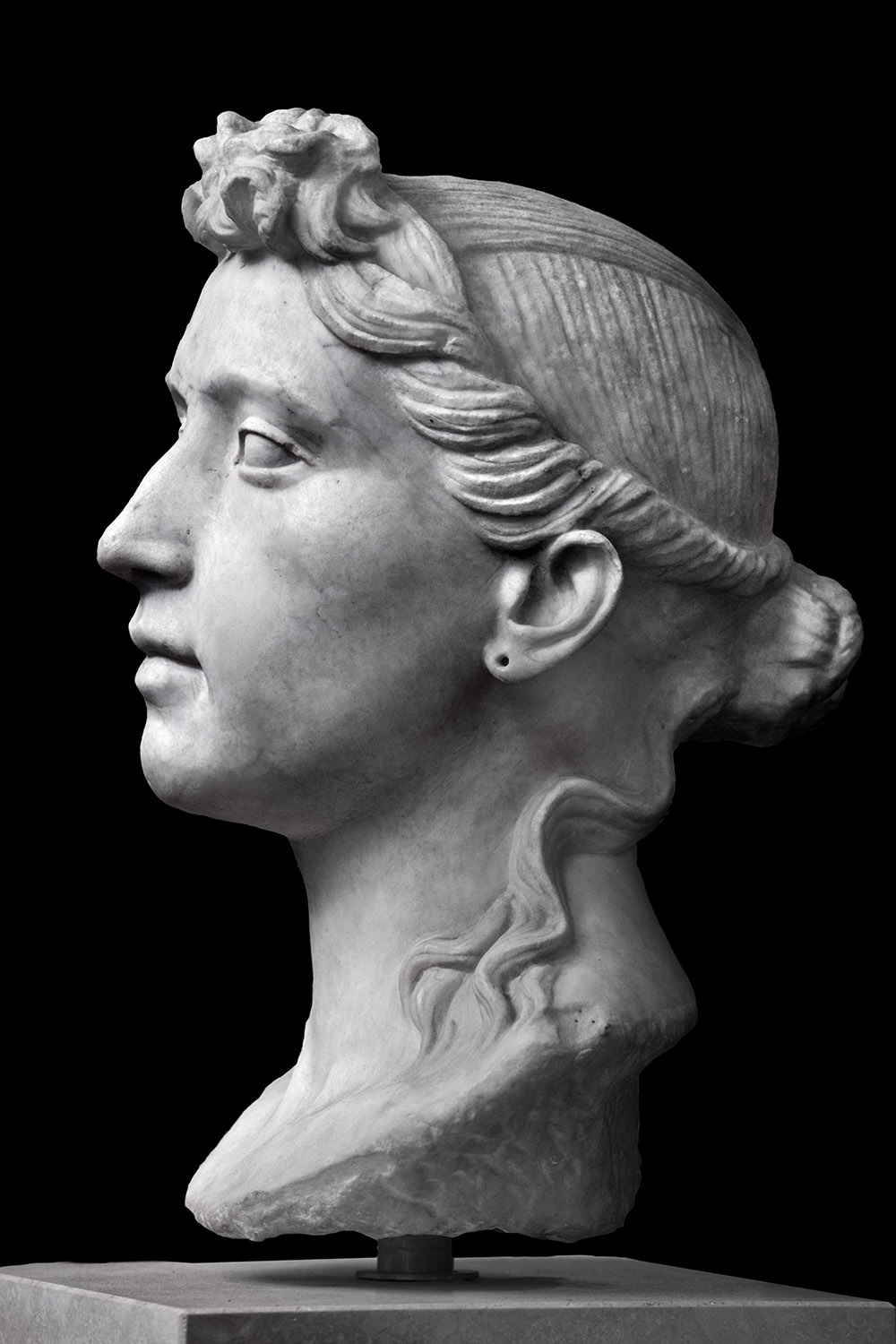
The so-called General from Tivoli (Terme inv. 106513) was found beneath the Temple of Hercules in 1925. Dating to about 70 – 90 BC, he was probably a lieutenant of Sulla. The late-Republican portrait busts (Inv. 112301 and 114759) are famous for their verism – a style emphasizing unidealized realism. Rather than the smooth, youthful perfection of Greek sculpture, Roman patrons in this period wanted faces that looked weathered and unmistakably mortal. Eyes were often sharply undercut and hollowed to give depth and intensity. Cheeks could appear gaunt, lips thin and compressed, necks stringy. The overall effect was one of disciplined austerity and civic virtue – a face hardened by service to the Republic.
The young woman’s elaborate hairstyle (inv. 125591, just above) is a social signal, suggesting she belonged to a wealthy family or wanted to look the part. The combination of a classicizing ideal face with a detailed fashionable hairstyle suggests a woman who wants to present both grace and her social status. That blend of realism and idealization is typical of the late republic.
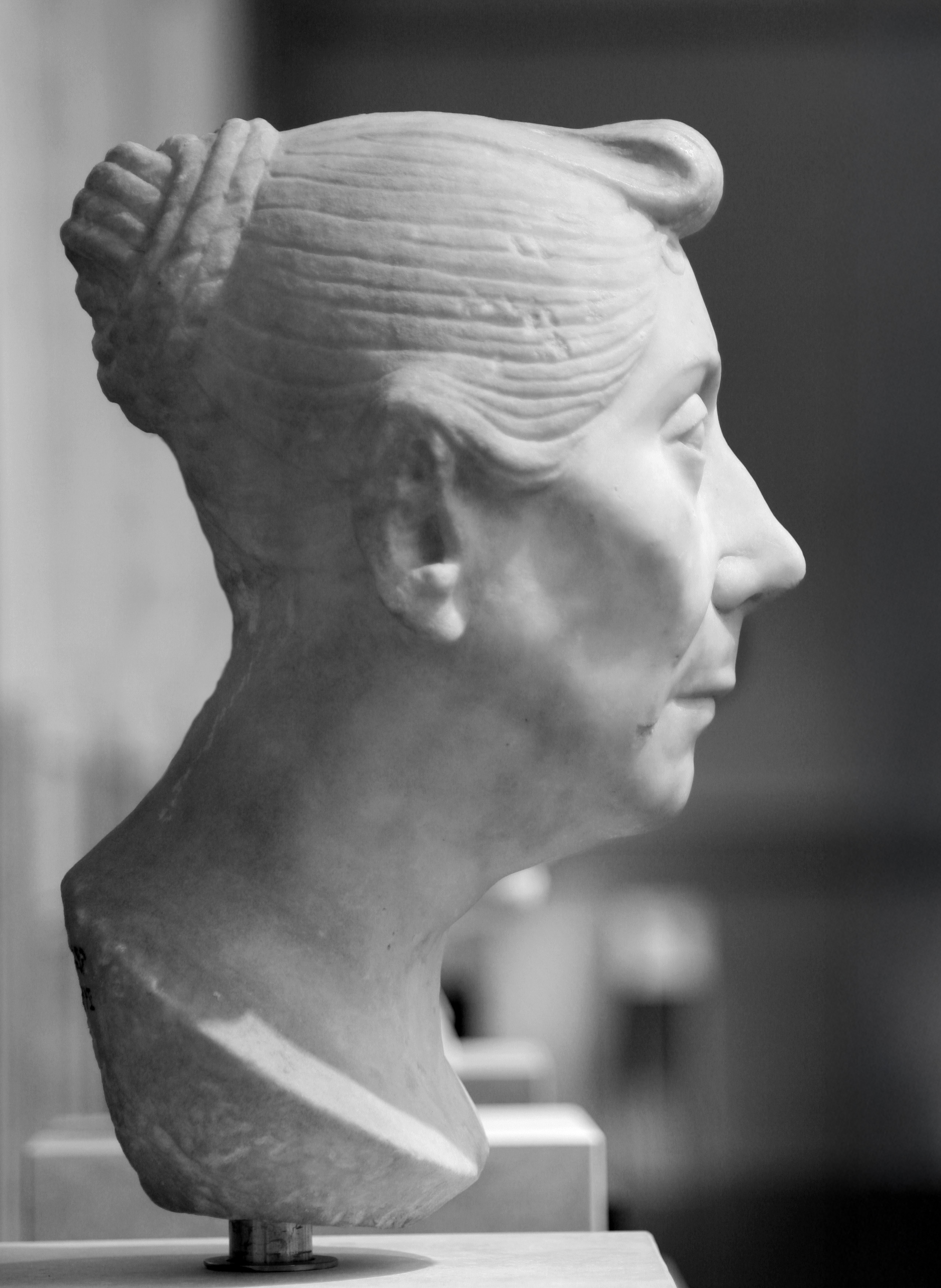
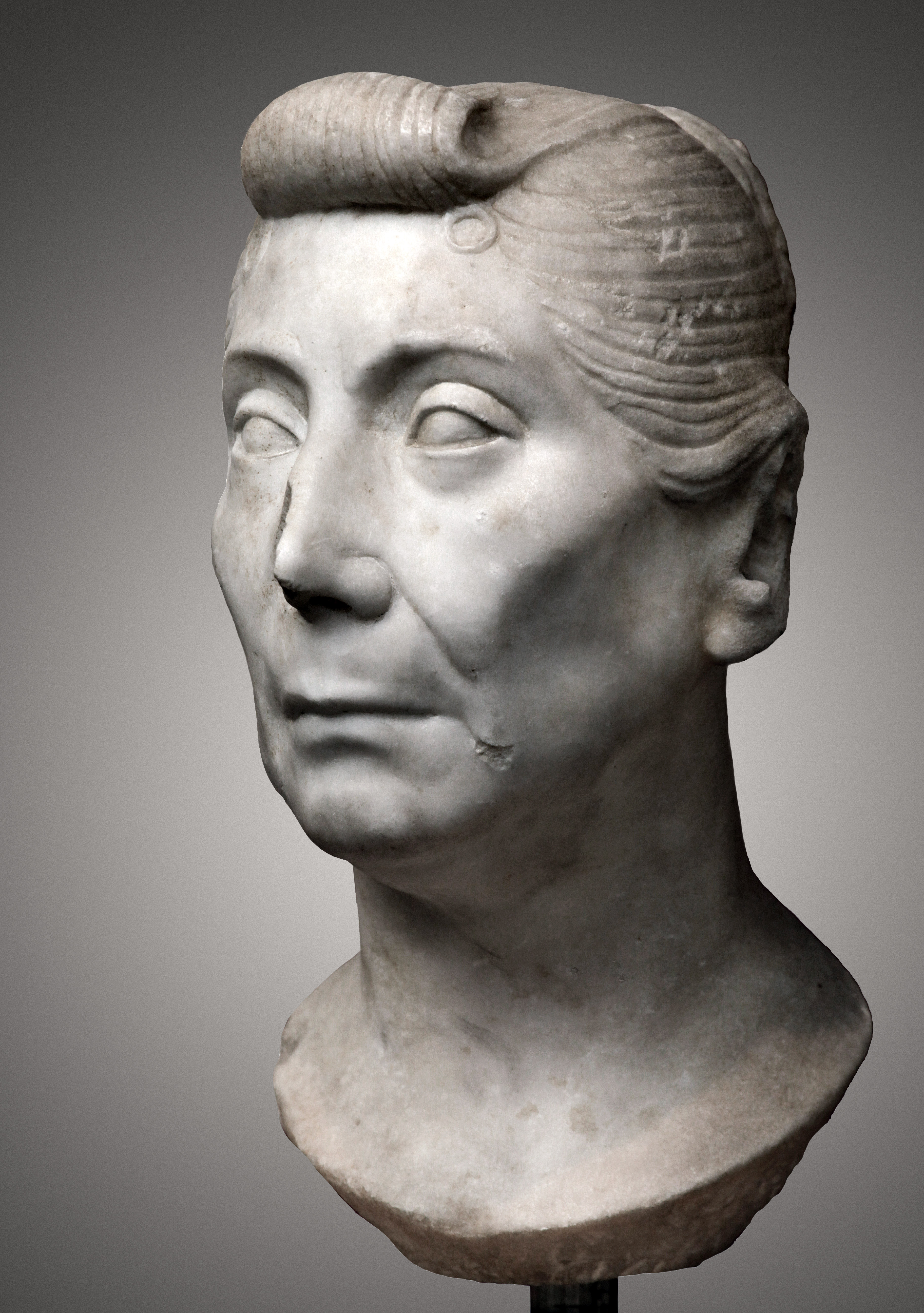
This was more selective exaggeration than realism. These men were advertising moral qualities: gravitas, virtus, fides. By the time of Caesar, you see a blending of this verism with a hint of idealization, anticipating the smooth, godlike Augustan portraits to come.
Speaking of late Republicans, this marble portrait of an elderly woman with her hair in a bun brings to mind another later Republican – Ronald Reagan.
The Sarcophagus of Marcus Claudianus
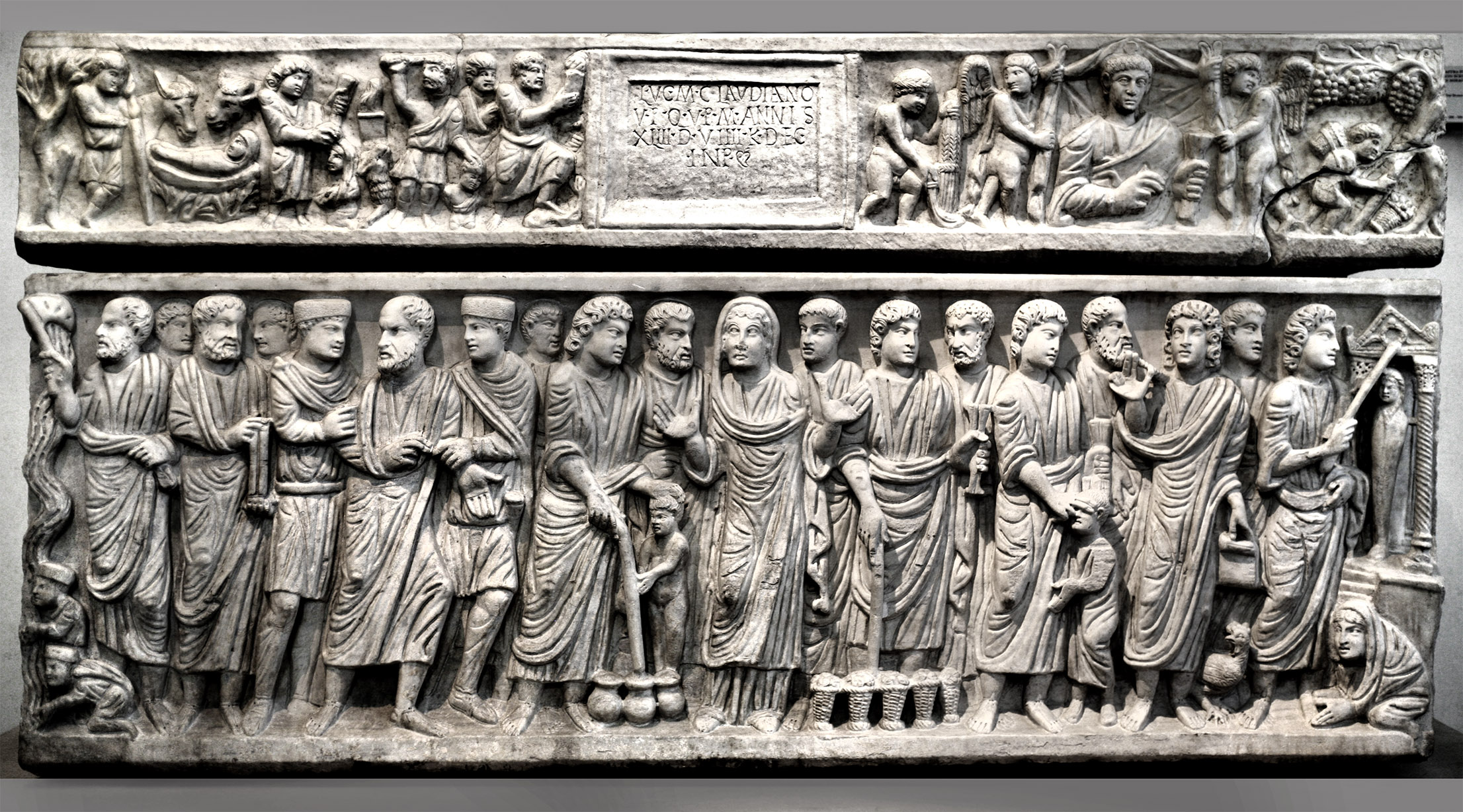
The continuous-frieze sarcophagus of Marcus Claudianus shows New Testament scenes on its front; and New and Old Testament scenes on its lid, along with pagan elements. The grape harvest imagery on the lid is ambiguous; it appears on pagan and Christian sarcophagi with identical elements. From left to right on the lid: Jesus nativity scene, sacrifice of Isaac, inscription naming the deceased, image of the deceased as scholar, grape harvest scene.
Carvings on the front of the sarcophagus: Arrest of Peter (Acts 12:3), miracle of water and wine (with possible baptism reference, John 2:1), orant figure, miracle of loaves (Mark 6:30–44, Matt 14:13–21, Luke 9:10–17, John 6:1–14), healing a man born blind (John 9:1), prediction of Peter’s denial (Mark 14:27–31, Matt 26:30–35, Luke 22:31–34, John 13:36–38), resurrection of Lazarus (John 11:1), and supplication of Lazarus’s sister (John 11:32).
The scenes on this sarcophagus include several apparent departures from scriptural miracle stories. Jesus appears in three places as magician, using a wand to perform miracles. He stands above five baskets of bread, a number consistent with most sarcophagi of its age but inconsistent with either of the loaves-and-fish scriptural pairs, where the remaining baskets number seven and twelve (Matthew 4:17, Matthew 15:34). This could have been a choice made by the sculptor for purely artistic reasons. The orant figure in the center is similar to those seen on earlier gravestones, and does not seem to be a scriptural reference. This posture is similar to that of the three youths in the furnace and the common sarcophagus scene of Jesus passing the new law to Peter and Paul (non-scriptural).
The Marcus Claudianus sarcophagus stands out for the prominence of Johannine-only imagery – Lazarus, the man born blind, Cana – scenes that are either uniquely Johannine or given distinct theological weight in that gospel. I don’t think you’ll hear this from anyone but me. I love this sarc for this reason. Compared to the sarcophagi from the Vatican necropolis, whose iconography often centers on synoptic or composite miracle cycles (feeding, healing, Jonah, Daniel, Good Shepherd), this sarc shows a notable shift toward Christological revelation rather than simple miracle narrative.
That shift says to me: mid-4th-century context, when Johannine motifs had become the backbone of Christian funerary theology. By that time, art was turning from generic symbols of deliverance to narratives that expressed Christ as Logos and life-giver, echoing themes prominent in the theological debates of the post-Nicene generation. The Lazarus scene, for example, takes on explicit resurrection connotations, and the healing of the blind man becomes an emblem of illumination through baptism – precisely the kind of allegorical reading developed in the decades after Constantine.
Earlier dating has been given by some scholars. Bunk. That impulse reflects anxiety over the scarcity of securely dated pre-Constantinian Christian monuments in Rome. Stylistically and iconographically, the Claudianus piece sits more naturally with sarcophagi of the 340s-360s: compressed compositions, monumental heads, frontal orant, and a selective, theological rather than narrative use of miracle scenes. And that’s probably more than you wanted to know about a topic I find fascinating because of what it says about modern Catholicism.
Bronze Athletes
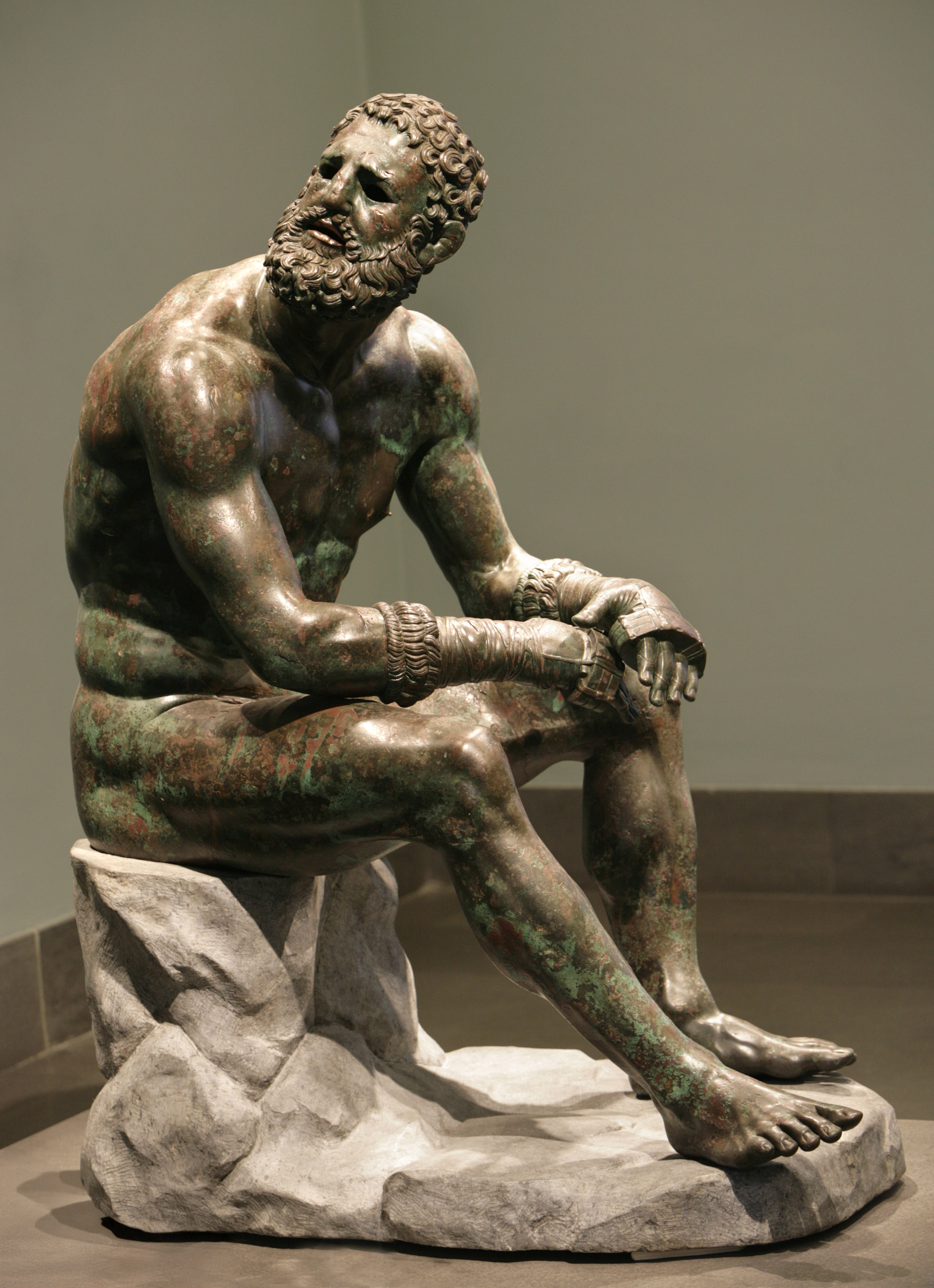
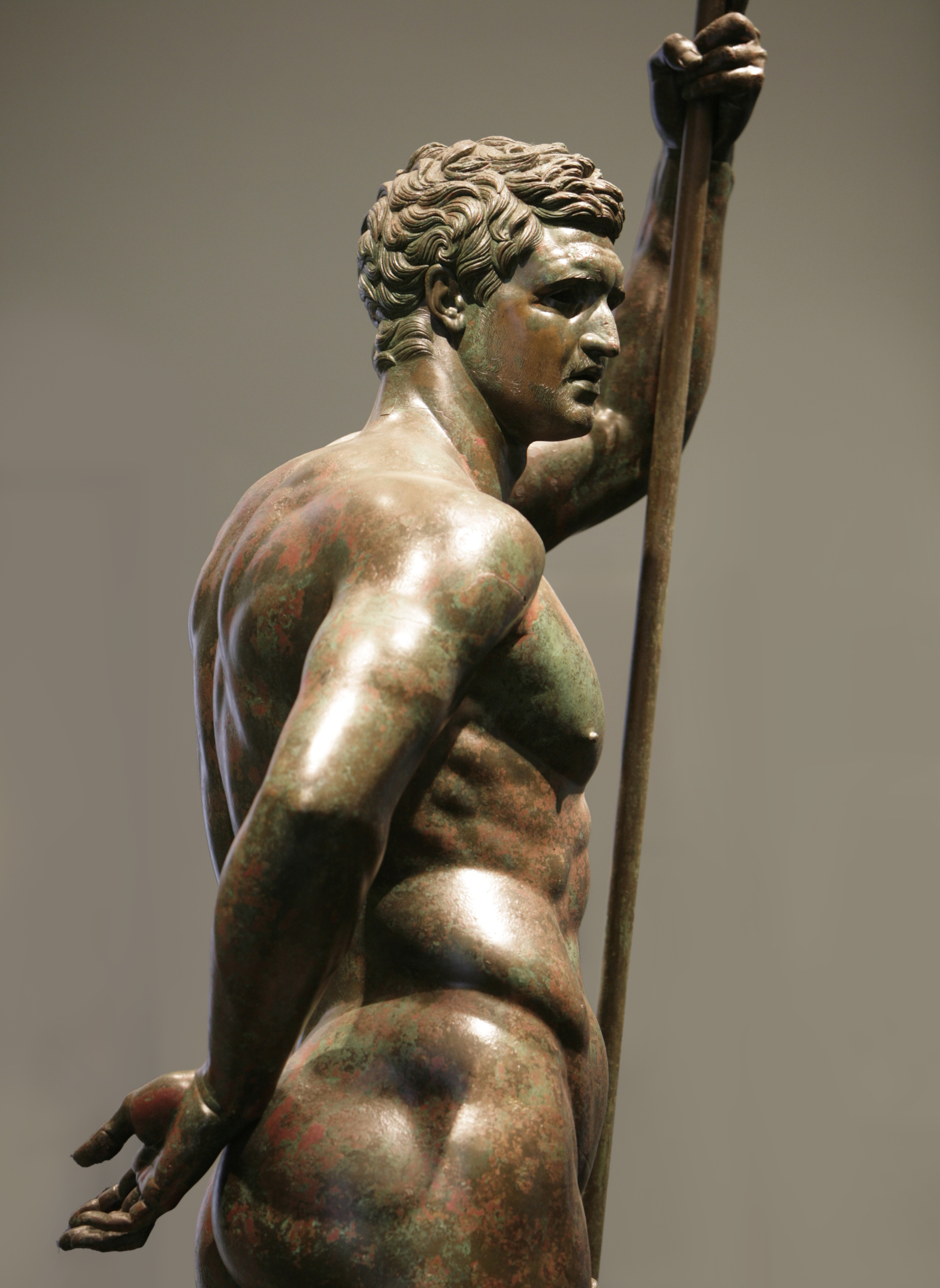
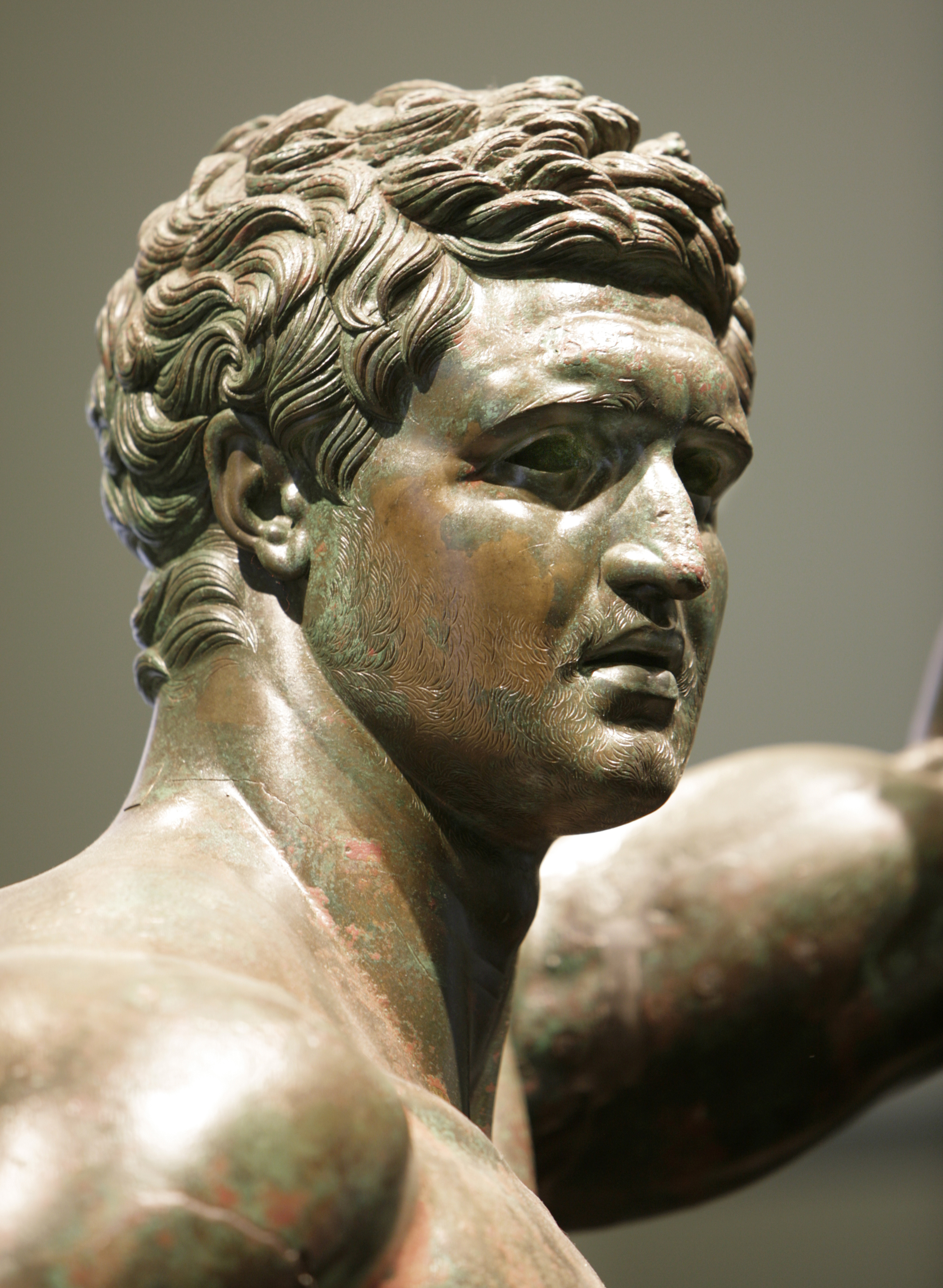
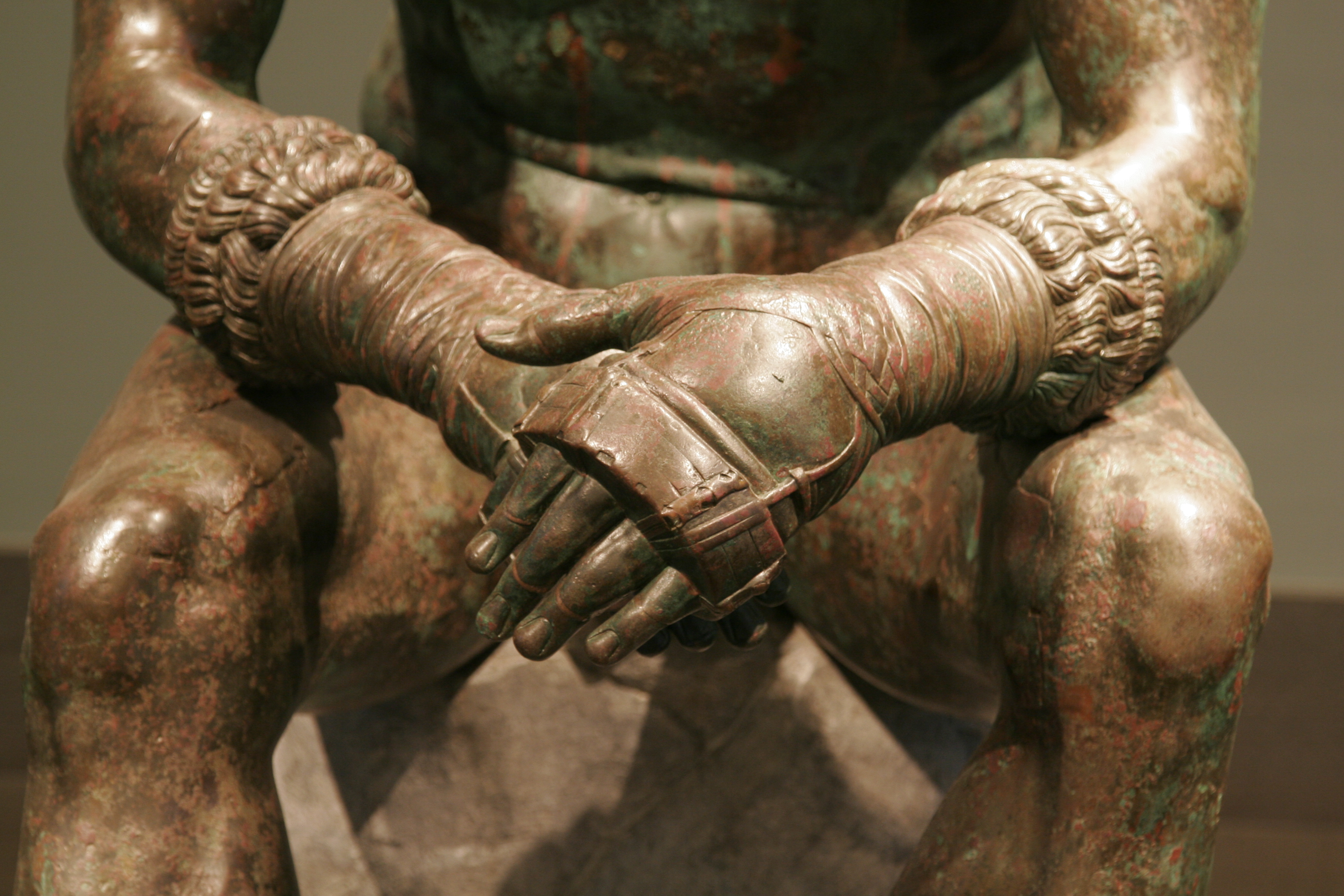
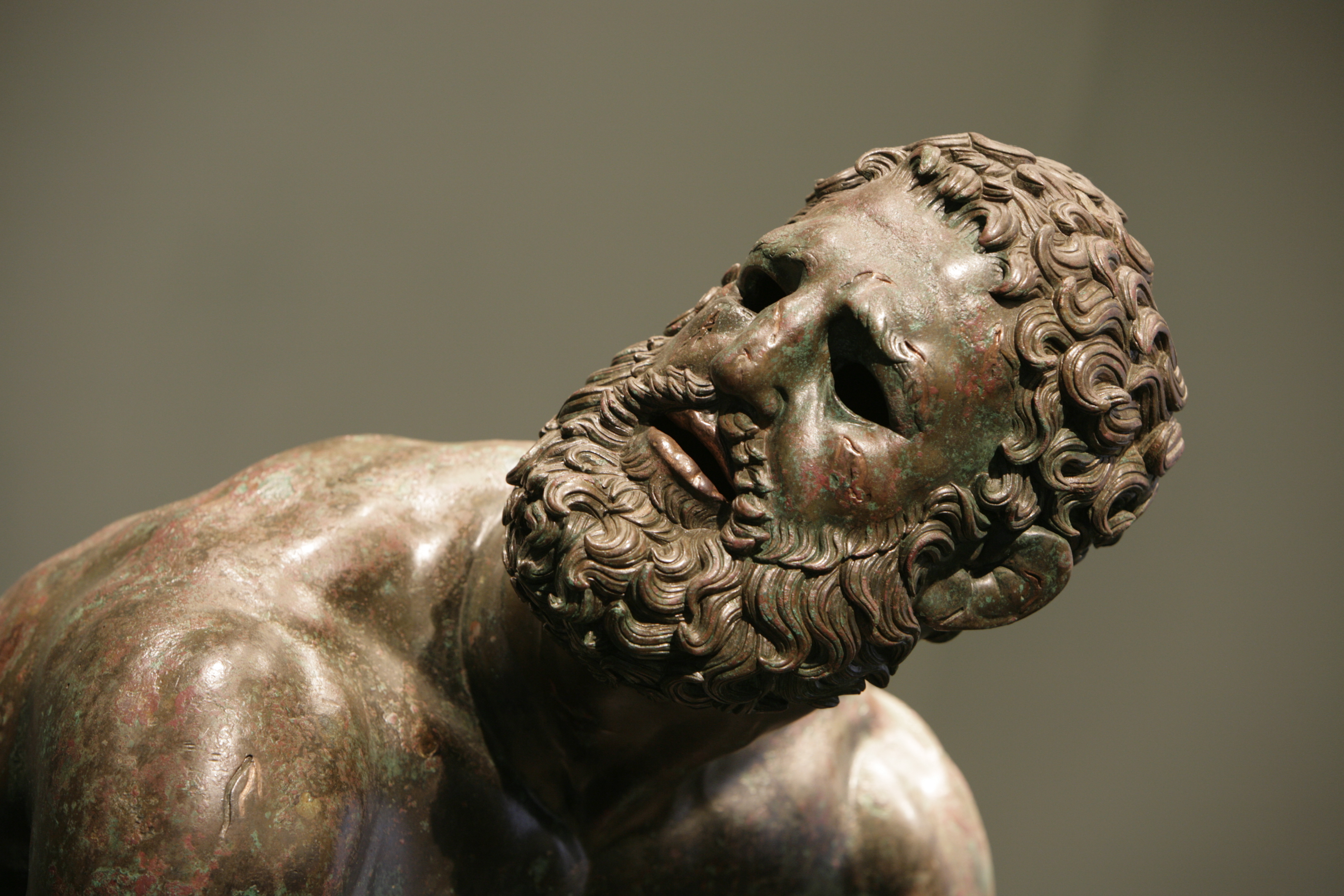
The bronze athletes date from the Hellenistic period (second to first century BCE) convey the victory, exhaustion and fleeting nature of athletic glory.
The most famous of them, the Terme Boxer, was discovered on the Quirinal Hill in 1885. He sits slumped, body still powerful but spent, his face swollen and scarred, his hands wrapped in leather thongs. The artist cast every cut and bruise in bronze, even inlaid copper to suggest blood and wounds. Yet his expression is not defeat but endurance – a man who’s given everything to the arena.
Nearby, the Hellenistic Prince (or Terme Ruler), found in the same area, stands upright and nude, the counterpart to the seated boxer. His stance is heroic but weary, his gaze detached. Together the two figures tell both a moral story and a physical one: the the beauty and cost of strength.
These bronzes were likely imported to Rome as prized Greek originals or high-quality copies for a wealthy patron’s villa. They embody the Greek ideal of athletic excellence reframed through Roman admiration for the discipline and suffering behind it.
Wall Paintings/Frescoes
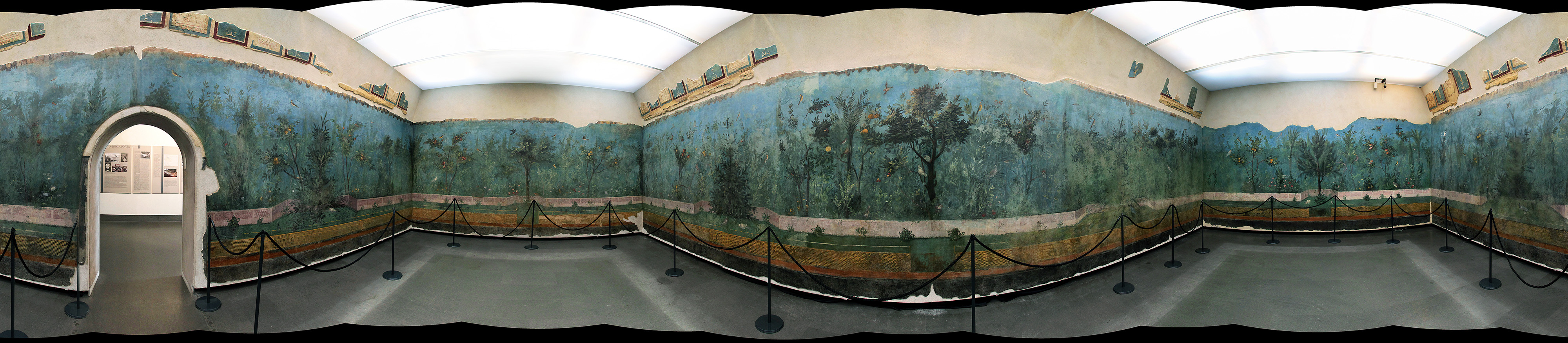
The villa wall paintings in Palazzo Massimo form one of the richest surviving narratives of Roman domestic life and taste. Most come from suburban villas around Rome, dating from the late Republic through the early Empire, and they recreate the visual world of elite Roman interiors.
The centerpiece is the set from Livia’s Villa at Prima Porta, discovered in 1863. The walls depict an illusionistic garden in full bloom – fruit trees, flowers, birds, and a soft blue sky.
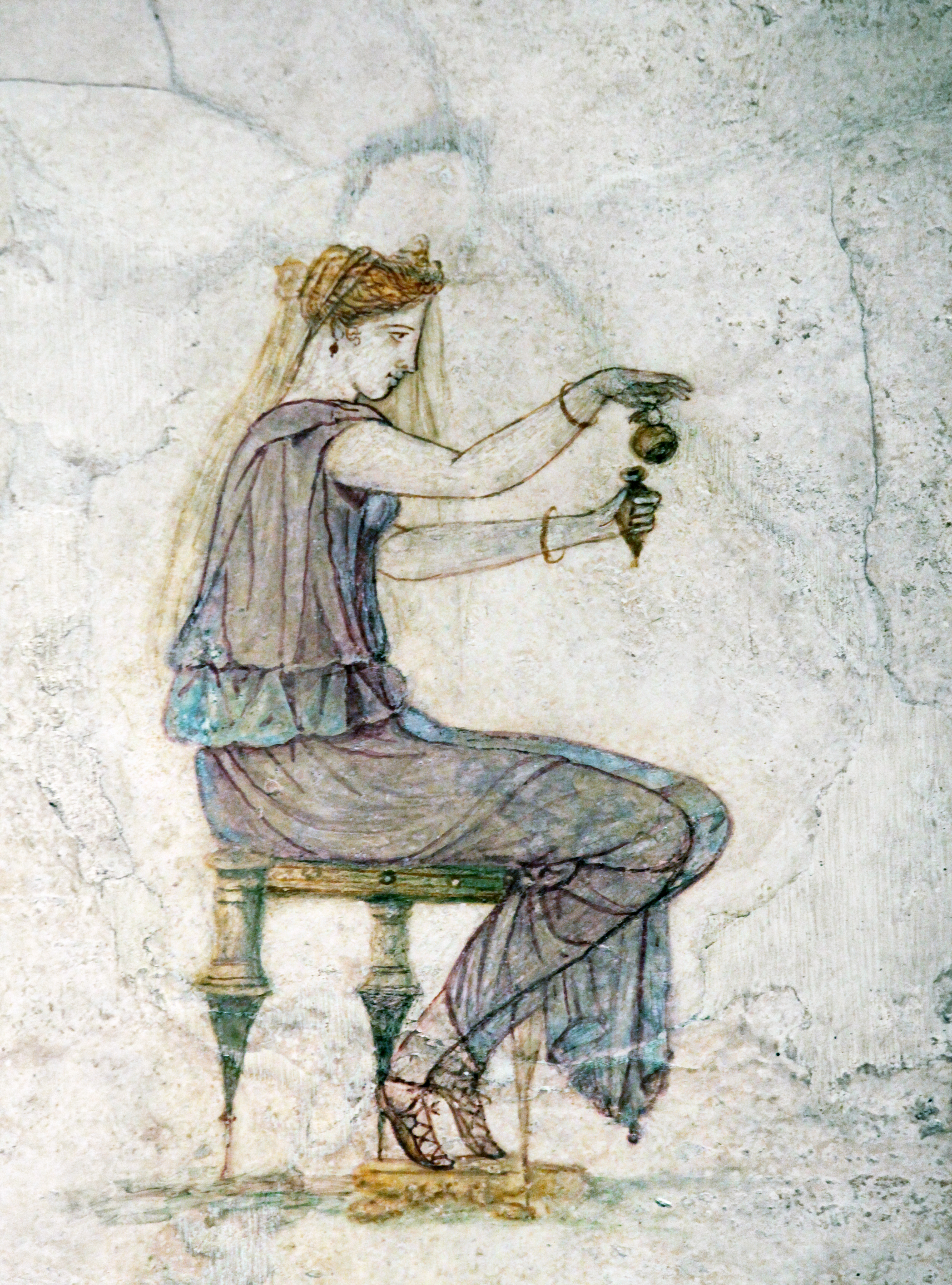
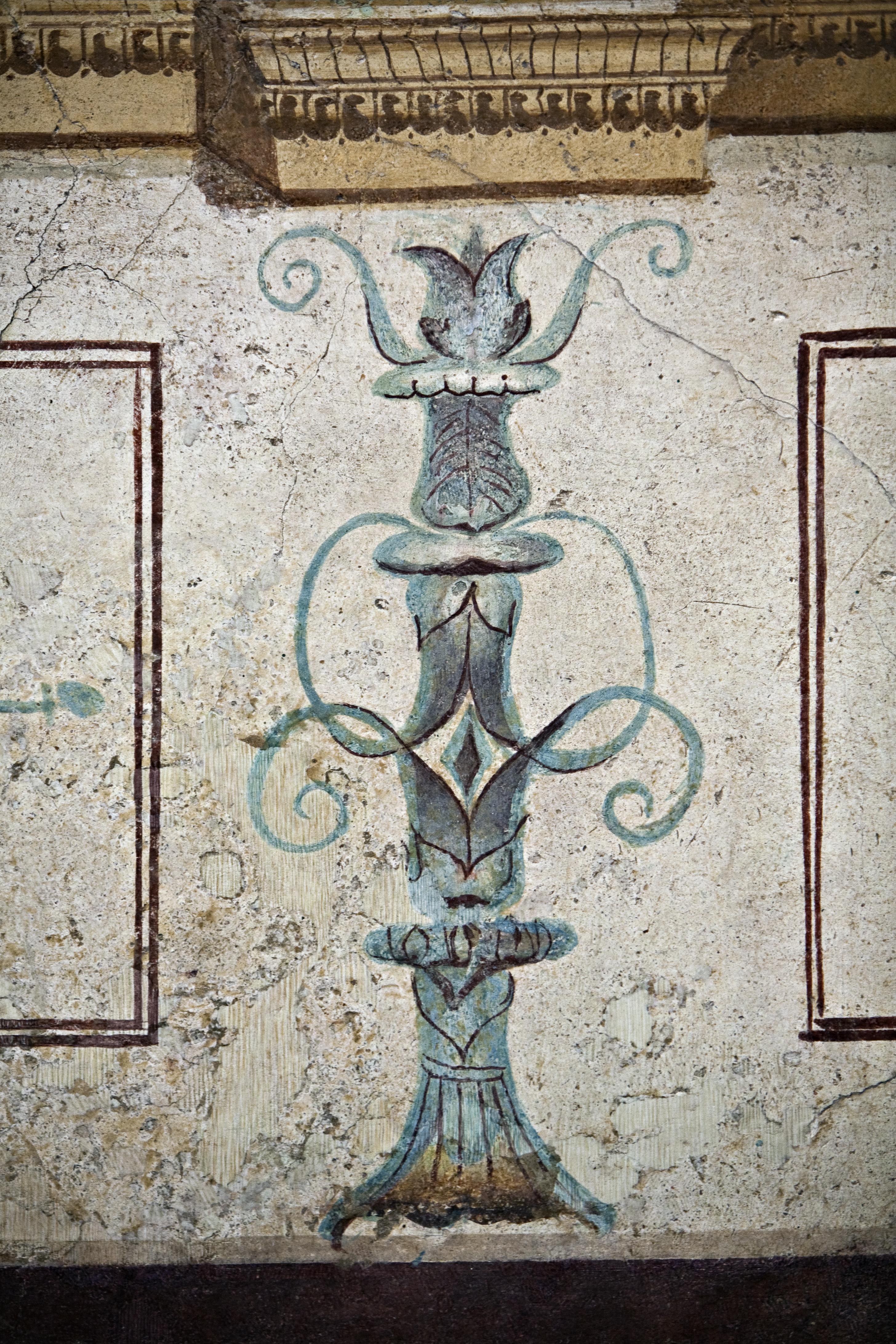
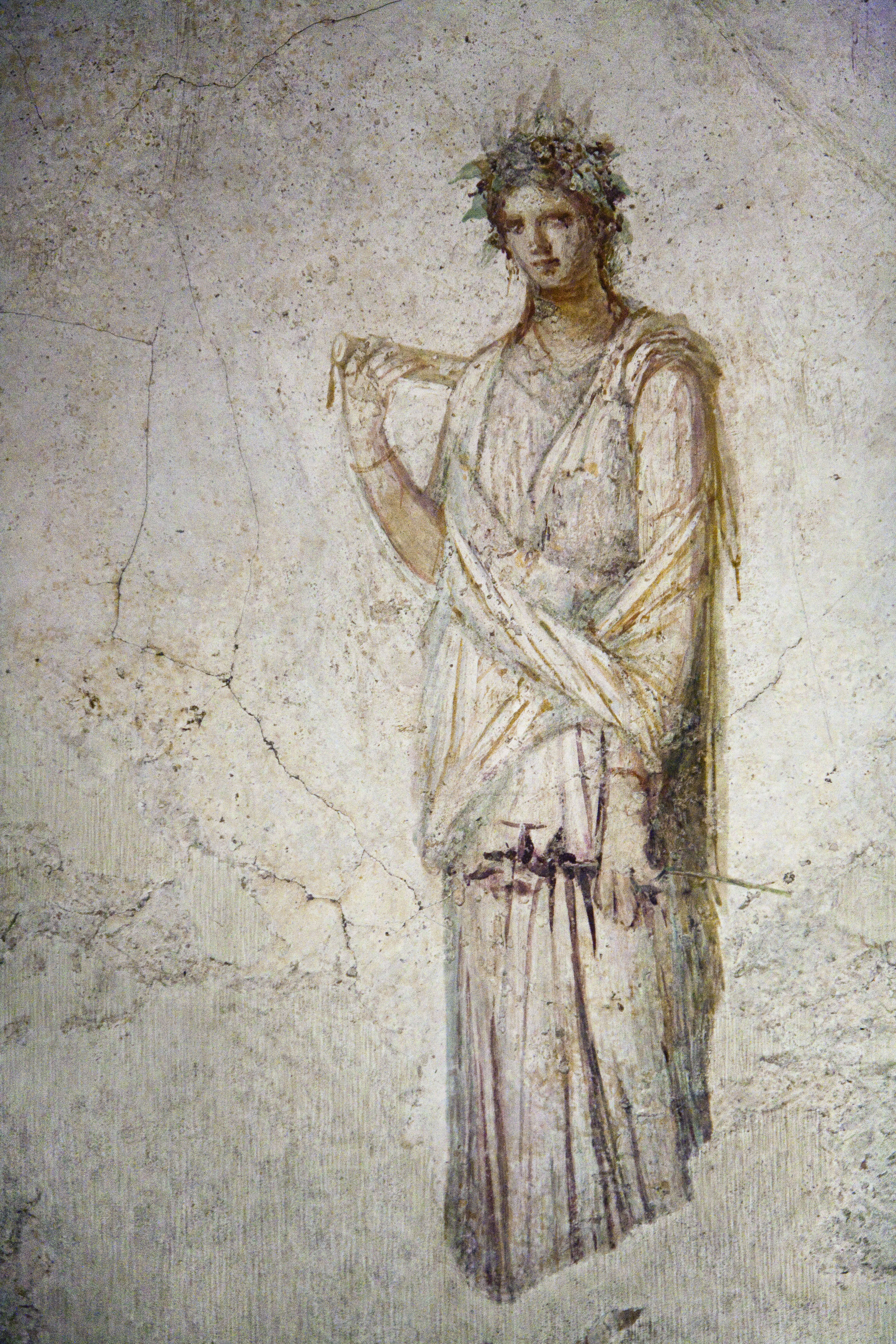
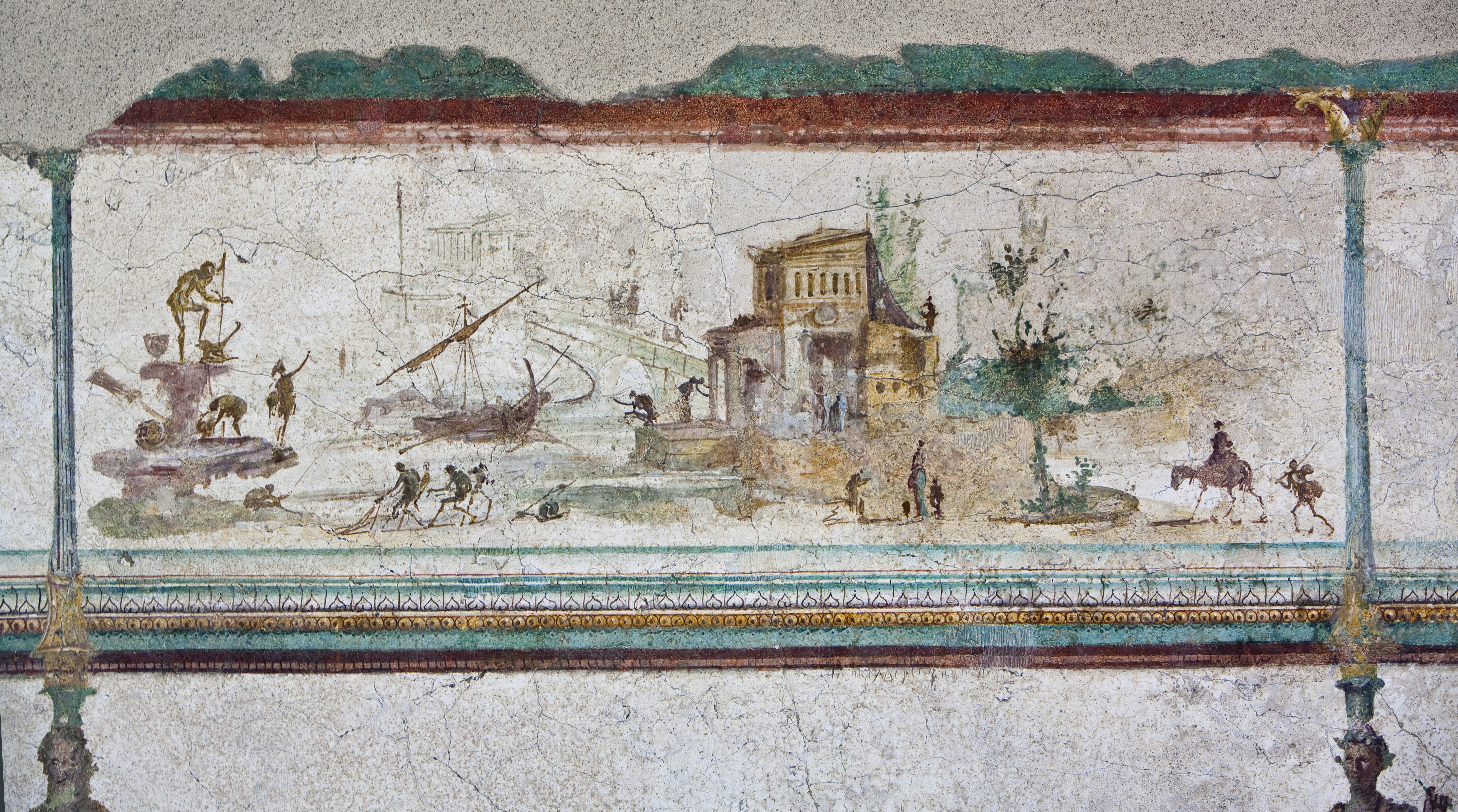
Other rooms, such as those from the Villa of Farnesina, show mythological scenes, architectural vistas, and richly colored panels framed by columns and imaginary shrines. These follow the Second and Third Styles of Roman wall painting: first creating deep, theatrical perspective, then shifting to flatter, more decorative compositions filled with miniature landscapes and floating figures.
Taken together, the frescoes chart Rome’s transition from the austere republican taste for illusionistic space and Greek motifs to the sophisticated imperial language of myth, luxury, and controlled fantasy.
Cristo Docente
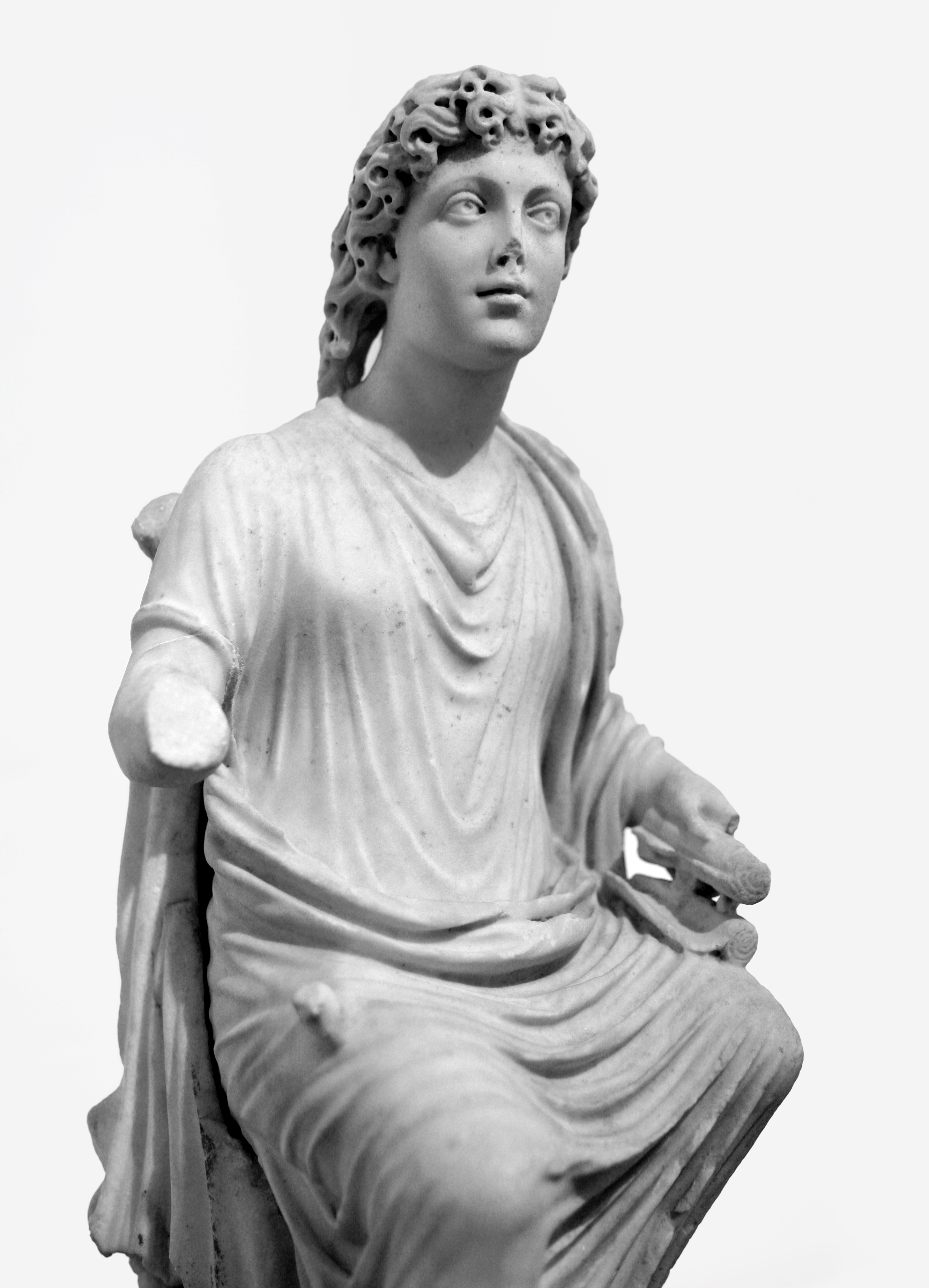
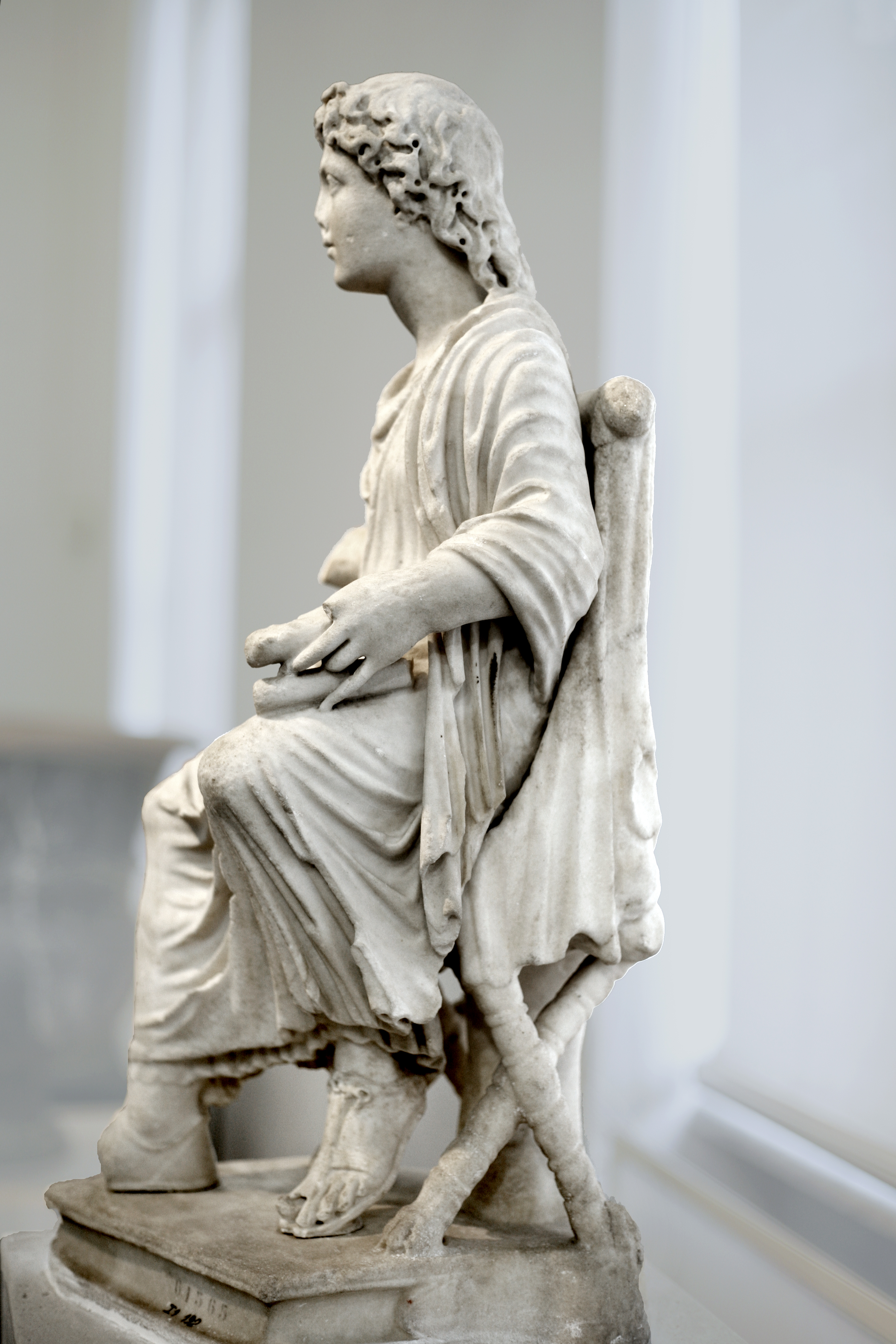
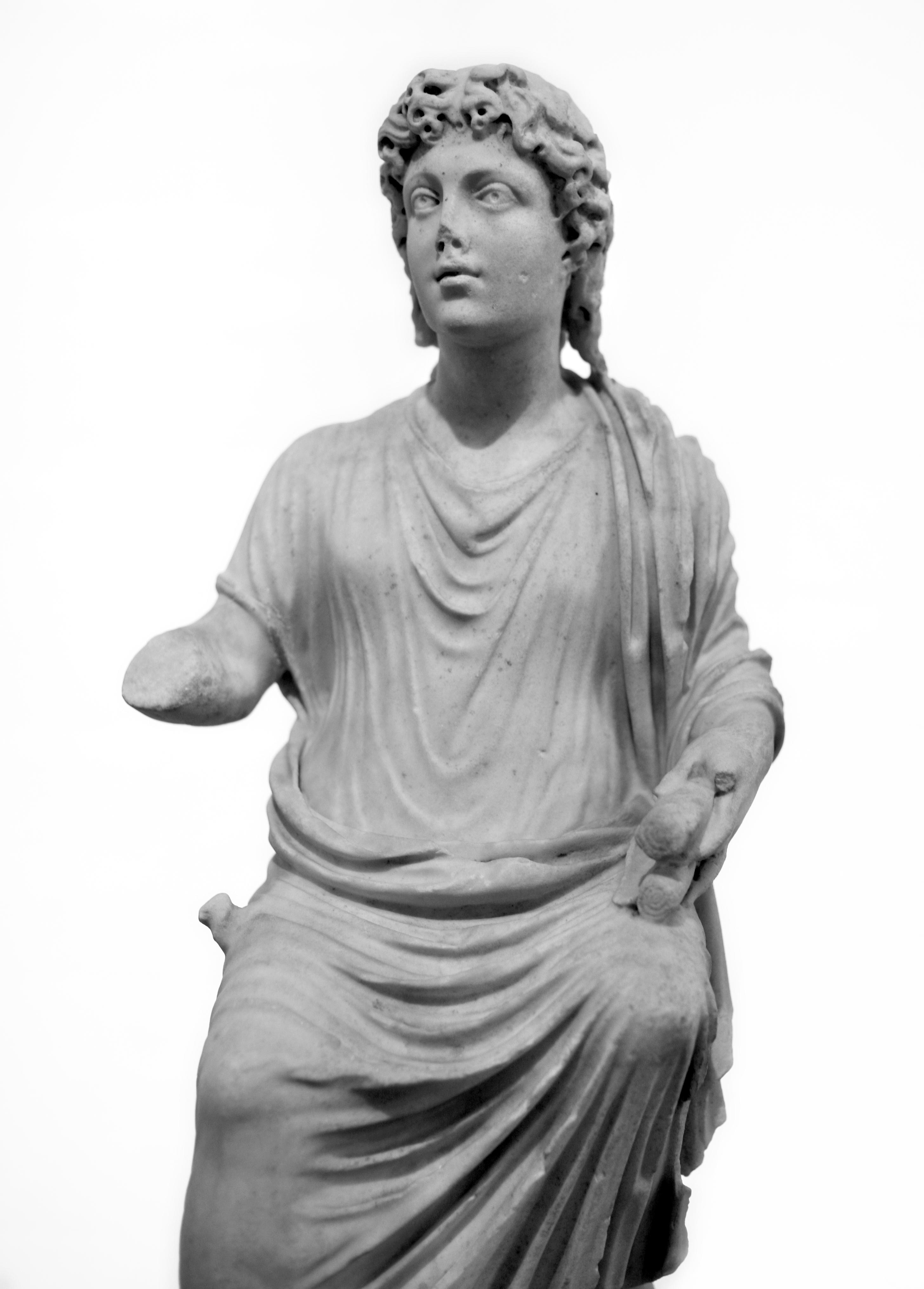
The Cristo Docente (Teaching Christ) clearly shows a youthful, androgynous body with small breasts. This is visual language flowing directly from Greco-Roman conventions of the philosopher, ephebe, or Apollo rather than an ethnographically accurate depiction of any historical Jesus. This one of the earliest depictions of Jesus, and a very rare example of Christian art not associated with burial. I wonder what the Vatican would trade for it.
Early Christian artists weren’t attempting realism; they were translating abstract theological ideas into iconic forms the viewer would recognize. The effeminate traits signal spiritual rather than biological qualities – gentleness, wisdom, eternal youth – while the frontal, often seated or teaching pose evokes authority and composure. In that cultural moment, a physically idealized, effeminate figure would convey the moral and divine authority expected of a teacher or savior without challenging Roman notions of masculinity, which were more flexible in the context of idealized youth and divinity.
The Christian anxiety that arises from this piece crack me up. Modern viewers, steeped in historical or doctrinal literalism, try to read the image literally. That’s a projection: the image is a theological construction, not an ethnographic one. Christian art critics, especially in the early 20th century, bristled at the iconography and tried to brush the thing off as a young girl posing as a scholar, rather than relaxing into the idea that early Christians weren’t like them.
The Discobulus
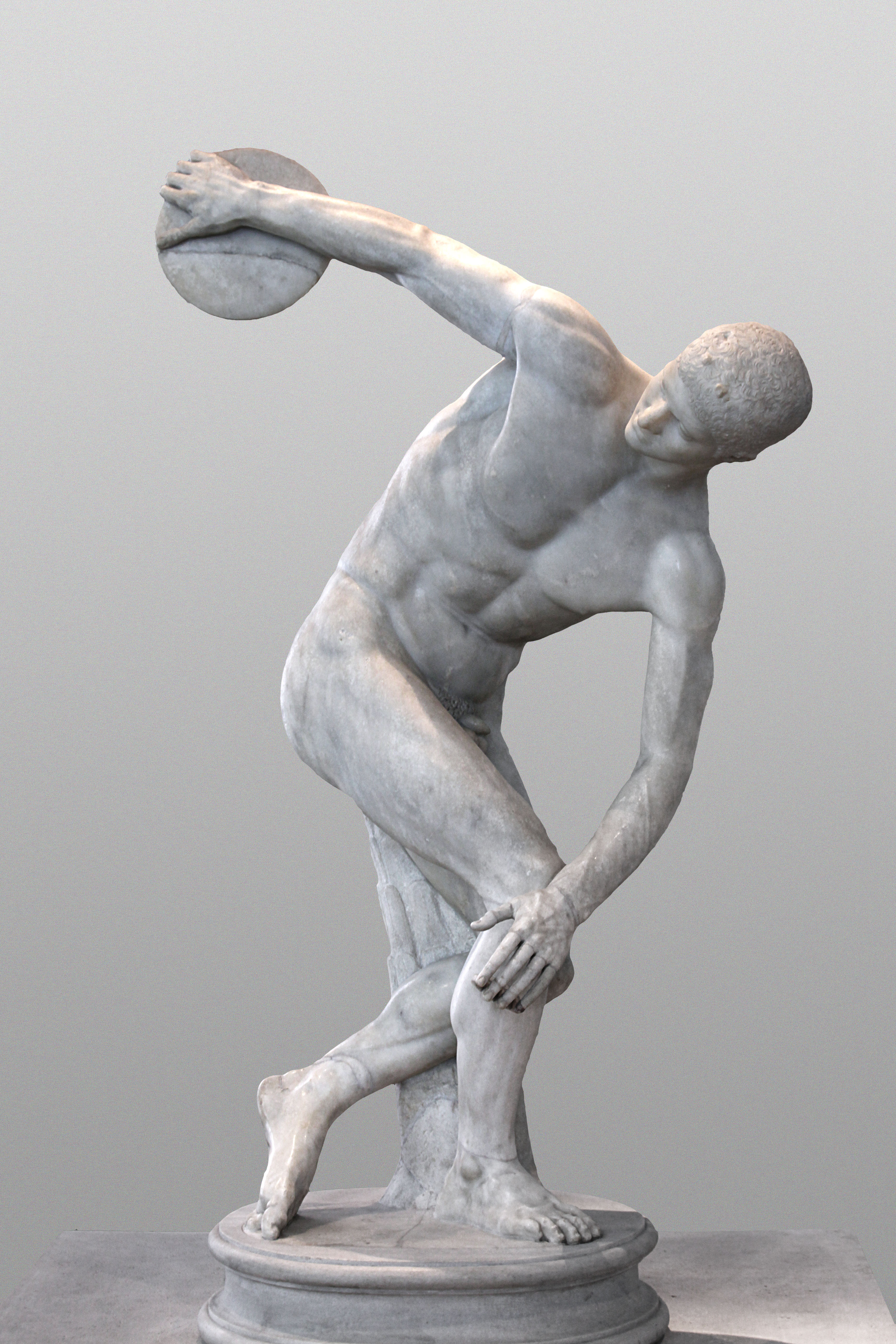
This discobolus is interesting because it’s a Roman copy of a Greek original (traditionally attributed to Myron, mid-5th century BCE) but reinterpreted in a Roman context. Several points stand out:
Roman taste for idealized athleticism – Unlike the athletes that highlight strain and fatigue, the Discobolus captures frozen, perfect form in mid-action, emphasizing harmony, proportion, and controlled energy. The figure is taut, but serene, a demonstration of mastery over both body and motion.
Technical virtuosity – The sculpture compresses a dynamic twist of the torso and rotation of limbs into a balanced composition. The Massimo copy preserves this elegance while subtly softening the muscular definition compared with Hellenistic copies that exaggerate tension.
Cultural resonance in Rome – Displaying this statue in a Roman villa or public space signaled the moral and civic ideals associated with disciplined youth, athletic virtue, and controlled action—qualities the Roman elite wanted to project.
Roman copy as a lens on reception – we see how Romans interpreted Greek originals, choosing what to preserve, emphasize, or downplay. Unlike more dramatic Hellenistic works, this Discobolus shows restraint, aligning with Roman preferences for clarity, proportion, and intelligibility over theatricality. It’s a visual bridge between Greek athletic ideal and Roman moral-aesthetic ideology.
Bronze from Caligula’s Ships
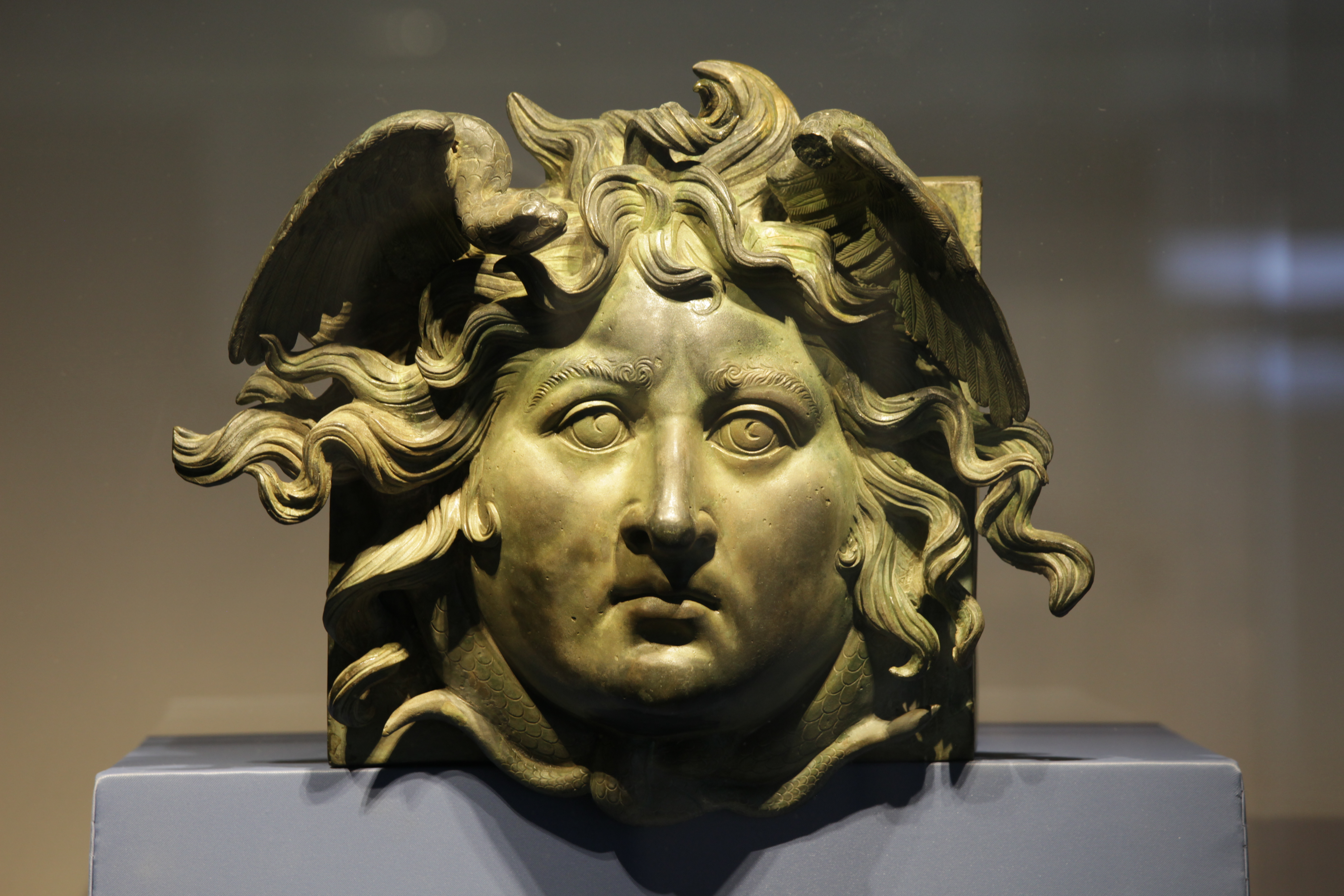
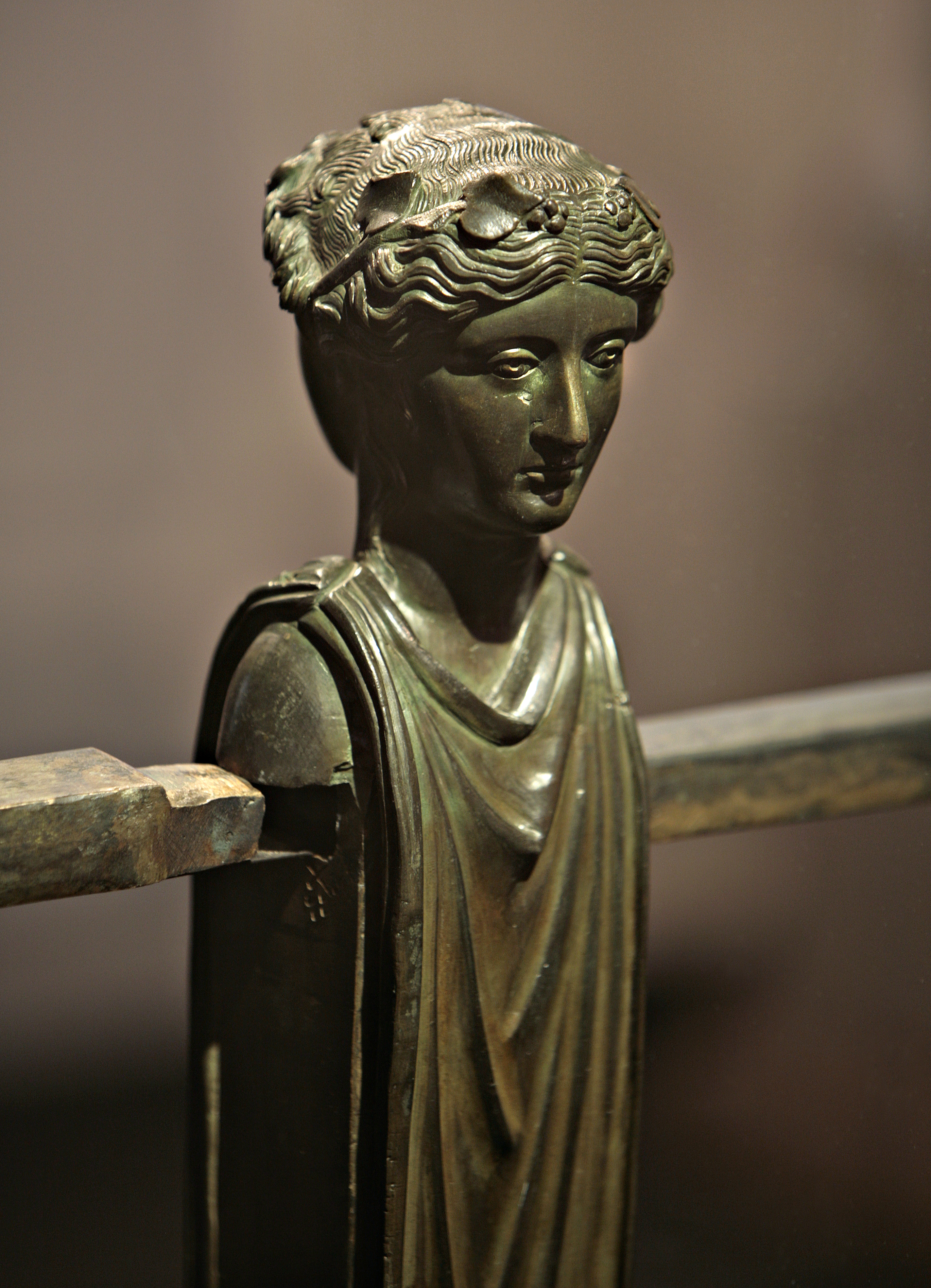
The bronze fittings come from the two grand ceremonial vessels built in the lake of Lake Nemi, ordered by Gaius Caligula around AD 37-41. By commissioning such a floating palace, Caligula aligned himself with Hellenistic kings and with the mastery of nature. The bronzes speak that language of luxury and sacerdotal authority.
The vessels and their fittings were masterpieces of maritime technology, supported by massive beams, outriggers, twin rudders, and elaborate decoration. The bronze protomes were integrated in the structural and mechanical system of the ship (rudders, beams, mooring rings). Here is the transition from Republic to Imperial ornamentation in full flourish – Roman taste for Hellenistic luxury, combined with native iconography. The bronzes bridge functional object, architectural ornament, and political symbol.

