

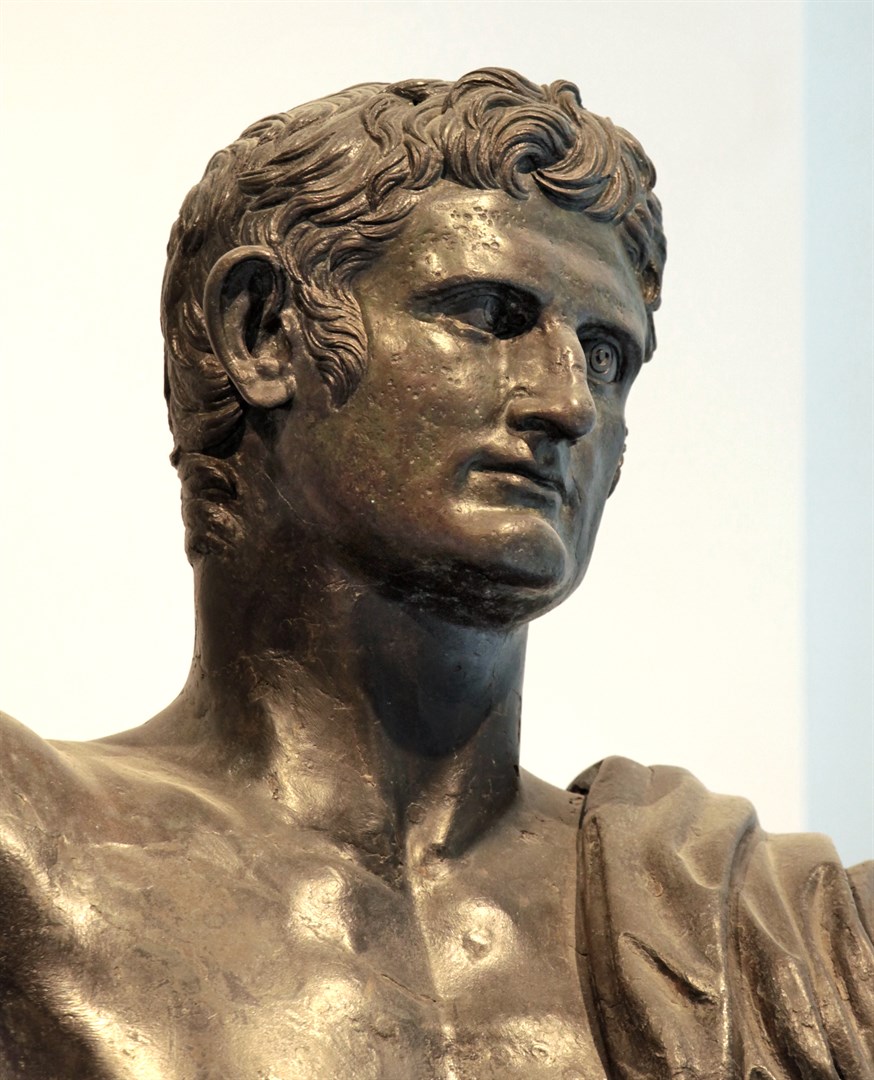
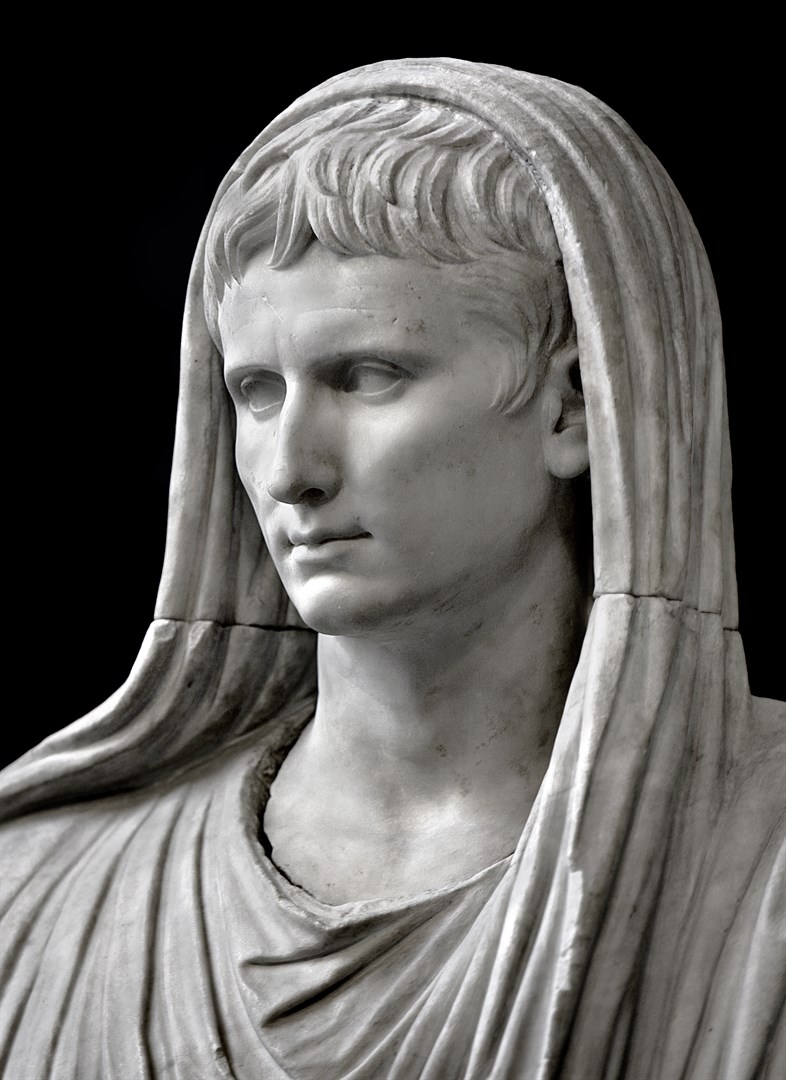
For 23 years Laura Maish and I have been shooting photos of republican and imperial portraits. We’ve accumulated 30,000 photos of ancient marble and bronze heads.
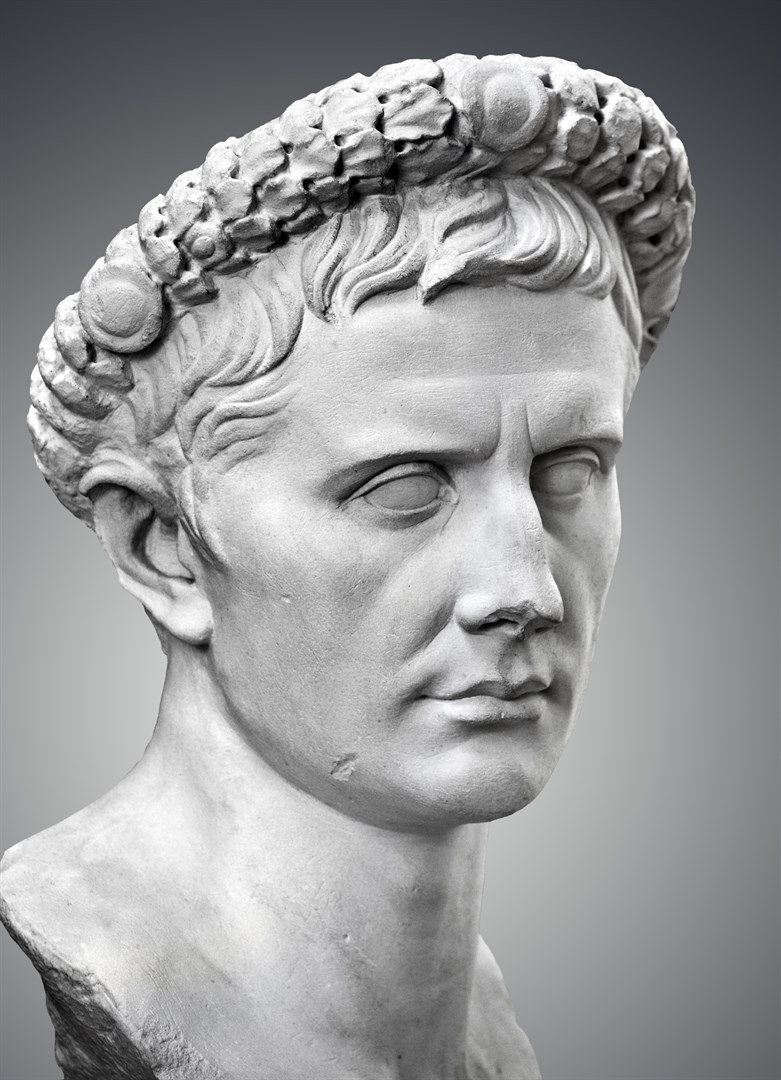
Our latest addition, just photographed this week in Rome, is the below Alcudia-type head of Augustus discovered in 2019 along Via Alessandrina in Rome Mercati di Traiano and recently put on display in the Trajan’s Market museum. This typology, named after a similar portrait found in Alcudia, Spain, dates to 40–38 BCE and depicts Octavian in his early twenties. This type aligns with Augustus’ adoption of the title Divi Filius (Son of the Deified*) following Julius Caesar’s deification. Alcudia-type portraits of Augustus are rare, so this was a significant find.
* This is often incorrectly translated as “Son of the Divine.” Divus (from which Divi comes) refers specifically to a mortal who has been deified after death, not to an eternal or inherently divine being (like a traditional god such as Jupiter). Deus, by contrast, refers to a god or divine being in a more traditional, eternal sense.


This Alcúdia type bust portrays Augustus with a youthful face, featuring a broad forehead, sharp brow, and almond-shaped eyes with thin lids. The facial modeling is restrained, part realistic individualism and part classicizing elements inspired by Greek sculpture, particularly the works like the Doryphoros of Polykleitos. His expression is calm and dignified, reflecting the Augustan ideal of serene authority.
A defining feature is the distinctive arrangement of hair, with thick, comma-shaped locks combed forward, often with a pronounced central “clip” formed by two locks curving to the right and one to the left. The hair over the forehead is voluminous, with some strands undercut for a three-dimensional effect, and it closely follows the skull, contrasting with later types like the Prima Porta, where the hair is more simplified. As with the other Alcúdia-type portraits the rest of the hair is smoother and less detailed compared to later Augustan portraits.
This piece appears to be carved from Parian marble. I could not find any info on it and I’m unskilled in petrography. It is some kind of high-quality, fine-grained, homogeneous lychnite.
Visit this page for photos of many more portraits of Augustus.

 The Multidisciplinarian
#1 by Atty at Purchasing on May 24, 2025 - 2:07 pm
The post as well as the full article about the timeline, ancient commentary and portraits of Augustus are captivating. I been reading about Rome in the first two centuries AD/CE – society, classes, neighborhoods, etc and the Christian communities there at the same time; also studying the transmission of epistles/gospels/apokalypse/acts before there was an occupational scribe the way there was in the middle ages. Novice in all it is overwhelming as it is interesting.
Augustus had one of the longest reigns of an Roman emperor which is a feat in an empire at any time – makes for good history reading too.
#2 by Bill Storage on May 25, 2025 - 4:41 am
Thank you sir. I got a half written piece on Tertullian’s writings from years ago I’ve been fixing to complete. Also some stuff on reader-response criticism and rhetorical brilliance of Gospel Mark. One of these days.
#3 by joegeranio1 on May 24, 2025 - 3:35 pm
Very nice!! Joe Geranio
#4 by joegeranio1 on June 15, 2025 - 4:30 am
Speaking to Caligula Vesta as issues. —– Forwarded Message —– From: Bryan Zymanek geranioj@aol.comTo: The Multidisciplinarian comment+p3n1rnroew_yn9itri8gy9z@comment.wordpress.comSent: Sunday, June 15, 2025 at 04:24:35 AM PDTSubject: Re: Render Unto Caesar His Complexion Great thoughts as usual. The only change I see sometimes , not about hair color or eyes, but balding. It seems once the COS IIII or 40-41 AD. Even though in profile on his forehead seems to be receding. Multa Cum Amicitia. Josephus.