I was always puzzled by the campaign for gay marriage two decades back. Why did they seek admission to an institution whose underlying premises themselves might have been questioned. Why state recognition? Why not demand that the state get out of the marriage business altogether?
Marriage is a religious and cultural institution. People have married for thousands of years, under a remarkable variety of customs and arrangements. The state has legitimate interests in regulating property, inheritance, parental responsibilities, and perhaps the obligations people undertake toward one another. Why should it combine all these interests in a single legal status, and why should that status be called marriage?
I might want to designate someone to receive my insurance benefits, inherit my property, make medical decisions on my behalf, or take responsibility for my affairs when I become incapacitated. Why should that person have to be my spouse? Why couldn’t it be my grandmother? Or my brother? Or a friend with whom I’ve shared a house and a bank account for thirty years?
There is no obvious reason for these arrangements to be bundled. We could have beneficiary designations, contracts, wills, powers of attorney, and legal instruments that let people arrange their affairs according to their needs. The state could provide default arrangements for those who make none. It needn’t decide which of our personal relationships qualify as marriages.
We didn’t chose that course in this century. We have instead expanded the category of people eligible to marry while retaining all the institution’s traditional restrictions. I’ll focus one of them.
Consider two adult brothers. For sake of discussion, they are both gay. Neither has any interest in marrying a woman or having children. They have lived together for twenty-five years. They share a home, finances, responsibilities, and the ordinary burdens of a household. They care for each other, intend to remain together for the rest of their lives, and would like the legal protections and recognition that marriage provides. They cannot marry.
This isn’t because their relationship is insincere, because they lack commitment, or because they are incapable of assuming the obligations of marriage. It is because they are brothers.
Now consider a gay man who marries woman who marries an immigrant woman. They have no sexual relationship and no romantic attraction. Neither expects these things to develop. They nevertheless have a genuine affection for each other and intend to share their lives indefinitely. They regard themselves as family and undertake the mutual obligations of marriage.
Their marriage can qualify under immigration law, if they aren’t lured by ICE agents into lying about it. The government can investigate whether their commitment is genuine. It cannot properly insist that they demonstrate sexual attraction or romantic love. A marriage need not conform to the conventional romantic model to be real, not in this country.
Why, then, should the brothers be excluded? Their commitment is every bit as genuine. They might have shared a life longer than many married couples. If the test is the sincerity of their intentions, they have met it.
One might object that sexual relations between siblings carry genetic risks. Those risks are substantial when children are conceived by close biological relatives. We don’t prohibit marriage between infertile people or those with no intention of having kids, nor do we require couples to demonstrate reproductive capacity or submit to genetic testing to get a marriage license. The state could regulate reproduction without prohibiting marriage. China did.
The genetic argument does not explain why adopted siblings are prohibited from marrying in most states, even if they have no biological relationship whatsoever. They might have met as adults, after each had established an independent life. Their legal kinship, rather than their biology or the history of their relationship, is sufficient to disqualify them.
Legal scholars raise other possible objections. Family relationships can involve coercion, dependency, and abuse. These are reasons to protect people from coercion and abuse, not reasons to impose an irrebuttable prohibition on every possible relationship within a broad category. We can’t reasonably assume – and nor should legal scholars – that every relationship between unrelated adults is free of coercion.
The strongest objection may be that most folk simply find marriage between siblings repugnant. I understand that reaction. Disgust is not a legal argument, nor is it rational by any standard of reasoning. If it were, a majority might simply ban the minority’s romantic acts, as they once did. Disgust isn’t automatically devoid of instructional value. It cannot, by itself, establish that something is harmful, unjust, or properly prohibited by law, as the repeal of California’s Prop 8 showed.
We have repeatedly discovered that practices once considered beyond the bounds of acceptable society were not necessarily harmful, and that the boundaries of acceptable conduct were often maintained by convention rather than reason.
I don’t mean to imply that existing constitutional law establishes a right to sibling marriage. It doesn’t. The Supreme Court has recognized marriage as a fundamental right, most notably in Loving v. Virginia and Obergefell v. Hodges. It has also treated restrictions on close-relative marriage as permissible. My argument is about whether those restrictions are justified.
The more general question is what we expect marriage to accomplish. In Obergefell, the Court emphasized individual autonomy, personal choice, and the importance of intimate commitment. Those are substantial principles. If we invoke them to justify extending marriage to same-sex couples, we should be prepared to consider their implications beyond that particular case. Otherwise, we are not applying a principle so much as deciding which exclusions we happen to find acceptable.
There is another way to approach the problem. Perhaps the state should stop issuing marriage licenses.
People could continue to marry in churches, synagogues, or wherever their traditions direct them. They could hold ceremonies, exchange rings, make promises, wear costumes, and call themselves married. The state would neither prohibit nor confer those relationships. It would simply provide the legal instruments through which people could arrange their property, responsibilities, and personal affairs.
This would require some changes. Marriage currently serves as a convenient administrative shortcut for a great many legal purposes. Convenience is not a sufficient reason to preserve a system that makes access to those purposes depend on qualifying for a particular personal relationship. We could recognize households, dependents, designated partners, and other forms of mutual responsibility without requiring them to fit a single model.
It would also mean giving up the state’s endorsement of marriage as a uniquely privileged relationship. Some people would regard that as a loss. They might reasonably prefer that the state recognize and encourage the traditional family. The state already has ways to protect children, support dependents, and discourage exploitation. It needn’t make marriage the gateway to all the legal benefits associated with caring for another person.
There is a familiar argument against changing institutions that have existed for a long time. Jefferson wrote that prudence counsels against changing governments long established for light and transient causes. The sentiment has considerable force – or should have. Institutions often embody accumulated experience that isn’t immediately apparent, and reformers can be careless about what they dismantle.
Longevity simply cannot be proof of justification. An institution can survive because it serves a useful purpose, because people value it, or because no one has seriously questioned it. These are different things.
Marriage has changed considerably over the centuries. Its legal and social purposes have never been entirely fixed. Women once had radically diminished legal identities within marriage. Interracial marriage was prohibited in many states. Same-sex marriage was prohibited everywhere. Each change required people to reconsider assumptions that had seemed self-evident to previous generations.
I don’t propose that we discard marriage as a human institution. People will continue to form intimate partnerships, raise children, share homes, and make commitments. What I question is the state’s claim to determine which of these relationships deserve a particular legal designation, and why access to a collection of legal rights should depend on obtaining it.
If the state insists on maintaining civil marriage, it owes us a reason for excluding two adult brothers who wish to marry. If the answer is that their relationship is not romantic, we must explain why romantic love is indispensable when immigration law doesn’t require it. If the answer is genetic risk, we must explain why infertile siblings and adopted siblings are also excluded. If the answer is that their relationship violates tradition, we must explain why tradition should prevail over individual autonomy.
Or we could leave marriage to the people who care about it as a cultural institution, and let the rest of us arrange our affairs without asking a government permission to call someone family.
.
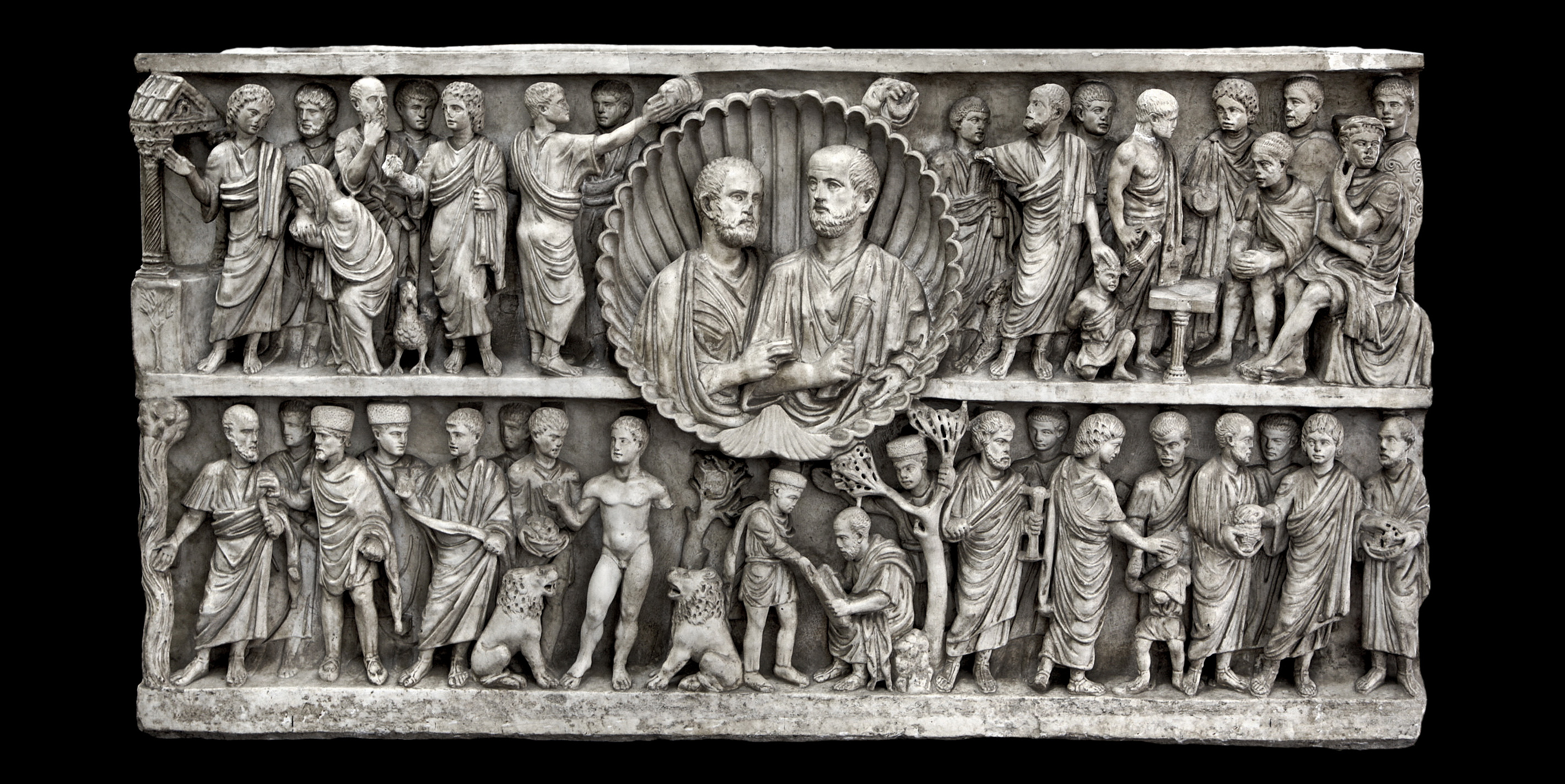
Extra credit: who’s the man in the tree?


#1 by Atty at Purchasing on November 29, 2026 - 4:04 pm
Marriage customs, cultures and codes are the evolutionary amalgam of power dynamics, within which is power of male over female (social and sometimes political, enforced by physical superiority), concurrent with politically powerful social strata deciding what to permit or restrict (or sometimes stop restricting) to keep people coming back to the desired norms of the state (often alongside religious) actors in temporal terms such as submission to order or taxation, or fear of eternal destruction, condamnation, or torment.
Recognition of marriage by the state, today, is heavily influenced by the catholic sacramentalness in that the ceremonial (custom of the family or community) must be “officiated” by an “official” that is licensed in some way in their jurdiction – kinda like an ordination but (as to officiality) the state endorses apart from the church. [For over a thousand years – especially the =dark= ages, the church influenced many governments and were enter twined with governments in some cases. Not just roman catholic but lutheran, reformed, …too]
A “church wedding” today means nothing in reality, except for the state actor (officiant) wearing a religious costume.
Today consummation, or sexual intercourse, is not a legal concern [except for fraud], only a personal or community or ritual concern. When centralized churches had a heavier hand in laws this was different.
To those that were not religious or political elites, historically, you were subjugated by those elites and one way was sexuality and/or marriage.
In much of the centuries when the Roman empire was dominant, women , even free and freeborn, were in a lower social strata than men, even the ladies that had an inherited estate. Recently I read about christianity in the city of Rome in the first two centuries, to be accepted in a house church, a woman of means might be romantically attached to a male servant/slave but no allowed by law to marry. With the house church approval she might still be allowed into the meeting because she is unable to follow through legally with the marriage.
Other modes of projecting power, if you go back to lets say the hebrew bible the fornication (in LXX porneia) referred to a paid sex worker involvement. Somewhere in the second temple period when they were writing more scriptures, the earliest evolved interpretation other than harlot was that of someone marrying outside of the tribe (like tribe of Ephraim, vs. Judah, vs. Benjamin, etc). In other words tribal purity. And then more and more sexual tabooos were appended by the new testament times. [Although aposTle Paul often bunched fornication/porneia in with other specific things, so why use a catch-all word and then specific sexual words that would fall under the catch all – unless the catch all did not “catch ALL”] Strongs lexicon ( not the greatest) and Thayers lexicon (no as un-great as Strongs) define porneia as “harlotry” but add in “any illicit sexual behavior”, which leads to two questions: first, what is illicit and where is it defined [keep looking you won’t find in scripture cannon]; also, why mention harlotry if ANY/ALL illicit fits the definition (unlest harlotry is “licit”??)?
Going back to =power= dimensions at play, nearly all societies considered women mere possessions and you can see that in adultery/moikeia laws in many societies including hebrew – whereby the offender was principally the man involved in the sexual act against another man’s property. [Not that some laws in some times couldn’t find a way to punish the woman too]. This fits in with akkadian, babylonian and later hebrew laws where women sold as slaves would not be freed after three years, or six years, like the men; women in ancient Israel subjected to virginity tests; the commandment you shalt not covet any of the neighbors chattel, be it tools, idols, images, servants, slaves, or WIFE.
As I am running out of ink, in summary, marriage is an obsolete and unproductive institution. People are inclined to spend ridiculous amounts of money and energy on a ceremony and celebration and not a fraction of thought or endeavor into the commitment and investment before them.
Bill Storage article that is inclined to contracts or declarations of association, and the scope of that association are far more practical to assuring the duties and privileges sought are understood at the front end and enforceable when needed.
Though more productive, such would be a culture shock, as would Defund Church and State.