Archive for June, 2016
Science vs Philosophy Again
Posted by Bill Storage in Multidisciplinarians, Philosophy of Science on June 20, 2016
Scientists, for the most part, make lousy philosophers.
Yesterday I made a brief post on the hostility to philosophy expressed by scientists and engineers. A thoughtful reply by philosopher of science Tom Hickey left me thinking more about the topic.
Scientists are known for being hostile to philosophy and for being lousy at philosophy when they practice it inadvertently. Scientists tend to do a lousy job even at analytic philosophy, the realm most applicable to science (what counts as good thinking, evidence and proof), not merely lousy when they rhapsodize on ethics.
But science vs. philosophy is a late 20th century phenomenon. Bohr, Einstein, and Ramsey were philosophy-friendly. This doesn’t mean they did philosophy well. Many scientists, before the rift between science (“natural philosophy” as it was known) and philosophy, were deeply interested in logic, ethics and metaphysics. The most influential scientists have poor track records in philosophy – Pythagoras (if he existed), Kepler, Leibnitz and Newton, for example. Einstein’s naïve social economic philosophy might be excused for being far from his core competency, but the charge of ultracrepidarianism might still apply. More importantly, Einstein’s dogged refusal to budge on causality (“I find the idea quite intolerable that an electron exposed to radiation should chose of its own free will…”) showed methodological – if not epistemic – flaws. Still, Einstein took interest in conventionalism, positivism and the nuances of theory choice. He believed that his interest in philosophy enabled his scientific creativity:
“I fully agree with you about the significance and educational value of methodology as well as history and philosophy of science. So many people today – and even professional scientists – seem to me like somebody who has seen thousands of trees but has never seen a forest. A knowledge of the historic and philosophical background gives that kind of independence from prejudices of his generation from which most scientists are suffering. This independence created by philosophical insight is – in my opinion – the mark of distinction between a mere artisan or specialist and a real seeker after truth.” – (Einstein letter to Robert Thornton, Dec. 1944)
So why the current hostility? Hawking pronounced philosophy dead in his recent book. He then goes on to perform a good deal of thought around string theory, apparently unaware that he is reenacting philosophical work done long ago. Some of Hawking’s philosophy, at least, is well thought.
Not all philosophy done by scientists fares so well. Richard Dawkins makes analytic philosophers cringe; and his excursions into the intersection of science and religion are dripping with self-refutation.
The philosophy of David Deutsch is more perplexing. I recommend his The Beginning of Infinity for its breadth of ideas, some novel outlooks, for some captivating views on ethics and esthetics, and – out of the blue – for giving Jared Diamond the thrashing I think he deserves. That said, Deutsch’s dogmatism is infuriating. He invents a straw man he names inductivism. He observes that “since inductivism is false, empiricism is as well.” Deutsch misses the point that empiricism (which he calls a misconception) is something scientists lean slightly more or slightly less toward. He thinks there are card-carrying empiricists who need to be outed. Odd as the notion of scientists subscribing to a named philosophical position might appear, Deutsch does seem to be a true Popperian. He ignores the problem of choosing between alternative non-falsified theories and the matter of theory-ladenness of negative observations. Despite this, and despite Kuhn’s arguments, Popper remains on a pedestal for Deutsch. (Don’t get me wrong; there is much good in Popper.) He goes on to dismiss relativism, justificationism and instrumentalism (“a project for preventing progress in understanding the entities beyond our direct experience”) as “misconceptions.” Boom. Case closed. Read the book anyway.
So much for philosophy-hostile scientists and philosophy-friendly scientists who do bad philosophy. What about friendly scientists who do philosophy proud. For this I’ll nominate Sean Carroll. In addition to treating the common ground between physics and philosophy with great finesse in The Big Picture, Carroll, in interviews and on his blog (and here), tries to set things right. He says that “shut up and calculate” isn’t good enough, characterizing lazy critiques of philosophy as either totally dopey, frustratingly annoying, or deeply depressing. Carroll says the universe is a strange place, and that he welcomes all the help he can get in figuring it out.
.
Rµv – (1/2)Rgµv = 8πGTµv. This is the equation that a physicist would think of if you said “Einstein’s equation”; that E = mc2 business is a minor thing – Sean Carroll, From Eternity to Here
Up until early 20th century philosophers had material contributions to make to the physical sciences – Neil deGrasse Tyson
The P Word
Posted by Bill Storage in Philosophy of Science, Uncategorized on June 19, 2016
Philosophy can get you into trouble.
I don’t get many responses to blog posts; and for some reason, most of those I get come as email. A good number of those I have received fall into two categories – proclamations and condemnations of philosophy.
The former consist of a final word offered on a matter that I wrote about having two sides and warranting some investigation. The respondents, whose signatures always include a three-letter suffix, set me straight, apparently discounting the possibility of an opposing PhD. Regarding argumentum ad verecundiam, John Locke’s 1689 Essay Concerning Human Understanding is apparently passé in the era where nonscientists feel no shame for their science illiteracy and “my scientist can beat up your scientist.” For one blog post where I questioned whether fault tree analysis was, as commonly claimed, a deductive process, I received two emails in perfect opposition, both suitably credentialed but unimpressively defended.
More surprising is hostility to endorsement of philosophy in general or philosophy of science (as in last post). It seems that for most scientist, engineers and Silicon Valley tech folk, “philosophy” conjures up guys in wool sportscoats with elbow patches wondering what to doubt next or French neoliberals congratulating themselves on having simultaneously confuted Freud, Marx, Mao, Hamilton, Rawls and Cato the Elder.
When I invoke philosophy here I’m talking about how to think well, not how to live right. And philosophy of science is a thing (hint: Google); I didn’t make it up. Philosophy of science is not about ethics. It has to do with that fact that most of us agree that science yields useful knowledge, but we don’t all agree about what makes good scientific thinking. I.e., what counts as evidence, what truth and proof mean, and being honest about what questions science can’t answer.
Philosophy is not, as some still maintain, a framework or ground on which science rests. The failure of logical positivism in the 1960s ended that notion. But the failure of positivism did not render science immune to philosophy. Willard Van Orman Quine is known for having put the nail in the coffin of logical positivism. Quine introduced a phrase I discussed in my last post – underdetermination of theory by data – in his 1951 “Two Dogmas of Empiricism,” often called the most important philosophical article of the 20th century. Quine’s article isn’t about ethics; it’s about scientific method. As Quine later said in Ontological Relativity and Other Essays (1969):
I see philosophy not as groundwork for science, but as continuous with science. I see philosophy and science as in the same boat – a boat which we can rebuild only at sea while staying afloat in it. There is no external vantage point, no first philosophy. All scientific findings, all scientific conjectures that are at present plausible, are therefore in my view as welcome for use in philosophy as elsewhere.
Philosophy helps us to know what science is. But then, what is philosophy, you might ask. If so, you’re halfway there.
.
—
Philosophy is the art of asking questions that come naturally to children, using methods that come naturally to lawyers. – David Hills in Jeffrey Kasser’s The Philosophy of Science lectures
The aim of philosophy, abstractly formulated, is to understand how things in the broadest possible sense of the term hang together in the broadest possible sense of the term. – Wilfrid Sellars, “Philosophy and the Scientific Image of Man,” 1962
This familiar desk manifests its presence by resisting my pressures and by deflecting light to my eyes. – WVO Quine, Word and Object, 1960
Andrei’s Anthropic Abduction
Posted by Bill Storage in History of Science, Philosophy of Science on June 15, 2016
 No Space aliens here. This deals with the question of whether Stanford physicist Andrei Linde’s work deserves to be called science or whether it is in the realm of pseudoscience some call “not even wrong.” While debated among scientists, this question isn’t really in the domain of science, but of philosophy. If use of the term abduction to describe a form of reasoning isn’t familiar, please read my previous post.
Linde is a key figure in the family of theories of cosmic origins called inflation. Inflation holds that in a period lasting roughly 10E-30 seconds the cosmos doubled in size by at least 100 orders of magnitude. Quantum fluctuations in the then-tiny inflationary region became the gravitational seeds that formed the galaxies and galaxy clusters we now observe. Proponents of the theory hold that it is the best explanation for universal homogeneity and isotropy of matter, the miniscule temperature anisotropies of the cosmic microwave background radiation, geometrical flatness of the universe, and the absence of magnetic monopoles. Inflation requires that the universe should be incredibly homogeneous, isotropic and conform to Euclidean geometry – but not completely. It’s perturbations should be Gaussian and adiabatic, and it requires a nonzero vacuum energy that is, however, extremely close to zero.
In Linde’s model of inflation, the rapidly expanding regions branch off from other expanding regions and occasionally enter a non-inflating phase. But the generation rate of inflationary regions is much higher than the rate of termination of inflation within regions. Therefore, the volume of the inflating part of space is always much larger than the part where inflation has stopped, Terminology varies; for sake of clarity I’ll use multiverse to describe all of space and universe (sometimes Linde uses bubble universe) to describe each separate inflating region or region where inflation has stopped, as is the case where we live. Each of universe in this multiverse can have radically different laws of physics (more accurately, different physical constants and properties). Finally, note that this multiverse scenario has nothing to do with the more popular parallel-universe consequences of the Many Worlds interpretation of quantum mechanics. Linde’s work is particularly interesting for looking at scientific-realism and empiricist leanings of living scientists. Chaotic inflation is unappealing to empiricists, but less maligned than string theory.
Linde gave a fun, engaging hour-long intro to his version of inflation in a talk to the SETI Institute in 2012 (above). He presents the theory briefly, using the imagery of fractals, and then gives a long defense of anthropic reasoning. Anthropic arguments may, at first glance, appear to be mere tautologies, but scrutiny shows something more subtle and complex. Linde once said, “those who dislike anthropic principles are simply in denial.” In the SETI talk he jocularly explains the anthropic response to the apparent fine tuning of the universe. Finally, he gives a philosophical justification for his theory, explicitly rejecting empiricists’ demands that all predictions be falsifiable, and making inference to the best explanation primary with a justification of “best” by process of elimination.
Curiously, anthropic reasoning, often reviled when applied to universe-sized entities, is readily accepted on smaller scales. Roger Penrose is dubious, saying such reasoning “tends to be invoked by theorists whenever they do not have a good enough theory to explain the observed facts.” But the earth and life on it in some ways seems a bag of unlikely coincidences. Life requires water and the earth is just the right distance from the sun to allow liquid water. It’s no surprise that we don’t find ourselves on Venus, because it has no water. If the overwhelming majority of planets in the universe are uninhabitable the apparent coincidence that we find ourselves on one that is habitable evaporates. If the overwhelming majority of universes don’t support star formation because of incompatible vacuum energy, the apparent fine tuning of that value here is demystified.
On vacuum energy, Linde says in the SETI talk, “that’s why the energy of the universe is so tiny, because if non-tiny, we would not be talking about it.”
Addressing his empiricist critics he says:
“Is it physics or metaphysics? Can it be experimentally tested? … This theory provides the only known explanation of numerous anthropic coincidences (extremely small vacuum energy, strange masses of elementary particles, etc.). In this sense it was already tested… When you have eliminated the impossible, whatever remains, however improbable, must be the truth.
Mass of the neutron is just slightly larger than mass of the proton. Neutrons decay. If protons were just slightly heavier than neutrons, the protons would decay and you’d have a totally different universe where we would not be able to live… Protons are 2000 times heavier than electrons. If electronics were twice as heavy as we find them to be, we wouldn’t be able to live here… What is so special about it? What is so special about it is us. We would be unable to exist in the part of the universe where the electron has a different mass.”
Noting that the American judicial system is based on inference to the best explanation, Linde then uses humor and points to the name of a philosopher on a screen that we don’t see. Presumably the name is either Charles Peirce or Gilbert Harman. He offers a justification that while not completely watertight, is pretty good:
“The multiverse is as of now the only existing explanation of experimental fact [mass of electron]. So when people say we cannot travel that far [beyond the observable universe] and therefore the multiverse theory cannot be tested, it’s already tested experimentally by our own existence. But you may say, ‘what we want is to make a prediction and then check it experimentally.’ My answer to that is that this is not how the American court system works. For example a person killed his wife. They do not repeat the experiment. They do not give him a new wife and a knife, etc. What they do is they use the method suggested by this philosopher. They just try to eliminate impossible options. And once they eliminate them either the guy goes free or the guy goes dead, or a mistake – sorry… So everything is possible. It is not necessary to repeat the experiment and check what is going to happen with the universe if it’s cooked up differently. If what we have provides the only explanation of what we see, that’s already something.”
Linde then goes farther down the road of anthropic reasoning than I’ve seen others do, responding to famous quotes by Einstein and Wigner, following with a much less famous retort to Wigner by Israel Gelfand. The Gelfand quote, echoing Kant, gives a hint as to where Linde is heading:
The most incomprehensible thing about the universe is its comprehensibility – Albert Einstein
The miracle of the appropriateness of the language of mathematics for the formulation of the laws of physics is a wonderful gift, which we neither understand nor deserve. (The Unreasonable Effectiveness of Mathematics ) – Eugene Wigner
There is only one thing which is more unreasonable than the unreasonable effectiveness of mathematics in physics, and this is the unreasonable ineffectiveness of mathematics in biology. - Israel Gelfand
Linde says Einstein and Wigner’s puzzles are easily explained. If a universe obeys discoverable laws, it can be considered as an undeserved gift of God to physicists and mathematicians. But elsewhere, in a universe that is a mess, you cannot make any predictions and your mathematicians and physicists would be totally useless. Linde emphasizes, “Universes that do not produce observers do not produce physicists.” No one in such a universe would contemplate the effectiveness of mathematics. In a universe of high density the interactions would be so swift and strong that once you record anything, a millisecond later it would be gone. Your calculations would be instantly negated. In these universes mathematics and physics are ineffective. But we can only live in universes, says Linde, where natural selection is possible and where predictions are possible. Linde says, as humans, we need to make predictions at every step of our lives. He then jokes, “If we would be in a universe where predictions are impossible we wouldn’t be there” Einstein can only live in the kind of universe where Einstein can ask why the universe is so comprehensible.
Nobel Laureate Steven Weinberg finds the multiverse an intriguing idea with some good theoretical support, but on reading that Andrei Linde was willing to bet his life on it and that Martin Rees was willing to bet the life of his dog, Weinberg offered, “I have just enough confidence about the multiverse to bet the lives of both Andrei Linde and Martin Rees’s dog.”
Neutrinos and the Higgs field were predicted decades before they were observed. Most would agree that the detection of neutrinos is direct enough that the term “observation” is justified. The Higgs boson, in comparison, was only inferred as the best explanation of the decay patterns of high energy hadron collisions. Could the interpretation of disturbances in the cosmic background radiation as “bruises” caused by collisions between adjacent bubble universes and our own count as confirming evidence of Linde’s model? Could anything else – in practice or in principle – confirm or falsify chaotic inflation? Particle physics isn’t my day job. Let me know if my understanding of the science is wrong or if you have a different view of Linde’s philosophical stance.
– – –
.
There will never be a Newton of the blade of grass – Immanuel Kant
Physics is mathematical not because we know so much about the physical world, but because we know so little; it is only its mathematical properties that we can discover. ― Bertrand Russell
As we look out into the universe and identify the many accidents of physics and astronomy that have worked together to our benefit, it almost seems as if the universe must in some sense have known we were coming. – Freeman Dyson
Of Mice, Maids and Explanatory Theories
Posted by Bill Storage in History of Science, Philosophy of Science on June 13, 2016
One night in early 1981, theoretical physicist Andrei Linde woke his wife in the middle of the night and said, “I think that I know how the universe was born.”
That summer he wrote a paper on this topic, rushing to get it published in an international journal. But in cold war Russia, it took months for the government censors to approve everything that crossed the border. That October Linde was able to give a talk on his theory, which he called new inflation, at a conference on quantum gravity in Moscow attended by Stephen Hawking and similar luminaries. The next day Hawking gave a talk on Alan Guth’s earlier independent work on cosmic inflation in English. Linde received the task of translating Hawking’s talk to Russian in real time. Linde didn’t know what Hawking would be saying in advance. Hawking’s talk explained Guth’s theory and then went on explain why Linde’s theory was incorrect. So Linde had the painful experience of unfolding several arguments against his own work to an audience of Russian scientists who were in control of Linde’s budget and career. At the end of Hawking’s talk, Linde offered to explain why Hawking was wrong. Hawking agreed to listen, then agreed that Linde was right. They became friends and, as Linde explains it, “we were off to the races.”
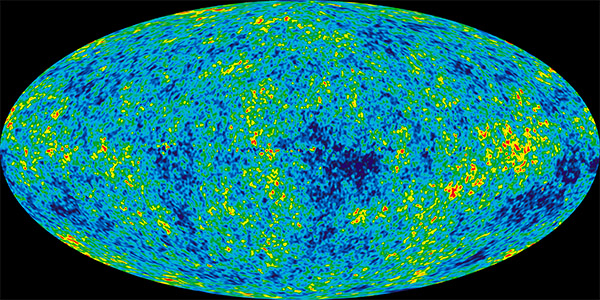
Linde’s idea was a new twist on a family of theories about cosmic inflation, a theory that encompasses big bang theory. In Linde’s refinement of it, cosmic inflation continued while the scalar field slowly rolled down. If that isn’t familiar science, don’t worry, I’ll post some links. Linde later reworked his new inflation theory, arriving at chaotic inflation, as it is now known. The theory has, as a necessary consequence, a nearly infinite number of parallel universes. To clarify, parallel universes are not a theory of Linde’s, per se. Parallel universes fall out of his theory designed to explain phenomena we observe, such as the cosmic background radiation.
So the theory involves entities (universes) that are not only unobservable in practice, but unobservable in principle too. Can a theory that makes untestable claims and posits unobservable entities fairly be called scientific? Even if some of its consequences are observable and falsifiable? And how can we justify the judgment we reach on that question? To answer these questions we need some background from the philosophy of science.
The Scientific Method
A simplistic view of scientific method involves theories that make predictions about the world, testing the theories by experimentation and observation, and then discarding or refining theories that fail to predict the outcomes of experiments or make wrong predictions. At some point in the life of a theory or family of theories, one might judge that a law of nature has been uncovered. Such a law might be, for example, that all copper conducts electricity or that force equals mass times acceleration. Another use for theories is to explain things. For example, the patient complains of shortness of breath only on cold days and the doctor judges the cause to be episodic bronchial constriction rather than asthma. Here we’re relying on the tight link between explanation and cause. More on that below.
Notice that science, as characterized like this, doesn’t prove anything, but merely gives evidence for something. Proof uses deduction. It works for geometry, syllogisms and affirming the antecedent, but not for science. You remember the rules. All rocks are mortal. Socrates is a rock. Therefore, Socrates is mortal. The conclusion about Socrates, in this case, follows from his membership in the set of all rocks, about which it is given that they are mortal. Substitute men or any other set, class, or category for rocks and the conclusion remains valid.
Science relies on inferences that are inductive. They typically take the following form: All observed X have been Y. The next observed X will be Y. Or a simpler version: All observed X have been Y. Therefore all X are Y. Real science does a better job. It eliminates many claims about future observations of X even before any non-Y instances of X have been found. It was unreasonable to claim that all swans were white even before Australian black swans were discovered. We know how fickle color is in birds. Another example of scientific induction is the conductive power of copper mentioned above. All observed copper conducts electricity. The next piece of copper found will also conduct.
In the mid-1700s philosopher David Hume penned a challenge to inductive thought that is still debated. Hume noted that induction assumes the uniformity of nature, something for which there can be no proof. Says Hume, we can easily imagine a universe that is not uniform – one where everything is haphazard and unpredictable. Such universes are of particular interest in Andrei Linde’s theory. Proving universal uniformity of nature would vindicate induction, said Hume, but no such proof is possible. One might be tempted to argue that nature has always been uniform until now so it is reasonable that it will continue to be so. Using induction to demonstrate the uniformity of nature – in order to vindicate induction in the first place – is obviously circular.
Despite the logical weakness of inductive reasoning, science relies on it. We beef up our induction with scientific explanations. This brings up the matter of what makes a scientific explanation good. It’s tempting to jump to the conclusion that a good explanation is one that reveals the cause of an observed effect. But, as troublemaker David Hume also showed, causality is never really observed directly – only chronology is. Analytic philosophers, logicians, and many quantum physicists are in fact very leery of causality. Carl Hempel, in the 1950s, worked hard on an alternative account of scientific explanation, the Covering-law model. It ultimately proved flawed. I’ll spare you the details.
Hempel also noted a symmetry between explanation and prediction. He claimed that the very laws of nature and experimental observations used to explain a phenomenon could have also been used to predict that phenomenon, had it not already been observed. While valid in many cases, in the years following Hempel’s valiant efforts, it became clear that significant exceptions existed for all of Hempel’s claims of symmetry in scientific explanation. So in most cases we’re really left with no option for explanation other than causality.
Beyond deduction and the simple more-of-the-same type of induction, we’ve been circling around another form of reasoning thought by some to derive from induction but argued by others to be more fundamental than the above-described induction. This is abductive reasoning or inference to the best explanation (synonymous for our purposes though differentiated by some). Inference to the best explanation requires that a theory not merely necessitate the observations but explain them. For this I’ll use an example from Samir Okasha of the University of Bristol.
Who moved the cheese?
The cheese disappeared from the cupboard last night, except for a few crumbs. The family were woken by scratching noises heard coming from the kitchen. How do we explain the phenomenon of missing cheese? Sherlock Holmes would likely claim he deduced that a mouse had crawled up the cupboard and taken the cheese. But no deduction is involved. Nor is induction as described above. Sherlock would actually be inferring, from the available evidence that, among the possible explanations for these observations, that a mouse was the best theory. The cheese could have vanished from a non-uniformity of nature, or the maid may have stolen it; but Holmes thought the mouse explanation to be best.
Inference to the best explanation is particularly important when science deals with unobservable entities. Electrons are the poster children for unobservable entities that most scientists describe as real. Other entities useful in scientific theories are given less credence. Scientists postulate such entities as components of a theory; and many such theories enjoy great predictive success. The best explanation of their predictive success is often that the postulated unobservables are in fact real. Likewise, the theory’s explanatory success, while relying on unobservables, argues that the theory is valid. The no miracles argument maintains that if the unobservable entities are actually not present in the world, then the successfully predicted phenomena would be unexplained miracles. Neutrinos were once unobservable, as were quarks and Higgs bosons. Note that “observable” here is used loosely. Some might prefer “detectable”; but that distinction opens another can of philosophical worms.
More worms emerge when we attempt to define “best” in this usage. Experimenters will have different criteria as to what makes an explanation good. For some simplicity is best, for others loveliness or probability. This can of worms might be called the problem of theory choice. For another time, maybe.
For a more current example consider the Higgs Boson. Before its recent discovery, physicists didn’t infer that all Higgs particles would have a mass of 126 GeV from prior observations of other Higgs particles having that weight, since there had been no observations of Higgs at all. Nor did they use any other form of simple induction. They inferred that the Higgs must exist as the best explanation of other observations, and that if the Higgs did exist, it would have a mass in that range. Bingo – and it did.
The school of thought most suspicious of unobservable entities is called empiricism. In contrast, those at peace with deep use of inference to the best explanation are dubbed scientific realists. Those leaning toward empiricism (few would identify fully with either label) cite two classic epistemological complaints with scientific realism: underdetermination of theory by data and pessimistic meta-induction. All theories are, to some degree, vulnerable to competing theories that explain the same observations – perhaps equally well (underdetermination). Empiricists feel that the degree of explanatory inference entailed in string theory and some of Andrei Linde’s work are dangerously underdetermined. The pessimistic meta-induction argument, in simplest form, says that science has been wrong about unobservables many times in the past and therefore, by induction, is probably wrong this time. In summary, empiricists assert that inference to the best explanation wanders too far beyond solid evidential grounds and leads to metaphysical speculation. Andrei Linde, though he doesn’t state so explicitly, sees inference to the best explanation as scientifically rational and essential to a mature theory of universal inflation.
With that background, painful as it might be, I’ll be able to explain my thoughts on Andrei Linde’s view of the world, and to analyze his defense of his theory and its unobservables in my next post.
– – –
Biographical material on Andrei Linde from the essay, “A balloon producing balloons producing balloons,” in The Universe, edited by John Brockman, and
Autobiography of Andrei Linde for the Kavli foundation
 The Multidisciplinarian