Archive for April, 2026
An Apostolic Blind Spot
Posted by Bill Storage in Biblical Criticism on April 8, 2026
Paul’s silences on the historical Jesus are striking. So is the scholarly tendency to not notice, or to wave them away without comment.
For years I participated in The Jesus Mysteries forum. Yahoo shut the platform down in 2020. No comprehensive archive of a decade of amazing scholarship exists. Among its key discussion topics was the historicity of Jesus. What follows is a line of questioning developed in that group, a bunch of shockingly sharp logicians named Arne, Blair, Jay, Klaus, Neville, Vince among others. There was nothing close to consensus, but the patterns the group highlighted is real and insufficiently addressed. Some, but not all what follows was condensed and published in Doherty’s The Jesus Puzzle, though it doesn’t capture the deductive intricacies of that scholarship. This is a condensation of notes from my participation in that group.
The opportunities missed by the writers of the Epistles to mention an earthly Jesus abound. I’ll refer to “Paul” as author of those epistles, though authorial style, differences in Christology, semantic analysis, and statistical stylometry virtually ensure that the epistles, even the central five, are the works of multiple authors, even within each book.
Paul is regarded as Christianity’s most tireless evangelist, a man who carried the message of Jesus across the Mediterranean world. Yet when we read his letters closely, a puzzle emerges. Paul almost never appeals to the words, deeds, or life of a historical Jesus. This silence is systematic. Evangelists and historians respond piecemeal to the conspicuous silences, as if refuting one silence dissolves the argument. The method for addressing these silences in the discussion group was cumulative, not merely deductive. Individually, any silence can be explained away – by pastoral reasons, rhetorical constraints, or theological priorities. But not all of them together. The force comes from the sheer volume and consistency of the omissions.
Consider Paul’s own calling. Christians often picture the road to Damascus as a cinematic event, complete with blinding light and a thunderous voice from heaven. That story comes from Acts, written later (we can say this with certainty – a story in itself) and by someone other than authors of the central epistles. In Paul’s epistles, the spectacle is absent. He describes his apostleship as grounded in the will and approval of God, not in an encounter with a speaking Jesus. He says he was “called by the will of God” (1 Cor. 1:1), says his ministry was “approved by God” (1 Thess. 2:4), and refers to a divine commission entrusted to him (Col. 1:25). Even when Paul mentions visions and revelations, as in 2 Corinthians 12, he does not identify them with a Damascus event.
Galatians 1 is especially revealing. Paul says that God was pleased to reveal his Son en him. The Greek preposition is ambiguous, but “in” or “through” are more natural readings than “to.” In any case, Paul frames the experience as God’s initiative, not a personal encounter with an earthly Jesus who teaches, corrects, or commissions him. Throughout Paul’s letters, the source of authority is God. Christ is the content of the message, not the narrator of Paul’s vocation.
This pattern continues. Paul repeatedly insists that his gospel is a “gospel of God” (Rom. 1:1; 1 Thess. 2:2). He never speaks of a “gospel of Jesus” in the sense of teachings delivered by Jesus during his lifetime. Even apostles, Paul says, are appointed by God (1 Cor. 12:28), not by Jesus during an earthly ministry.
Once you notice it, you see Paul’s silences everywhere.
He tells the Corinthians explicitly that Christ did not send him to baptize (1 Cor. 1:17). That statement is at odds with Matthew’s post-resurrection command to baptize all nations. Paul does not explain the tension. He doesn’t appeal to Jesus’ authority to clarify it.
Paul advocates celibacy and restraint, yet never cites Jesus’ remarks about those who renounce marriage for the sake of the kingdom. In Galatians, he confronts Peter at Antioch over table fellowship with Gentiles but does not remind him that Jesus himself ate with sinners and outsiders. When Paul admits uncertainty about how to pray (Rom. 8:26), he does not appeal to the Lord’s Prayer. Seems to me it might have helped.
More astounding still, Paul never places Jesus in a historical setting. He gives no dates, no locations, no rulers, no geography. Jesus might as well have lived nowhere in particular, or, as, some Jesus Mysteries participants argued, solely in a heavenly realm. Without the gospels, Christ is disconnected from first-century Palestine. This does not prove Paul denied an earthly or historical Jesus, but it does show that such details were not important to his theology or his apologetics.
Paul’s relationship with the Jerusalem leaders only makes things weirder. He treats Peter, James, and John as rivals rather than revered custodians of Jesus’ earthly teaching. His tone in Galatians is dismissive, often caustic. He never indicates belief that these men supposedly knew Jesus personally. He never appeals to their memories of Jesus’ words. He never even says or implies that anyone had encountered Jesus face to face.
Language matters here. Paul never uses the word “disciple.” Given how central discipleship is in the gospel narratives, the absence is conspicuous. So is Paul’s Christology. In Philippians 2, Jesus receives his exalted name only after death. Paul consistently distinguishes between God and Christ. “The head of Christ is God” (1 Cor. 11:3). Paul prays to God, sometimes through Christ, but never to Christ. There is no Trinitarian framework in Paul’s letters.
Eschatology raises similar questions. In the gospels, the destruction of the Temple is a decisive sign bound up with the coming kingdom. Paul speaks incessantly about the end times, yet never mentions the Temple’s destruction, past or future. He never links eschatological expectation to Jerusalem’s fate. Given the importance of the Temple in Jewish apocalyptic thought, this silence is impossible to dismiss.
Paul also avoids explicitly Jewish messianic language. He rarely uses “messiah” as a title with explanatory force and never employs “Son of Man.” His Christ is not embedded in Jewish expectation in the way gospel Jesus is. One wonders what, precisely, Paul learned from the so-called pillars.
Finally, Paul speaks of Jesus’ future arrival, but never calls it a second coming. There is no contrast with a first public advent. Jesus’ earthly career, if Paul believed one existed, plays no role in structuring his theology.
When all this is laid out, the cumulative effect is unsettling. Paul never mentions Nazareth, Bethlehem, Galilee, Herod, Pilate, Mary, Joseph, John the Baptist, parables, miracles, the Temple action, Judas, Gethsemane, the trial, the empty tomb, or post-resurrection appearances in narrative form. You can infer, obliquely, allusions – never narrated, contextualized, or grounded in remembered scenes – to some of these events. But such inferences are only possible given your background knowledge of the gospel stories Paul never addresses.
These omissions don’t prove anything. They do suggest that Paul’s Christ is not the biographical figure of the gospels. Paul’s Jesus is a revealed, exalted figure known through scripture, visions, and divine commission, not through memories of a recent teacher from Galilee.
Historians are trained to notice gaps. In this case, the gap is not only in Paul’s letters, but in the secondary literature that treats those letters as if nothing were missing.
The Ugly Nero
Posted by Bill Storage in History of Art on April 1, 2026
This is Nero, the infamous emperor who fiddled while Rome burned – or so the story goes – the story being a modern amplification of disreputable ancient sources.
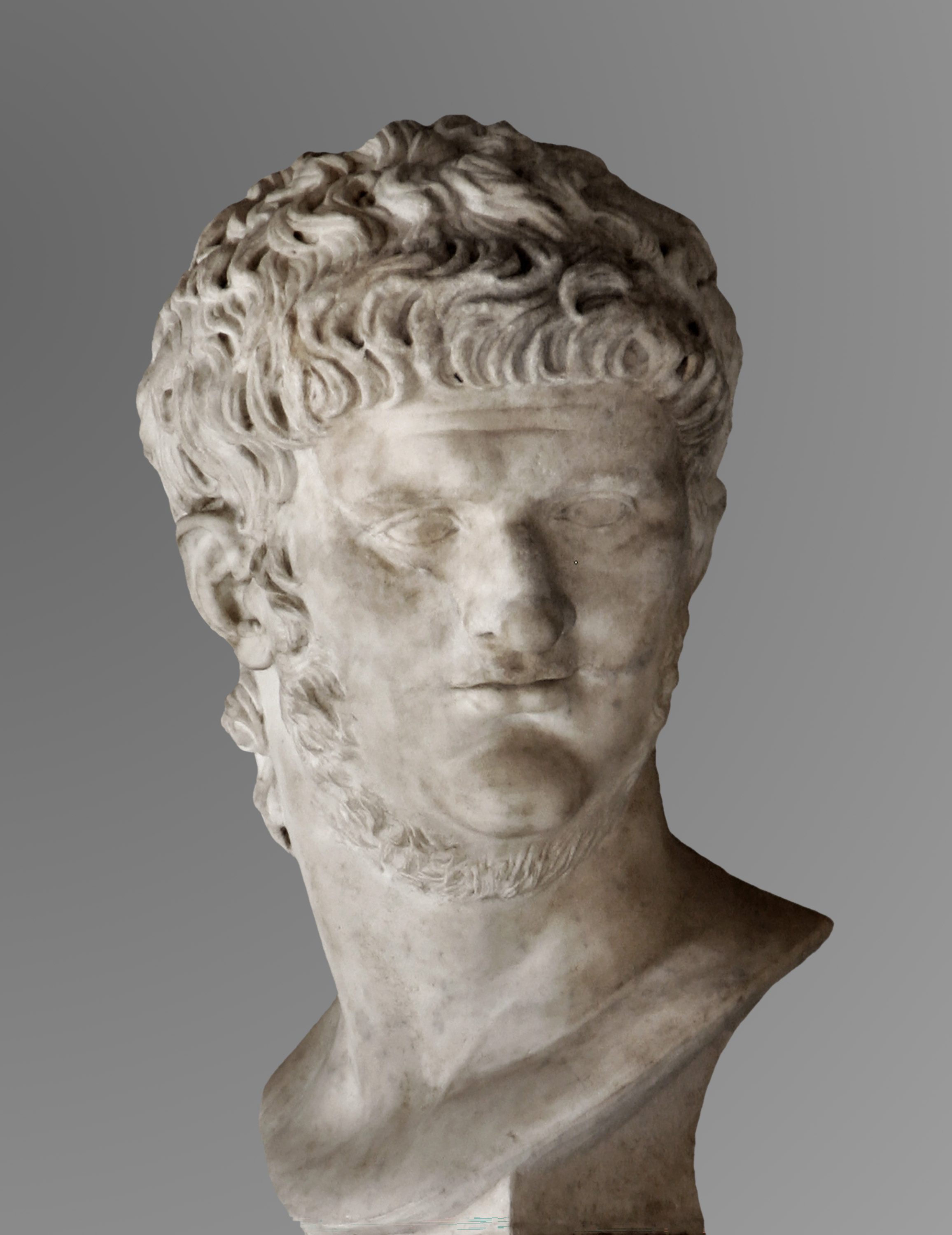
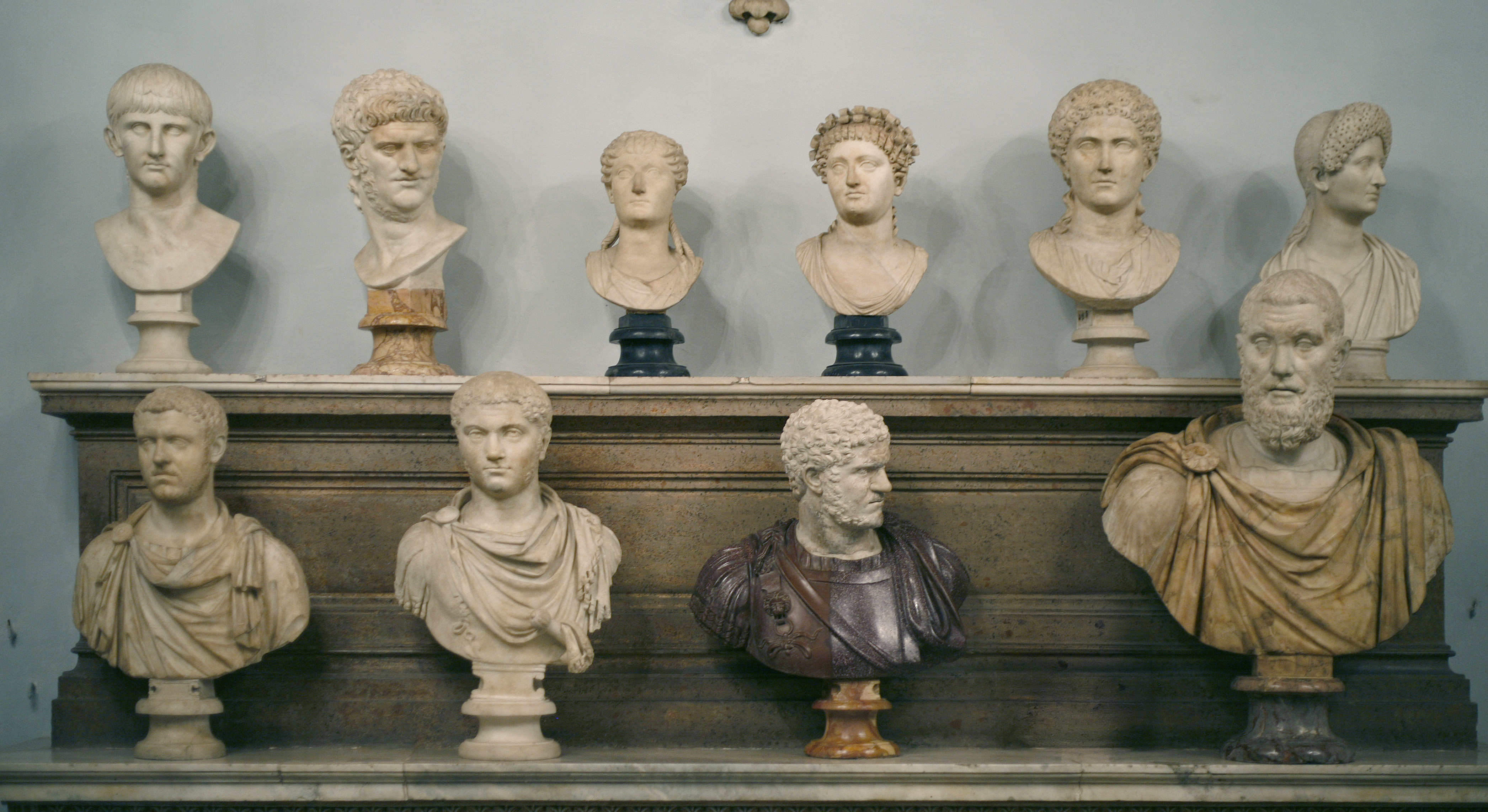
This striking marble bust (Museo Capitolino inventory MC 0427) in the Capitoline Museums’ Hall of Emperors is one of the most photographed portraits of him. It’s certainly the ugliest. But there’s a twist.
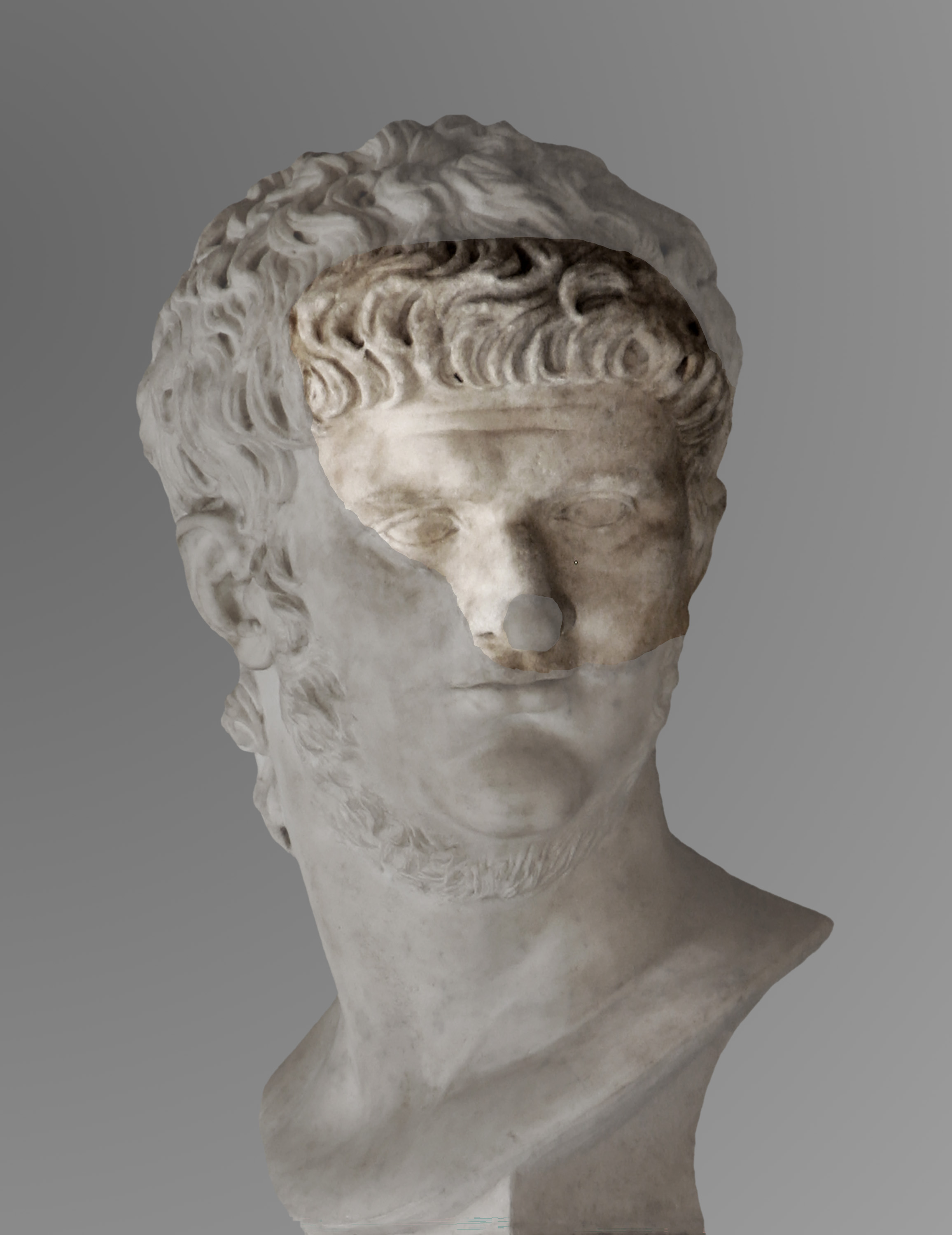
Only this small upper part of the face is actually ancient. It probably originated as a portrait of Nero carved late in his reign, around AD 60 or later. After Nero was murdered, it appears the head was recarved in antiquity to represent Domitian instead.
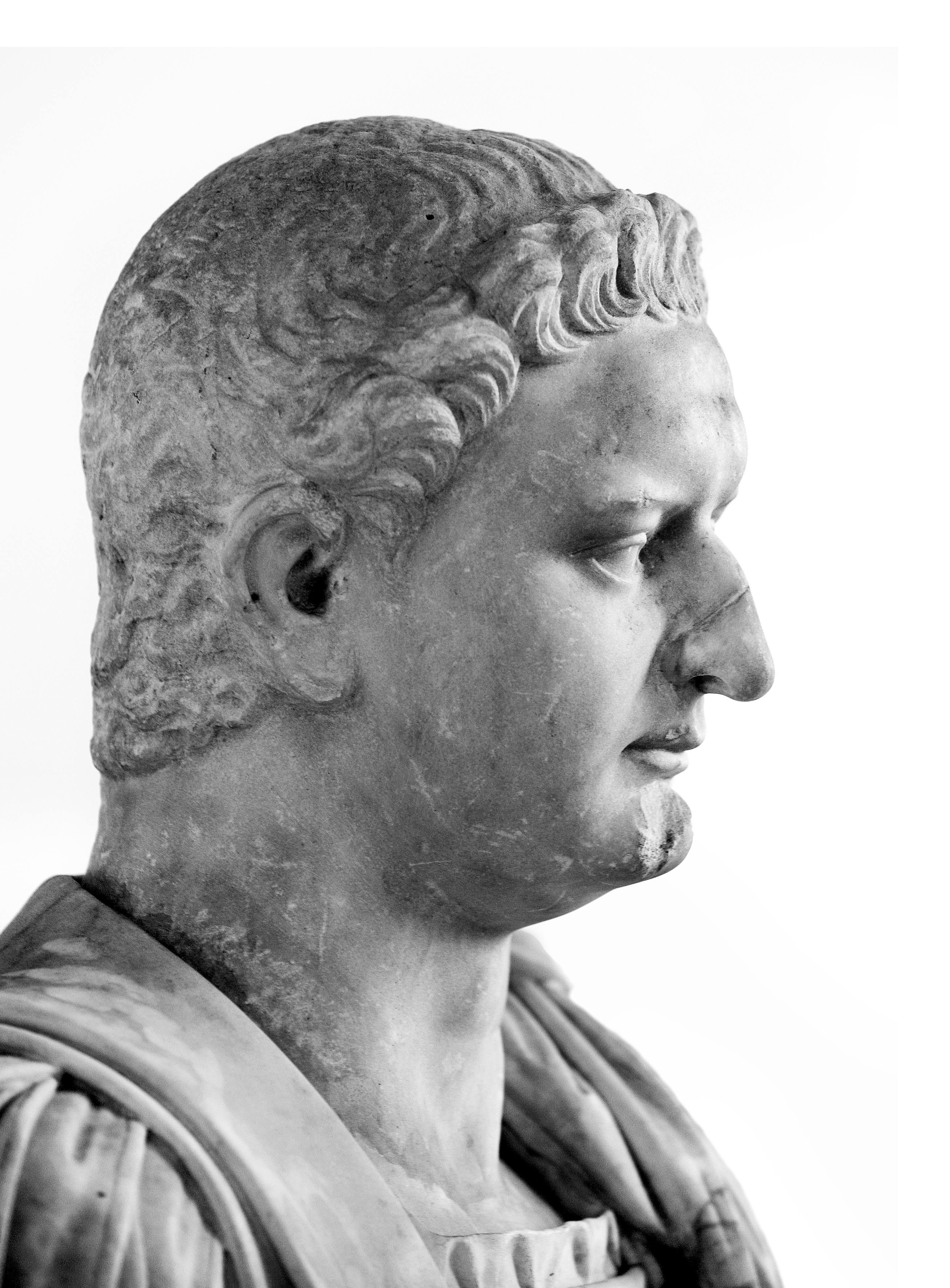
Some time later, it was damaged, leaving just the fragment highlighted here. Then, in the late 16th or early 17th century, Baroque restorers went to work for collectors like those in the Albani circle. The source of the original ancient head is unknown. It passed through the Giustiniani collection before entering the Albani collection, assembled by Cardinal Alessandro Albani in the 1700s. The Capitoline Museums acquired many pieces from the Albani collection in the 18th century as part of the museum’s early formation and expansion.
The Albacini workshop (Carlo Albacini and his son Filippo) was the cutting edge in Rome for restoring and completing ancient sculptures for collectors and the Grand Tour market. A drawing or related work by the Albacinis depicts “a fragment of Domitian restored as Nero,” suggesting their involvement. They completed almost the entire head, neck, and bust in the dramatic style of their time.
The result looks like Nero… Sort of. But compare it to better-preserved portraits of the real emperor and differences jump out. The proportions here are noticeably off – wider, coarser, perhaps deliberately unflattering.
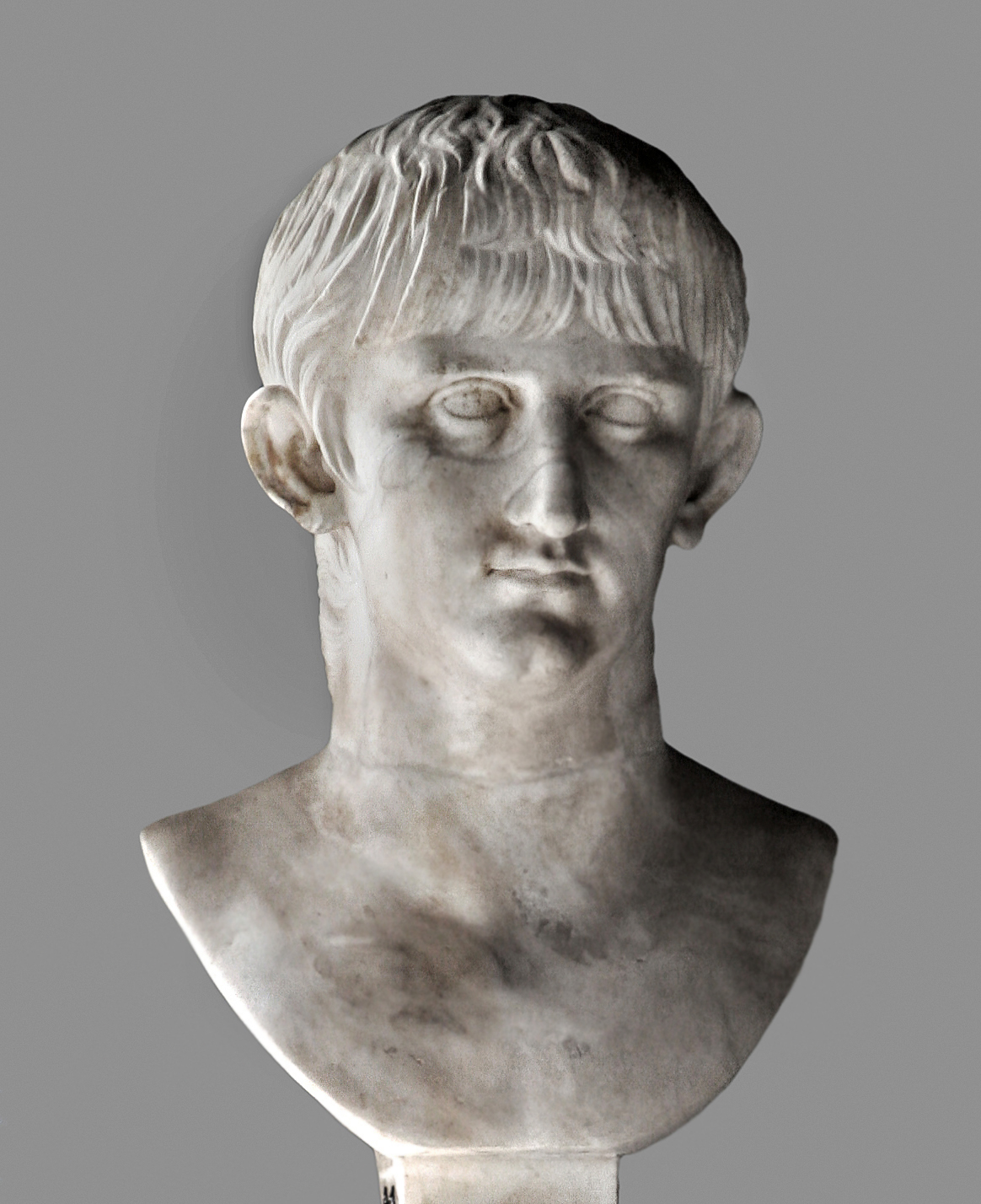
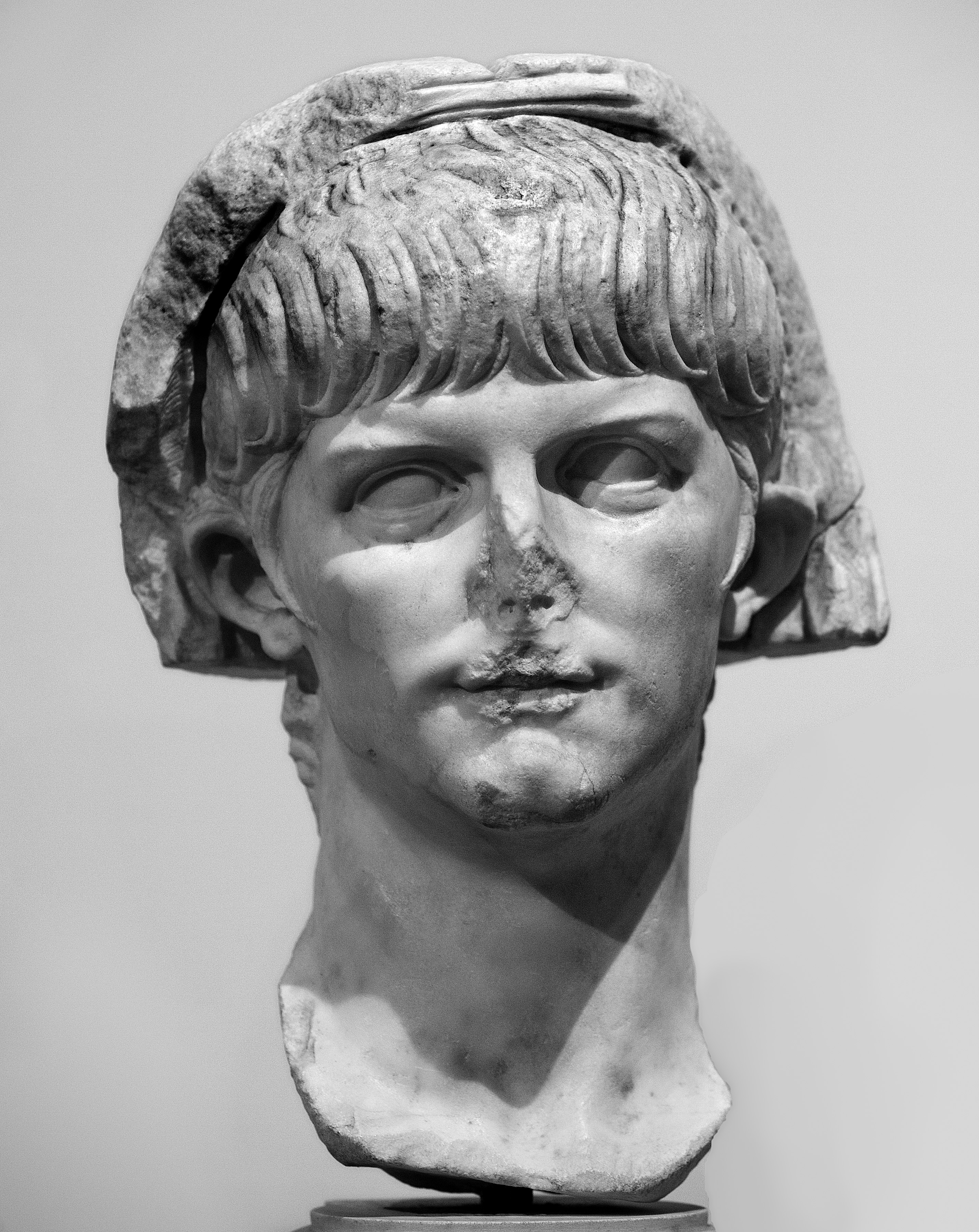
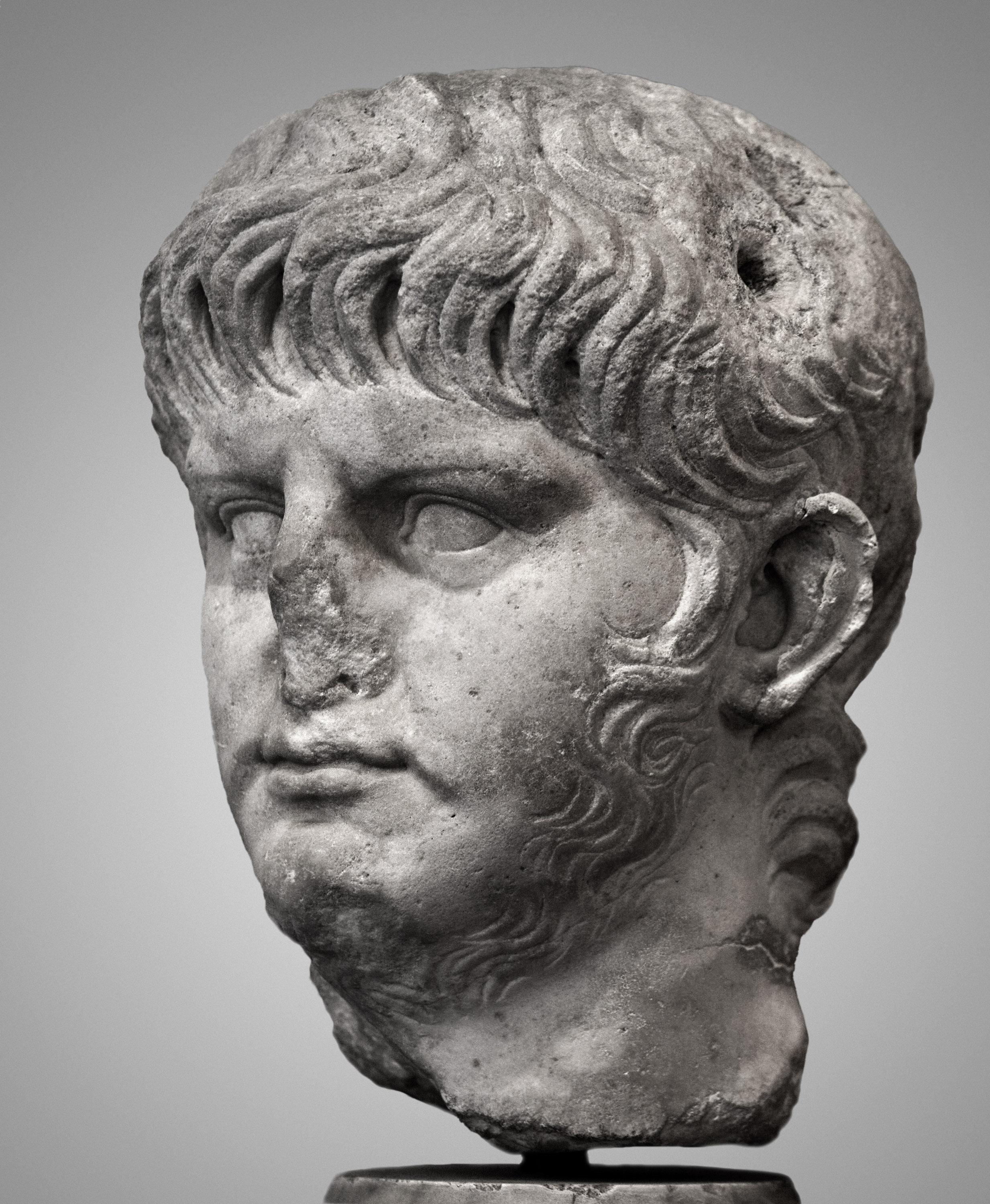
The restored lower face and neck stand out sharply from Nero’s established types. We know this because we took detailed measurements of them and did statistical analyses.
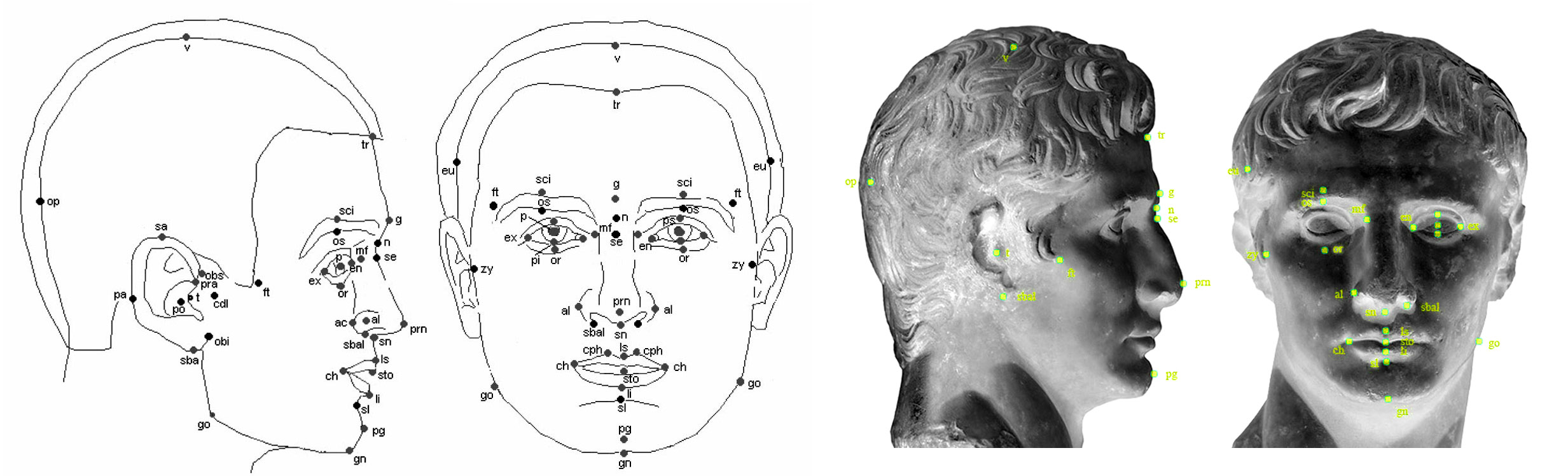
Why make Nero look almost hideous? It probably wasn’t ignorance. Other Nero portraits were known in Rome at the time. More likely, the restorers were channeling Suetonius, who described Nero as physically unappealing, with a thick neck and features that matched the image of a tyrant. Suetonius dies hard, even though we know he just made stuff up. Emperors, in ancient, Renaissance and modern minds alike, it seems, need to have been either great or terrible. Ancient physiognomy – the idea that looks reveal character – probably played a role in the restoration. They may have seen their job as more than just fixing marble. They were shaping a moral story.
This bust is a living record, layered with ancient politics, damage, and Renaissance imagination.
Next time you’re in the Hall of Emperors, look past the label. Roman portraits often tell us as much about the people who carved or restored them as about the emperors themselves.
—
See our YouTube short on this head of Nero
 The Multidisciplinarian
Republicans Against Democracy
Posted by Bill Storage in Commentary on April 9, 2026
The aim of protest is to misrepresent the proportion of people holding a given opinion by being more conspicuous than those not holding that view.
You might argue, in response, that protest is less about measuring opinion than “signaling intensity.” Ten thousand mildly supportive people and five hundred highly motivated people are not equivalent in political terms, you might say. The latter will donate, organize, vote in primaries, and make life difficult for officials. Protest is a way of saying, “we care enough to incur cost.” That’s information, says the organizer.
Then maybe you’ve made my point. In a democracy – democratic republic, more correctly – someone in that highly motivated group should still cast but one vote.
A protest and its media coverage create the impression of a groundswell that isn’t there. And there’s a continuity between “signaling intensity” and “nudging conformity.” Social visibility tells folk seeking peer approval “this is the crowd to be part of.”
If a protest makes a stance feel socially legible and non-isolating, it lowers the cost of adopting it. Deep-pocket funding can tilt who gets organized and which messages are polished. It can lower barriers for certain groups, provide stipends for organizers, and shape the tone of events. That can make a movement look more coherent or widespread than it would be if people had to self-organize, like they did in 1967.
Media bias, including social media hosted by big concerns like Facebook, X and Google, is an obvious source of concern. Case in point: Google’s apparent attempt to coerce me right here. I intended to call this essay “Democrats Against Democracy.” So I asked Google Gemini to make me an image of an angry man holding a sign saying “Democrats against democracy.”
It refused. I asked two more times, using different language. It instead built me an image of a man holding a sign reading “Democrats against corruption.” So I then asked for an angry man with “Republicans against democracy.” Thank you.
I cover a wide variety of topics on this blog. From my WordPress stats, I can conclude that textual analysis of the Gospel of Mark and stress analysis of concrete expansion bolts are hotter topics than politics. I can’t know for sure whether Google suppresses my political posts, but it seems curious that Mark and concrete bolts each got 40 times as many views as my pieces criticizing covid response. 40 times.
Elections confer authority, they shouldn’t suspend dissent. Protest can be a normal part of democratic feedback when it tries to change minds or set agendas. It can be clearly anti-democratic when it aims to nullify lawful outcomes or intimidate participation. Help me draw the line?
Watch my short video spoof about Careers in the Protest Economy on YouTube. YouTube is owned by Google. This video got one fiftieth as many views as the one I made about a particular marble bust of emperor Nero a day later. Timely topic, Nero.
democracy, history, news, politics, trump
1 Comment