Posts Tagged science
Paul Feyerabend – The Worst Enemy of Science
Posted by Bill Storage in Philosophy of Science on August 7, 2012
The Incommensurable Thomas Kuhn
Posted by Bill Storage in Philosophy of Science on August 4, 2012
William Storage 4 Aug 2012
Visiting Scholar, UC Berkeley Center for Science, Technology & Society
Thomas Kuhn’s 1962 book, The Structure of Scientific Revolutions, appears in Wikipedia’s list of the 100 most influential books in history. In Structure, Kuhn introduced the now ubiquitous term and concept of paradigm shift. As Kuhn saw it, the scope of a paradigm was universal. A paradigm is not merely a theory, but the framework and worldview in which a theory dwells. Kuhn explained that, “successive transition from one paradigm to another via revolution is the usual developmental pattern of mature science.” His view was that paradigms guide research through periods of “normal science,” during which, any experimental results not consistent with the paradigm are deemed erratic and are discarded. This persists until overwhelming evidence against the paradigm results in its collapse, and a paradigm shift occurs.
Kuhn stressed the idea of incommensurability between associated paradigms, meaning that it is impossible to understand the new paradigm from within the conceptual framework of its predecessor. Examples include the Copernican Revolution, plate tectonics, and quantum mechanics.
Countless discussions and critiques of Kuhn and his work have been published. I’ll focus mainly on aspects of his work – and popular conceptions of it – related to its appropriation in technology and business process management; but a bit of background on popular misunderstandings of his work from a philosophy perspective will come in handy later.
Kuhn’s claim of incommensurability led many to conclude that the selection of a governing theory is fundamentally irrational, a product of consensus or politics rather than of objective criteria. This fueled flames already raging in criticism of science in postmodernist, subjectivist, and post-structuralist circles. Kuhn was an overnight sensation and placed on a pedestal by all sorts of relativism, sociology, and arts and humanities movements, despite his vigorous rejection of them, their methods, their theories, and their paradigms. Decades later (The Road Since Structure), Kuhn added that, “if it was relativism, it was an interesting sort of relativism that needed to be thought out before the tag was applied.”
Communities outside of hard science – 20th century social theory in particular – couldn’t get enough of Kuhn and his paradigm shifts. Much of the Philosophy of Science community scoffed at his book. Within hard science there was considerable debate, particularly by Karl Popper, Stephen Toulmin and Paul Feyerabend. And even in the hard science community, Kuhn found himself in constant defense not against the scientific reading of his model, but against the ideas appropriated by schools of philosophers, cultural theorists, and literary critics calling themselves Kuhnians. Freeman Dyson recall s having confronted Kuhn about these schools of thought:
“A few years ago I happened to meet Kuhn at a scientific meeting and complained to him about the nonsense that had been attached to his name. He reacted angrily. In a voice loud enough to be heard by everyone in the hall, he shouted, ‘One thing you have to understand. I am not a Kuhnian.'” – Freeman Dyson, The Sun, The Genome, and The Internet: Tools of Scientific Revolutions
 Postmodern deconstructionists are certainly right about one thing; there are many ways to read Kuhn. Kuhn’s Structure – if interpreted outside the narrow realm in which he intended it to operate – becomes strangely self-referential and self-exemplifying. Different communities consumed it as constrained by their existing paradigms. In The Road Since Structure Kuhn reflected that, regarding Structure‘s uptake, he had disappointments but not regrets. He suggested that if he had it do over, he would have sought to prevent readings such as the view that paradigms are sources of oppression to be destroyed.
Kuhn would have to have been extremely naive to fail to consider the consequences – in the socially precarious 1960s – of describing scientific change in terms of a sociological, political, and Gestalt-psychology models in a book having “revolution” in its title. Or perhaps it was a scientist’s humility (he was educated as a physicist) that allowed him to not anticipate that a book on history of science would ever be read outside the communities of science. Despite the incredulity of such claims – and independent of accuracy of his position on science – my reading of Kuhn’s interviews and commentary on the impact of Structure leads me to conclude that Kuhn is truly an accidental guru – misread, misunderstood, and misused by adoring postmodernist theorists and business strategists alike. Without Thomas Kuhn, paradigm shift would not rank in CNET’s top 10 dot-com buzzwords, futurist Joel Barker and motivator Stephen Covey would have had very different careers, and postmodern relativists might still be desperately craving some shred of external validation.
——————————
.
“You talk about misuses of Kuhn’s work. I think it is wildly misused outside of natural sciences. The number of scientific revolutions is extremely small… To find one outside the natural sciences is very hard. There are just not enough interesting and signficant ideas around, but it is curious if you read the sociological or linguistic literate, that people are finding revolutions everywhere.” – Noam Chomsky, The Generative Enterprise Revisited
“Let us now turn our atention towards some historical analyses that have apparently provided grist for the mill of contemporary relativism. The most famous of these is undoubtedly Thomas Kuhn’s The Structure of Scientific Revolutions.” – Alan Sokol, Beyond the Hoax
——————————
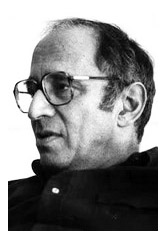
The above use of a low-resolution image of Thomas Kuhn is contended to be a fair use because it is solely for the educational purpose of illustrating this article and because the value of any existing copyright is not lessened by its use here. The subject is deceased and no free equivalent can therefore be obtained. The image is of greatly lower quality than the original, reducing the risk of damage to the value of the original version.Science, Holism and Easter
Posted by Bill Storage in Multidisciplinarians, Systems Thinking on April 8, 2012
 Thomas E. Woods, Jr., in How the Catholic Church Built Western Civilization, credits the church as being the primary sponsor of western science throughout most of the church’s existence. His point is valid, though many might find his presentation very economical with the truth. With a view that everything in the universe was interconnected, the church was content to ascribe the plague to sin. The church’s interest in science had something to do with Easter. I’ll get to that after a small diversion to relate this topic to one from a recent blog post.
Catholic theologians, right up until very recent times, have held a totally holistic view, seeing properties and attributes as belonging to high level objects and their context, and opposing reductionism and analysis by decomposition. In God’s universe (as they saw it), behavior of the parts was determined by the whole, not the other way around. Catholic holy men might well be seen as champions of “Systems Thinking” – at least in the popular modern use of that term. Like many systems thinking advocates in business and politics today, the church of the middle ages wasn’t merely pragmatic-anti-reductionist, it was philosophically anti-reductionist. I.e., their view was not that it is too difficult to analyze the inner workings of a thing to understand its properties, but that it is fundamentally impossible to do so.

Santa Maria degli Angeli, a Catholic solar observatory
Unlike modern anti-reductionists, whose movement has been from reductionism toward something variously called collectivism, pluralism or holism, the Vatican has been forced in the opposite direction. The Catholics were dragged kicking and screaming into the realm of reductionist science because one of their core values – throwing really big parties – demanded it.
The celebration date of Easter is based on pagan and Jewish antecedents. Many agricultural gods were celebrated on the vernal equinox. The celebration is also linked to Shavuot and Passover. This brings the lunar calendar into the mix. That means Easter is a movable feast; it doesn’t occur on a fixed day of the year. It can occur anywhere from March 22 to April 25. Roughly speaking, Easter is the first Sunday following the first full moon after the spring equinox. To mess things up further, the ecclesiastical definitions of equinox and full moon are not the astronomical ones. The church wades only so far into the sea of reductionism. Consequently, different sects have used different definitions over the years. Never fearful of conflict, factions invented nasty names for rival factions; and, as Socrates Scholasticus tells it, Bishop John Chrysostom booted some of his Easter-calculation opponents out of the early Catholic church.
 Science in the midst of faith, Santa Maria degli Angeli
By the 6th century, the papal authorities had legislated a calculation for Easter, enforcing it as if it came down on a tablet. By the twelfth century, they could no longer evade the fact that Easter had drifted way off course.
Right around that time, Muslim scholars had just translated the works of the ancient Greek mathematicians to Latin (Ptolemy’s Almagest in particular). By the time of the Renaissance, Easter celebrations in Rome were gigantic affairs. Travel arrangements and event catering meant that the popes needed to plan for Easter celebrations many years in advance. They wanted to send out invitations specifying a single date, not a five week range.
 Sketch from Bianchini’s 1703 “De nummo.”
Science appeared the only way to solve the messy problem of predicting Easter. And the popes happened to have money to throw at the problem. They suddenly became the world’s largest backer of scientific research – well, targeted research, one might say. John Heilbron, Vice-Chancellor Emeritus of UC Berkeley (who brought me into History of Science at Cal) put it this way in his The Sun in the Church:
The Roman Catholic Church gave more financial support to the study of astronomy for over six centuries, from the recovery of ancient learning during the late Middle Ages into the Enlightenment, than any other, and, probably, all other, institutions. Those who infer the Church’s attitude from its persecution of Galileo may be reassured to know that the basis of its generosity to astronomy was not a love of science but a problem of administration. The problem was establishing and promulgating the date of Easter.
The tough part of the calculation was determining the exact time of the equinox. Experimental measurement would require a large observatory with a small hole in the roof and a flat floor where one could draw a long north-south line to chart out the spot the sun hit on the floor at noon. The spots would trace a circuit around the floor of the observatory. When the spot returned to the same point on the north-south line, you had the crux of the Easter calculation.

 Solar observatory detail in marble floor of church
By luck or divine providence, the popes already had such observatories on hand – the grand churches of Europe. Punching a hole through the roof of God’s house was a small price to pay for predicting the date of Easter years in advance.
Fortunately for their descendants, scientists are prone to going off on tangents, some of which come in handy. They needed a few centuries of experimentation to perfect the Easter calculation. Matters of light diffraction and the distance from the center of the earth to the floor of the church had to be addressed. During this time Galileo and friends stumbled onto a few work byproducts that the church would have been happier without, and certainly would not have invested in.

Gnomon and meridian, Saint-Sulpice, Paris
The guy who finally mastered the Easter problem was Francesco Bianchini, multidisciplinarian par exellence. The church OK’d his plan to build a meridian line diagonally across the floor of the giant church of Santa Maria degli Angeli in Rome. This church owes its size to the fact that it was actually built as a bath during the reign of Diocletian (284 – 305 AD) and was then converted to a church by Pope Pius IV in 1560 with the assistance of Michelangelo. Pius set about to avenge Diocletian’s Christian victims by converting a part of the huge pagan structure built “for the convenience and pleasure of idolaters by an impious tyrant” to “a temple of the virgin.”
Bianchini’s meridian is a major point of tourist interest within Santa Maria degli Angeli. All that science in the middle of a church feels really odd – analysis surrounded by faith, reductionism surrounded by holy holism.
 The Multidisciplinarian