Bill Storage

This user hasn't shared any biographical information
I’m Not Saying Neil deGrasse Tyson Is an Idiot
Posted in Commentary, History of Science on March 19, 2026
A clip from a 2023 interview with Neil deGrasse Tyson is making the rounds. The key move comes here:
“you can say Trump is an idiot… get him out of there. But wait a minute. There’s still the matter of the 80 million people who voted for him.”
That “but wait a minute” frames the opposition view in a compressed, caricatured form, then pivots to what Tyson wants to emphasize, the scale of voter support. It’s a familiar courtroom tactic: summarize the other side just enough to dismiss it.
Grammatically, it is steelmanning. He states the strongest version of the anti-Trump position without owning the offense, then challenges the adequacy of the idea that we can “just swap the leader.” The logic doesn’t require him to endorse the insult, only to note that it fails to persuade tens of millions of voters.
The framing isn’t neutral. My Kuhn/Feyerabend reflex kicks in whenever a scientist steps into politics. Kuhn reminds us that observation is theory-laden. Tyson’s background inclines him toward a systems view, voters as the underlying structure, leaders as surface phenomena. That’s a perspective, a model, a theory. Evidentiary support?
Feyerabend helps with the second layer. Tyson doesn’t speak as just another citizen. He speaks as a public scientist whose words hold epistemic weight because of a lab coat. He carries borrowed authority. In a lab, that authority is constrained and earned. In politics, it floats freely. What sounds like analysis can double as worldview advocacy with a credentialed accent.
Tyson’s brand is built on empiricism – evidence-based thinking. When he wades into polarized territory, the man-of-science hat amplifies his inferences beyond what he literally says. The clip explicitly avoids calling Trump and voters idiots. Yet by staging a hypothetical view as “Trump is an idiot, remove him,” it hands audiences a simplified target. In the echo chambers where the clip circulates, the move often completes itself. The conclusion becomes, “people who disagree are ignorant,” now tacitly endorsed by an astrophysicist.
From what surfaced in reactions to the Tyson clip, viewers do leap to exactly the conclusion: “yeah, those voters are uneducated (or they would know Trump is an idiot).” Comments frame large voter blocs as gullible, anti-intellectual hilljacks, with Tyson positioned as the authoritative validator. The authority halo makes it potent. The leap feels licensed because the astrophysicist said (implied) it.
Let’s examine the alternative Tyson the scientist might have taken. Treat the 80 million votes not as a rhetorical endpoint but as a dataset. What motivates them? Economic stress, distrust of institutions, cultural alignment, media ecosystems? Which of those factors are well supported, which are not? That would model inquiry rather than closure. It would look like science, not like New York Times propaganda.
Instead, he treats the voter count as brute fact. The “spinning wheel” metaphor does the work. It gestures at a cycle of anger without examining its causes. American political theory has long assumed exactly this kind of friction, not as a bug but as a feature of competing viewpoints. The mess is structural. Has Tyson read the Federalist Papers?
Tyson teaches, by implication, that you can borrow the prestige of science to shortcut messy social inquiry. When expertise bleeds unchecked into values-laden domains, it inadvertently – in the most charitable interpretation of his words – credentials tribal intuitions instead of challenging them.
From the lens of science, the issue isn’t Tyson’s conclusion but his method. When scientific authority migrates without marking its limits, it can validate the intuitions it ought to probe. Listeners don’t just hear the argument, they hear who is making it.
Public scientists don’t need to stay in their lane, but when they step out, the burden shifts. They should, above all else, reinforce the habit of interrogating assumptions with rigor. Less metaphor, more mechanism. Otherwise the lab coat becomes too persuasive, for all the wrong reasons.
Avuncular Aloofness as Superstructure: New York Times’ Khamenei Framing through a Marxist Lens
Posted in Commentary on March 3, 2026
New York Times, February 28, 2026: “Ayatollah Ali Khamenei, Autocratic Cleric Who Made Iran a Regional Power, Is Dead at 86”:
“With his spectacles, Palestinian kaffiyeh, long robes and silver beard, Ayatollah Khamenei cast himself as a religious scholar as well as a writer and translator of works on Islam. He affected an avuncular and magnanimous aloofness, running the country from a perch above the jousting of daily politics.”
Washington Post, February 28, 2026: “Ayatollah Ali Khamenei, Iran’s supreme leader, is dead at 86”:
“With his bushy white beard and easy smile, Ayatollah Khamenei cut a more avuncular figure in public than his perpetually scowling but much more revered mentor, and he was known to be fond of Persian poetry and classic Western novels, especially Victor Hugo’s Les Misérables.”
Khamenei was killed on February 28, 2026, in joint U.S.-Israeli strikes on Iran. The New York Times led its piece with his avuncular and magnanimous aloofness. Oh, and a religious scholar. The Washington Post opened its obit with a bushy white beard and easy smile. A soft spot for Victor Hugo’s Les Misérables. Both papers called him “avuncular.” Anything odd there? No?
I read Karl Marx closely. Some of my fellow Marxists forget Marx when it’s convenient. You all know the mechanism: the narrative superstructure serves the interest. What gets foregrounded – the beard, the smile, the poetry – and what gets backgrounded is never neutral. It’s selection bias dressed up as multi-perspective objectivity and eloquence.
If I learned one thing from Das Kapital, it is that interest controls that lens. What you choose to put in the first paragraph is the tell. What you omit, or bury at the bottom of the piece, says more. He exported death, you disgusting rag. Here’s the omitted ledger that actually defined the man who held absolute power from 1989 until last week:
The poetry was real enough. It defines Khamenei’s 37-year rule just as much as Hitler’s watercolor hobby defined his. Yet these respected journals lead with the his “easy smile” the same way they opened Baghdadi obits with “austere religious scholar.”
This garbage is sheer institutional reflex. The Times’ default mode for anti-Western authoritarians is the “complex man of culture” framing. Raw moral clarity (“ruthless theocrat who turned Iran into a prison state and terror sponsor”) must be too binary for the elite reader. Iranians danced in the streets and shouted from rooftops; the Times writers stroked his bushy beard. Was that acknowledging complexity? Or just laundering priority. Ho ho ho.
These papers once prided themselves on skepticism toward power. Yet when the power is cloaked in anti-Western theocratic rhetoric, the victims become statistics lower in the column. The audience might skew toward people who prize balance and distrust moralistic takes as simplistic or right-wing. The Times’ superstructure of polite, nuanced prose protects the base. They wouldn’t want to alienate certain geopolitical narratives of their intellectual base. What they sell as the bravery of complexity is just cowardice and pandering dressed up as erudition.
I canceled after the Baghdadi religious scholar stuff. John, how can you still read this shit?
Postscript Mar. 4 – Supplemental rant:
The New York Times is held to have high standards in prose. Forget the politics for a minute. Both obits, NYT and WaPo, open with “With his…” and then wander into complete loss of agency. How do those spectacles relate to magnanimity, ruling from a perch, and death to America?
Are they using “with” as a preposition? Or as a false subordinating conjunction, or a false relative pronoun? It’s a multipurpose crutch, to pad length, to layer innuendo and dilute syntactic warrant. Cowards.
The prepositional phrase it introduces is used adverbially to set scene, but it functions like a weak subordinating clause or appositive, tacked on to introduce a description without committing to a strong main verb anchor. That is, to avoid taking responsibility for their underlying message. Karl Marx gets it.
Given their shared use of “avuncular” and their imputation-laden abuse of prepositional phrases, I wonder if the two rags share an uncle, AI-incense or the like.
What ‘Project Hail Mary’ Gets Right about Science
Posted in History of Science on February 11, 2026
Most reviews of Project Hail Mary focus on the science, the plot, or the plausibility of first contact. This one asks a different question: what does the story assume science is?
Andy Weir’s novel, and the upcoming film adaptation, treats science not as individual brilliance but as a coordination technology, a way fallible minds synchronize their guesses about the world. That framing quietly explains why an alien civilization could master interstellar travel while missing radiation, and why human weakness turns out to be an epistemic strength.
This review looks at Project Hail Mary as a rare piece of science fiction where epistemology is central. Things like:
- Science as method rather than facts
- Individual intelligence vs collective knowledge
- Why discovery depends on social structure, not genius
- Rocky’s cognition and epistemic blind spots
- Why humans “stumble” into deep structure
Most people think science is something smart individuals discover. Project Hail Mary argues the opposite: science works because none of us is very smart alone. This idea is the structure that holds the whole story together.
Science is not a property of brains. It’s a coordination technology we built to synchronize our predictions about nature. Very few novels even notice this distinction. Project Hail Mary, a 2021 novel by Andy Weir and a 2026 film starring Ryan Gosling, puts it at the center of the story. The question here isn’t whether Weir gets the science right, but what the story assumes science is.
I’m going to give you a philosopher-of-science take on why Hail Mary works when so much science fiction doesn’t.
Most science fiction forgets about epistemology, the theory of knowledge. How do we know? What counts as evidence? What methods justify belief? Epistemology sounds abstract, but it’s basic enough that it could be taught to sixth graders, and once was. Project Hail Mary never uses the word, and its characters never discuss it explicitly. Instead, epistemology is the plot – which is oddly refreshing.
Every observation and every conclusion in the book flows from astronaut Ryland Grace’s constrained first-person perspective. Weir keeps epistemology inside the story rather than lecturing about it. Walter Miller gestured at something similar in his 1959 A Canticle for Leibowitz, where the complementary mental habits of Michael Faraday and James Clerk Maxwell are mirrored without ever being named. Insiders catch it, outsiders don’t need to. Weir pushes that technique much further. Epistemology becomes the engine that moves the story forward. I hope the movie retains this aspect of the book. Weir’s early praise of the movie is a good sign.
From a literary standpoint, science fiction has mostly lagged behind other genres in abandoning omniscient reporting of mental states. Weir avoids this almost to a fault. Grace knows only what he can operationalize. Awakening from a coma, even his own memories arrive like experimental results rather than introspection. This feels less like literary minimalism than engineering discipline. Knowledge is revealed through constrained interaction with apparatus, not through authorial mind-reading. Bradbury told us what characters thought because he was taught that was realism. Weir understands that realism in science is procedural.
Reactions to Hail Mary are mixed but mostly positive. Many readers praise its ingenuity while criticizing its thin prose, quippy dialogue, and engineered optimism. Weir has admitted that scientific accuracy takes priority over literary polish. Grace can feel like a bundle of dad jokes attached to a physics degree. But that tone does more work than it seems. We are, after all, inside the head of a physics nerd solving problems under extreme constraint.
The novel openly teaches science: pendulums, gravitation, momentum. Less openly, it teaches philosophy of science. That second lesson is never announced. It’s embedded.
Grace encounters an extraterrestrial engineer named Rocky. Rocky evolved in an ammonia atmosphere far denser and hotter than Earth’s. His blood is mercury. He has no eyes, five legs, speaks in chords, is the size of a dog but weighs 400 pounds, and can only interact with Grace across physical barriers. The differences pile up gradually.
Rocky is astonishingly capable. His memory is perfect. His computation is nearly instantaneous. And yet his civilization never discovered radiation. It’s a blind spot with lethal consequences. They developed interstellar travel without any theory of relativity. Rocky is not inferior to humans. He is orthogonal. Weir refuses to treat language, vision, or the ability to abstract as universal yardsticks. Rocky’s cognition is constrained by temperature, pressure, materials science, acoustics, and survival heuristics that are alien in the literal sense.
Interstellar travel without knowledge of relativity sounds implausible until you think like a historian of science. Discovery is path-dependent. Humans built steam engines before thermodynamics, radios before quantum mechanics, and turbochargers without a general solution to the Navier–Stokes equations. In fact, general relativity was understood faster, with fewer people and fewer unknowns, than modern turbomachinery. Intelligence does not guarantee theoretical completeness.
We often talk as if engineering is applied science, as though scientists discover laws and engineers merely execute them. Historically, it’s mostly the reverse. Engineering drove hydrostatics, thermodynamics, and much of electromagnetism. Science condensed out of practice. Rocky shows us a civilization that pushed engineering heuristics to extraordinary limits without building the meta-theory we associate with modern physics.
Weir shows us that ignorance has consequences. Rocky’s civilization has blind spots, not just gaps. They solve problems locally, not universally. That matches real scientific history, which is full of “how did they not notice that?” moments. Epistemic humility matters.
The deeper point is easy to miss. Rocky’s raw intelligence is overwhelming, yet Weir shows how insufficient that is. Computational power is not the same thing as epistemic traction.
Humans compensate for limited individual cognition by externalizing thought. Books, instruments, equations, replication, argument, peer irritation. Science is not what smart people know. It’s what happens when disagreement is preserved instead of suppressed.
Consider the neutron lifetime puzzle. Isolated neutrons decay in about fifteen minutes. Bottle experiments and beam experiments both work, both are careful, and their measurements disagree by nearly ten seconds. That discrepancy feeds directly into Big Bang nucleosynthesis and cosmology. No one is happy about it. That discomfort is the system working. Science as a council of experts would smooth it over. Science as a messy coordination technology will not.
Rocky’s science advances by heroic individual problem-solving. Human science advances by distributed skepticism. His civilization seems optimized for survival and local success, not for epistemic reach. Humans stumble into deep structure because we are bad enough at thinking alone that we are forced to think together.
Relativity illustrates this point. Einstein is often treated as a counterexample, the lone genius who leapt beyond intuition. But strip away the myth and the leap shrinks. Maxwell’s equations had already broken classical time and space. Michelson–Morley refused to go away. Lorentz supplied transformations that worked but felt evasive. Einstein inherited the problem fully formed. His leap was short because the runway was long. What made it remarkable was not distance but direction. He was willing to look where others would not. No one is epistemically self-sufficient. Not Einstein, not Rocky, not us.
There’s another evolutionary angle Weir hints at. Vision didn’t just give humans data. It gave easily shared data. You can point. You can draw on a cave wall. You can argue over the same thing in space. In Rocky’s sightless world, translating private perception into communal objects is harder. That alone could delay theoretical physics by centuries.
The book’s real claim is stronger than “different minds think differently.” Scientific knowledge depends on social failure modes as much as on cognitive gifts. Progress requires tolerance for being wrong in public and for wasting effort on anomalies.
Thankfully, Weir doesn’t sermonize. Rocky saves the mission by being smarter. Humanity saves itself by having invented a way for dull humans to coordinate across centuries. It’s a quietly anti-heroic view of intelligence.
Project Hail Mary treats science as failure analysis rather than genius theater. Something breaks. What do we test next? That may be why it succeeds where so much science fiction fails.
Here’s my video review shot with an action cam as I wander the streets of ancient and renaissance Rome.
Anger As Argument – the Facebook Dividend
Posted in Commentary, Ethics on January 16, 2026

1. Your partner has ordered the trolley conductor to drive away. If you order her to step out of the vehicle, and you briefly set foot on the track, you can repeatedly shoot her in the head and send the trolley careening out of control, possibly taking out another commie liberal, and the president will hail you as a hero. What do you do?
2. You’re at a crossroads and the only way to save your governor’s career and reputation is to take one for the team. Out of nowhere the frazzled ICE agent you’ve been threatening for days steps onto the trolley track. You can choose to sacrifice yourself in a final heroic act, slamming into that threat, keeping the governor safe and leaving your child an orphan. Do it now, or let Trump’s chaos reign. What’s your move?
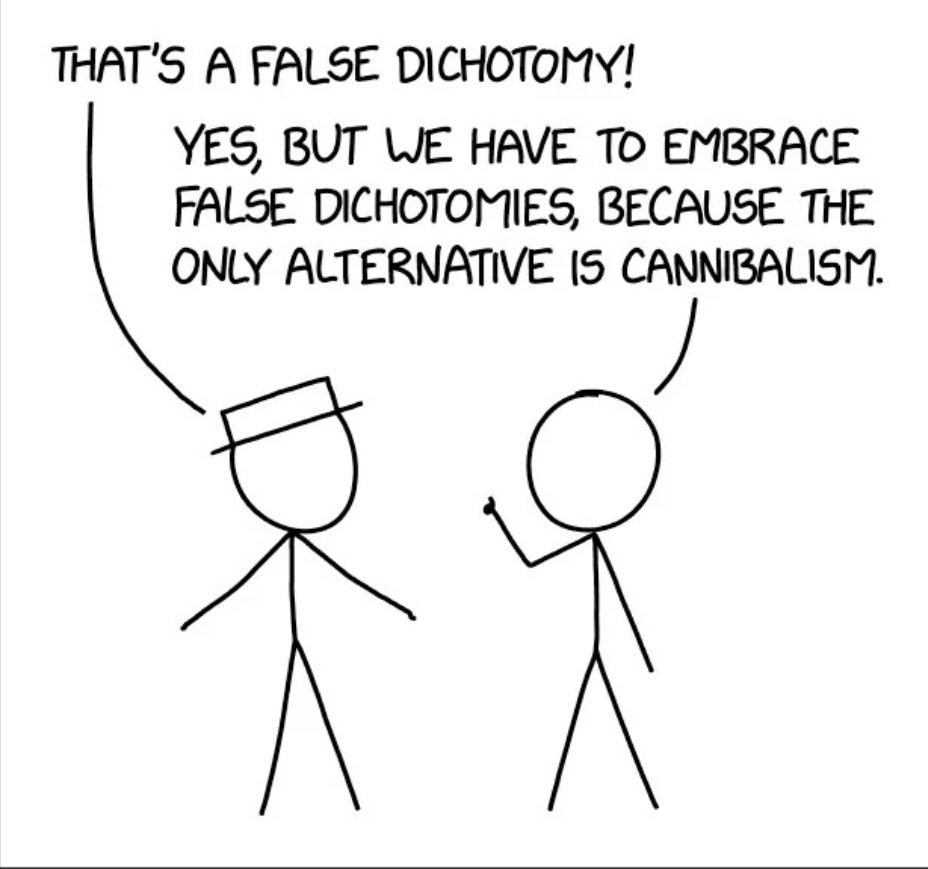
The original trolley problems aimed at making you think. It was a philosophical puzzle used to explore moral reasoning, utilitarianism and deontology. Both versions above turn the trolley problem into a caricature. One paints federal force as the unstoppable threat that must be violently halted, the other paints civil disobedience as the lethal danger that must be neutralized. Each is designed to elicit tribal fervor.
These caricatures work on Facebook not because they clarify moral structure but because they flatter the reader and stage moral theater. The audiences already know who the villain is and get to enjoy the feeling of having seen through it all. Smug sarcasm supplies the laugh track.
What’s most depressing is the way such “humor” gets conscripted. Old fashioned wit punctured pretension and left everyone a bit exposed. This humor is ritualized sneer, a war cry that signals membership. Moral superiority and righteous indignation arrive prepackaged.
Whichever side you pick, your rage is justified. Anger becomes proof of righteousness. If I can mock you, I don’t need to understand you. If I can make others laugh at you, I don’t need to persuade them. Emotional reward comes first, the argument is decorative trim. I am furious. Therefore the offense must be enormous. My fury is not only justified but morally required. Anger stops being a response and becomes evidence. The hotter it burns, the stronger the proof. On Facebook this logic is amplified.
Philosophy, ethics, and moral reasoning slow things down. Facebook collapses time, context, and agency into a single cinematic moment. Pull the lever and cue the likes. Facebook rewards train people out of moral curiosity. Once sarcasm becomes the marker of insight, asking a genuine question is read as weakness. The platform punishes those who don’t escalate.
If something is free, the product is you. Facebook loves your self-justifying rage because rage compresses so well. A qualified objection is no match for indignation. Agreement becomes a reflex response. Once anger functions as proof, escalation is inevitable. Disagreement cannot be good faith. Arguments cease to be about the original claim and switch to the legitimacy of self-authenticating anger itself.
Facebook provides the perfect stage because it removes the costs that normally discipline rage. There’s no awkward pause, just instant feedback and dopamine.
To be taken seriously, you have to be outraged. You have to perform belief that the stakes are absolute. If your performance is good, you convince yourself. Likes makes right. Everything is existential. Restraint is complicity. The cycle continues. Facebook counts the clicks and sells them to Progressive Insurance, Apple, and Amazon.
___
Via Randall Munroe, xkcd
Crystals Know What Day It Is
Posted in Commentary, Engineering & Applied Physics on January 9, 2026
Shelley, raising an eyebrow, asked me if I knew anything about energy. She was our departmental secretary at Boeing. I pictured turbomachinery, ablative dissipation, and aircraft landings. Yes, I said, some aspects. She handed me a pamphlet from Adam, an engineer in Propulsion. He was moonlighting as an energy consultant. That’s what the cover said. California law was clear. Boeing couldn’t stop him from doing whatever he wanted on his own time.
The pamphlet explained how energy flowed between people and from crystals to people, but only natural crystals. I flipped a few pages. You could convert a man-made crystal to a natural one by storing it under a pyramid for 30 days. Thirty. Giza pyramids? Or would cardboard do? Would crystals know about days? Would they choose a number tied to the sun? Twelve months in a year. Or the moon? Or a number that changed over geologic time? A billion years ago, when days were 18 hours long, did man-made crystals take 40 days to cure?
Shelley asked what I thought. I said I thought he wanted in her pants. He was an engineer, trained in physics and reasoning. He worked with wind tunnels. Adam knows better and thinks you don’t, I said. Shelley shook her head. She knew I was being charitable. Adam believed that stuff.
On a ski trip with Garrett Turbine employees, Melissa insisted we heat water on the stove. Microwave ovens, she said, rearranged the molecular structure of water. Unsafe. Melissa designs auxiliary power units for jets.
They’re not dumb. They can engineer turbomachinery that doesn’t end in a water landing. People rarely run a single epistemic operating system. Rules are brutal in the wind tunnel. Models either converge or they don’t. Reality testifies. In the personal realm, reality can be more forgiving. You can hold nonsense for decades without a compressor stall.
Some of it looks like motivated belief. Whatever his intentions toward Shelley, something about identity and control was at work. Crystals cast him as holding esoteric knowledge. The thinking followed the role.
Engineers also learn to trust models. That works when physics pushes back. Less so when nothing ever does.
Success doesn’t help. The GE90 turbine’s in-flight shutdown rate is about one per million flight hours on the triple seven. Do that well for long enough and humility thins. An ER doc once told me surgeons are often right and never uncertain. Trained for one, rewarded for the other.
Some ideas live where no one checks them. There’s no Flight Readiness Review for microwave theories. No stress test. The questions about days and crystals never get asked.
What, then, do microwaves do to water? Start with the physics. Microwave ovens radiate photons that excite rotational modes in polar molecules like water. For quantum reasons, the hydrogen atoms aren’t evenly spaced but sit to one side, like Mickey Mouse ears. The molecule is electrically neutral, but its charge is uneven. That polarity makes water responsive to oscillating electric fields.
Melissa translated water’s dipole moment into “warped molecules.” What actually happens is boring. The hydrogen-bond network jiggles, breaks, reforms, then settles back into the same statistical distribution. Heat water on a stove and it happens even more. Ice made from microwaved water freezes normally. Enzymes and bacteria, testifying by the trillions, vote not guilty.
“Excite” and “rotational modes” sound like structural meddling if you distrust boxes that hum. Adam and Melissa use the right nouns, invoke real properties, and gesture at invisible mechanisms. Heat from a flame feels natural; the word “radiate” smuggles in nuclear anxiety.
Crystal mysticism has roots in real science. Mid-century physics pulled quartz oscillators, piezoelectricity, band gaps, and lasers out of its hat. Crystals turn pressure into voltage, voltage into timekeeping, and sand into computation. LCDs followed: apply a voltage, patterns appear. In that sense, crystals do know time. Order responds to invisible forces. Once imagined as intentional, it drifts right on down, lands in nonsense.
The 30-day pyramid transformation launders mysticism through quasi-engineering constraints. Not “chant until Houtu signals,” but “store for 30 days.” A soak time defined in a spec. It feels procedural rather than occult. When Adam’s unwired crystals track solar days, not sidereal time, the scaffolding shows through.
Asking how Adam’s crystals know what a day is would mean letting astronomy into his pyramid. No one in the kitchen with Melissa demands control samples. The beliefs survive by staying small, domestic, and unreviewed. Engineers are trained to respect reality where reality speaks loud. Elsewhere, we’re free to improvise. The danger is not believing nonsense. It’s knowing the questions that would shatter the spell. And doing nothing.
Don’t Skimp on Shoes
Posted in Commentary on January 2, 2026
When I was a kid, mom and dad went out for the evening and told me that Frank, whom I hadn’t met, was going to stop by. He was dropping off some coins from his collection. He wanted us to determine whether these gold coins were legitimate, ninety percent gold, “.900 fineness,” as specified by the Coinage Act of 1837.
After the 1974 legalization of private gold ownership in the U.S., demand surged for pre-1933 American gold coins as bullion investments rather than numismatic curiosities. The market became jumpy, especially among buyers who cared only about intrinsic value. Counterfeit U.S. gold coins did exist. They were high-quality struck fakes, not crude castings, and they were made from real ninety percent gold alloy. Counterfeiters melted down common-date coins to produce rarer ones. Gold-plated base-metal fakes also existed, but those were cast, and Frank would never have fallen for them. We know that now. At the time, reliable information was thin on the ground.
The plan was to use Archimedes’ method. We’d weigh the coins, then dunk them in water and measure the displacement. Weight divided by displaced volume gives density. Ninety percent gold with ten percent copper comes out to 17.15 grams per cubic centimeter. Anything lower meant trouble.
The doorbell rang. Frank was a big guy in flannel shirt and jeans. He said he had something for my dad. I told him dad said he’d be coming. Frank handed me a small bag weighing five pounds – avoirdupois, not troy. About fifteen thousand dollars’ worth of gold at the time. You could buy a Corvette coupe, not the cheaper convertible, for six thousand. He handed me the bag, said thanks, and drove off in his pickup truck.
A few years ago I went on a caving trip to the Marble Mountains of northern California. The walk in didn’t look bad on paper. Five or six miles, maybe a couple thousand feet of elevation gain. With camping gear, food, and a load of heavy caving equipment, it turned out to be very bad indeed. I underestimated it, and paid for it.
A month before I’d been in Hawaii hiking to and through lava tubes in a recent flow, not the friendly pahoehoe kind but the boot-shredding a‘a stuff. A few days there destroyed a decent pair of boots. Desperate to make a big connection between two distant entrances, Doug drove me to Walmart, and I bought one of their industrial utility specials. It would get me through the day. It did. Our lava tube was four miles end to end.
I forgot about my boot situation until the Marble Mountains trip. At camp, as I was cutting sheets of moleskin to armor my feet for the hike out, I met a caver who knew my name and treated me as someone seasoned, someone who ought to know better. He looked down at my feet, laughed, and said, “Storage, you of all people, I figured wouldn’t wear cheap shoes into the mountains.” He figured wrong. I wore La Sportivas on the next trip.
What struck me as odd, I told my dad when he got home, wasn’t that Frank trusted a kid with fifteen thousand dollars in gold. It was that he drove a beat-up truck. I mentioned the rust.
“Yeah,” dad said. “But it’s got new tires.”
Dugga Dugga Dugga
Posted in History of Art, speleology on December 30, 2025
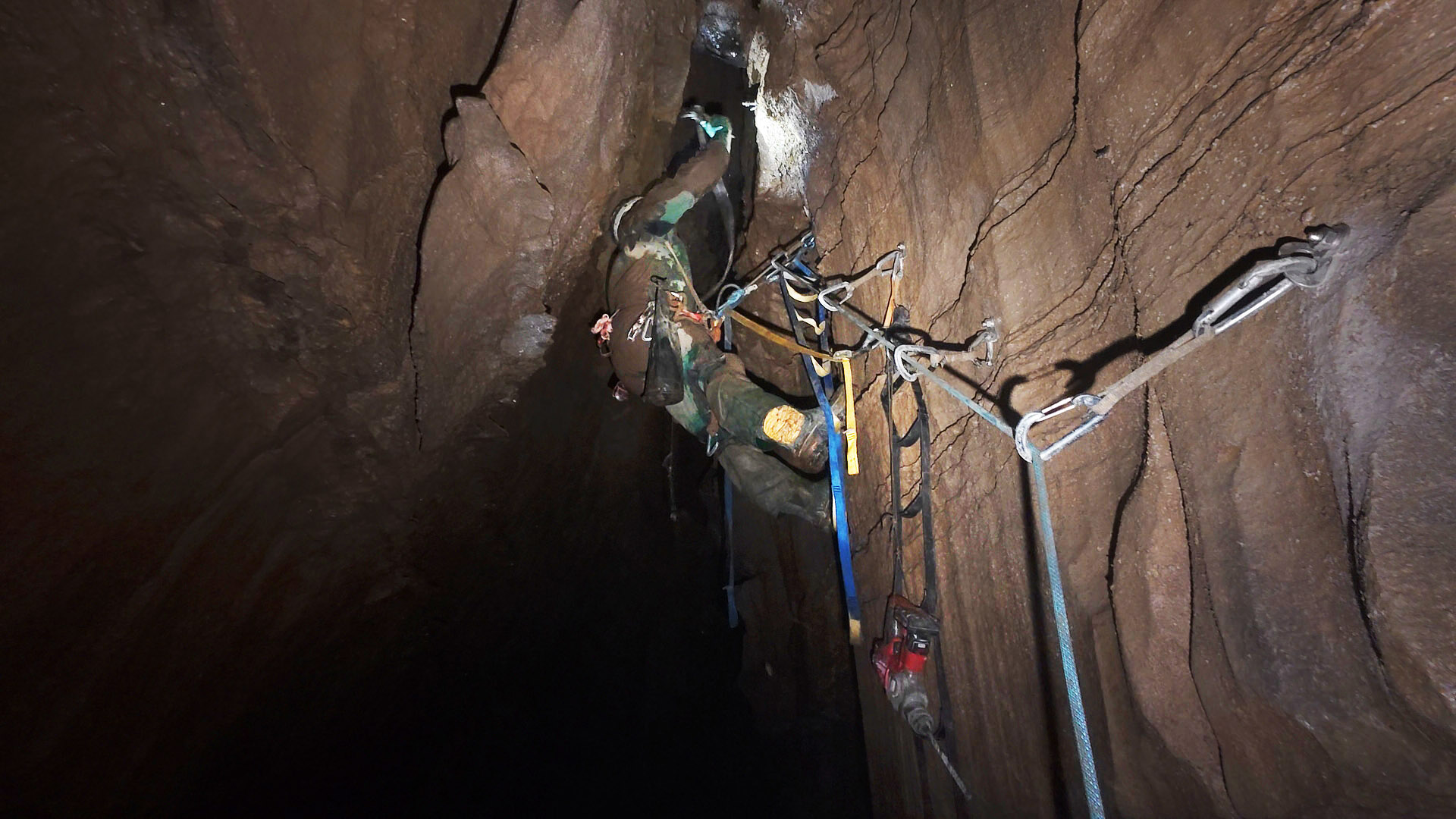
This story is about the band Wire and about using electric hammer drills in caves. That’s why I called this site The Multidisciplinarian. Not because I’m competent in many disciplines, or because I harbor disciplinarians in the basement, but because I wanted a single conversational space where unrelated things could bump into each other and see what happens. That’s what early bloggers did. Not Jorn Barger in 1997, when he coined the hideous word “blogging.” I’m still recovering. I mean the nineteenth-century social diarists. People made public diaries: Here’s my thoughts, see what you think. Beatrice Webb, aptly named, ran what was essentially a Victorian blog when she wasn’t co-founding the London School of Economics. If this social diary bores you, skip to the end and watch the 3-minute video.
I used to write record reviews for a couple of magazines. I was bad at it. I quit in frustration after reading what struck me as a devastatingly concise review of a Pere Ubu album. Pere Ubu, for the uninitiated, was an avant-garage band from northern Ohio who were far more popular on other continents than in Cleveland. Or even trendy Kent, Ohio.
The reviewer wrote something like this:
David Thomas, Ubu’s singer, though many people disputed that what he did qualified as singing, is coming from wherever Jim Morrison was heading. Pere Ubu is what Roxy Music would have been if Eno had taken over, fired Bryan Ferry, and hired a neurotic poet.
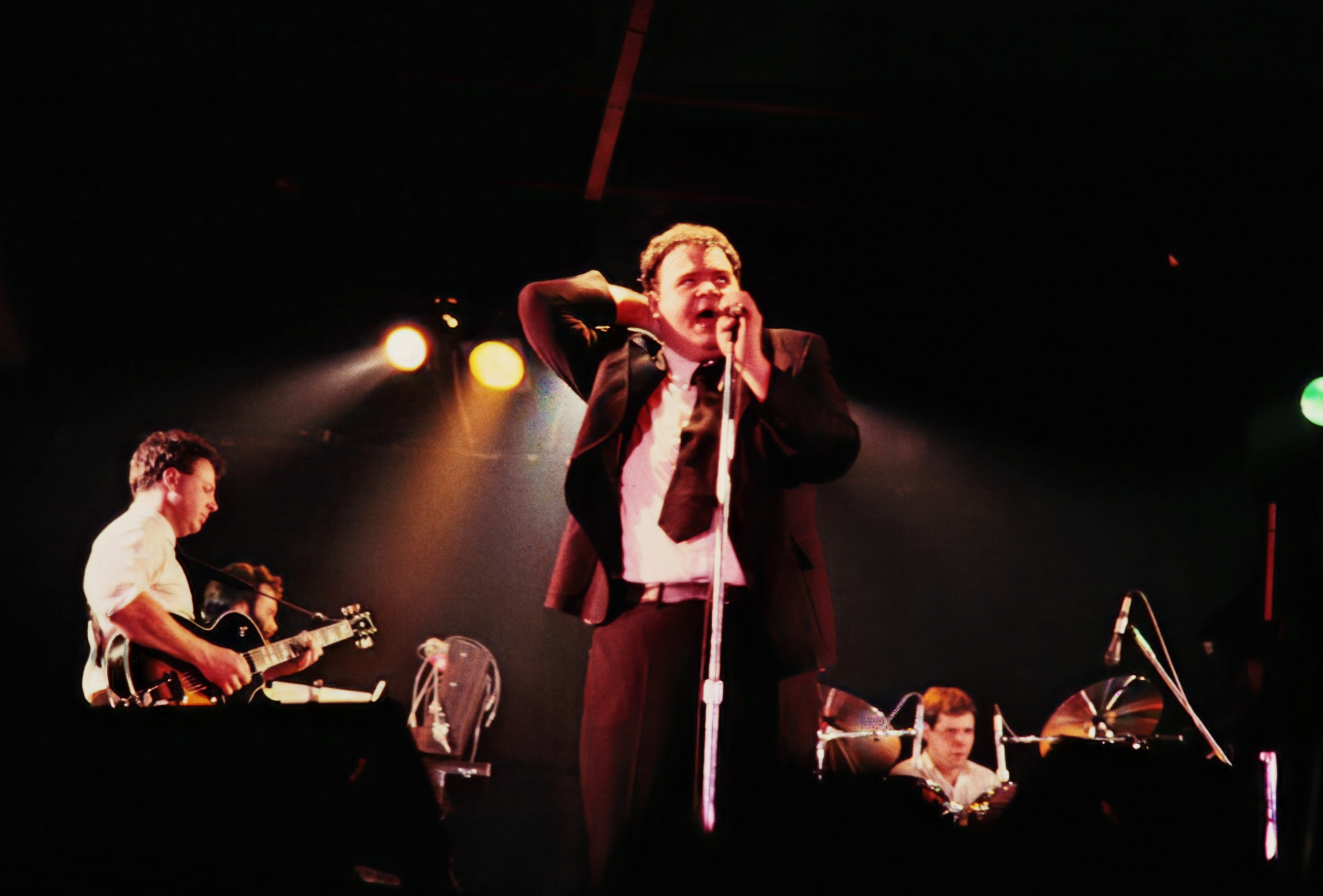
David Thomas, incidentally, later used several of my photos. Twenty years on, he told me he was thrilled that I’d captured what appear to be the only known photos of classic-era Pere Ubu, the brief and unrepeatable moment when Mayo Thompson and Richard Thompson, from opposite ends of the musical universe, were both in the band. Here’s two I took at the Cleveland Agora, after Thomas told security to let me in with a telephoto.

I remember thinking I could never write a review that clever. The writer, maybe Dean Suzuki, now a music professor at San Francisco State, nailed it. These days, the review impresses me slightly less. The Morrison line doesn’t really explain anything beyond “Thomas is weirder than Morrison.” You might infer that Morrison was a rock singer drifting toward the avant-garde, while Thomas was an avant-garde noise artist drifting toward rock. That’s clever, but it wouldn’t have helped me decide whether to buy The Art of Walking.
The Roxy Music comparison works better. Pere Ubu, like Roxy, made songs. They both layered noise and oddity onto them. But the key difference, the reason the “neurotic poet” line lands, is Thomas’s vocal delivery. He’s been described as yelping, barking, warbling like a distressed whale, or like a nervous art-school guy about to puke or cry. It’s stream-of-consciousness paranoia set to rhythm inside a foundry.
For readers already familiar with early Roxy Music (I discussed here), the analogy signals freaky, Eno-era art rock taken to an extreme, minus the glamour. That might hook you. But it works better as enticement than guidance. As criticism, it dodges the two questions I was supposed to answer. Was the band’s objective worth pursuing? And did they succeed?
Anyway, this piece isn’t about Pere Ubu or The Art of Walking. It’s about Wire and the art of cave exploration. The Pere Ubu detour is just throat-clearing. Amy, a caving friend, once said of my music criticism, “Once a critic, always an ass.” Fair enough.
Wire formed in London in October 1976. The members met at art school and had little prior band experience or instrumental proficiency. They were beginners leaning hard into punk’s DIY ethos. Unlike many of their contemporaries, who pursued deconstruction, Wire practiced pure reductionism. Not the Sex Pistols’ kind. Something colder and more deliberate.
From the start, their influences were eclectic: 60s pop, early Pink Floyd, Roxy Music, Brian Eno, krautrock, and punk, selectively. The Ramones for brevity, not for attitude. Wire always had internal tension between a pop impulse and an experimental or noise impulse. As Colin Newman put it, “Wire’s never really shared much taste as a band. It’s about the work. It always has been.” The tension proved unsustainable. They split in 1979.
So when Wire reappeared in 1986, touring with no advance press, it was a shock. They played none of their early material. Old Wire songs were two-minute punk bursts for intellectuals. New Wire played twenty- to thirty-minute trance pieces. What began as a rehearsal exercise became their most durable experiment. There are now roughly a hundred versions of “The Drill,” first released on the Snakedrill EP.
The band described it as monophonic, mono-rhythmic repetition. Then they translated it for the rest of us: “dugga dugga dugga.” Relentless single-line loops. Call and response. “Drill, drill, drill.” “Dugga, dugga, dugga.”
We’re milling through the grinder, and grinding through the mill,
If this is not an exercise, could it be a…
Could it be a…
…
Sometimes that unfinished line repeats long enough that you’re shouting “drill!”. Then it goes on so long you forget why you cared. Occasionally they finish the sentence. Sometimes they don’t. Drill. It’s an acquired taste.
Now I’ll describe this like a mechanical engineer who knows audio physics and a bit of music theory, but is resolved that he will never write engaging music critique.
Although “The Drill” sits nominally in 4/4, its rhythmic surface has virtually no accentuation of downbeat or tactus. You hear an isochronous pulse stream with no hierarchy. No dynamics. No phrasing cues. Meter becomes something you infer rather than perceive. The pulse just is.
Terse, right? Take that, Dean Suzuki. Who is, by the way, a very cool guy.
In 1990, Wire released The Drill, nearly an hour long, nine radically different versions of the same piece. Disco-adjacent versions, near-electronica, a sprawling twelve-minute live Chicago take, instrumentals like “Jumping Mint” and “Did You Dugga?” No sane producer would rush such a thing to market.
Also in 1990, I bought a 36-volt Hilti TE-10A battery-powered hammer drill. A Hilti dealer delivered it to my house in a red Hilti truck, which felt important. It was expensive and brutally heavy. Spare batteries were unthinkable, both for weight and cost. John Ganter and I used it for aid climbs underground. As far as I know, it was the first electric hammer drill used for cave exploration in West Virginia. The artifact now lives in John’s farmhouse garage, or museum.
That drill changed everything. On one battery you could place ten 3/8 x 3-inch wedge anchors. In hours you could do what had previously taken weeks with Rawl star drills or self-drives that barely engaged an inch of rock. Abuse followed, of course. Bolt farms sprouted. Some pristine pits gathered unnecessary hardware because someone thought they knew better than the last person. Alabama had already shown us the future.
Still, the potential was undeniable. When I returned to caving in 2021, Amy had a Bosch GBH18V-21. Drills were now lighter, and batteries were small and affordable. We had lists of high leads. We placed 108 bolts in a couple of months, none of them superfluous. Hunter, Casey, and Kyle, working the same cave, were bolting across ceilings, opening ridiculous routes.
Then Kyle, Max, Casey, and I started hauling drills through hours of low-airspace passages to climb beyond sumps. The drill became standard gear. You divided up the gear and double-dry-bagged it. And you brought earplugs. Ninety seconds of drilling in a confined space is wicked loud. Dugga dugga dugga.
On the drive to the cave, Max, Amy, and I traded Spotify tracks. I submitted “The Drill.” Not everyone’s taste, but it grows on you. Its flat pulse stream pairs well with the experience of standing in a swinging etrier, helmet lamp glaring, arm fully extended, ropes and gear tangling, water dripping down your back, mud in your eye. You are wearing goggles, right?
I started wondering whether actual drill audio could be mashed up with Wire’s “The Drill.” In theory, drill noise should be broadband, mostly non-harmonic. In practice, you hear pitch. A steady rotational component plus a reciprocating hammering component creates tonal structure.
I had helmet-cam footage, so I ran Fourier analysis. Once upon a time this required oscilloscopes and lab gear. Now software like Mixxx does it for free. Surprisingly, my Bosch drill consistently produces a dominant pitch around D#4, about 311 Hz. Hunter’s drilling hits the same pitch. Either we push identically, or push force doesn’t affect impact rate much. The advertised hammer rate is 5,100 BPM, or 85 Hz. The fourth harmonic lands near 340 Hz. Our load pulls it down roughly a semitone.
Our Milwaukee M12 rotary hammers center closer to C, with a hammer rate of 4,400 BPM, or 73 Hz. We push it harder than Milwaukee recommends. Otherwise it’s too slow. No motors have died yet. Its fourth harmonic is around 293 Hz. Analysis shows strong components at C3 and C4. We’re dragging it down a major second plus a bit.
DJs and the like probably do this in their sleep, or Mixxx does it for them. I made a spreadsheet. Wire’s Chicago “Drill” sits near D# minor. The A Bell Is a Cup version is in A minor. “Jumping Mint” is in C. I transposed everything to A, matched tempos, pitched the Bosch drill accordingly, then stitched audio and video together in DaVinci Resolve.
The six-minute version is reserved for future live drill events. Here’s the short cut. You might like it. Especially if you’ve ever enjoyed Pere Ubu’s singing or the sound of a machine shop.
Robert Reich, Genius
Posted in Commentary on December 25, 2025
Is Robert Reich a twit, or does he just play one for money on the internet?
I never cared about Monica Lewinsky. Bill Clinton was a big-picture sort of president, like Ronald Reagan, oddly. Flawed personally, but who are we to be critical? Marriage to Hillary might test anyone’s resolve with cigars and Big Macs. Yet somehow Clinton elevated Robert Reich to Secretary of Labor. Maybe he thought Panetta and Greenspan could keep the ideologue in check.
Reich later resigned and penned Locked in the Cabinet, a “memoir” devoured by left-wing academics despite its fabricated dialogues – proven mismatches with transcripts and C-SPAN tapes. Facts are optional when the narrative sings.
Fast-forward: Reich posted this on December 23:
“Around 70% of the U.S. economy depends on consumer spending. As wealth concentrates in the richest 10%, the rest of America can’t afford to buy enough to keep the economy running.”
Classic Reich: tidy slogan, profound vibe, zero nuance, preached to the CNN faithful.
Yes, consumption is ~70% of GDP. But accounting isn’t causation. Saying the economy “runs on” consumption is like saying a car runs on exhaust because that’s what comes out the back.
Wealth concentration doesn’t vanish spending:
- High earners save more per dollar, true – but they do spend (luxury, services) and, crucially, invest.
- Investment isn’t hoarded in vaults; it funds factories, tech, startups, real estate – creating jobs and future demand. U.S. history proves inequality and growth coexist.
- The economy isn’t a closed moral ecosystem: Government spending, exports, debt expansion, asset bubbles, and credit substitution all prop things up, sometimes for a long time and sometimes disastrously. Reich’s “can’t afford” is doing heroic rhetorical labor here.
Reich smuggles in a fixed “enough” consumption – for full employment? Asset bubbles? Entitlements? That’s the debate, not premise.
His real point is political: Extreme inequality risks instability in a consumption-heavy model. Fair to argue. But he serves it as revealed truth, as if Keynes himself chiseled it.
Reich champions “labor and farmers” while blaming Trump’s tariffs for the price of beef. Thank you Robert, but, as Deming argued (unsuccessfully) to US auto makers, some people will pay more for quality. Detroit disagreed, and Toyota cleaned their clocks. Yes, I’m willing to pay more for local beef. I’m sure Bill Clinton would, had he not gone all vegan on us. Moderation, Bill, like Groucho said about his cigar.
Reich’s got bumper-sticker economics. Feels good, thinks shallow.
Bridging the Gap: Investor – Startup Psychology and What VCs Really Want to Hear
Posted in Innovation management, Strategy on December 11, 2025
There’s a persistent gap between what investors want to know about startups and what founders present during their pitches. You’ll significantly improve your chance of being funded if you understand investors’ perspective and speak directly to their interests.
I speak with a bit of experience, having been on both sides of the investor conversation. Early in my career, I conducted technology due diligence for Internet Capital Group (ICG) and have since represented VC interests for $20-40M A rounds. I was also twice in the founder’s shoes, successfully raising capital for my own startups, including a $2 million round in 1998, a decent sum back then. The dynamics of pitching evolve, but the core investor psychology remains constant.
Thousands of articles list the top n things to do or not do while pitching. Here I take a more data-driven approach, grounded in investor psychology. By analyzing data on how investors consume pitch decks versus what founders emphasize in live presentations, startups can tune their pitches to align with audience interest and mental biases.
10 Essential Pitch Topics
Fifteen years ago, Sequoia Capital authored their seminal Guide to Pitching. It identified ten primary topics for a startup pitch deck, each to be covered in one or more slides:
- Purpose
- Problem
- Solution
- Why now?
- Market
- Competition
- Business model
- Team
- Financials
- Product
The Shifting Attention Span of Investors
I collected data on where founders spend their time during live pitches from the Silicon Valley Software SIG, videos of pitches found on the web, Band of Angels, and live pitch competitions in the bay area over the last ten years.
I also started tracking DocSend’s data on investors’ pitch deck interest. Their data consistently shows that the average time investors spend reviewing a pitch deck is very brief. The average time dropped from 3 minutes and 27 seconds in 2015 to just 2 minutes and 47 seconds by April 2021. The most recent data from 2024 shows an even tighter window, often averaging just 2 minutes and 35 seconds. Investors are smart, busy, and focused, so pitch decks must cover the right topics clearly and efficiently.
The Persistent Mismatch of Interests
The count of slides in a deck has averaged around 20 for years. Using that as a guide, at least one slide should cover each of the primary Sequoia topics, with some topics needing more real estate.
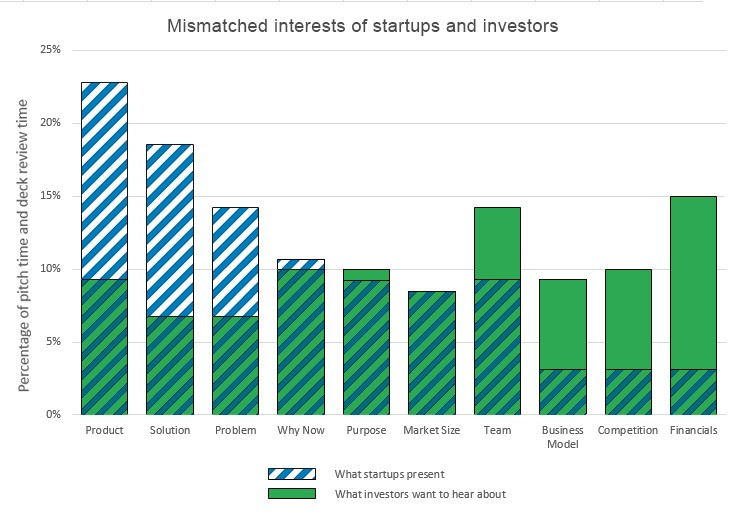
The combined data on investor viewing time versus founder presentation time reveals a clear mismatch of interest (see chart). From the investor’s perspective, founders still talk far too much about the problem, the solution, and how the product delivers the solution. Conversely, founders talk far too little about the business model, the competition, and financials.
This mismatch highlights something that may seem obvious but is too easily lost in the pursuit of developing great technology: Investors want to know how their money will translate into your growth and their eventual profitable exit. Ultimately, they want to manage their investment risk.
A Great Product Does Not Guarantee a Great Investment
Investors often need little convincing that a business problem exists and that your product is a potential solution. They trust your domain expertise on the problem. But a great product does not necessarily make a great company, and a great company is not necessarily a great investment.
To judge an investment risk as acceptable, investors need to understand your business model in detail.
- How exactly do you get paid for your product?
- What are your primary channels for customer acquisition?
- How much will it cost to acquire each new customer (CAC)?
They want to know that your sales forecasts are plausible. What size of sales force will it take if you’re projecting exponential sales increases?
Competition and Market Realities
Data presented by Ron Weissman at Band of Angels back in 2015 showed that founders gave almost no time at all to their competition. While this has improved slightly, it remains a significant weak area for most pitches.
You should be able to answer key competitive questions transparently:
- Who are your competitors now?
- Who will they be in the future?
- What is their secret sauce?
- What do you do better than all of them?
- Can you maintain that advantage in the future?
You should answer these questions without disparaging your competitors or resorting to the classic red flag that “there are no competitors” (which usually implies there is no market). Differentiation should include aspects of the business – such as distribution, partnerships, or unique data access – not just technical product features.
Focus on Scalability and Use of Funds
Investors are rarely interested in science projects. They want to see a business that can scale rapidly with an injection of capital. Your financial projections must make clear your intended use of funds.
- How much goes to hiring great talent?
- How much to marketing?
- How much to sales?
Investors understand that your projections of future revenue, market share, and customer acquisition costs are hypothetical and based on limited current information. However, they are scrutinizing your ability to think critically about scale. They want proof that it is feasible you’ll reach the key metrics required for your next round of funding before you run out of money.
This emphasis on feasibility and risk mitigation translates directly into a heightened focus on capital efficiency. In today’s market, VCs prioritize companies that can do more with less. Pitches need to clearly articulate a path to profitability or sustainable growth that minimizes cash burn. Investors want to see that founders have a credible plan to achieve significant milestones within 18-24 months without needing another immediate cash infusion. Demonstrating a capital-efficient operational plan is now as critical as projecting believable revenue growth.
I hope you find this material helpful for tuning your pitch deck to its investor audience. Please let me know if I can develop any of these points further.
 The Multidisciplinarian
Demonstration Studies: Interdisciplinary Approaches to Policy Frameworks and Educational Pathways in Collective Action
Posted in Commentary, Interdisciplinary learning on March 28, 2026
At some point we have to confront the labor imbalance head-on. Our guidance counselors still push the same tired pipeline, STEM, pre-med, maybe a grudging nod to business during the late-capitalism era, while a clearly underdeveloped sector sits right outside our school doors, chanting.
The protest industry is no longer a cottage operation. It has matured into a complex, vertically integrated field with roles spanning logistics, messaging, performance, risk management, and, most crucially, optics. Yet high school seniors are given exactly zero structured exposure. We march past an opportunity that stands before us.
A modern curriculum would correct this. Introductory coursework might range from Slogan Compression, the art of reducing a dubious causal claim to five words and a rhyme, to Sign Engineering, where students learn the tensile limits of corrugated plastic under high wind conditions. Advanced pre-college topics could tackle Strategic Outrage Calibration, a delicate discipline balancing moral fervor with camera awareness.
Internships are obvious and plentiful. Students could rotate through departments: Street Presence, Social Media Amplification, and the always critical Rapid Narrative Adjustment Unit, which specializes in pivoting within the first news cycle. Apprenticeships with seasoned professionals would provide invaluable field experience, especially in high-stakes environments where the difference between “grassroots” and “organized” must remain tastefully subliminal.
Naturally, certification would follow. A tiered credentialing system would help employers distinguish between casual enthusiasts and those with demonstrated competencies in crowd choreography and chant synchronization. Continuing education would be required, given the field’s rapid evolution and the half-life of yesterday’s outrage, an inescapable facet the multidisciplinary practitioner simply must address.
Demand appears remarkably resilient. Issues may change, but the underlying need for visible indignation shows no sign of decline. Automation threatens many traditional careers, but it’s difficult to algorithmically replicate the human capacity for performative sincerity in front of a camera.
In the end, this is also about equity of opportunity. Not every student need submit to the oppression of differential equations or patient care. Some have a natural gift for megaphones, timing, and the instinctive sense of where the lens is. It seems only fair that our educational system recognize such talent, nurture it, and send it out into the world fully credentialed, well-practiced, and ready to make a difference.
Sustainable outrage demands long-term career planning in high-intensity advocacy. Tomorrow’s performative conviction will require assessment models for demonstrative competence. Recent trends show that raw spontaneity is simply unable to meet market demands. Elite programs won’t eliminate it, they will curate it.
My own experience in curriculum design is limited to outmoded domains of engineering and science. With that caveat I humbly propose, as a rough framework for expansion by high school curriculum professionals, something like the following. Underlying this introductory program would be the doctrine of teaching sincerity as a deployable skill rather than a personal trait:
Students workshop facial expressions and vocal strain until they land somewhere between “deeply moved” and “media-ready.” Overacting is penalized, underacting is remediated.
A close reading of acceptable deviation. How far one can drift from the script while still being invited back.
Live exercises where students are prompted with unexpected cues, then evaluated on how convincingly their responses appear unprompted. Focus on plausible deniability.
The old paradox, solved with mirrors and playback. Students learn to anticipate where to stand, sensory memory, and emotional immersion to achieve authentic, realistic performances.
Each student stages a fully “unscripted” episode, complete with organic escalation and tasteful resolution. External reviewers assess authenticity using a standardized index, revised each year to ensure relevance.
Of course, we must face the market reality that not all are cut out for client-facing roles. Fortunately, the industry is flush with blue-ocean organizational and infrastructural opportunities. Emerging industries eventually discover that selling isn’t merely the visible thing, it’s forging everything that makes the visible thing possible. Examples include:
Third-party auditors who certify that a demonstration meets recognized standards of organic feeling. Think ISO, but for indignation. “This protest conforms to Authenticity Protocol 9001.”
Uber, but for turnout. Need 50 people who look plausibly local, available within 90 minutes, with a mix of ages and photogenic diversity? Surge pricing during major news cycles.
Not quite PR, not quite a legal department. Their job is to anticipate how an action will be reframed within the first six hours and pre-position counter-narratives. A kind of high-frequency trading desk for moral framing.
The field still runs on vibes. That’s inefficient. We will standardize KPIs: chant retention rate, sign legibility at 30 feet, camera capture frequency, virality half-life. If you can measure it, your client will pay for improving it.
Borrowing from theme parks, choreographed “journeys” through a demonstration, emotional arcs, moments of crescendo. Participants leave feeling they’ve had an experience, not just attended an event. Premium tier tickets include curated photo opportunities.
Most demonstrations peak in the moment and fade. A firm that repackages footage, testimonials, and authentic reactions into a longer tail of content will extend the lifecycle, with revenue sharing back to organizers.
As the field professionalizes, so will its exposure. Insurance products, permitting strategy, de-escalation protocols that still look spontaneous. While strictly back-office, they are lucrative and indispensable.
None of these involve changing the underlying product. Visible moral urgency remains the headline. The opportunity is everything that sits just behind it, quietly shaping, measuring, and monetizing what calls itself spontaneous.
Conclusion
Professionalizing an emerging dissent exigence requires a structured, forward-looking framework for youth engagement, one that recognizes protest not as episodic expression but as a durable component of the political expression economy. Data-driven communication competencies in activist contexts can be cultivated systematically, if still described as organic, through pedagogies that integrate growth-minded inclusivity, social-emotional calibration, and context-sensitive cultural fluency.
The task before us is not to encourage participation – that threshold has long been crossed – but to formalize preparation. Absent such efforts, we risk perpetuating an inequitable landscape in which only the informally trained achieve visibility, while others remain under-amplified despite comparable conviction. A coordinated educational response will ensure that future cohorts enter the field with passion, demonstrable proficiency, adaptive awareness, and a shared vocabulary of practice.
In this light, the institutionalization of dissent will align existing educational pathways with an already normalized mode of civic engagement, and, in doing so, quietly resolve the longstanding gap between expression and employability.
ai, education, parody, politics, technology
2 Comments