Posts Tagged science
Extraordinary Miscarriages of Science, Part 2 – Creation Science
Posted by Bill Storage in History of Science on January 21, 2024
By Bill Storage, Jan. 21, 2024
Creation Science can refer either to young-earth or old-earth creation theories. Young Earth Creationism (YEC) makes specific claims about the creation of the universe from nothing, the age of the earth as inferred from the Book of Genesis and about the creation of separate “kinds” of creatures. Wikipedia’s terse coverage, as with Lysenkoism, brands it a pseudoscience without explanation. But YEC makes bold, falsifiable claims about biology and genetics (not merely evolution), geology (plate tectonics or lack thereof), and, most significantly, Newtonian mechanics. While it posits unfalsifiable unobservables including a divinity that sculpts the universe in six days, much of its paradigm contrasts modern physics in testable ways. Creation Science is not a miscarriage of science in the sense of some of the others. I’m covering it here because it has many similarities to other bad sciences and is a great test of demarcation criteria. Creation Science does limited harm because it preaches to the choir. I doubt anyone ever joined a cult because they were persuaded that creationism is scientific.
Intelligent Design
Old-earth creationism, now known as Intelligent Design (ID) theory is much different. While ID could have confined itself to the realm of metaphysics and stayed out of our cross hairs, it did not. ID mostly confines itself to the realm of descriptions and explanations, but it explicitly claims to be a science. Again, Wikipedia brands ID as pseudoscience, and, again, this distinction seems shallow. I’m also concerned that the label is rooted in anti-Christian bias with reasons invented after the labelling as a rationalization. To be clear, I see nothing substantial in ID that is scientific, but its opponents’ arguments are often not much better than those of its proponents.
It might be true that a supreme being, benevolent or otherwise, guided the hand of cosmological and biological evolution. But simpler, adequate explanations of those processes exist outside of ID, and ID adds no explanatory power to the theories of cosmology and biology that are independent of it. This was not always the case. The US founding fathers, often labeled Christian by modern Christians, were not Christian at all. They were deists, mainly because they lacked a theoretical framework to explain the universe without a creator, who had little interest in earthly affairs. They accepted the medieval idea that complex organisms, like complex mechanisms, must have a designer. Emergent complexity wasn’t seen as an option. That they generally – notably excepting David Hume – failed to see the circularity of this “teleological argument” can likely be explained by Kuhn’s notion of the assent of the relevant community. Each of them bought it because they all bought it. It was the reigning paradigm.
While intelligent design could logically be understood to not require a Judeo-Christian god, ID seems to have emerged out of fundamentalist Christian objection to teaching evolution in public schools. Logically, “intelligent design” could equally apply to theories involving a superior but not supreme creator or inventor. Space aliens may have seeded the earth with amino acids – the Zoo Hypothesis. Complex organic molecules could have been sent to earth on a comet by highly advanced – and highly patient – aliens, something we might call directed panspermia. Or we could be living in a computer simulation of an alien school kid. Nevertheless, ID seems to be a Christian undertaking positing a Christian God.
Opponents are quick to point this out. ID is motivated by Christian sentiments and is closely aligned with Christian evangelism. Is this a fair criticism of ID as a science? I tend to think not. Newton was strongly motivated by Christian beliefs, though his religion, something like Arianism or Unitarianism, would certainly be rejected by modern Christians. Regardless, Newton’s religious motivation for his studies no more invalidates them than Linus Pauling’s (covered below) economic motivations invalidate his work. Motivations of practitioners, in my view, cannot be grounds for calling a field of inquiry pseudoscience or bad science. Some social scientists disagree.
Dominated by Negative Arguments
YEC and ID writings focus on arguing that much of modern science, particularly evolutionary biology, cannot be correct. For example, much of YEC’s efforts are directed at arguing that the earth cannot be 4.5 billion years old. Strictly speaking, this ( the theory that another theory is wrong) is a difficult theory to disprove. Most scientists tend to think that disproving a theory that itself aims to disprove geology is pointless. They hold that the confirming evidence for modern geologic theory is sufficient. Karl Popper, who held that absence of disconfirmation was the sole basis for judging a theory good, would seem to have a problem with this though. YEC also holds theories defending a single worldwide flood within the last 5,000 years. That seems reasonably falsifiable, if one accepts a large body of related science including several radioactive dating techniques, mechanics of solids, denudation rate calculations, and much more.
Further, it is flawed reasoning (“false choice”) to think that exposing a failure of classical geology is support for a specific competing theory.
YEC and, perhaps surprisingly, much of ID have assembled a body of negative arguments against Darwinism, geology, and other aspects of a naturalistic worldview. Arguing that fossil evidence is an insufficient basis for evolution and that natural processes cannot explain the complexity of the eyeball are characteristically negative arguments. This raises the question of whether a bunch of negative arguments can rightly be called a science. While Einstein started with the judgement that the wave theory of light could not be right (he got the idea from Maxwell), his program included developing a bold, testable, and falsifiable theory that posited that light was something that came in discreet packages, along with predictions about how it would behave in a variety of extreme circumstances. Einsteinian relativity gives us global positioning and useful tools in our cell phones. Creationism’s utility seems limited to philosophical realms. Is lack of practical utility or observable consequences a good basis for calling an endeavor unscientific? See String Theory, below.
Wikipedia (you might guess that I find Wikipedia great for learning the discography of Miley Cyrus but poor for serious inquiries), appealing to “consensus” and “the scientific community,” judges Creation Science to be pseudoscience because creationism invokes supernatural causes. In the same article, it decries the circular reasoning of ID’s argument from design (the teleological argument). But claiming that Creation Science invokes supernatural causes is equally circular unless we’re able to draw the natural/supernatural distinction independently from the science/pseudoscience distinction. Creationists hold that creation is natural; that’s their whole point.
Ignoring Disconfirming Evidence
YEC proponents seem to refuse to allow that any amount of radioactive dating evidence falsifies their theory. I’m tempted to say this alone makes YEC either a pseudoscience or just terrible science. But doing so would force me to accept the 2nd and 3rd definitions of science that I gave in the previous post. In other words, I don’t want to judge a scientific inquiry’s status (or even the status of a non-scientific one) on the basis of what its proponents (a community or institution) do at an arbitrary point in time. Let’s judge the theory, not its most vocal proponents. A large body of German physicists denied that Edington’s measurement confirmed Einstein’s prediction of bent light rays during an eclipse because they rejected Jewish physics. Their hardheadedness is no reason to call their preferred wave theory of light a bad theory. It was a good theory with bad adherents, a good theory for which we now have excellent reasons to judge wrong.
Some YEC proponents hold that, essentially, the fossil record is God’s little joke. Indeed it is possible that when God created the world in six days a few thousand years ago he laid down a lot of evidence to test our faith. The ancient Christian writer Tertullian argued that Satan traveled backward in time to plant evidence against Christian doctrine (more on him soon). It’s hard to disprove. The possibility of deceptive evidence is related to the worry expressed by Hume and countless science fiction writers that the universe, including fossils and your memories of today’s breakfast, could have been planted five minutes ago. Like the Phantom Time hypothesis, it cannot be disproved. Also, as with Phantom Time, we have immense evidence against it. And from a practical perspective, nothing in the future would change if it were true.
Lakatos Applied to Creation Science
Lakatos might give us the best basis for rejecting Creation Science as pseudoscience rather than as an extraordinarily bad science, if that distinction has any value, which it might in the case of deciding what can be taught in elementary school. (We have no laws against unsuccessful theories or poor science.) Lakatos was interested in how a theory makes use of laws of nature and what its research agenda looks like. Laws of nature are regularities observed in nature so widely that we assume them to be true, contingently, and ground predictions about nature on them. Creation Science usually has little interest in making testable predictions about nature or the universe on the basis of such laws. Dr. Duane Gish of the Institute for Creation Research (ICR) wrote in Evolution, The Fossils Say No that “God used processes which are not now operating anywhere in the natural universe.” This is a major point against Creation Science counting as science.
Creation Science’s lack of testable predictions might not even be a fair basis for judging a pursuit to be unscientific. Botany is far more explanatory than predictive, and few of us, including Wikipedia, are ready to expel botany from the science club.
Most significant for me, Lakatos casts doubt on Creation Science by the thinness of its research agenda. A look at the ICR’s site reveals a list of papers and seminars all by PhDs and MDs. They seem to fall in two categories: evolution is wrong (discussed above), and topics that are plausible but that don’t give support for creationism in any meaningful way. The ploy here is playing a game with the logic of confirmation.
By the Will of Elvis
Consider the following statement of hypothesis. Everything happens by the will of Elvis. Now this statement, if true, logically ensures that the following disjunctive statement is true: Either everything happens by the will of Elvis or all cats have hearts. Now let’s go out with a stethoscope and do some solid cat science to gather empirical evidential support for all cats having hearts. This evidence gives us reasonable confidence that the disjunctive statement is true. Since the original simple hypothesis logically implies the disjunction, evidence that cats have hearts gives support for the hypothesis that everything happens by the will of Elvis. This is a fun game (like Hempel’s crows) in the logic of confirmation, and those who have studied it will instantly see the ruse. But ICR has dedicated half its research agenda to it, apparently to deceive its adherents.
The creationist research agenda is mostly aimed at negating evolution and at large philosophical matters. Where it deals with small and specific scientific questions – analogous to cat hearts in the above example – the answers to those questions don’t in any honest sense provide evidentiary support for divine creation.
If anything fails the test of being valid science, Creation Science does. Yet popular arguments that attempt to logically dismiss it from the sciences seem prejudiced or ill motivated. As discussed in the last post, fair and honest demarcation is not so simple. This may be a case where we have to take the stance of Justice Potter Stewart, who, when judging whether Lady Chatterley’s Lover was pornography, said “I shall not today attempt further to define [it], but I know it when I see it, and this is not it.”
To be continued.
Nobel Laureates Stoop to the Level of Greenpeace
Posted by Bill Storage in Philosophy of Science on July 3, 2016
Over 100 Nobel laureates signed a letter urging Greenpeace to stop opposing genetically modified organisms (GMOs). The letter specifically address golden rice, a genetically engineered crop designed to reduce Vitamin-A deficiencies, which cause blindness in children of the developing world.
My first thought is to endorse any effort against the self-obsessed, romantic dogmatism of Greenpeace. But that may be a bit hasty.
The effort behind the letter was organized by Sir Richard Roberts, Chief Scientific Officer of New England Biolabs and Phillip Sharp, winner of the 1993 Nobel Prize in Physiology or Medicine for the discovery that genes in eukaryotes are not contiguous strings and contain introns. UC Berkeley’s Randy Schekman, professor of cell and developmental biology and 2013 Nobel laureate also signed the letter.
I expect Roberts, Sharp, Schekman and other signers are highly qualified to offer an opinion on the safety of golden rice. And I suspect they’re right about Greenpeace. But I think the letter is a terrible move for science.
Of the 110 Nobel laureate signers as of today, 26 are physicists and 34 are chemists. Laureates in Peace, Literature and Economics are also on the list. It’s possible that a physicists or an economist might be highly skilled in judging the safety of golden rice; but I doubt that most Nobel winners who signed that letter are more qualified than the average molecular biologist without a Nobel Prize.
Scientists, more than most folk, should be aware that consensus should not be recruited to support a theory. Instead, consensus should occur only when the last skeptic is dragged, kicking and screaming, over the evidence, then succumbing to the same explanatory theory held by peers. That clearly didn’t happen with Roberts’ campaign and argument from authority.
Also, if these Nobel-winning scientist had received slightly less specialized educations, they might see a terrible irony here. They naively attempt to side step Hume’s Guillotine. That is, by thinking that scientific knowledge allows deriving an “ought” statement from an “is” statement (or collection of scientific facts), they indulge in ethical naturalism and are exposed to the naturalistic fallacy. And in a very literal sense, ethical naturalism is exactly the delusion under which Greenpeace operates.
.
Each day I wonder how many things I am dead wrong about. – Jim Harrison
Great Innovative Minds: A Discord on Method
Posted by Bill Storage in Innovation management, Multidisciplinarians on November 19, 2013
Great minds do not think alike. Cognitive diversity has served us well. That’s not news to those who study innovation; but I think you’ll find this to be a different take on the topic, one that gets at its roots.
The two main figures credited with setting the scientific revolution in motion did not agree at all on what the scientific method actually was. It’s not that they differed on the finer points; they disagreed on the most basic aspect of what it meant to do science – though they didn’t yet use that term. At the time of Francis Bacon and Rene Descartes, there were no scientists. There were natural philosophers. This distinction is important for showing just how radical and progressive Descartes and Bacon were.
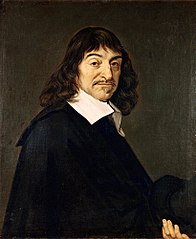 In Discourse on Method, Descartes argued that philosophers, over thousands of years of study, had achieved absolutely nothing. They pursued knowledge, but they had searched in vain. Descartes shared some views with Aristotle, but denied Aristotelian natural philosophy, which had been woven into Christian beliefs about nature. For Aristotle, rocks fell to earth because the natural order is for rocks to be on the earth, not above it – the Christian version of which was that it was God’s plan. In medieval Europe truths about nature were revealed by divinity or authority, not discovered. Descartes and Bacon were both devout Christians, but believed that Aristotelian philosophy of nature had to go. Observing that there is no real body of knowledge that can be claimed by philosophy, Descartes chose to base his approach to the study of nature on mathematics and reason. A mere 400 years after Descartes, we have trouble grasping just how radical this notion was. Descartes believed that the use of reason could give us knowledge of nature, and thus give us control over nature. His approach was innovative, in the broad sense of that term, which I’ll discuss below. Observation and experience, however, in Descartes’ view, could be deceptive. They had to be subdued by pure reason. His approach can be called rationalism. He sensed that we could use rationalism to develop theories – predictive models – with immense power, which would liberate mankind. He was right.
Francis Bacon, Descartes slightly older counterpart in the scientific revolution, was a British philosopher and statesman who became attorney general in 1613 under James I. He is now credited with being the father of empiricism, the hands-on, experimental basis for modern science, engineering, and technology. Bacon believed that acquiring knowledge of nature had to be rooted in observation and sensory experience alone. Do experiments and then decide what it means. Infer conclusions from the facts. Bacon argued that we must quiet the mind and apply a humble, mechanistic approach to studying nature and developing theories. Reason biases observation, he said. In this sense, the theory-building models of Bacon and Descartes were almost completely opposite. I’ll return to Bacon after a clarification of terms needed to make a point about him.
Innovation has many meanings. Cicero said he regarded it with great suspicion. He saw innovation as the haphazard application of untested methods to important matters. For Cicero, innovators were prone to understating the risks and overstating the potential gains to the public, while the innovators themselves had a more favorable risk/reward quotient. If innovation meant dictatorship for life for Julius Caesar after 500 years of self-governance by the Roman people, Cicero’s position might be understandable.
Today, innovation usually applies specifically to big changes in commercial products and services, involving better consumer value, whether by new features, reduced prices, reduced operator skill level, or breaking into a new market. Peter Drucker, Clayton Christensen and the tech press use innovation in roughly this sense. It is closely tied to markets, and is differentiated from invention (which may not have market impact), improvement (may be merely marginal), and discovery.
 That business-oriented definition of innovation is clear and useful, but it leaves me with no word for what earlier generations meant by innovation. In a broader sense, it seems fair that innovation also applies to what vanishing point perspective brought to art during the renaissance. John Locke, a follower of both Bacon and Descartes, and later Thomas Jefferson and crew, conceived of the radical idea that a nation could govern itself by the application of reason. Discovery, invention and improvement don’t seem to capture the work of Locke and Jefferson either. Innovation seems the best fit. So for discussion purposes, I’ll call this innovation in the broader sense as opposed to the narrower sense, where it’s tied directly to markets.
In the broader sense, Descartes was the innovator of his century. But in the narrow sense (the business and markets sense), Francis Bacon can rightly be called the father of innovation – and it’s first vocal advocate. Bacon envisioned a future where natural philosophy (later called science) could fuel industry, prosperity and human progress. Again, it’s hard to grasp how radical this was; but in those days the dominant view was that mankind had reached its prime in ancient times, and was on a downhill trajectory. Bacon’s vision was a real departure from the reigning view that philosophy, including natural philosophy, was stuff of the mind and the library, not a call to action or a route to improving life. Historian William Hepworth Dixon wrote in 1862 that everyone who rides in a train, sends a telegram or undergoes a painless surgery owes something to Bacon. In 1620, Bacon made, in The Great Instauration, an unprecedented claim in the post-classical world:
“The explanation of which things, and of the true relation between the nature of things and the nature of the mind … may spring helps to man, and a line and race of inventions that may in some degree subdue and overcome the necessities and miseries of humanity.”
In Bacon’s view, such explanations would stem from a mechanistic approach to investigation; and it must steer clear of four dogmas, which he called idols. Idols of the tribe are the set of ambient cultural prejudices. He cites our tendency to respond more strongly to positive evidence than to negative evidence, even if they are equally present; we leap to conclusions. Idols of the cave are one’s individual preconceptions that must be overcome. Idols of the theater refer to dogmatic academic beliefs and outmoded philosophies; and idols of the marketplace are those prejudices stemming from social interactions, specifically semantic equivocation and terminological disputes.
Descartes realized that if you were to strictly follow Bacon’s method of fact collecting, you’d never get anything done. Without reasoning out some initial theoretical model, you could collect unrelated facts forever with little chance of developing a usable theory. Descartes also saw Bacon’s flaw in logic to be fatal. Bacon’s method (pure empiricism) commits the logical sin of affirming the consequent. That is, the hypothesis, if A then B, is not made true by any number of observations of B. This is because C, D or E (and infinitely more letters) might also cause B, in the absence of A. This logical fallacy had been well documented by the ancient Greeks, whom Bacon and Descartes had both studied. Descartes pressed on with rationalism, developing tools like analytic geometry and symbolic logic along the way.
Interestingly, both Bacon and Descartes were, from our perspective, rather miserable scientists. Bacon denied Copernicanism, refused to accept Kepler’s conclusion that planet orbits were elliptical, and argued against William Harvey’s conclusion that the heart pumped blood to the brain through a circulatory system. Likewise, by avoiding empiricism, Descartes reached some very wrong conclusions about space, matter, souls and biology, even arguing that non-human animals must be considered machines, not organisms. But their failings were all corrected by time and the approaches to investigation they inaugurated. The tension between their approaches didn’t go unnoticed by their successors. Isaac Newton took a lot from Bacon and a little from Descartes; his rival Gottfried Leibniz took a lot from Descartes and a little from Bacon. Both were wildly successful. Science made the best of it, striving for deductive logic where possible, but accepting the problems of Baconian empiricism. Despite reliance on affirming the consequent, inductive science seems to work rather well, especially if theories remain open to revision.
Bacon’s idols seem to be as relevant to the boardroom as they were to the court of James I. Seekers of innovation, whether in the classroom or in the enterprise, might do well to consider the approaches and virtues of Bacon and Descartes, of contrasting and fusing rationalism and observation. Bacon and Descartes envisioned a brighter future through creative problem-solving. They broke the bonds of dogma and showed that a new route forward was possible. Let’s keep moving, with a diversity of perspectives, interpretations, and predictive models.
Paul Feyerabend – The Worst Enemy of Science
Posted by Bill Storage in Philosophy of Science on August 7, 2012
The Incommensurable Thomas Kuhn
Posted by Bill Storage in Philosophy of Science on August 4, 2012
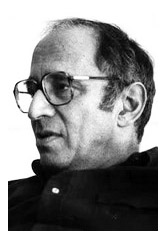
William Storage 4 Aug 2012
Visiting Scholar, UC Berkeley Center for Science, Technology & Society
Thomas Kuhn’s 1962 book, The Structure of Scientific Revolutions, appears in Wikipedia’s list of the 100 most influential books in history. In Structure, Kuhn introduced the now ubiquitous term and concept of paradigm shift. As Kuhn saw it, the scope of a paradigm was universal. A paradigm is not merely a theory, but the framework and worldview in which a theory dwells. Kuhn explained that, “successive transition from one paradigm to another via revolution is the usual developmental pattern of mature science.” His view was that paradigms guide research through periods of “normal science,” during which, any experimental results not consistent with the paradigm are deemed erratic and are discarded. This persists until overwhelming evidence against the paradigm results in its collapse, and a paradigm shift occurs.
Kuhn stressed the idea of incommensurability between associated paradigms, meaning that it is impossible to understand the new paradigm from within the conceptual framework of its predecessor. Examples include the Copernican Revolution, plate tectonics, and quantum mechanics.
Countless discussions and critiques of Kuhn and his work have been published. I’ll focus mainly on aspects of his work – and popular conceptions of it – related to its appropriation in technology and business process management; but a bit of background on popular misunderstandings of his work from a philosophy perspective will come in handy later.
Kuhn’s claim of incommensurability led many to conclude that the selection of a governing theory is fundamentally irrational, a product of consensus or politics rather than of objective criteria. This fueled flames already raging in criticism of science in postmodernist, subjectivist, and post-structuralist circles. Kuhn was an overnight sensation and placed on a pedestal by all sorts of relativism, sociology, and arts and humanities movements, despite his vigorous rejection of them, their methods, their theories, and their paradigms. Decades later (The Road Since Structure), Kuhn added that, “if it was relativism, it was an interesting sort of relativism that needed to be thought out before the tag was applied.”
Communities outside of hard science – 20th century social theory in particular – couldn’t get enough of Kuhn and his paradigm shifts. Much of the Philosophy of Science community scoffed at his book. Within hard science there was considerable debate, particularly by Karl Popper, Stephen Toulmin and Paul Feyerabend. And even in the hard science community, Kuhn found himself in constant defense not against the scientific reading of his model, but against the ideas appropriated by schools of philosophers, cultural theorists, and literary critics calling themselves Kuhnians. Freeman Dyson recall s having confronted Kuhn about these schools of thought:
“A few years ago I happened to meet Kuhn at a scientific meeting and complained to him about the nonsense that had been attached to his name. He reacted angrily. In a voice loud enough to be heard by everyone in the hall, he shouted, ‘One thing you have to understand. I am not a Kuhnian.'” – Freeman Dyson, The Sun, The Genome, and The Internet: Tools of Scientific Revolutions
 Postmodern deconstructionists are certainly right about one thing; there are many ways to read Kuhn. Kuhn’s Structure – if interpreted outside the narrow realm in which he intended it to operate – becomes strangely self-referential and self-exemplifying. Different communities consumed it as constrained by their existing paradigms. In The Road Since Structure Kuhn reflected that, regarding Structure‘s uptake, he had disappointments but not regrets. He suggested that if he had it do over, he would have sought to prevent readings such as the view that paradigms are sources of oppression to be destroyed.
Kuhn would have to have been extremely naive to fail to consider the consequences – in the socially precarious 1960s – of describing scientific change in terms of a sociological, political, and Gestalt-psychology models in a book having “revolution” in its title. Or perhaps it was a scientist’s humility (he was educated as a physicist) that allowed him to not anticipate that a book on history of science would ever be read outside the communities of science. Despite the incredulity of such claims – and independent of accuracy of his position on science – my reading of Kuhn’s interviews and commentary on the impact of Structure leads me to conclude that Kuhn is truly an accidental guru – misread, misunderstood, and misused by adoring postmodernist theorists and business strategists alike. Without Thomas Kuhn, paradigm shift would not rank in CNET’s top 10 dot-com buzzwords, futurist Joel Barker and motivator Stephen Covey would have had very different careers, and postmodern relativists might still be desperately craving some shred of external validation.
——————————
.
“You talk about misuses of Kuhn’s work. I think it is wildly misused outside of natural sciences. The number of scientific revolutions is extremely small… To find one outside the natural sciences is very hard. There are just not enough interesting and signficant ideas around, but it is curious if you read the sociological or linguistic literate, that people are finding revolutions everywhere.” – Noam Chomsky, The Generative Enterprise Revisited
“Let us now turn our atention towards some historical analyses that have apparently provided grist for the mill of contemporary relativism. The most famous of these is undoubtedly Thomas Kuhn’s The Structure of Scientific Revolutions.” – Alan Sokol, Beyond the Hoax
——————————
The above use of a low-resolution image of Thomas Kuhn is contended to be a fair use because it is solely for the educational purpose of illustrating this article and because the value of any existing copyright is not lessened by its use here. The subject is deceased and no free equivalent can therefore be obtained. The image is of greatly lower quality than the original, reducing the risk of damage to the value of the original version.Science, Holism and Easter
Posted by Bill Storage in Multidisciplinarians, Systems Thinking on April 8, 2012
 Thomas E. Woods, Jr., in How the Catholic Church Built Western Civilization, credits the church as being the primary sponsor of western science throughout most of the church’s existence. His point is valid, though many might find his presentation very economical with the truth. With a view that everything in the universe was interconnected, the church was content to ascribe the plague to sin. The church’s interest in science had something to do with Easter. I’ll get to that after a small diversion to relate this topic to one from a recent blog post.
Catholic theologians, right up until very recent times, have held a totally holistic view, seeing properties and attributes as belonging to high level objects and their context, and opposing reductionism and analysis by decomposition. In God’s universe (as they saw it), behavior of the parts was determined by the whole, not the other way around. Catholic holy men might well be seen as champions of “Systems Thinking” – at least in the popular modern use of that term. Like many systems thinking advocates in business and politics today, the church of the middle ages wasn’t merely pragmatic-anti-reductionist, it was philosophically anti-reductionist. I.e., their view was not that it is too difficult to analyze the inner workings of a thing to understand its properties, but that it is fundamentally impossible to do so.

Santa Maria degli Angeli, a Catholic solar observatory
Unlike modern anti-reductionists, whose movement has been from reductionism toward something variously called collectivism, pluralism or holism, the Vatican has been forced in the opposite direction. The Catholics were dragged kicking and screaming into the realm of reductionist science because one of their core values – throwing really big parties – demanded it.
The celebration date of Easter is based on pagan and Jewish antecedents. Many agricultural gods were celebrated on the vernal equinox. The celebration is also linked to Shavuot and Passover. This brings the lunar calendar into the mix. That means Easter is a movable feast; it doesn’t occur on a fixed day of the year. It can occur anywhere from March 22 to April 25. Roughly speaking, Easter is the first Sunday following the first full moon after the spring equinox. To mess things up further, the ecclesiastical definitions of equinox and full moon are not the astronomical ones. The church wades only so far into the sea of reductionism. Consequently, different sects have used different definitions over the years. Never fearful of conflict, factions invented nasty names for rival factions; and, as Socrates Scholasticus tells it, Bishop John Chrysostom booted some of his Easter-calculation opponents out of the early Catholic church.
 Science in the midst of faith, Santa Maria degli Angeli
By the 6th century, the papal authorities had legislated a calculation for Easter, enforcing it as if it came down on a tablet. By the twelfth century, they could no longer evade the fact that Easter had drifted way off course.
Right around that time, Muslim scholars had just translated the works of the ancient Greek mathematicians to Latin (Ptolemy’s Almagest in particular). By the time of the Renaissance, Easter celebrations in Rome were gigantic affairs. Travel arrangements and event catering meant that the popes needed to plan for Easter celebrations many years in advance. They wanted to send out invitations specifying a single date, not a five week range.
 Sketch from Bianchini’s 1703 “De nummo.”
Science appeared the only way to solve the messy problem of predicting Easter. And the popes happened to have money to throw at the problem. They suddenly became the world’s largest backer of scientific research – well, targeted research, one might say. John Heilbron, Vice-Chancellor Emeritus of UC Berkeley (who brought me into History of Science at Cal) put it this way in his The Sun in the Church:
The Roman Catholic Church gave more financial support to the study of astronomy for over six centuries, from the recovery of ancient learning during the late Middle Ages into the Enlightenment, than any other, and, probably, all other, institutions. Those who infer the Church’s attitude from its persecution of Galileo may be reassured to know that the basis of its generosity to astronomy was not a love of science but a problem of administration. The problem was establishing and promulgating the date of Easter.
The tough part of the calculation was determining the exact time of the equinox. Experimental measurement would require a large observatory with a small hole in the roof and a flat floor where one could draw a long north-south line to chart out the spot the sun hit on the floor at noon. The spots would trace a circuit around the floor of the observatory. When the spot returned to the same point on the north-south line, you had the crux of the Easter calculation.

 Solar observatory detail in marble floor of church
By luck or divine providence, the popes already had such observatories on hand – the grand churches of Europe. Punching a hole through the roof of God’s house was a small price to pay for predicting the date of Easter years in advance.
Fortunately for their descendants, scientists are prone to going off on tangents, some of which come in handy. They needed a few centuries of experimentation to perfect the Easter calculation. Matters of light diffraction and the distance from the center of the earth to the floor of the church had to be addressed. During this time Galileo and friends stumbled onto a few work byproducts that the church would have been happier without, and certainly would not have invested in.

Gnomon and meridian, Saint-Sulpice, Paris
The guy who finally mastered the Easter problem was Francesco Bianchini, multidisciplinarian par exellence. The church OK’d his plan to build a meridian line diagonally across the floor of the giant church of Santa Maria degli Angeli in Rome. This church owes its size to the fact that it was actually built as a bath during the reign of Diocletian (284 – 305 AD) and was then converted to a church by Pope Pius IV in 1560 with the assistance of Michelangelo. Pius set about to avenge Diocletian’s Christian victims by converting a part of the huge pagan structure built “for the convenience and pleasure of idolaters by an impious tyrant” to “a temple of the virgin.”
Bianchini’s meridian is a major point of tourist interest within Santa Maria degli Angeli. All that science in the middle of a church feels really odd – analysis surrounded by faith, reductionism surrounded by holy holism.

