Archive for category Philosophy of Science
Marcus Vitruvius’s Science
Posted by Bill Storage in Engineering & Applied Physics, Philosophy of Science on June 26, 2015
Science, as an enterprise that acquires knowledge and justified beliefs in the form of testable predictions by systematic iterations of observation and math-based theory, started around the 17th century, somewhere between Copernicus and Newton. That, we learned in school, was the beginning of the scientific revolution. Historians of science tend to regard this great revolution as the one that never happened. That is, as Floris Cohen puts it, the scientific revolution, once an innovative and inspiring concept, has since turned into a straight-jacket. Picking this revolution’s starting point, identifying any cause for it, and deciding what concepts and technological innovations belong to it are problematic.
That said, several writers have made good cases for why the pace of evolution – if not revolution – of modern science accelerated dramatically in Europe, only when it did, why it has continuously gained steam rather than petering out, its primary driving force, and the associated transformations in our view of how nature works. Some thought the protestant ethic and capitalism set the stage for science. Others thought science couldn’t emerge until the alliance between Christianity and Aristotelianism was dissolved. Moveable type and mass production of books can certainly claim a role, but was it really a prerequisite? Some think a critical mass of ancient Greek writings had to have been transferred to western Europe by the Muslims. The humanist literary critics that enabled repair and reconstruction of ancient texts mangled in translation from Greek to Syriac to Persian to Latin and botched by illiterate medieval scribes certainly played a part. If this sounds like a stretch, note that those critics seem to mark the first occurrence of a collective effort by a group spread across a large geographic space using shared standards to reach a peer-reviewed consensus – a process sharing much with modern science.
But those reasons given for the scientific revolution all have the feel of post hoc theorizing. Might intellectuals of the day, observing these events, have concluded that a resultant scientific revolution was on the horizon? Francis Bacon comes closest to fitting this bill, but his predictions gave little sense that he was envisioning anything like what really happened.
I’ve wondered why the burst of progress in science – as differentiated from plain know-how, nature-knowledge, art, craft, technique, or engineering knowledge – didn’t happen earlier. Why not just after the period of innovation in from about 1100 to 1300 CE in Europe. In this period Jean Buridan invented calculators and almost got the concept of inertia right. Robert Grosseteste hinted at the experiment-theory model of science. Nicole Oresme debunked astrology and gave arguments for a moving earth. But he was the end of this line. After this brief awakening, which also included the invention of banking and the university, progress came to a screeching halt. Some blame the plague, but that can’t be the culprit. Literature of the time barley mentions the plague. Despite the death toll, politics and war went on as usual; but interest in resurrecting ancient Greek knowledge of all sorts tanked.
Why not in the Islamic world in the time of Ali al-Qushji and al-Birjandi? Certainly the mental capacity was there. A layman would have a hard time distinguishing al-Birjandi’s arguments and thought experiments for the earth’s rotation from those of Galileo. But Islamic civilization at the time had plenty of scholars but no institutions for making practical use of such knowledge and its society would not have tolerated displacement of received wisdom by man-made knowledge.
The most compelling case for civilization having been on the brink of science at an earlier time seems to be the late republic or early imperial Rome. This may seem a stretch, since Rome is much more known for brute force than for finesse, despite their flying buttresses, cranes, fire engines, central heating and indoor plumbing.
 Consider the writings of one Vitruvius, likely Marcus Vitruvius Pollio, in the early reign of Augustus. Vitruvius wrote De Architectura, a ten volume guide to Roman engineering knowledge. Architecture, in Latin, translates accurately into what we call engineering. Rediscovered and widely published during the European renaissance as a standard text for engineers, Vitruvius’s work contains text that seems to contradict what we were all taught about the emergence of the – or a – scientific method.
Vitruvius is full of surprises. He acknowledges that he is not a scientist (an anachronistic but fitting term) but a collator of Greek learning from several preceding centuries. He describes vanishing point perspective: “…the method of sketching a front with the sides withdrawing into the background, the lines all meeting in the center of a circle.” (See photo below of a fresco in the Oecus at Villa Poppea, Oplontis showing construction lines for vanishing point perspective.) He covers acoustic considerations for theater design, explains central heating technology, and the Archimedian water screw used to drain mines. He mentions a steam engine, likely that later described by Hero of Alexandria (aeolipile drawing at right), which turns heat into rotational energy. He describes a heliocentric model passed down from ancient Greeks. To be sure, there is also much that Vitruvius gets wrong about physics. But so does Galileo.

Most of De Architectura is not really science; it could more accurately be called know-how, technology, or engineering knowledge. Yet it’s close. Vitruvius explains the difference between mere machines, which let men do work, and engines, which derive from ingenuity and allow storing energy.
What convinces me most that Vitruvius – and he surely could not have been alone – truly had the concept of modern scientific method within his grasp is his understanding that a combination of mathematical proof (“demonstration” in his terms) plus theory, plus hands-on practice are needed for real engineering knowledge. Thus he says that what we call science – theory plus math (demonstration) plus observation (practice) – is essential to good engineering.
The engineer should be equipped with knowledge of many branches of study and varied kinds of learning, for it is by his judgement that all work done by the other arts is put to test. This knowledge is the child of practice and theory. Practice is the continuous and regular exercise of employment where manual work is done with any necessary material according to the design of a drawing. Theory, on the other hand, is the ability to demonstrate and explain the productions of dexterity on the principles of proportion.
It follows, therefore, that engineers who have aimed at acquiring manual skill without scholarship have never been able to reach a position of authority to correspond to their pains, while those who relied only upon theories and scholarship were obviously hunting the shadow, not the substance. But those who have a thorough knowledge of both, like men armed at all points, have the sooner attained their object and carried authority with them.
It appears, then, that one who professes himself an engineer should be well versed in both directions. He ought, therefore, to be both naturally gifted and amenable to instruction. Neither natural ability without instruction nor instruction without natural ability can make the perfect artist. Let him be educated, skillful with the pencil, instructed in geometry, know much history, have followed the philosophers with attention, understand music, have some knowledge of medicine, know the opinions of the jurists, and be acquainted with astronomy and the theory of the heavens. – Vitruvius – De Architectura, Book 1
Historians, please correct me if you know otherwise, but I don’t think there’s anything else remotely like this on record before Isaac Newton – anything in writing that comes this close to an understanding of modern scientific method.
So what went wrong in Rome? Many blame Christianity for the demise of knowledge in Rome, but that is not the case here. We can’t know for sure, but the later failure of science in the Islamic world seems to provide a clue. Society simply wasn’t ready. Vitruvius and his ilk may have been ready for science, but after nearly a century of civil war (starting with the Italian social wars), Augustus, the senate, and likely the plebes, had seen too much social innovation that all went bad. The vision of science, so evident during the European Enlightenment, as the primary driver of social change, may have been apparent to influential Romans as well, at a time when social change had lost its luster. As seen in writings of Cicero and the correspondence between Pliny and Trajan, Rome now regarded social innovation with suspicion if not contempt. Roman society, at least its government and aristocracy, simply couldn’t risk the main byproduct of science – progress.
———————————-
History is not merely what happened: it is what happened in the context of what might have happened. – Hugh Trevor-Roper – Oxford Valedictorian Address, 1998
The affairs of the Empire of letters are in a situation in which they never were and never will be again; we are passing now from an old world into the new world, and we are working seriously on the first foundation of the sciences. – Robert Desgabets, Oeuvres complètes de Malebranche, 1676
Newton interjected historical remarks which were neither accurate nor fair. These historical lapses are a reminder that history requires every bit as much attention to detail as does science – and the history of science perhaps twice as much. – Carl Benjamin Boyer, The Rainbow: From Myth to Mathematics, 1957
Text and photos © 2015 William Storage
Great Philosophers Damned to Hell
Posted by Bill Storage in Philosophy of Science on March 31, 2015
April 1 2015.
My neighbor asked me if I thought anything new ever happened in philosophy, or whether, 2500 years after Socrates, all that could be worked out in philosophy had been wrapped up and shipped. Alfred Whitehead came to mind, who wrote in Process and Reality that the entire European philosophical tradition was merely footnotes to Plato. I don’t know what Whitehead meant by this, or for that matter, by the majority of his metaphysical ramblings. I’m no expert, but for my money most of what’s great in philosophy has happened in the last few centuries – including some real gems in the last few decades.
For me, ancient, eastern, and medieval philosophy is merely a preface to Hume. OK, a few of his predecessors deserve a nod – Peter Abelard, Adelard of Bath, and Francis Bacon. But really, David Hume was the first human honest enough to admit that we can’t really know much about anything worth knowing and that our actions are born of custom, not reason. Hume threw a wrench into the works of causation and induction and stopped them cold. Hume could write clearly and concisely. Try his Treatise some time.
Immanuel Kant, in an attempt to reconcile empiricism with rationalism, fought to rescue us from Hume’s skepticism and failed miserably. Kant, often a tad difficult to grasp (“transcendental idealism” actually can make sense once you get his vocabulary), succeeded in opposing every one of his own positions while paving the way for the great steaming heap of German philosophy that reeks to this day.
The core of that heap is, of course, the domain of GWF Hegel, which the more economical Schopenhauer called “pseudo-philosophy paralyzing all mental powers, stifling all real thinking.”
Don’t take my word (or Schopenhauer‘s) for it. Read Karl Marx’s Critique of Hegel’s Philosophy. On second thought, don’t. Just read Imre Lakatos’s critique of Marx’s critique of Hegel. Better yet, read Paul Feyerabend’s critique of Lakatos’s critique of Marx’s critique. Of Hegel. Now you’re getting the spirit of philosophy. For every philosopher there is an equal and opposite philosopher. For Kant, they were the same person. For Hegel, the opposite and its referent are both all substance and non-being. Or something like that.
Hegel set out to “make philosophy speak German” and succeeded in making German speak gibberish. Through great effort and remapping your vocabulary you can eventually understand Hegel, at which point you realize what an existential waste that effort has been. But not all of what Hegel wrote was gibberish; some of it was facile politics.
Hegel writes – in the most charitable of translations – that reason “is Substance, as well as Infinite Power; its own Infinite Material underlying all the natural and spiritual life which it originates, as also the Infinite Form, – that which sets this Material in motion”
I side with the logical positivists, who, despite ultimately crashing into Karl Popper’s brick wall, had the noble cause of making philosophy work like science. The positivists, as seen in writings by AJ Ayer and Hans Reichenbach, thought the words of Hegel simply did no intellectual work. Rudolf Carnap relentlessly mocked Heidegger’s “the nothing itself nothings.” It sounds better in the Nazi philosopher’s own German: “Das Nichts nichtet,” and reveals that Reichenbach could have been more sympathetic in his translation by using nihilates instead of nothings. The removal of a sentence from its context was unfair, as you can plainly see when it is returned to its native habitat:
In anxiety occurs a shrinking back before … which is surely not any sort of flight but rather a kind of bewildered calm. This “back before” takes its departure from the nothing. The nothing itself does not attract; it is essentially repelling. But this repulsion is itself as such a parting gesture toward beings that are submerging as a whole. This wholly repelling gesture toward beings that are in retreat as a whole, which is the action of the nothing that oppresses Dasein in anxiety, is the essence of the nothing: nihilation. It is neither an annihilation of beings nor does it spring from a negation. Nihilation will not submit to calculation in terms of annihilation and negation. The nothing itself nihilates.
Heidegger goes on like that for 150 pages.
The positivists found fault with philosophers who argued from their armchairs that Einstein could not have been right. Yes, they really did this; and not all of them opposed Einstein’s science just because it was Jewish. The philosophy of the positivists had some real intellectual heft, despite being wrong, more or less. They were consumed not only by causality and determinism, but by the quest for demarcation – the fine line between science and nonsense. They failed. Popper burst their bubble by pointing out that scientific theory selection relied more on absence of disconfirming evidence than on the presence of confirming evidence. Positivism fell victim mainly to its own honest efforts. The insider Willard Van Orman Quine (like Popper), put a nail in positivism’s coffin by showing the distinction between analytic and synthetic statements to be false. Hillary Putnam, killing the now-dead horse, then showed the distinction between “observational” and “theoretical” to be meaningless. Finally, in 1960, Thomas Kuhn showed up in Berkeley with the bomb that the truth conditions for science do not stand independent of their paradigms. I think often and write occasionally on the highly misappropriated Kuhn. He was wrong in all his details and overall one of the rightest men who ever lived.
Before leaving logical positivism, I must mention another hero from its ranks, Carl Hempel. Hempel is best known, at least in scientific circles, for his wonderful illustration of Hume’s problem of induction known as the Raven Paradox.
But I digress. I mainly intended to say that philosophy for me really starts with Hume and some of his contemporaries, like Adam Smith, William Blackstone, Voltaire, Diderot, Moses Mendelssohn, d’Alembert, and Montesquieu.
And to say that 20th century philosophers have still been busy, and have broken new ground. As favorites I’ll cite Quine, Kuhn and Hempel, mentioned above, along with Ludwig Wittgenstein, Richard Rorty (late works in particular), Hannah Arendt, John Rawls (read about, don’t read – great thinker, tedious writer), Michel Foucault (despite his Hegelian tendencies), Charles Peirce, William James (writes better than his brother), Paul Feyerabend, 7th Circuit Judge Richard Posner, and the distinguished Simon Blackburn, with whom I’ll finish.
One of Thomas Kuhn’s more controversial concepts is that of incommensurability. He maintained that cross-paradigm argument is futile because members of opposing paradigms do not share a sufficiently common language in which to argue. At best, they lob their words across each other’s bows. This brings to mind a story told by Simon Blackburn at a talk I attended a few years back. It recalls Theodoras and Protagoras against Socrates on truth being absolute vs. relative – if you’re into that sort of thing. If not, it’s still good.
Blackburn said that Lord Jeremy Waldron was attending a think tank session on ethics at Princeton, out of obligation, not fondness for such sessions. As Blackburn recounted Waldron’s experience, Waldron sat on a forum in which representatives of the great religions gave presentations.
First the Buddhist talked of the corruption of life by desire, the eight-fold way, and the path of enlightenment, to which all the panelists said “Wow, terrific. If that works for you that’s great” and things of the like.
Then the Hindu holy man talked of the cycles of suffering and birth and rebirth, the teachings of Krishna and the way to release. And the panelists praised his conviction, applauded and cried ‘Wow, terrific – if it works for you that’s fabulous” and so on.
A Catholic priest then came to the podium, detailing the message of Christ, the promise of salvation, and the path to eternal life. The panel cheered at his great passion, applauded and cried, ‘Wow, terrific, if that works for you, great”.
And the priest pounded his fist on the podium and shouted, ‘No! Not a question of whether it works for me! This is the true word of the living God; and if you don’t believe it you’re all damned to Hell!”
The panel cheered and gave a standing ovation, saying: “Wow! Terrific! If that works for you that’s great”!
More Philosophy for Engineers
Posted by Bill Storage in Engineering & Applied Physics, Philosophy of Science, Probability and Risk on January 9, 2015
In a post on Richard Feynman and philosophy of science, I suggested that engineers would benefit from a class in philosophy of science. A student recently asked if I meant to say that a course in philosophy would make engineers better at engineering – or better philosophers. Better engineers, I said.
Here’s an example from my recent work as an engineer that drives the point home.
I was reviewing an FMEA (Failure Mode Effects Analysis) prepared by a high-priced consultancy and encountered many cases where a critical failure mode had been deemed highly improbable on the basis that the FMEA was for a mature system with no known failures.
How many hours of operation has this system actually seen, I asked. The response indicated about 10 thousand hours total.
 I said on that basis we could assume a failure rate of about one per 10,001 hours. The direct cost of the failure was about $1.5 million. Thus the “expected value” (or “mathematical expectation” – the probabilistic cost of the loss) of this failure mode in a 160 hour mission is $24,000 or about $300,000 per year (excluding any secondary effects such as damaged reputation). With that number in mind, I asked the client if they wanted to consider further mitigation by adding monitoring circuitry.
I was challenged on the failure rate I used. It was, after all, a mature, ten year old system with no recorded failures of this type.
Here’s where the analytic philosophy course those consultants never took would have been useful.
You simply cannot justify calling a failure mode extremely rare based on evidence that it is at least somewhat rare. All unique events – like the massive rotor failure that took out all three hydraulic systems of a DC-10 in Sioux City – were very rare before they happened.
The authors of the FMEA I was reviewing were using unjustifiable inductive reasoning. Philosopher David Hume debugged this thoroughly in his 1738 A Treatise of Human Nature.
Hume concluded that there simply is no rational or deductive basis for induction, the belief that the future will be like the past.
Hume understood that, despite the lack of justification for induction, betting against the sun rising tomorrow was not a good strategy either. But this is a matter of pragmatism, not of rationality. A bet against the sunrise would mean getting behind counter-induction; and there’s no rational justification for that either.
In the case of the failure mode not yet observed, however, there is ample justification for counter-induction. All mechanical parts and all human operations necessarily have nonzero failure or error rates. In the world of failure modeling, the knowledge “known pretty good” does not support the proposition “probably extremely good”, no matter how natural the step between them feels.
Hume’s problem of induction, despite the efforts of Immanuel Kant and the McKinsey consulting firm, has not been solved.
A fabulously entertaining – in my view – expression of the problem of induction was given by philosopher Carl Hempel in 1965.
Hempel observed that we tend to take each new observation of a black crow as incrementally supporting the inductive conclusion that all crows are black. Deductive logic tells us that if a conditional statement is true, its contrapositive is also true, since the statement and its contrapositive are logically equivalent. Thus if all crows are black then all non-black things are non-crow.
It then follows that if each observation of black crows is evidence that all crows are black (compare: each observation of no failure is evidence that no failure will occur), then each observation of a non-black non-crow is also evidence that all crows are black.
Following this line, my red shirt is confirming evidence for the proposition that all crows are black. It’s a hard argument to oppose, but it simply does not “feel” right to most people.
Many try to salvage the situation by suggesting that observing that my shirt is red is in fact evidence that all crows are black, but provides only unimaginably small support to that proposition.
But pushing the thing just a bit further destroys even this attempt at rescuing induction from the clutches of analysis.
If my red shirt gives a tiny bit of evidence that all crows are black, it then also gives equal support to the proposition that all crows are white. After all, my red shirt is a non-white non-crow.
Epistemology of Innovation
Posted by Bill Storage in Design Thinking, Innovation management, Philosophy of Science on October 27, 2013
 I recently ran across an outstanding blog and series of articles by Bruce A. Vojak, Associate Dean for Administration and an Adjunct Professor in the College of Engineering at the University of Illinois. Vojak deals with the epistemology of innovation. Epistemology is mostly an academic term, not yet usurped by Silicon Valley spin doctors, which basically means the study of knowledge and its justification – in other words, what we know, how we know it, and how we know we know it. So it follows that Vojak’s intent is to challenge readers to reflect on the practice of innovation and on how practitioners come to know what to do today in order to innovate successfully.
Incidentally, Vojak uses the popular term, “breakthrough innovation” – as we all do. I’ve been somewhat skeptical that this term can really carry much epistemic weight. It is popular among innovation advocates, but I’m not sure it has any theoretical – thus predictive – value. Even Judy Estrin, a Silicon Valley visionary for whom I have great respect, differentiates breakthrough from other innovation only in terms of historical marketplace success. Thus it seems to me that breakthrough can only be applied to an innovation in retrospect. In this sense it may be rare that prospective innovators can know whether they are pursuing continuous innovation or the breakthrough variety. Why set your sights low? In any case, Vojak is much more knowledgeable on the topic than I, and I’ll enjoy seeing where he goes with the breakthrough distinction that he develops somewhat in his So, what’s the big idea?. Vojak offers that breakthrough innovators are systems thinkers.
The articles by Vojak that I’m most thrilled with, contrasting the minds of contemporary innovators, are entitled “Patriarchs of Contemporary Innovation.” He’s released two of these this month: Newton & Goethe and Socrates & Hegel. I love these for many reasons including good subjects, concisely covered, flowing logically in a non-academic tone; but especially because they assign a very broad scope to innovation, contrasting the tunnel vision of the tech press.
In Newton & Goethe, Vojak looks at what can be learned from contrasting the two contemporary (with each other) thinkers. The objective Newton used a mathematical description of color, saw color as external to humans, reduced color into components (his famous prism experiment), and was a detached and dispassionate observer of it – the classic empiricist. For the subjective Goethe, color is something that humans do (it’s in our perception). Goethe was attached to color’s beauty; color is an experiential matter. In this sense, Newton is an analyst and Goethe is a design-thinker. Vojak then proposes that one role of an innovator is be able to hold both perspectives and to know when each is appropriate. Contrast this mature perspective with the magic-creative-powers BS peddled by Silicon Valley’s hockers of Design Thinking.
 Because of my interest in history of science/philosophy of science, one aspect of Newton & Goethe got me thinking along a bit of tangent, but I think a rather interesting one. Vojak contrasts the romanticism and metaphysics of Goethe with the naturalism and empiricism of Newton, the “mastery of them that know.” But even Newton’s empiricism went only so far. Despite his having revealed what he called “true causes” and “universal truths,” his responses to his peers on what gravity actually was suggest that he never sought justification (in the epistemological sense) for his theories. “Gravity is the finger of God,” said Newton.
Newton was not a scientist, and we should avoid calling him that for reasons beyond the fact that the term did not exist in his day. He was a natural philosopher. When his rival continental natural philosophers – the disciples of Descartes – demanded explanation for force at a distance (how gravity pulls with no rope), Newton replied something along the lines of that gravity means what the equation says. For Newton there was no need to correlate experience with something behind the experience. This attitude seems natural today, with our post-Einstein, post-quantum-mechanics perspective, but certainly was rightly seen by the emerging naturalists of Newton’s day as a theological-holdout basis for denying any interest in understanding reality.
In my view, history shortchanges us a bit by not bothering to mention that only 20% of Newton’s writings were in math and physics, the rest being theology and various forms of spooky knowledge. As presented in modern textbooks, Newton doesn’t seem like the type who would spend years seeking divine secrets revealed in the proportions of biblical structures, yet he did. Newton helped himself to Design Thinking at times.
None of this opposes any of Vojak’s contrast of Newton and Goethe; I just find it fascinating that even in Newton’s day, there was quite a bit of thinking on the opposite side of Newton from Goethe.
I highly recommend Vojak’s very accessible blog and articles on the illinois.edu site to anyone seeking some fresh air on the topic of innovation.
Richard Rorty: A Matter for the Engineers
Posted by Bill Storage in Multidisciplinarians, Philosophy of Science on September 13, 2012
William Storage 13 Sep 2012
Visiting Scholar, UC Berkeley Science, Technology & Society Center
 Richard Rorty (1931-2007) was arguably the most controversial philosopher in recent history. Unarguably, he was the most entertaining. Profoundly influenced by Thomas Kuhn, Rorty is fascinating and inspirational, even for engineers and scientists.
Rorty’s thought defied classification – literally; encyclopedias struggle to pin philosophical categories to him. He felt that confining yourself to a single category leads to personal stagnation on all levels. An interview excerpt at the end of this post ends with a casual yet weighty statement of his confidence in engineers’ ability to save the world.
Unlike many of his contemporaries, Rorty looked at familiar things in different light – and could explain his position in plain English. I never found much of Heidegger to be coherent, let alone important. No such problem with Dick Rorty.
Rorty could simplify arcane philosophical concepts. He saw similarities where others saw differences, being mostly rejected by schools of thought he drew from. This was especially true for pragmatism. Often accused of hijacking this term, Rorty offered that pragmatism is a vague, ambiguous, and overworked word, but nonetheless, “it names the chief glory of our country’s intellectual tradition.” He was enamored with moral and scientific progress, and often glowed with optimism and hope while his contemporaries brooded in murky, nihilistic dungeons.
 Richard Rorty photo by Mary Rorty. Used by permission.
Rorty called himself a “Kuhnian” apart from those Kuhnians for whom The Structure of Scientific Revolution justified moral relativism and epistemic nihilism. Rorty’s critics in the hard sciences – at least those who embrace Kuhn – have gone to great lengths to distance Kuhn from Rorty. Philosophers have done the same, perhaps a bit sore from Rorty’s denigration of analytic philosophy and his insistence that philosophers have no special claim to wisdom. Kyle Cavagnini in the Spring 2012 issue of Stance (“Descriptions of Scientific Revolutions: Rorty’s Failure at Redescribing Scientific Progress”) finds that Rorty tries too hard to make Kuhn a relativist:
“Kuhn’s work provided a new framework in philosophy of science that garnered much attention, leading some of his theories to be adopted outside of the natural sciences. Unfortunately, some of these adoptions have not been faithful to Kuhn’s original theories, and at times just plain erroneous conclusions are drawn that use Kuhn as their justification. These misreadings not only detract from the power of Kuhn’s argument, but also serve to add false support for theories that Kuhn was very much against; Rorty was one such individual.”
Cavagnini may have some valid technical points. But it’s as easy to misread Rorty as to misread Kuhn. As I read Rorty, he derives from Kuhn that the authority of science has no basis beyond scientific consensus. It then follows for Rorty that instituational science and scientists have no basis for a privileged status in acquiring truth. Scientist who know their stuff shouldn’t disagree on this point. Rorty’s position is not cultural constructivism applied to science. He doesn’t remotely imply that one claim of truth – scientific or otherwise – is as good as another. In fact, Rorty explicitly argues against that position as applied to both science and ethics. Rorty then takes ideas he got from Kuhn to places that Kuhn would not have gone, without projecting his philosophical ideas onto Kuhn:
“To say that the study of the history of science, like the study of the rest of history, must be hermeneutical, and to deny (as I, but not Kuhn, would) that there is something extra called ‘rational reconstruction’ which can legitimize current scientific practice, is still not to say that the atoms, wave packages, etc., discovered by the physical scientists are creations of the human spirit.” – Philosophy and the Mirror of Nature
“I hope to convince the reader that the dialectic within analytical philosophy, which has carried … philosophy of science from Carnap to Kuhn, needs to be carried a few steps further.” – Philosophy and the Mirror of Nature
What Rorty calls “leveling down science” is aimed at the scientism of logical positivists in philosophy – those who try to “science-up” analytic philosophy:
“I tend to view natural science as in the business of controlling and predicting things, and as largely useless for philosophical purposes” – Rorty and Pragmatism: The Philosopher Responds to his Critics
For Rorty, both modern science and modern western ethics can claim superiority over their precursors and competitors. In other words, we are perfectly capable of judging that we’ve made moral and scientific progress without a need for a privileged position of any discipline, and without any basis beyond consensus. This line of thought enabled the political right to accuse Rorty of moral relativism and at the same time the left to accuse him of bigotry and ethnocentrism. Both did vigorously. [note]
You can get a taste of Rorty from the sound and video snippets available on the web, e.g. this clip where he dresses down the standard philosophical theory of truth with an argument that would thrill mathematician Kurt Gödel:
In his 2006 Dewey Lecture in Law and Philosophy at the University of Chicago, he explains his position, neither moral absolutist nor moral relativist (though accused of being both by different factions), in praise of western progress in science and ethics.
Another example of Rorty’s nuanced position is captured on tape in Stanford’s archives of the Entitled Opinions radio program. Host Robert Harrison is an eloquent scholar and announcer, but in a 2005 Entitled Opinions interview, Rorty frustrates Harrison to the point of being tongue-tied. At some point in the discussion Rorty offers that the rest of the world should become more like America. This strikes Harrison as perverse. Harrison asks for clarification, getting a response he finds even more perverse:
Harrison: What do you mean that the rest of the world should become a lot more like America? Would it be desirable to have all the various cultures across the globe Americanize? Would that not entail some sort of loss at least at the level of diversity or certain wisdoms that go back through their own particular traditions. What would be lost in the Americanization or Norwegianization of the world?
Rorty: A great deal would be lost. A great deal was lost when the Roman Empire suppressed a lot of native cultures. A great deal was lost when the Han Empire in China suppressed a lot of native cultures […]. Whenever there’s a rise in a great power a lot of great cultures get suppressed. That’s the price we pay for history.
Asked if this is not too high a price to pay, Rorty answers that if you could get American-style democracy around the globe, it would be a small price to have paid. Harrison is astounded, if not offended:
Harrison: Well here I’m going to speak in my own proper voice and to really disagree in this sense: that I think governments and forms of government are the result of a whole host of contingent geographical historical factors whereby western bourgeois liberalism or democracy arose through a whole set of circumstances that played themselves out over time, and I think that [there is in] America a certain set of presumptions that our form of democracy is infinitely exportable … [and] that we can just take this model of American democracy and make it work elsewhere. I think experience has shown us that it’s not that easy.
Rorty: We can’t make it work elsewhere but people coming to our country and finding out how things are done in the democratic west can go back and try to imitate that in their own countries. They’ve often done so with considerable success. I was very impressed on a visit to Guangzhou to see a replica of the statue of Liberty in one of the city parks. It was built by the first generation of Chinese students to visit America when they got back. They built a replica of the Statue of Liberty in order to help to try to explain to the other Chinese what was so great about the country they’d come back from. And remember that a replica of the Statue of Liberty was carried by the students in Tiananmen Square.
Harrison (agitated): Well OK but that’s one way. What if you… Why can’t we go to China and see a beautiful statue of the Buddha or something, and understand equally – have a moment of enlightenment and bring that statue back and say that we have something to learn from this other culture out there. And why is the statue of liberty the final transcend[ant] – you say yourself as a philosopher that you don’t – that there are no absolutes and that part of the misunderstanding in the history of philosophy is that there are no absolutes. It sounds like that for you the Statue of Liberty is an absolute.
Rorty: How about it’s the best thing anybody has come up with so far. It’s done more for humanity than the Buddha ever did. And it gives us something that … [interrupted]
Harrison: How can we know that!?
Rorty: From history.
Harrison: Well, for example, what do we know about the happiness of the Buddhist cultures from the inside? Can we really know from the outside that we’re happier than they are?
Rorty: I suspect so. We’ve all had experiences in moving around from culture to culture. They’re not closed off entities, opaque to outsiders. You can talk to people raised in lots of different places about how happy they are and what they’d like.
Then it spirals down a bit further. Harrison asks Rorty if he thinks capitalism is a neutral phenomenon. Rorty replies that capitalism is the worst system imaginable except for all the others that have been tried so far. He offers that communism, nationalization of production and state capitalism were utter disasters, adding that private property and private business are the only option left until some genius comes up with a new model.
Harrison then reveals his deep concern over the environment and the free market’s effect on it, suggesting that since the human story is now shown to be embedded in the world of nature, that philosophy might entertain the topic of “life” – specifically, progressing beyond 20th century humanist utopian values in light of climate change and resource usage. Rorty offers that unless we develop fusion energy or similar, we’ve had it just as much as if the terrorists get their hands on nuclear bombs. Rorty says human life and nature are valid concerns, but that he doesn’t see that they give any reason for philosophers to start talking about life, a topic he says philosophy has thus far failed to illuminate.
This irritates Harrison greatly. At one point he curtly addresses Rorty as “my dear Dick.” Rorty’s clarification, his apparent detachment, and his brevity seem to make things worse:
Rorty: “Well suppose that we find out that it’s all going to be wiped out by an asteroid. Would you want philosophers to suddenly start thinking about asteroids? We may well collapse due to the exhaustion of natural resources but what good is it going to do for philosophers to start thinking about natural resources?”
Harrison: “Yeah but Dick there’s a difference between thinking of asteroids, which is something that is outside of human control and which is not submitted to human decision and doesn’t enter into the political sphere, and talking about something which is completely under the governance of human action. I don’t say it’s under the governance of human will, but it is human action which is bringing about the asteroid, if you like. And therefore it’s not a question of waiting around for some kind of natural disaster to happen, because we are the disaster – or one could say that we are the disaster – and that the maximization of wealth for the maximum amount of people is exactly what is putting us on this track toward a disaster.
Rorty: Well, we’ve accommodated environmental change before. Maybe we can accommodate it again; maybe we can’t. But surely this is a matter for the engineers rather than the philosophers.
A matter for the engineers indeed.
.
————————————————-
.
Notes
1) Rorty and politics: The academic left cheered as Rorty shelled Ollie North’s run for the US Senate. As usual, not mincing words, Rorty called North a liar, a claim later repeated by Nancy Reagan. There was little cheering from the right when Rorty later had the academic left in his crosshairs; perhaps they failed to notice.. In 1997 Rorty wrote that the academic left must shed its anti-Americanism and its quest for even more abusive names for “The System.” “Outside the academy, Americans still want to feel patriotic,” observed Rorty. “They still want to feel part of a nation which can take control of its destiny and make itself a better place.”
On racism, Rorty observed that the left once promoted equality by saying we were all Americans, regardless of color. By contrast, he said, the contemporary left now “urges that America should not be a melting-pot, because we need to respect one another in our differences.” He chastised the academic left for destroying any hope for a sense of commonality by highlighting differences and preserving otherness. “National pride is to countries what self-respect is to individuals,” wrote Rorty.
For Dinesh D’Souza, patriotism is no substitute for religion. D’Souza still today seems obsessed with Rorty’s having once stated his intent “to arrange things so that students who enter as bigoted, homophobic religious fundamentalists will leave college with views more like our own.” This assault on Christianity lands Rorty on a D’Souza enemy list that includes Sam Harris, Christopher Hitchens, and Richard Dawkins, D’Souza apparently unaware that Rorty’s final understanding of pragmatism included an accomodation of liberal Christianity.
2) See Richard Rorty bibliographical material and photos maintained by the Rorty family on the Stanford web site.
Paul Feyerabend – The Worst Enemy of Science
Posted by Bill Storage in Philosophy of Science on August 7, 2012
The Incommensurable Thomas Kuhn
Posted by Bill Storage in Philosophy of Science on August 4, 2012
William Storage 4 Aug 2012
Visiting Scholar, UC Berkeley Center for Science, Technology & Society
Thomas Kuhn’s 1962 book, The Structure of Scientific Revolutions, appears in Wikipedia’s list of the 100 most influential books in history. In Structure, Kuhn introduced the now ubiquitous term and concept of paradigm shift. As Kuhn saw it, the scope of a paradigm was universal. A paradigm is not merely a theory, but the framework and worldview in which a theory dwells. Kuhn explained that, “successive transition from one paradigm to another via revolution is the usual developmental pattern of mature science.” His view was that paradigms guide research through periods of “normal science,” during which, any experimental results not consistent with the paradigm are deemed erratic and are discarded. This persists until overwhelming evidence against the paradigm results in its collapse, and a paradigm shift occurs.
Kuhn stressed the idea of incommensurability between associated paradigms, meaning that it is impossible to understand the new paradigm from within the conceptual framework of its predecessor. Examples include the Copernican Revolution, plate tectonics, and quantum mechanics.
Countless discussions and critiques of Kuhn and his work have been published. I’ll focus mainly on aspects of his work – and popular conceptions of it – related to its appropriation in technology and business process management; but a bit of background on popular misunderstandings of his work from a philosophy perspective will come in handy later.
Kuhn’s claim of incommensurability led many to conclude that the selection of a governing theory is fundamentally irrational, a product of consensus or politics rather than of objective criteria. This fueled flames already raging in criticism of science in postmodernist, subjectivist, and post-structuralist circles. Kuhn was an overnight sensation and placed on a pedestal by all sorts of relativism, sociology, and arts and humanities movements, despite his vigorous rejection of them, their methods, their theories, and their paradigms. Decades later (The Road Since Structure), Kuhn added that, “if it was relativism, it was an interesting sort of relativism that needed to be thought out before the tag was applied.”
Communities outside of hard science – 20th century social theory in particular – couldn’t get enough of Kuhn and his paradigm shifts. Much of the Philosophy of Science community scoffed at his book. Within hard science there was considerable debate, particularly by Karl Popper, Stephen Toulmin and Paul Feyerabend. And even in the hard science community, Kuhn found himself in constant defense not against the scientific reading of his model, but against the ideas appropriated by schools of philosophers, cultural theorists, and literary critics calling themselves Kuhnians. Freeman Dyson recall s having confronted Kuhn about these schools of thought:
“A few years ago I happened to meet Kuhn at a scientific meeting and complained to him about the nonsense that had been attached to his name. He reacted angrily. In a voice loud enough to be heard by everyone in the hall, he shouted, ‘One thing you have to understand. I am not a Kuhnian.'” – Freeman Dyson, The Sun, The Genome, and The Internet: Tools of Scientific Revolutions
 Postmodern deconstructionists are certainly right about one thing; there are many ways to read Kuhn. Kuhn’s Structure – if interpreted outside the narrow realm in which he intended it to operate – becomes strangely self-referential and self-exemplifying. Different communities consumed it as constrained by their existing paradigms. In The Road Since Structure Kuhn reflected that, regarding Structure‘s uptake, he had disappointments but not regrets. He suggested that if he had it do over, he would have sought to prevent readings such as the view that paradigms are sources of oppression to be destroyed.
Kuhn would have to have been extremely naive to fail to consider the consequences – in the socially precarious 1960s – of describing scientific change in terms of a sociological, political, and Gestalt-psychology models in a book having “revolution” in its title. Or perhaps it was a scientist’s humility (he was educated as a physicist) that allowed him to not anticipate that a book on history of science would ever be read outside the communities of science. Despite the incredulity of such claims – and independent of accuracy of his position on science – my reading of Kuhn’s interviews and commentary on the impact of Structure leads me to conclude that Kuhn is truly an accidental guru – misread, misunderstood, and misused by adoring postmodernist theorists and business strategists alike. Without Thomas Kuhn, paradigm shift would not rank in CNET’s top 10 dot-com buzzwords, futurist Joel Barker and motivator Stephen Covey would have had very different careers, and postmodern relativists might still be desperately craving some shred of external validation.
——————————
.
“You talk about misuses of Kuhn’s work. I think it is wildly misused outside of natural sciences. The number of scientific revolutions is extremely small… To find one outside the natural sciences is very hard. There are just not enough interesting and signficant ideas around, but it is curious if you read the sociological or linguistic literate, that people are finding revolutions everywhere.” – Noam Chomsky, The Generative Enterprise Revisited
“Let us now turn our atention towards some historical analyses that have apparently provided grist for the mill of contemporary relativism. The most famous of these is undoubtedly Thomas Kuhn’s The Structure of Scientific Revolutions.” – Alan Sokol, Beyond the Hoax
——————————
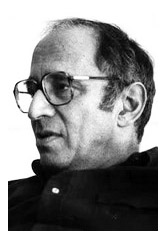
The above use of a low-resolution image of Thomas Kuhn is contended to be a fair use because it is solely for the educational purpose of illustrating this article and because the value of any existing copyright is not lessened by its use here. The subject is deceased and no free equivalent can therefore be obtained. The image is of greatly lower quality than the original, reducing the risk of damage to the value of the original version. The Multidisciplinarian
Recent Comments