Posts Tagged Thomas Kuhn
Incommensurability and the Design-Engineering Gap
Posted by Bill Storage in Engineering & Applied Physics, Innovation management, Interdisciplinary teams on April 4, 2014
Those who conceptualize products – particularly software – often have the unpleasant task of explaining their conceptual gems to unimaginative, sanctimonious engineers entrenched in the analytic mire of in-the-box thinking. This communication directs the engineers to do some plumbing and flip a few switches that get the concept to its intended audience or market… Or, at least, this is how many engineers think they are viewed by designers.

Truth is, engineers and creative designers really don’t speak the same language. This is more than just a joke. Many posts here involve philosopher of science, Thomas Kuhn. Kuhn’s idea of incommensurability between scientific paradigms also fits the design-engineering gap well. Those who claim the label, designers, believe design to be a highly creative, open-ended process with no right answer. Many engineers, conversely, understand design – at least within their discipline – to mean a systematic selection of components progressively integrated into an overall system, guided by business constraints and the laws of nature and reason. Disagreement on the meaning of design is just the start of the conflict.
Kuhn concluded that the lexicon of a discipline constrains the problem space and conceptual universe of that discipline. I.e., there is no fundamental theory of meaning that applies across paradigms. The meaning of expressions inside a paradigm comply only with the rules of that paradigm. Says Kuhn, “Conceptually, the world is our representation of our niche, the residence of the particular human community with whose members we are currently interacting” (The Road Since Structure, 1993, p. 103). Kuhn was criticized for exaggerating the extent to which a community’s vocabulary and word usage constrains the thoughts they are able to think. Kuhn saw this condition as self-perpetuating, since the discipline’s constrained thoughts then eliminate any need for expansion of its lexicon. Kuhn may have overplayed his hand on incommensurability, but you wouldn’t know it from some software-project kickoff meetings I’ve attended.
This short sketch, The Expert, written and directed by Lauris Beinerts, portrays design-engineering incommensurability from the perspective of the sole engineer in a preliminary design meeting.
See also: Debbie Downer Doesn’t Do Design
Richard Rorty: A Matter for the Engineers
Posted by Bill Storage in Multidisciplinarians, Philosophy of Science on September 13, 2012
William Storage 13 Sep 2012
Visiting Scholar, UC Berkeley Science, Technology & Society Center
 Richard Rorty (1931-2007) was arguably the most controversial philosopher in recent history. Unarguably, he was the most entertaining. Profoundly influenced by Thomas Kuhn, Rorty is fascinating and inspirational, even for engineers and scientists.
Rorty’s thought defied classification – literally; encyclopedias struggle to pin philosophical categories to him. He felt that confining yourself to a single category leads to personal stagnation on all levels. An interview excerpt at the end of this post ends with a casual yet weighty statement of his confidence in engineers’ ability to save the world.
Unlike many of his contemporaries, Rorty looked at familiar things in different light – and could explain his position in plain English. I never found much of Heidegger to be coherent, let alone important. No such problem with Dick Rorty.
Rorty could simplify arcane philosophical concepts. He saw similarities where others saw differences, being mostly rejected by schools of thought he drew from. This was especially true for pragmatism. Often accused of hijacking this term, Rorty offered that pragmatism is a vague, ambiguous, and overworked word, but nonetheless, “it names the chief glory of our country’s intellectual tradition.” He was enamored with moral and scientific progress, and often glowed with optimism and hope while his contemporaries brooded in murky, nihilistic dungeons.
 Richard Rorty photo by Mary Rorty. Used by permission.
Rorty called himself a “Kuhnian” apart from those Kuhnians for whom The Structure of Scientific Revolution justified moral relativism and epistemic nihilism. Rorty’s critics in the hard sciences – at least those who embrace Kuhn – have gone to great lengths to distance Kuhn from Rorty. Philosophers have done the same, perhaps a bit sore from Rorty’s denigration of analytic philosophy and his insistence that philosophers have no special claim to wisdom. Kyle Cavagnini in the Spring 2012 issue of Stance (“Descriptions of Scientific Revolutions: Rorty’s Failure at Redescribing Scientific Progress”) finds that Rorty tries too hard to make Kuhn a relativist:
“Kuhn’s work provided a new framework in philosophy of science that garnered much attention, leading some of his theories to be adopted outside of the natural sciences. Unfortunately, some of these adoptions have not been faithful to Kuhn’s original theories, and at times just plain erroneous conclusions are drawn that use Kuhn as their justification. These misreadings not only detract from the power of Kuhn’s argument, but also serve to add false support for theories that Kuhn was very much against; Rorty was one such individual.”
Cavagnini may have some valid technical points. But it’s as easy to misread Rorty as to misread Kuhn. As I read Rorty, he derives from Kuhn that the authority of science has no basis beyond scientific consensus. It then follows for Rorty that instituational science and scientists have no basis for a privileged status in acquiring truth. Scientist who know their stuff shouldn’t disagree on this point. Rorty’s position is not cultural constructivism applied to science. He doesn’t remotely imply that one claim of truth – scientific or otherwise – is as good as another. In fact, Rorty explicitly argues against that position as applied to both science and ethics. Rorty then takes ideas he got from Kuhn to places that Kuhn would not have gone, without projecting his philosophical ideas onto Kuhn:
“To say that the study of the history of science, like the study of the rest of history, must be hermeneutical, and to deny (as I, but not Kuhn, would) that there is something extra called ‘rational reconstruction’ which can legitimize current scientific practice, is still not to say that the atoms, wave packages, etc., discovered by the physical scientists are creations of the human spirit.” – Philosophy and the Mirror of Nature
“I hope to convince the reader that the dialectic within analytical philosophy, which has carried … philosophy of science from Carnap to Kuhn, needs to be carried a few steps further.” – Philosophy and the Mirror of Nature
What Rorty calls “leveling down science” is aimed at the scientism of logical positivists in philosophy – those who try to “science-up” analytic philosophy:
“I tend to view natural science as in the business of controlling and predicting things, and as largely useless for philosophical purposes” – Rorty and Pragmatism: The Philosopher Responds to his Critics
For Rorty, both modern science and modern western ethics can claim superiority over their precursors and competitors. In other words, we are perfectly capable of judging that we’ve made moral and scientific progress without a need for a privileged position of any discipline, and without any basis beyond consensus. This line of thought enabled the political right to accuse Rorty of moral relativism and at the same time the left to accuse him of bigotry and ethnocentrism. Both did vigorously. [note]
You can get a taste of Rorty from the sound and video snippets available on the web, e.g. this clip where he dresses down the standard philosophical theory of truth with an argument that would thrill mathematician Kurt Gödel:
In his 2006 Dewey Lecture in Law and Philosophy at the University of Chicago, he explains his position, neither moral absolutist nor moral relativist (though accused of being both by different factions), in praise of western progress in science and ethics.
Another example of Rorty’s nuanced position is captured on tape in Stanford’s archives of the Entitled Opinions radio program. Host Robert Harrison is an eloquent scholar and announcer, but in a 2005 Entitled Opinions interview, Rorty frustrates Harrison to the point of being tongue-tied. At some point in the discussion Rorty offers that the rest of the world should become more like America. This strikes Harrison as perverse. Harrison asks for clarification, getting a response he finds even more perverse:
Harrison: What do you mean that the rest of the world should become a lot more like America? Would it be desirable to have all the various cultures across the globe Americanize? Would that not entail some sort of loss at least at the level of diversity or certain wisdoms that go back through their own particular traditions. What would be lost in the Americanization or Norwegianization of the world?
Rorty: A great deal would be lost. A great deal was lost when the Roman Empire suppressed a lot of native cultures. A great deal was lost when the Han Empire in China suppressed a lot of native cultures […]. Whenever there’s a rise in a great power a lot of great cultures get suppressed. That’s the price we pay for history.
Asked if this is not too high a price to pay, Rorty answers that if you could get American-style democracy around the globe, it would be a small price to have paid. Harrison is astounded, if not offended:
Harrison: Well here I’m going to speak in my own proper voice and to really disagree in this sense: that I think governments and forms of government are the result of a whole host of contingent geographical historical factors whereby western bourgeois liberalism or democracy arose through a whole set of circumstances that played themselves out over time, and I think that [there is in] America a certain set of presumptions that our form of democracy is infinitely exportable … [and] that we can just take this model of American democracy and make it work elsewhere. I think experience has shown us that it’s not that easy.
Rorty: We can’t make it work elsewhere but people coming to our country and finding out how things are done in the democratic west can go back and try to imitate that in their own countries. They’ve often done so with considerable success. I was very impressed on a visit to Guangzhou to see a replica of the statue of Liberty in one of the city parks. It was built by the first generation of Chinese students to visit America when they got back. They built a replica of the Statue of Liberty in order to help to try to explain to the other Chinese what was so great about the country they’d come back from. And remember that a replica of the Statue of Liberty was carried by the students in Tiananmen Square.
Harrison (agitated): Well OK but that’s one way. What if you… Why can’t we go to China and see a beautiful statue of the Buddha or something, and understand equally – have a moment of enlightenment and bring that statue back and say that we have something to learn from this other culture out there. And why is the statue of liberty the final transcend[ant] – you say yourself as a philosopher that you don’t – that there are no absolutes and that part of the misunderstanding in the history of philosophy is that there are no absolutes. It sounds like that for you the Statue of Liberty is an absolute.
Rorty: How about it’s the best thing anybody has come up with so far. It’s done more for humanity than the Buddha ever did. And it gives us something that … [interrupted]
Harrison: How can we know that!?
Rorty: From history.
Harrison: Well, for example, what do we know about the happiness of the Buddhist cultures from the inside? Can we really know from the outside that we’re happier than they are?
Rorty: I suspect so. We’ve all had experiences in moving around from culture to culture. They’re not closed off entities, opaque to outsiders. You can talk to people raised in lots of different places about how happy they are and what they’d like.
Then it spirals down a bit further. Harrison asks Rorty if he thinks capitalism is a neutral phenomenon. Rorty replies that capitalism is the worst system imaginable except for all the others that have been tried so far. He offers that communism, nationalization of production and state capitalism were utter disasters, adding that private property and private business are the only option left until some genius comes up with a new model.
Harrison then reveals his deep concern over the environment and the free market’s effect on it, suggesting that since the human story is now shown to be embedded in the world of nature, that philosophy might entertain the topic of “life” – specifically, progressing beyond 20th century humanist utopian values in light of climate change and resource usage. Rorty offers that unless we develop fusion energy or similar, we’ve had it just as much as if the terrorists get their hands on nuclear bombs. Rorty says human life and nature are valid concerns, but that he doesn’t see that they give any reason for philosophers to start talking about life, a topic he says philosophy has thus far failed to illuminate.
This irritates Harrison greatly. At one point he curtly addresses Rorty as “my dear Dick.” Rorty’s clarification, his apparent detachment, and his brevity seem to make things worse:
Rorty: “Well suppose that we find out that it’s all going to be wiped out by an asteroid. Would you want philosophers to suddenly start thinking about asteroids? We may well collapse due to the exhaustion of natural resources but what good is it going to do for philosophers to start thinking about natural resources?”
Harrison: “Yeah but Dick there’s a difference between thinking of asteroids, which is something that is outside of human control and which is not submitted to human decision and doesn’t enter into the political sphere, and talking about something which is completely under the governance of human action. I don’t say it’s under the governance of human will, but it is human action which is bringing about the asteroid, if you like. And therefore it’s not a question of waiting around for some kind of natural disaster to happen, because we are the disaster – or one could say that we are the disaster – and that the maximization of wealth for the maximum amount of people is exactly what is putting us on this track toward a disaster.
Rorty: Well, we’ve accommodated environmental change before. Maybe we can accommodate it again; maybe we can’t. But surely this is a matter for the engineers rather than the philosophers.
A matter for the engineers indeed.
.
————————————————-
.
Notes
1) Rorty and politics: The academic left cheered as Rorty shelled Ollie North’s run for the US Senate. As usual, not mincing words, Rorty called North a liar, a claim later repeated by Nancy Reagan. There was little cheering from the right when Rorty later had the academic left in his crosshairs; perhaps they failed to notice.. In 1997 Rorty wrote that the academic left must shed its anti-Americanism and its quest for even more abusive names for “The System.” “Outside the academy, Americans still want to feel patriotic,” observed Rorty. “They still want to feel part of a nation which can take control of its destiny and make itself a better place.”
On racism, Rorty observed that the left once promoted equality by saying we were all Americans, regardless of color. By contrast, he said, the contemporary left now “urges that America should not be a melting-pot, because we need to respect one another in our differences.” He chastised the academic left for destroying any hope for a sense of commonality by highlighting differences and preserving otherness. “National pride is to countries what self-respect is to individuals,” wrote Rorty.
For Dinesh D’Souza, patriotism is no substitute for religion. D’Souza still today seems obsessed with Rorty’s having once stated his intent “to arrange things so that students who enter as bigoted, homophobic religious fundamentalists will leave college with views more like our own.” This assault on Christianity lands Rorty on a D’Souza enemy list that includes Sam Harris, Christopher Hitchens, and Richard Dawkins, D’Souza apparently unaware that Rorty’s final understanding of pragmatism included an accomodation of liberal Christianity.
2) See Richard Rorty bibliographical material and photos maintained by the Rorty family on the Stanford web site.
Paul Feyerabend – The Worst Enemy of Science
Posted by Bill Storage in Philosophy of Science on August 7, 2012
The Incommensurable Thomas Kuhn
Posted by Bill Storage in Philosophy of Science on August 4, 2012
William Storage 4 Aug 2012
Visiting Scholar, UC Berkeley Center for Science, Technology & Society
Thomas Kuhn’s 1962 book, The Structure of Scientific Revolutions, appears in Wikipedia’s list of the 100 most influential books in history. In Structure, Kuhn introduced the now ubiquitous term and concept of paradigm shift. As Kuhn saw it, the scope of a paradigm was universal. A paradigm is not merely a theory, but the framework and worldview in which a theory dwells. Kuhn explained that, “successive transition from one paradigm to another via revolution is the usual developmental pattern of mature science.” His view was that paradigms guide research through periods of “normal science,” during which, any experimental results not consistent with the paradigm are deemed erratic and are discarded. This persists until overwhelming evidence against the paradigm results in its collapse, and a paradigm shift occurs.
Kuhn stressed the idea of incommensurability between associated paradigms, meaning that it is impossible to understand the new paradigm from within the conceptual framework of its predecessor. Examples include the Copernican Revolution, plate tectonics, and quantum mechanics.
Countless discussions and critiques of Kuhn and his work have been published. I’ll focus mainly on aspects of his work – and popular conceptions of it – related to its appropriation in technology and business process management; but a bit of background on popular misunderstandings of his work from a philosophy perspective will come in handy later.
Kuhn’s claim of incommensurability led many to conclude that the selection of a governing theory is fundamentally irrational, a product of consensus or politics rather than of objective criteria. This fueled flames already raging in criticism of science in postmodernist, subjectivist, and post-structuralist circles. Kuhn was an overnight sensation and placed on a pedestal by all sorts of relativism, sociology, and arts and humanities movements, despite his vigorous rejection of them, their methods, their theories, and their paradigms. Decades later (The Road Since Structure), Kuhn added that, “if it was relativism, it was an interesting sort of relativism that needed to be thought out before the tag was applied.”
Communities outside of hard science – 20th century social theory in particular – couldn’t get enough of Kuhn and his paradigm shifts. Much of the Philosophy of Science community scoffed at his book. Within hard science there was considerable debate, particularly by Karl Popper, Stephen Toulmin and Paul Feyerabend. And even in the hard science community, Kuhn found himself in constant defense not against the scientific reading of his model, but against the ideas appropriated by schools of philosophers, cultural theorists, and literary critics calling themselves Kuhnians. Freeman Dyson recall s having confronted Kuhn about these schools of thought:
“A few years ago I happened to meet Kuhn at a scientific meeting and complained to him about the nonsense that had been attached to his name. He reacted angrily. In a voice loud enough to be heard by everyone in the hall, he shouted, ‘One thing you have to understand. I am not a Kuhnian.'” – Freeman Dyson, The Sun, The Genome, and The Internet: Tools of Scientific Revolutions
 Postmodern deconstructionists are certainly right about one thing; there are many ways to read Kuhn. Kuhn’s Structure – if interpreted outside the narrow realm in which he intended it to operate – becomes strangely self-referential and self-exemplifying. Different communities consumed it as constrained by their existing paradigms. In The Road Since Structure Kuhn reflected that, regarding Structure‘s uptake, he had disappointments but not regrets. He suggested that if he had it do over, he would have sought to prevent readings such as the view that paradigms are sources of oppression to be destroyed.
Kuhn would have to have been extremely naive to fail to consider the consequences – in the socially precarious 1960s – of describing scientific change in terms of a sociological, political, and Gestalt-psychology models in a book having “revolution” in its title. Or perhaps it was a scientist’s humility (he was educated as a physicist) that allowed him to not anticipate that a book on history of science would ever be read outside the communities of science. Despite the incredulity of such claims – and independent of accuracy of his position on science – my reading of Kuhn’s interviews and commentary on the impact of Structure leads me to conclude that Kuhn is truly an accidental guru – misread, misunderstood, and misused by adoring postmodernist theorists and business strategists alike. Without Thomas Kuhn, paradigm shift would not rank in CNET’s top 10 dot-com buzzwords, futurist Joel Barker and motivator Stephen Covey would have had very different careers, and postmodern relativists might still be desperately craving some shred of external validation.
——————————
.
“You talk about misuses of Kuhn’s work. I think it is wildly misused outside of natural sciences. The number of scientific revolutions is extremely small… To find one outside the natural sciences is very hard. There are just not enough interesting and signficant ideas around, but it is curious if you read the sociological or linguistic literate, that people are finding revolutions everywhere.” – Noam Chomsky, The Generative Enterprise Revisited
“Let us now turn our atention towards some historical analyses that have apparently provided grist for the mill of contemporary relativism. The most famous of these is undoubtedly Thomas Kuhn’s The Structure of Scientific Revolutions.” – Alan Sokol, Beyond the Hoax
——————————
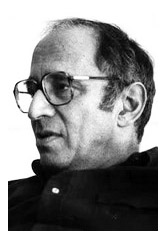
The above use of a low-resolution image of Thomas Kuhn is contended to be a fair use because it is solely for the educational purpose of illustrating this article and because the value of any existing copyright is not lessened by its use here. The subject is deceased and no free equivalent can therefore be obtained. The image is of greatly lower quality than the original, reducing the risk of damage to the value of the original version. The Multidisciplinarian
Recent Comments