Bill Storage

This user hasn't shared any biographical information
Fattening Frogs For Snakes
Posted in Fiction on December 2, 2025
(Sonny Boy Williamson’s blues classics reinterpreted)
1.
Three a.m. and the coffee skin was thick enough to skate across. I listened for heels on the stairs, the click of the screen door, but heard only the refrigerator humming a tune it couldn’t possibly know.
Took me a long time, long time to find out my mistake
You can bet your bottom dollar, ain’t fattening no more frogs for snakes
I had told her the frog-and-snake thing over venison and morels I picked myself above the ruined mill on Deep Creek. She’d worn a blue-green dress that looked like pond water reflecting setting sun. I remember thinking: that’s the color a man drowns in. She smiled at the frog and snake story. I tried to catalog the smile. Amusement? Patience? Or the kindness of someone who knows you’re performing before you know it yourself.
Now, she dreamed that I was a kissin’ her
On down by the mill
She’d dream that she’d taken me from
That girl up on the hill
Beneath the front window leaned her unicorn clock (acrylic on wood, fine art kissing kitsch), its hands frozen for years. She loved the useless thing. I measured the dead mechanism, then lost an hour on Amazon picking the exact shaft diameter, thread length, hand style. Details matter.
But first, could we find out what went wrong? I disconnected, tested continuity, checked for a bind, and listened again. The hum – or its absence – could tell me nothing. Still, I traced the edge of the case, felt for the tiniest resistance, imagined the coil shifting beneath my touch.
She asked if frogs really tasted like knowledge. I said only if you cooked them slow, with doubt and regret. She laughed so hard the candle guttered. But I’d just put more snake on the table than I’d meant to. She caught the mote of a pause when I stopped myself from straightening the candle.
She was the dreamest girl
The dreamest girl I most ever seen
The new movement arrived with six pairs of hands. I laid them out like tarot cards, wondering if anyone would notice an hour hand married to the wrong minute. I’d measured the inset twice and chosen the three-eighths movement, though I had doubts about the depth. Just in case, I’d already walked to Ace for a single Everbilt fender washer, bright enough to show every fingerprint of doubt.
Installation took thirty seconds. The old mechanism went into a drawer with all the other pieces that once belonged somewhere. The clock looked identical, but felt somehow different, like it had learned a secret.
That was the night I felt the first cold coil around my ankle.
Later, when the affair was coughing blood, I blamed more worldly men. I can’t dance – it doesn’t load right. I pictured them in Teslas, playing jazz, their beards shaped like the decisions they agonize over.
Oh been so long, been a mighty long time.
Yes a mighty long time since I seen that girl of mine
Sometimes, driving the back roads at dusk, I’d pass a slough and see her reflection in black water. Sometimes the reflection had my face. Sometimes it smiled like it knew the joke. Frog? Or snake?
2.
He was gone and the kissing dreams had faded. Who won the breakup?
I keep taking the same left past a collapsed barn with the Sinclair sign still bleeding green, and somehow I’m always coming up on it again. You saw it on Twilight Zone. The odometer isn’t moving. That’s how I know I’m still inside the dream he left me.
My mind was a room he enjoyed furnishing. I’d sit on the counter while he cooked – I couldn’t boil water when we met. I’ll grant him that. And he’d feed me concepts the way other men feed you strawberries. I grew up with X-Files and Nine Inch Nails. He gave me real art, history, literature. Not pretentious crap but the kind you hoard. I grew fat on it. Addicted.
Like I need an addiction. My thought turned sleek and cold-blooded.
My dreams inverted. I’d be sitting alone, and liking it, then there he’d be, fixing things I never used, and things that were broken but worked well enough. He seemed to audition for intimacy.
Now an’ I’m goin’ away, baby
Just to worry you off my mind
Tonight, I cook. I’m craving chicken. I’m not seeking fame here, just something with enough moving parts to keep me honest. The ingredients line up like suspects. Shallots, white wine, a sprig of thyme that’s tired but still willing. The thighs wait off to the side, trimmed and patted dry. Salt and pepper both sides. I want crisp skin.
Skin down in the pan, they hissed at me, and the smell shifted from raw to something that makes the neighbors reconsider their life choices. I did. Don’t fuss with the thighs. If you poke too early, the skin will tear.
I mince my shallots microscopic. Knife work is the closest thing I have to meditation. There’s no arguing with a blade that demands truth. From an onion or otherwise.
I remove the chicken once it loosens from the pan. In go the shallots, and the wine lifts the browned bits. The sauce pulls itself together and thickens like a story with unneeded characters. Heat on low.
I’d be walking the ridge and the ground would soften, turn to loam, then to water. I’d sink to the ankles, then the knees, and something muscular would brush my calf. No bite, just tasting the temperature. I looked down and saw his face under the surface, mouth open in a silent croak. Then it was my own face, older, eyes already filmed with the green of deep water.
I add stock, thyme, a whisper of cream. Soften it. Chicken back in the pan and then simmer. I load the D-minor Partita on Spotify and headphones.
The sauce coats the back of a spoon. I taste it, and it tastes back, which is how you know you’ve gotten somewhere. I plate the chicken with potatoes. Nothing theatrical. Just a little structure.
Snakes? Now the Bible prefers linear time, a story with a big bang and an end. Not loops, endless returns, and recurrence. The ouroboros, the snake that eats its tail, showed up in Greece and Mesopotamia. Put a cyclic symbol creature inside a linear story and you got tension.
Behind a clock face is a nest of gears that no one sees. Most folk just look at the hands. I tried replacements. They spoke depth in the voice of a dryer sheet with a taste for Wikipedia. None leave tracks when they walk across a lit room. None make the air go thick and listenable.
I wake up pounding my fist on the bed. I’m quoting dead Germans and want to bite my own tongue off. One says clocks murder everything alive about time, turn it into a corpse on a conveyor belt. I know their names. I can quote them. But why? Knowledge I wish I didn’t have, I tell myself, humming the partita.
Don’t start me to talkin’. I’ll tell everything I know.
Last week I found a morel growing through the floorboard of my car. Passenger side. I think I might be dreaming someone who’s trying to wake up from me. The Sinclair sign’s still bleeding green and the odometer hasn’t budged.
Oh been so long, been a mighty long time.
3.
The woman came at the blue hour when the bats stitch the sky together. She stood on the plank that used to be a dance floor before the flood of ’63 carried the jukebox down Deep Creek still playing Sonny Boy. She touched the face in the reflection.
She looked thinner. Hunger can do that, even if it’s the mind that’s starving.
She asked the water the questions people always ask when the music stops:
“Did he love me the way a man loves a woman, or the way a man loves a mirror?”
“Did I love him, or did I love being transformed into someone worth ruining?”
It was like she had read the script. I pressed a smile back down and let one eye break the surface.
“You loved me,” I told her.
She stood on the bank. A turtle hauled itself onto a sun-warmed log. Something regal in its refusal to hurry. The turtle blinked slowly, a gesture suggesting amusement. I nodded, thin as a drawn line – acknowledging the age, the armor, the calm.
The water held the crooked reflections of bottlebrush sedge. A few loose seeds clung to the stems. When a dragonfly landed, the stem leaned, and the whole cluster tilted just a hair.
She stepped in. The water took her weight without sound. Her hand found mine. Cold met cold. The scales remembered every classic she’d devoured whole.
I tasted the new skin budding under the old one – thin, translucent, the color of creek ice at breakup.
Above us, the mill wheel groaned. The years ran backward: the flood returned the jukebox, the mill stood up straight. The venison walked back into deer. Somewhere a screen door clicked shut.
I live it through my diary
And I read all my problems now are free
“Grow a new skin,” I told her. “You’ve earned it.”
And in that hush, I slipped beneath the water, silent on the downbeat.
Don’t start me to talkin’. I’ll tell everything I know.
___
.
Carving the Eagle
Posted in Commentary on November 27, 2025
If Ben Franklin had gotten his way, we’d have an edible national bird. Or no one would eat turkey on Thanksgiving. That might be ok by me.
Franklin was obsessed with it. He pushed for the wild turkey as our national bird. “Bird of courage” he said, roasting the bald eagle as having “bad moral character” for stealing fish from hard-working hawks. Imagine Franklin’s Thanksgiving. Either we’d be carving an eagle, or we’d eat ham, and nobody would miss two weeks of dry breast meat.
America, commerce always first, probably opted for turkey because it’s big and easy to farm, once tamed by government subsidy. Franklin lost that round, but he did get his face on the hundred-dollar bill.
“Turkey!” as an insult peaked in the US in the 1980s, due to National Lampoon’s 1975 Gold Turkey, and then Christmas Vacation (1989). It originated in theater. A “turkey” was a flop show that opened on Thanksgiving, anticipating a run til New Year, and closed fast. By the 50s it was niche. Belushi brought it back. Kids still use it.
Despite Franklin, Congress went with the eagle as the official bird, and 250 years later the turkey’s ultimate revenge was becoming the official insult. Turkey was relegated to grocery store and playground.
That’s a truly American outcome. We didn’t crown the turkey, we commodified it, mocked it, and ate it out of habit. Poor Ben. We turned his bird of courage into a riff for failure. For a man who valued thrift, civic virtue, and self-improvement, that must be the final insult.
If Franklin could see us now, he’d shake his head, pocket his hundred, and call us what we’ve become. Turkeys.
It’s the Losers Who Write History
Posted in Commentary on November 24, 2025
The victors write first drafts. They get to seize archives, commission official chronicles, destroy inconvenient records, and shape the immediate public memory. Take Roman accounts of Carthage and Spanish on the Aztecs. What happens afterward and indefinitely is where Humanities departments play an outsized role in canonization.
Such academics are the relativist high priests of the safe-space seminary – tenured custodians of western-cultural suicide. Their scripture is the ever-shifting DEI bulletin. Credentialed barbarians stand behind at the gates they themselves dismantled. They are moral vacationers who turned the university into a daycare for perpetual adolescents. The new scholastic is the aristocracy of mediocrity. Historicist gravediggers have pronouncing the West dead so they can inherit its estate.
Several mechanisms make this possible. Academic historians, not primary sources – whether Cicero or Churchill – decide which questions are worth asking. Since the 1970s especially, new methodologies like social history, postcolonial studies, gender studies, and critical race theory have systematically shifted focus away from political, military, and diplomatic chronicling toward power structures, marginalized voices, and systemic oppression. These are not neutral shifts. They reflect the political priorities of the post-Nixon academic left, which has dominated western humanities departments since.
Peer-reviewed journals, university presses, hiring committees, and tenure standards are overwhelmingly controlled by scholars who share an ideological range scarcely wider than a breath. Studies of political self-identification among historians routinely show ratios of 20:1 or higher in favor of the left – often contented Marxists. Dissenting or traditional interpretations that challenge revisionist views on colonialism, the Soviet Union, or America’s founding are marginalized, denied publication, and labeled “problematic.” A career is erased overnight.
K-12 and undergraduate curricula worship academic consensus. Here, again, is a coherence theory of truth subjugating the correspondence model. When the consensus changes – when a critical mass of scholars finds an even more apologetic lens – textbooks follow, almost instantly. The portrayal of the European Age of Exploration, for example, went overnight from celebration of discovery to exclusive emphasis on conquest and genocide. American Founding Fathers went from flawed but visionary innovators of a unique government to rich slave-owning hypocrites, especially after the 1619 Project gained academic traction. A generation or two of Humanities college grads have no clue that “rich white man” Alexander Hamilton was born illegitimate in the Caribbean, was a lifelong unambiguous abolitionist, despised the slave-based Southern economic model, and died broke. They don’t know that the atheist Gouverneur Morris at the Constitutional Convention called slavery “a nefarious institution … the curse of heaven on the states where it prevailed.” They don’t know this because they’ve never heard of Gouverneur Morris, the author of the final draft of the Constitution. That’s because Ken Burns never mentions Morris in his histories. It doesn’t fit his caricature. Ken Burns is where intellectuals learn history. His The Vietnam War is assigned in thousands of high-school and college courses as authoritative history.
Modern historians openly admit that they mean their work to serve social justice goals. The past is mined for precedents, cautionary tales, or moral leverage rather than reconstructed for its own sake. The American Historical Association’s own statements have emphasized “reckoning with the past” in explicitly activist language. Howard Zinn (A People’s History of the United States) boasted, “I don’t pretend to be neutral.”
The academic elite – professional mourners at the funeral of the mind they themselves poisoned – have graduated an entire generation who believe Nixon escalated (if not started) the Vietnam War. This is a textbook (literally) case of the academic apparatus quietly rewriting the emphasis of history. Safe-space sommeliers surely have access to original historical data, but their sheep are too docile to demand primary sources. Instead, border patrollers of the settler-colonial imagination serve up moral panic by the pronoun to their trauma-informed flock.
The numbers. Troop levels went from 1000 when Kennedy took office to 184,000 in 1965 under Johnson. A year later they hit 385,000, and peaked at 543,000 when Nixon took office in 1969. Nixon’s actual policy was systematic de-escalation; he reduced US troops to 24,000 by early 1973, then withdrew the U.S. from ground combat in March. But widely used texts like The American Pageant, Nation of Nations, and Visions of America ignore Kennedy’s and Johnson’s role while framing Nixon as the primary villain of the war. And a large fraction of the therapeutic sheep with Che Guevara posters in their dorms graze contentedly inside an electric fence of approved opinions. They genuinely believe Nixon started Vietnam, and they’re happy with that belief.
If Allan Bloom – the liberal Democrat author of The Closing of the American Mind (1987) – were somehow resurrected in 2025 and lived through the Great Awokening, I suspect he’d swing pretty far into the counter-revolutionary space of Victor Davis Hanson. He’d scorch the vanguardist curators of the neopuritan archival gaze and their pronoun-pious lambs who bleat “decolonize” while paying $100K a year to be colonized by the university’s endowment.
Ken Burns said he sees cuts to the Corporation for Public Broadcasting as a serious existential threat. He did. The republic – which he calls a democracy – is oh so fragile. He speaks as though he alone has been appointed to heal America’s soul. It’s the same sacerdotal NPR manner that Bloom skewered in the humanities professoriate: the priestly conviction that one is engaged in something higher than mere scholarship, something redemptive. And the nation keeps paying Burns for it, because it’s so much more comfortable to cry over a Burns film than to wrestle with the actual complexity Burns quietly edits out. He’s not a historian. He’s the high priest of the officially sanctioned memory palace. It’s losers like Burns who write history.
Removable Climbing Bolt Stress Under Offset Loading
Posted in Engineering & Applied Physics on November 13, 2025
A Facebook Group has been discussing how load direction affects the stress state of removable bolts and their integral hangers. Hanger geometry causes axial loads to be applied with a small (~ 20mm) offset from the axis of the bolt. One topic of discussion is whether this offset creates a class-2 leverage effect, thereby increasing the stress in the bolt. Other aspects of the physics of these bolts warrant discussion. This can serve as a good starter, specifically addressing the leveraging/prying concern.
Intuition is a poor guide for this kind of problem. Nature doesn’t answer to consensus or gut feeling, and social reasoning won’t reveal how a bolt actually behaves. The only way to understand what’s happening is to go back to basic physics. That’s not a criticism of anyone’s judgment, it’s just the boundary the world imposes on us.
Examining the problem starts with simple physics (statics). Then you need to model how the system stretches and bends. You need to look at its stress state. So you need to calculate. A quick review of the relevant basics of mechanics might help. They are important to check the validity of the mental models we use to represent the real-world situation.
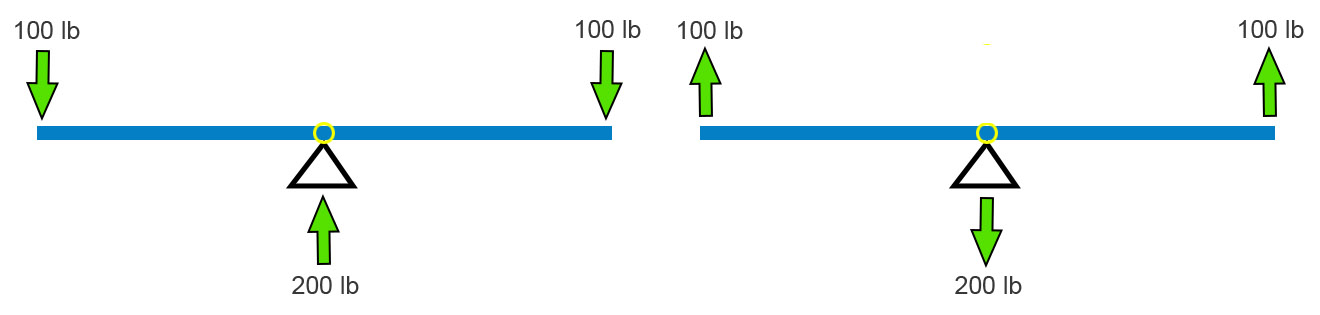
The classic balanced see-saw is at left below. The two 100 lb weights balance each other. The base pushes up on the beam with 200 pounds. We see Newton’s 1st Law in action. Sum of the down forces = sum of the up forces. If we say up forces are positive and down are negative, all the forces on the beam sum to zero. Simple. The see-saw works in tension too. Pull up with 2 ⋅ 100 pounds and the base pulls down by the same amount.
I’m going to stick will pull forces because they fit the bolt example better. A big kid and a little kid can still balance. Move the fulcrum toward the big kid (below left). The force the base pushes up with remains equal to the sum of the downward forces. This has to be in all cases. Newton (1st Law) must be satisfied.
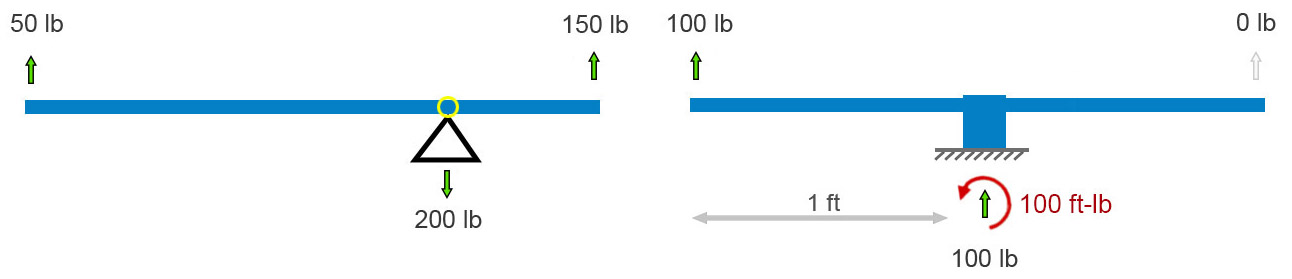
If the fulcrum – the pivot point – freezes up or is otherwise made immobile, the balancing act is no longer needed. The vertical forces still balance each other (cancel each other out), but now their is a twist on the base. Its left side wants to peel up. In addition to the sum of forces equaling zero, the sum of all twists must also sum to zero. A twist – I’ll use its physics name, moment – is defined as a force times the perpendicular distance through which it acts. In the above-right diagram, the 100 lb force is 1 foot from the base, so it applies a 100 ft-lb clockwise moment to the base (1 foot times 100 pounds = 100 ft-lb). (Notice we multiply the numbers and their units.) Therefore, to keep Isaac Newton happy, the ground must apply a 1 ft-lb counterclockwise moment (red curved arrow) to the base and beam that is fixed to it.
Anticipating a common point of confusion, I’ll point out here that, unlike the case where all the force arrows on this sort of “free body” diagram must sum to zero, there won’t necessarily be a visible curved arrow for every moment-balancing effect. Moment balance can exist between (1) a force times distance (100 lb up) and (2) a reaction moment (the counterclockwise moment applied by the ground), not between two drawn curved-arrows. If we focused on the ground and not the frozen see-saw, i.e., if we drew a free-body diagram of the ground and not the see-saw, we’d see a clockwise moment arrow representing the moment applied by the unbalanced base.
That’s all the pure statics we need to analyze these bolts. We’ll need mechanics of materials to analyze stresses. Let’s look at an idealized removable bolt in a hole. In particular, let’s look at an idealized Climbing Taiwan bolt. CT bolts have their integrated hangers welded to the bolt sleeve – fixed, like the base of the final see-saw above.
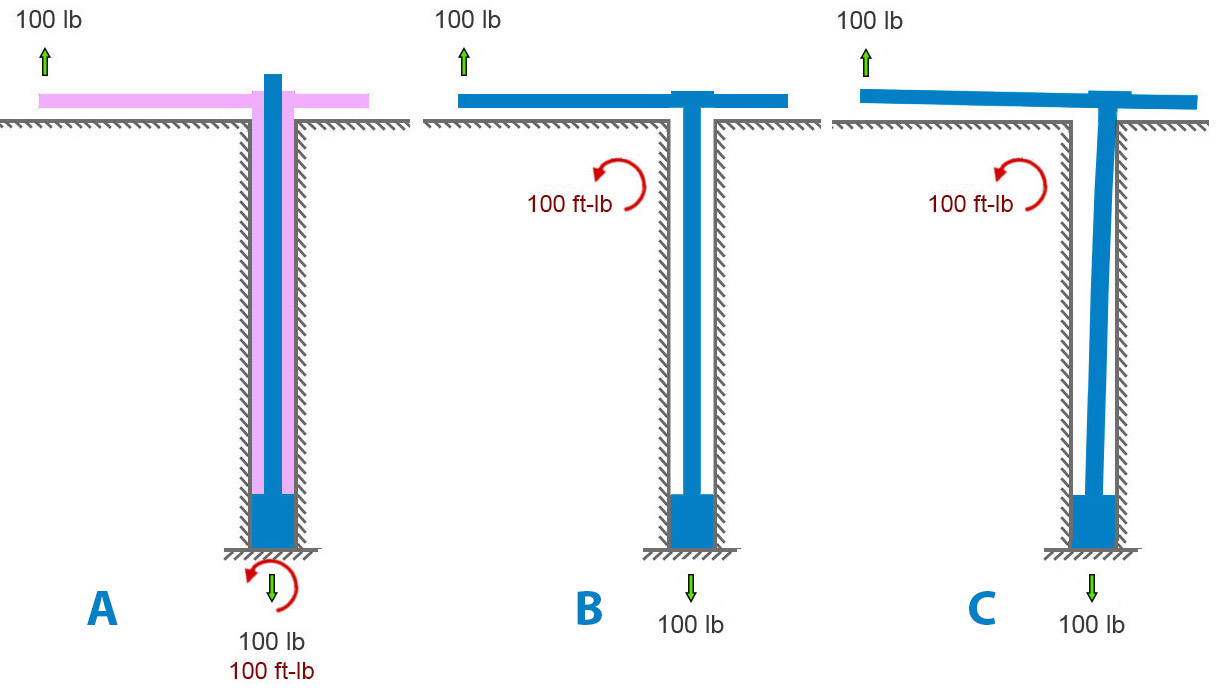
Figure A below shows an applied load of 100 pounds upward on the hanger. The bolt is anchored to rock at its base, at the bottom of the hole. A blue bolt is inside a pink hanger-sleeve assembly. The rock is pulling down on the base of the bolt with a force equal and opposite to the applied load. And the rock must apply a 100 ft-lb moment to the assembly to satisfy Newton. In figure A, it’s shown at the bottom of the hole.
But it need not be. Moments are global. Unlike forces, they aren’t applied at a point. We can move the curved arrow representing the moment – the twist the earth reacts to the load offset with – to any spot on the bolt assembly, as in the center diagram below. I further simplified the center diagram by removing the sleeve and modeling the situation as a single bolt-hanger assembly with space around it in the hole. For first-order calculations, given the small deflections involved, this simplification is acceptable. It helps us to see the key points.
We can allow the bolt to bend in the hole until it contacts the outside corner of the hole (figure B below). This changes very little besides adding some small counteracting horizontal forces there.
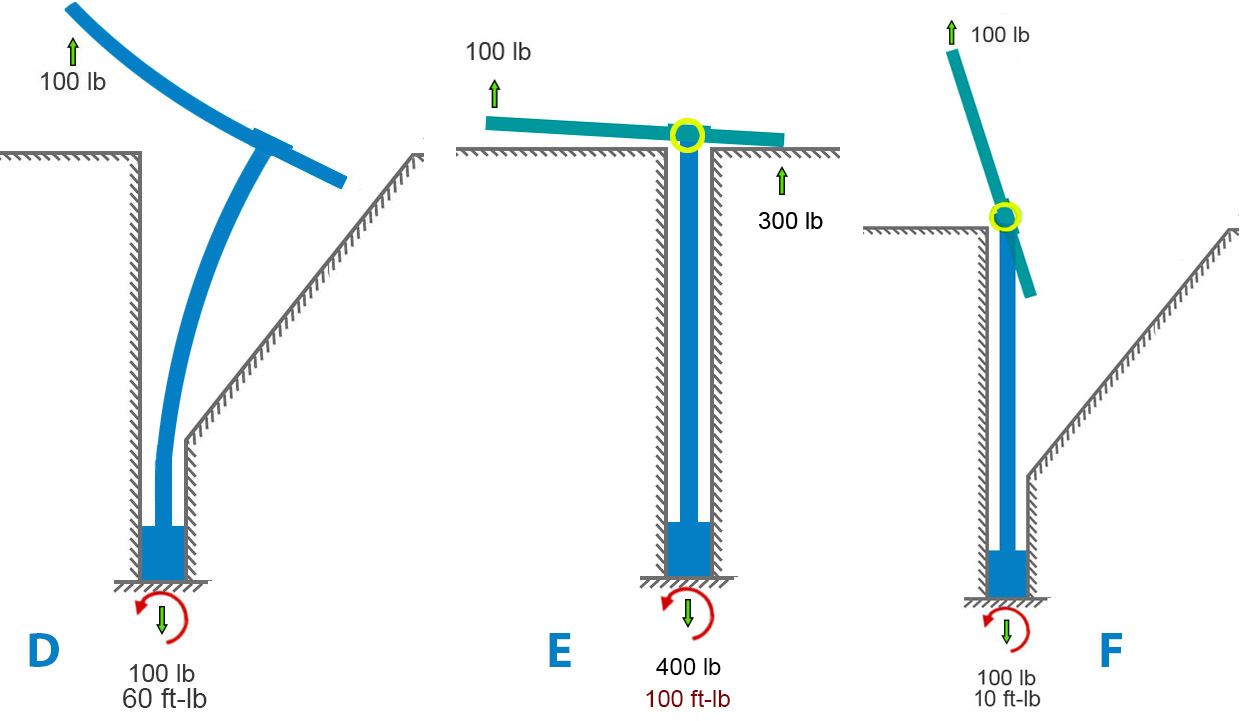
If we remove the rock and model a very bendy bolt, we get something like diagram D below. This leaves the forces unchanged but, in this extreme example, the moment is somewhat reduced because the moment arm (perpendicular distance between bolt and applied force) is considerably reduced by the bending.
We can also examine the case where the hanger is free to rotate on the bolt and sleeve (diagram E below). This is closer to the case of Petzl Pulse bolts. Here the 2nd-class lever mechanism comes into play. A “force-multiplier” is at work. If force-multiplier sounds like a bit of hand -waving, it is – forces aren’t multiplied per-se. We can do better and make Isaac Newton proud. A lever simply balances moments. If your hand is twice as far from the pivot as the load is, your hand needs only half the force because your longer distance gives your force more moment. Same moment, longer arm, smaller force. The 300-lb force at the hanger-rock (right side of bolt, figure E) contact exactly balances the 100-lb force that is three times farther away on the left side. Since both these forces pull upward on the hanger, the frictional force at the bottom of the whole becomes 400 pounds to balance it out. If no rock is on the right side of the hole, the hanger will rotate until it runs into something else (figure F).
Now we can look at stress, our bottom-line concern. Metal and rock and all other solids can take only so much stress, and then they break. For a material – say 304 steel – the stress at which it breaks is called its material strength. Material strength and stress are both measured in pounds per square inch (English) or Pascals (metric, often Megapascals, MPa). As a reference point, 304 steel breaks at a stress of 515 Mpa or 75,000 lb/sq-in. (75 ksi).
I will focus on figures A, B, C (identical for stress calcs), and E, since they are most like the real-world situations we’re concerned with. The various types of stresses all boil down to load divided by dimensions. Tensile stress is easy: axial load divided by cross sectional area. Since I’ve mixed English and metric units (for US reader familiarity), I’ll convert everything to metric units for stress calculation. Engineers use this symbol for stress: σ
Using σ = P/A to calculate axial stress, the numbers are:
- Axial load P= 100 lb =100 lbf = 444.82 N
- cross sectional area A = πd2/4 = 50.27 mm2
- radius c= 4 mm
Axial stress = σax = P/A = 8.85 MPa ≈ 1280 lb/sq-in.
The offset load imparts bending to the bolt. Calculating bending stress involves the concept of second moment of area (aka “cross-sectional moment of inertia” if you’re old-school). Many have tried to explain this concept simply. Fortunately, grasping its “why” is not essential to the point I want to make about axial vs. bending stress here. Nevertheless, here’s a short intro to the 2nd moment of area.
A beam under bending doesn’t care about how much material you have, it cares about how far that material is from the centerline. If you load a beam anchored at its ends in the middle, the top half (roughly) is in compression, the bottom half in tension. Top half squeezed, bottom stretched. Moment of area is a bookkeeping number that captures how much material you have times how far it sits from the centerline, squared. Add up every tiny patch of area, weighting each one by the square of its distance from the centerline. In shorthand, second moment of area (“I”) looks like this: I=∫y2dA
Now that you understand – or have taken on faith – the concept of second moment of area, we can calculate bending stress for the above scenario given the formula, σ = Mc/I.
Using σ = Mc/I, the numbers are:
- second moment I=πd4/64 = 201.06 mm4
- eccentric moment (i.e., the lever arm) = M = Pe=444.82 ⋅ 20 = 8896.44 N
Bending stress, σbend = Mc/I = 176.99 MPa ≈ 25,670 lb/sq-in.
The total stress of the bolt depends on which side of the bolt we are looking at. The maximum tensile stress is on the side that is getting stretched both by the applied axial load (100 lb) and by the fact that this load is offset. On that side of the bolt, we just add the axial and bending stress components (on the other side we would subtract the bending):
σtotal = σax ± σbend = 8.85 MPa + 176.99 MPa = 185.84 MPa ≈ 26,950 lb/sq-in.
Here we see something startling to folk who don’t do this kind of work. For situations like bolts and fasteners, the stress component due to the pullout force with no offset is insignificant compared to the effect of the offset. Bending completely dominates. By a factor of twenty in this case. Increasing the pure axial stress by increasing the applied axial load has little effect on the total stress in the bolt.
If we compare the A/B/C models with the E model, the pure-axial component grows by 18 MPa because of the higher reactive tensile force:
σtotal = σax ± σbend = 26.55 MPa + 176.99 MPa = 203.54 MPa ≈ 29521 lb/sq-in.
Adding the sleeve back to the model changes very little. It would reduce the force-multiplier effect in case E (thereby making it closer to A, B, and C) for several reasons that would take a lot of writing to explain well.
In the case of axially loaded removable bolts (not the use-case for which they were designed – significantly) the offset axial load greatly increases (completely dominates, in fact) the stress in the bolt. When a bolt carries an axial load that’s offset from its centerline, the problem isn’t any leverage created by the hanger’s prying geometry. That leverage effect is trivial. The offset itself produces a bending moment, and that bending drives the stress. For slender round members like bolts, bending overwhelms everything else.
Furthermore, published pull tests and my analysis of rock-limited vs. bolt-limited combinations of bolt diameter, length and rock strength suggest that bolt stress/strength is not a useful criterion for selecting removables. Based on what I’ve seen and experienced so far, I find the CT removables superior to other models for my concerns – durability, maintainability, reducing rock stress, and most importantly, ensuring that the wedge engages the back of the hole.
Things to See in Palazzo Massimo
Posted in History of Art, History of Christianity on November 10, 2025
Mike and Andrea visit Rome this week. Here’s what I think they should see in Museo Nazionale Romano, Palazzo Massimo. Not that I’d try to push my taste on anyone.
The Via Labicana Augustus
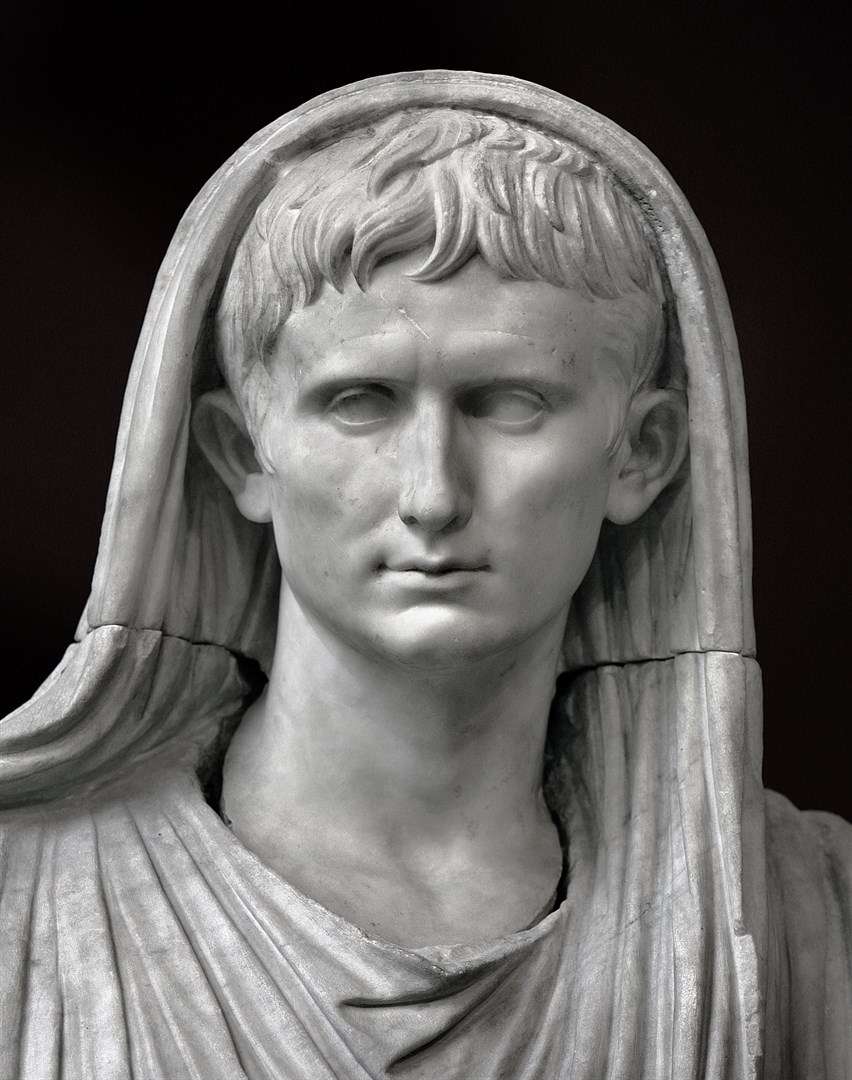
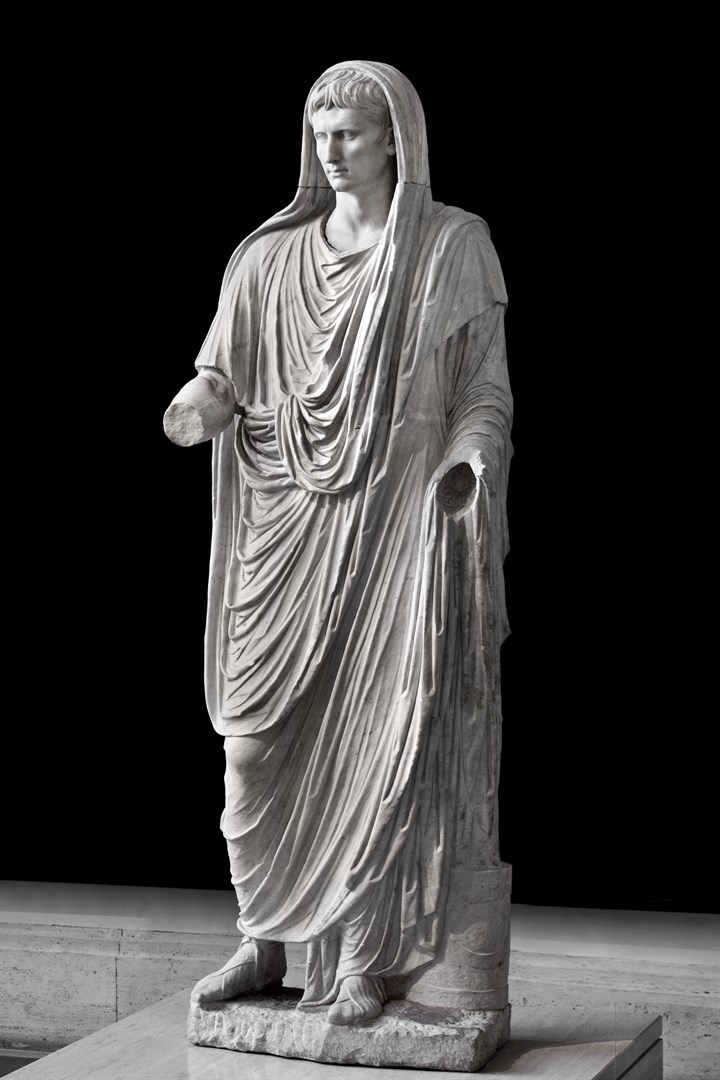
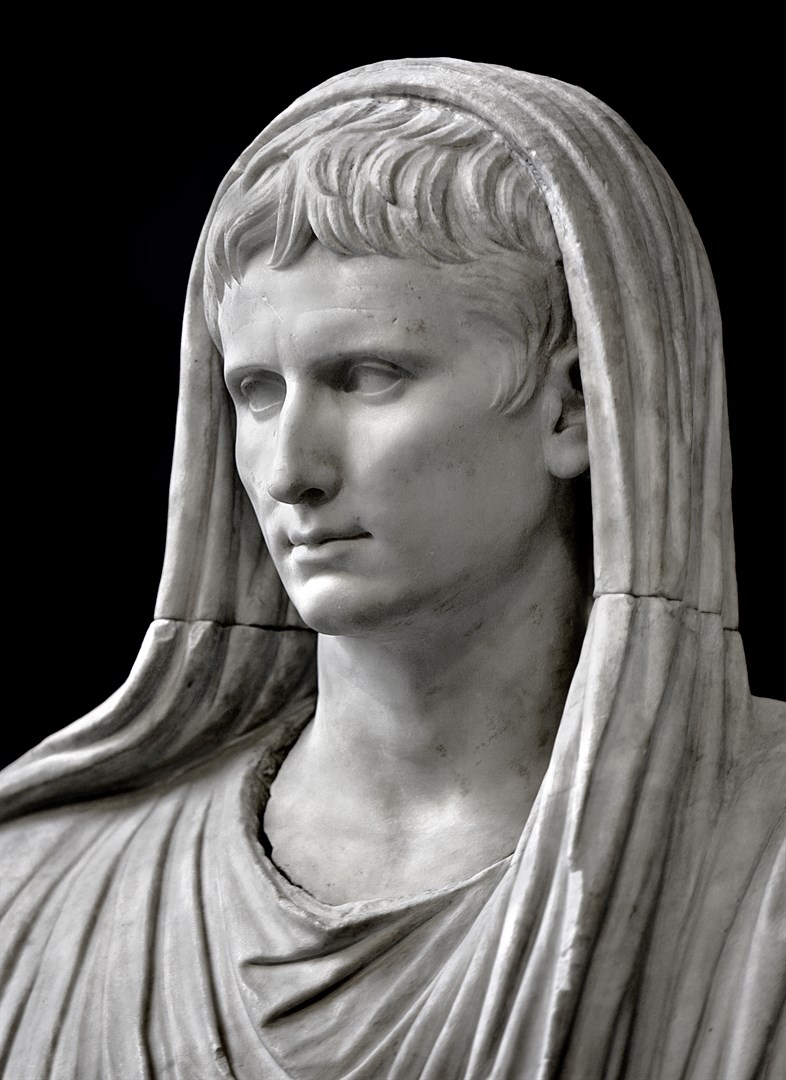
The Via Labicana Augustus was discovered in 1910 near the Via Labicana, southeast of Rome. It probably dates to 12 BCE, the year Augustus became Pontifex Maximus, chief priest of Rome.
The statue shows him veiled, performing a sacrifice, wearing the toga pulled over his head in the ritual gesture known as capite velato. Unlike the heroic, idealized Augustus of Prima Porta, this image presents him not as a godlike conqueror but as the pious restorer of Rome’s religious traditions. The face retains a calm, idealized realism – a softened continuation of late Republican verism – while the body’s smooth drapery and composed stance convey dignity and divine favor.
The piece reveals Augustus’s political strategy of merging personal authority with religious legitimacy. By showing himself as priest rather than warrior, he presented his rule as moral renewal and continuity with the Republic’s sacred traditions, rather than naked monarchy.
The Portonaccio Sarcophagus
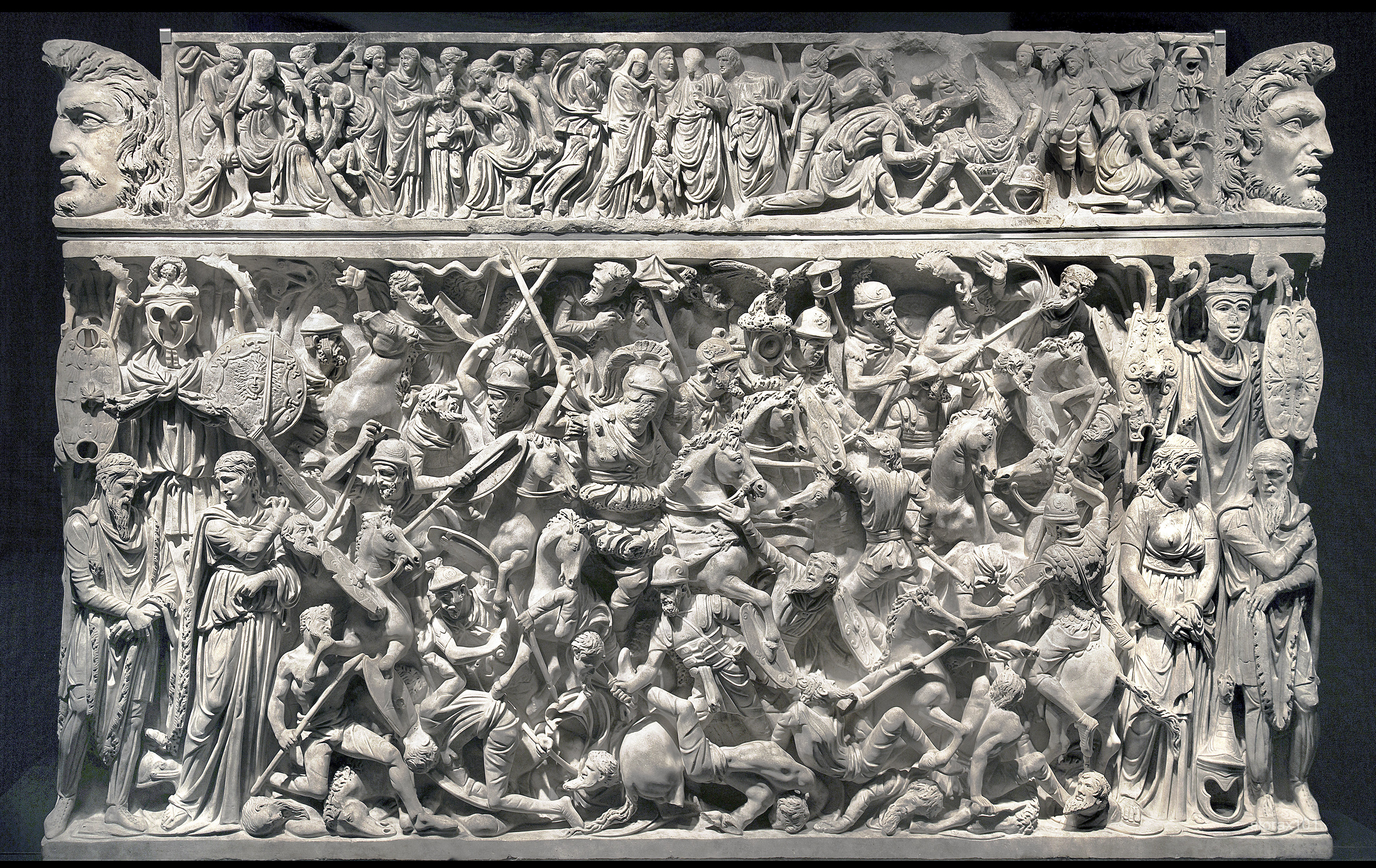
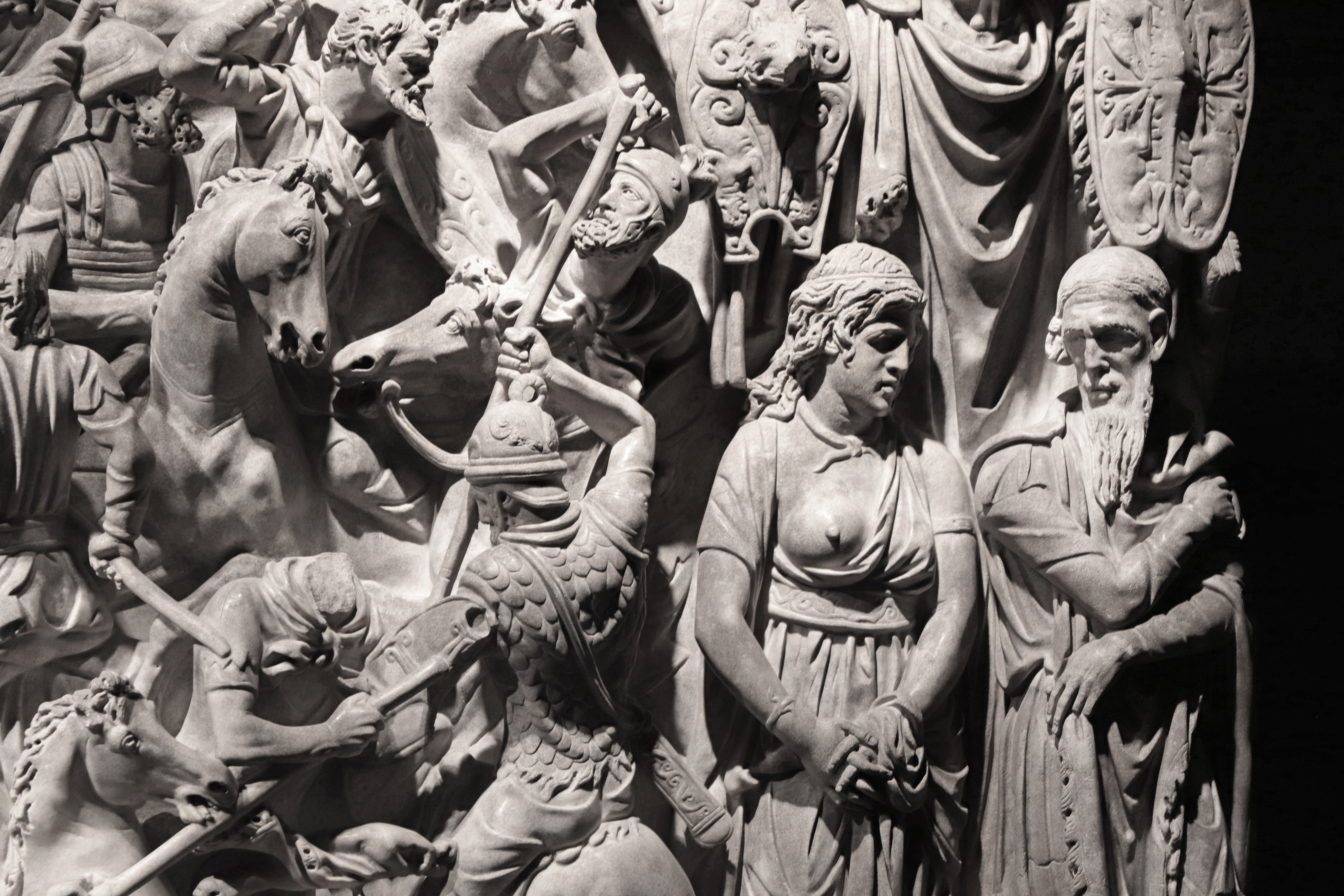
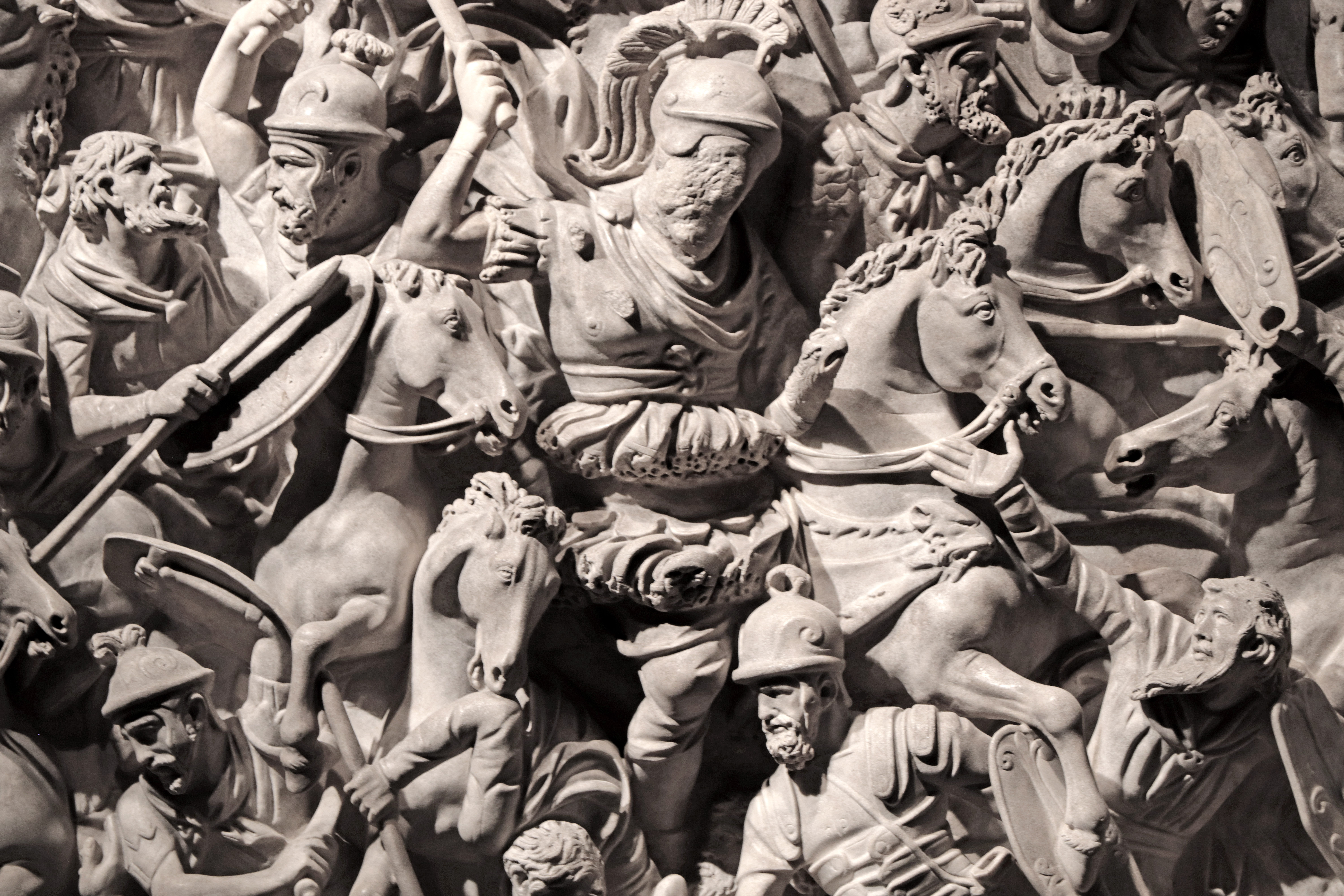
The Portonaccio Sarcophagus, carved in high relief around 180-190 CE, is one of the most elaborate Roman sarcophagi from the late second century CE. It was discovered in a tomb in 1931 near the ancient Via Tiburtina in the Portonaccio area of Rome.
The front is a dense, chaotic battle scene. Roman soldiers clash with barbarians in a tangle of limbs, shields, and horses. There’s no clear spatial depth, just a frenzied mass of combat, carved almost in relief upon relief. At the center stands the Roman general, larger and calmer than the rest, commanding order amid chaos. His face is idealized, yet individualized; his bare head suggests he may have died before receiving a victory crown.
This style marks a shift from the classical order of earlier art to the expressive, almost abstract energy of late imperial sculpture. It reflects the constant warfare and political instability of the era. It likely commemorated General Aulus Iulius Pompilius, who served under Marcus Aurelius.
Colossal Bust of Gordian III
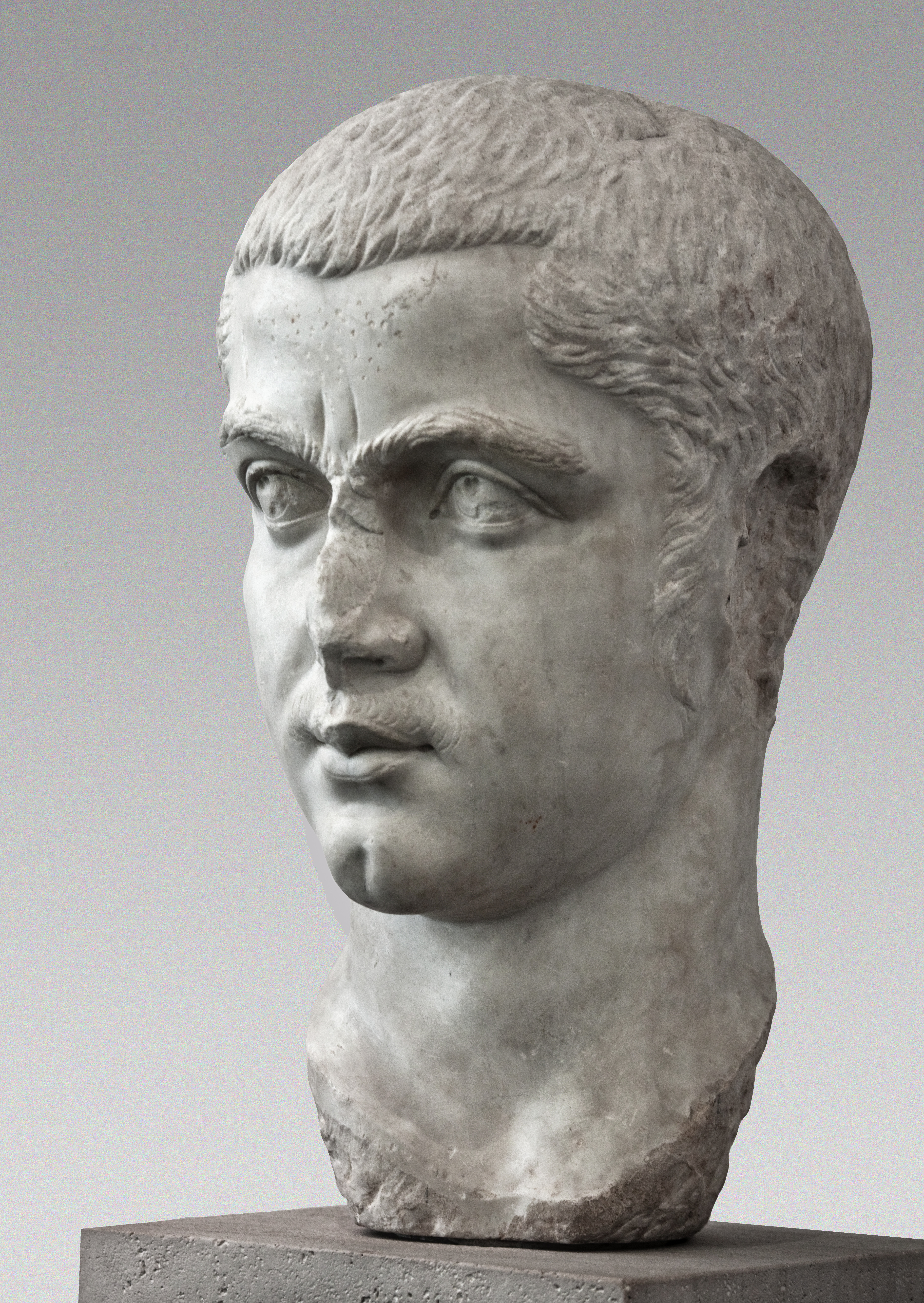
The colossal marble bust of Gordian III presents a striking – if not bizarre – image of the boy-emperor struggling to embody imperial gravitas. Created around AD 244, it reflects the tension between youthful vulnerability and the formal ideals of Roman authority.
Gordian III came to the throne after a cascade of assassinations during the “Year of the Six Emperors.” The sculptor has rendered him with the smooth, unlined face of an adolescent, but framed by the austere, hieratic composition typical of imperial portraiture – short military haircut, heavy-lidded eyes gazing slightly upward, and a thick neck suggesting strength he did could not have possessed. The result is almost tragic: the image insists on imperial permanence while hinting at fragility.
Stylistically, the bust belongs to the late Severan, early soldier-emperor phase, where portraiture shifts from the individualized realism of the Antonines to a more schematic, abstract treatment of features. The deep drilling of the hair and the intense, static expression anticipate the hard linearity of third-century imperial art.
The Charioteers
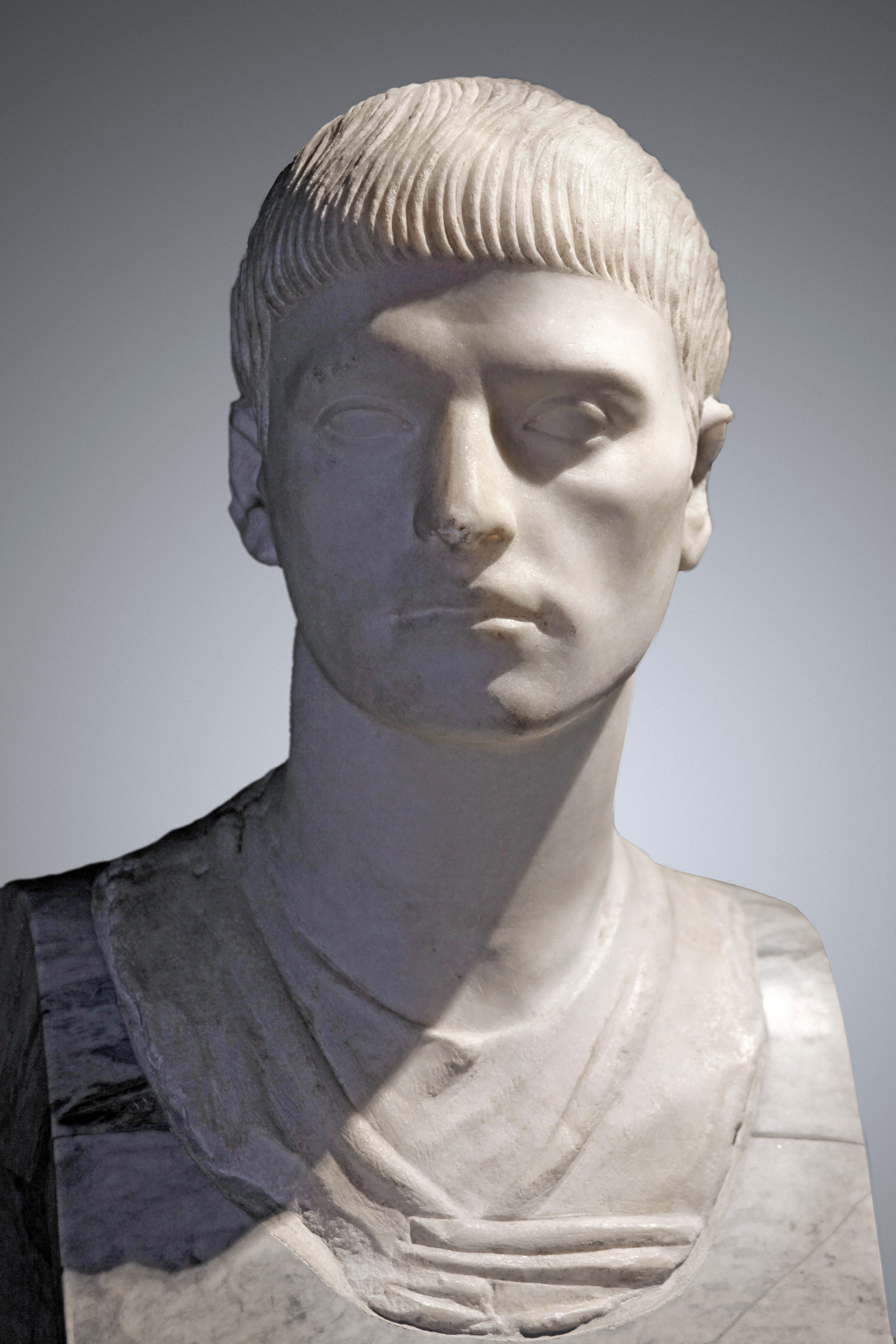
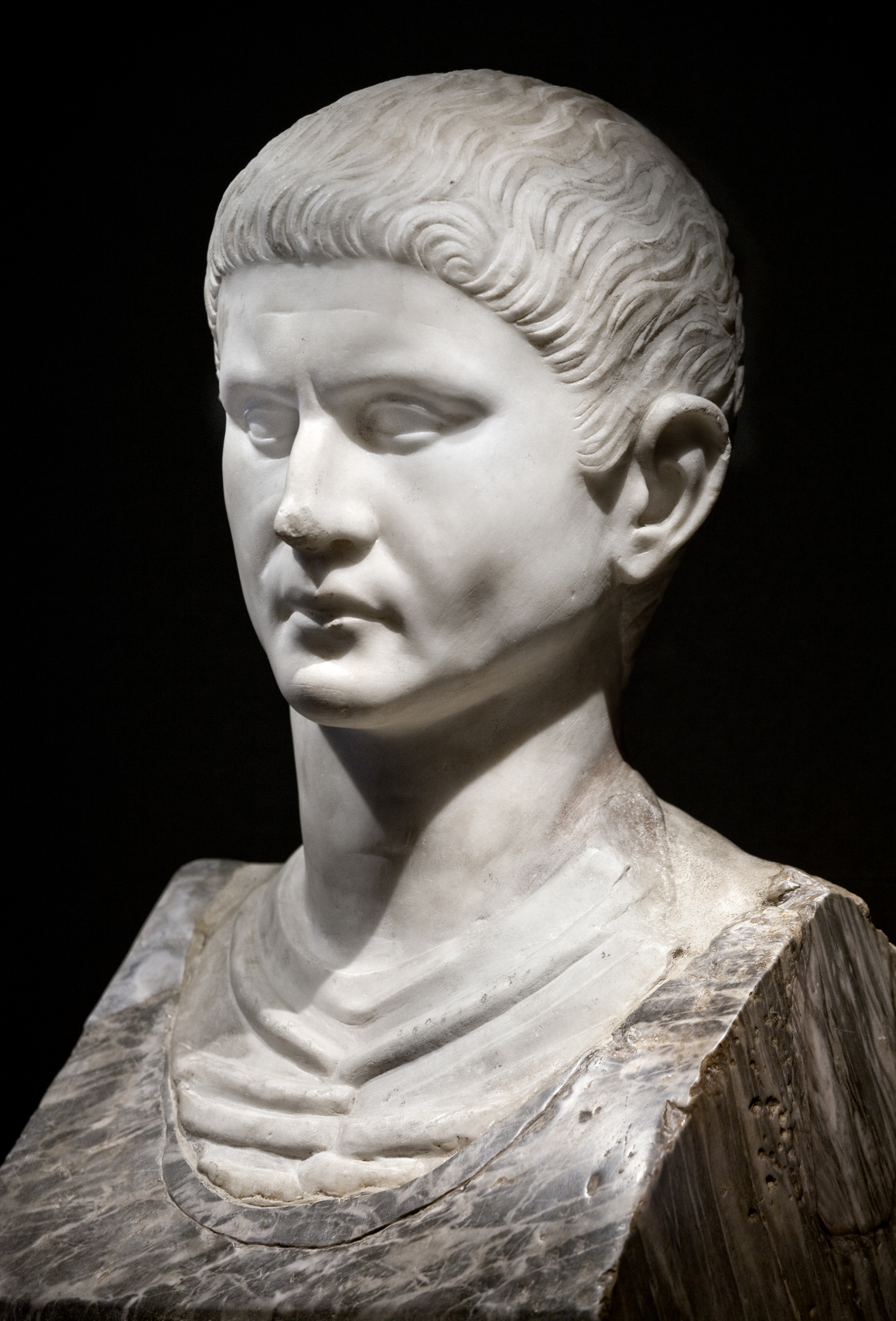
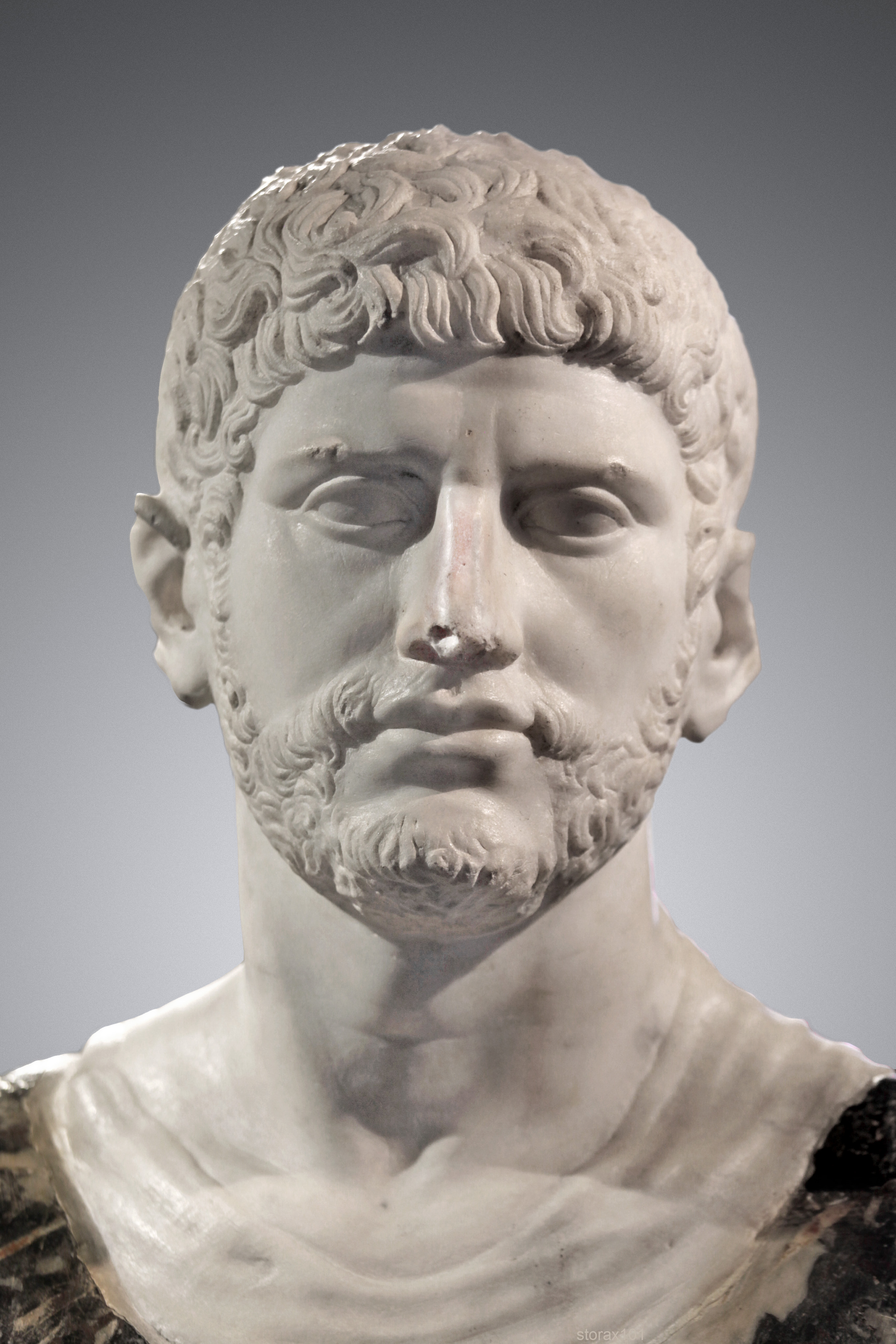
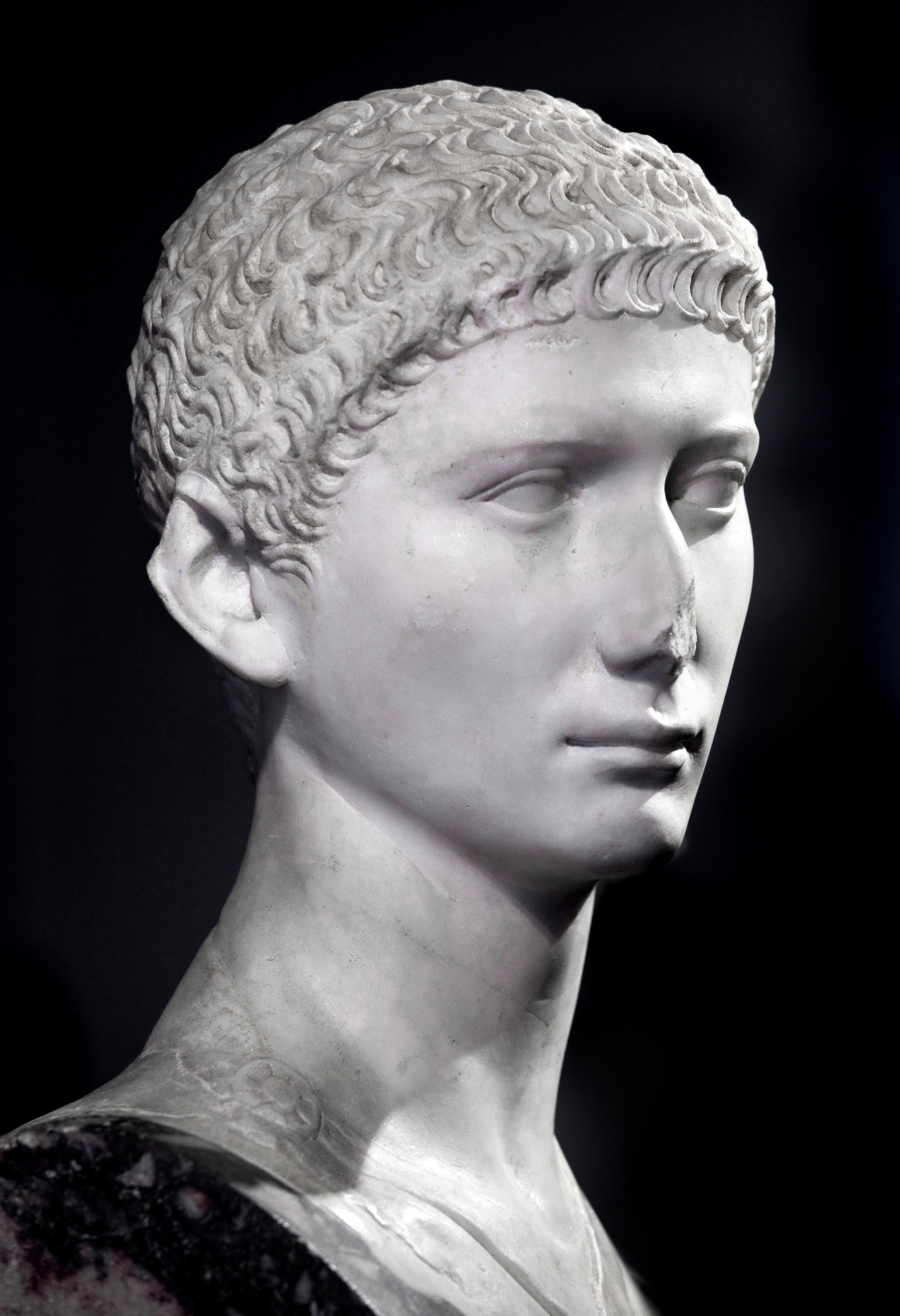
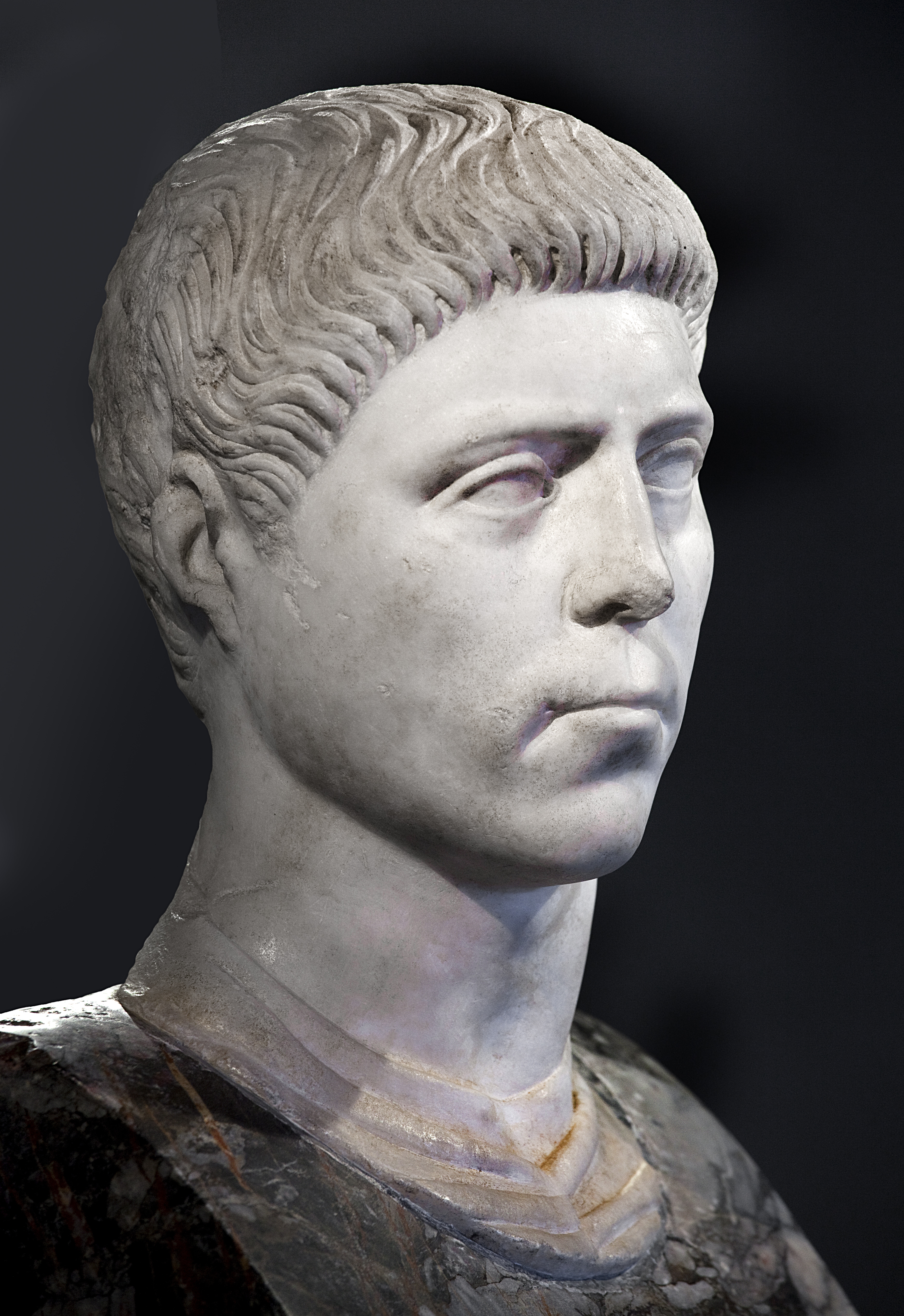
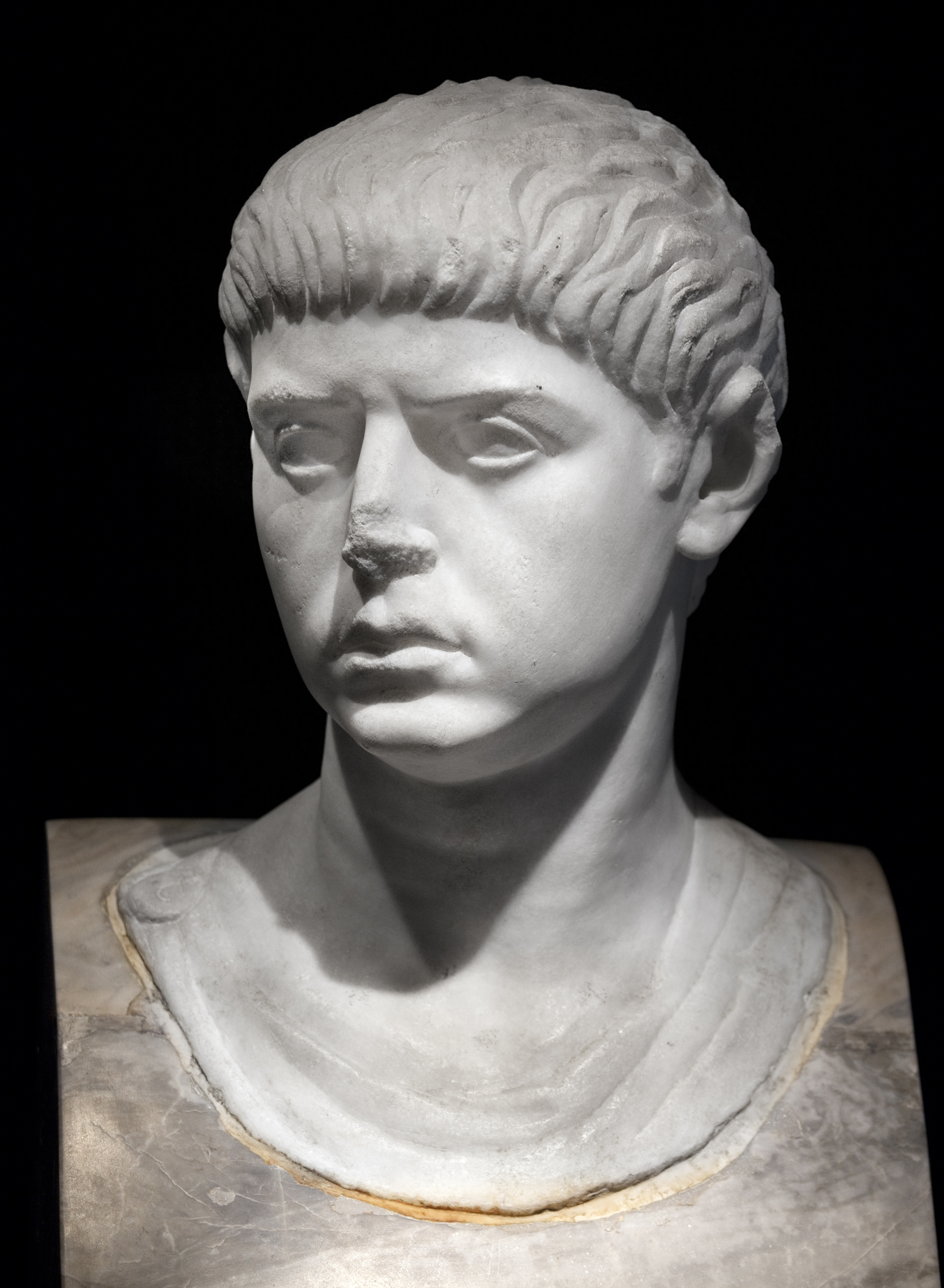
The charioteer portrait busts date from the early fourth century CE and depict professional aurigae – chariot racers who were the sports celebrities of late imperial Rome.
These busts show men with distinctive attributes of their trade: short, tightly curled hair, intense gazes, and tunics bound with leather straps across the chest, used to secure their protective harnesses during races. The faces are individualized, confident, and slightly idealized, conveying both athletic vigor and the proud self-awareness of public fame.
They likely commemorated successful drivers from the great Roman circuses, perhaps freedmen who had risen to wealth and status through racing. The style, with its crisp carving and alert expression, reflects late Roman portraiture’s mix of realism and formal abstraction – an art no longer concerned with classical balance, but with projecting charisma and presence.
Republicans
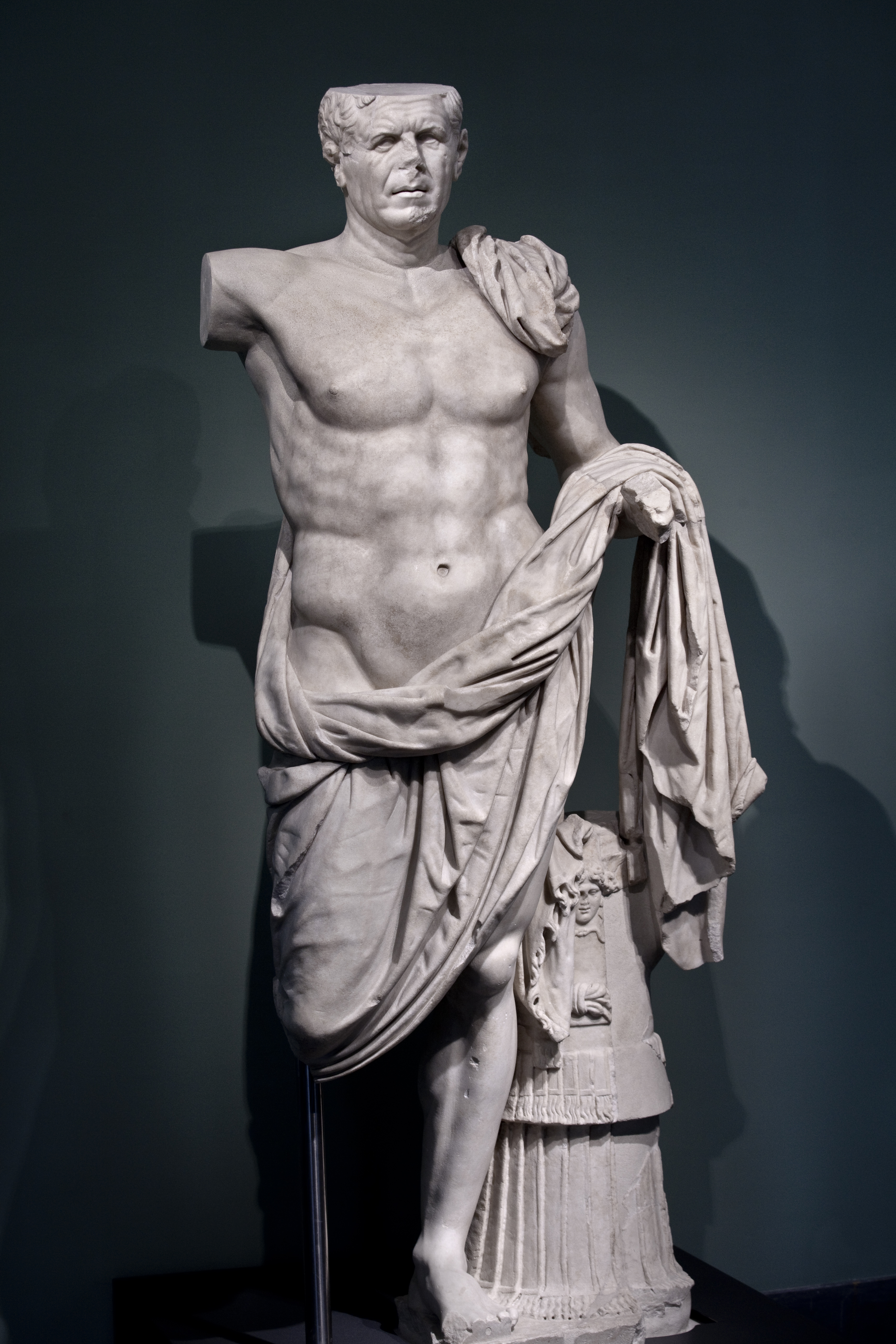
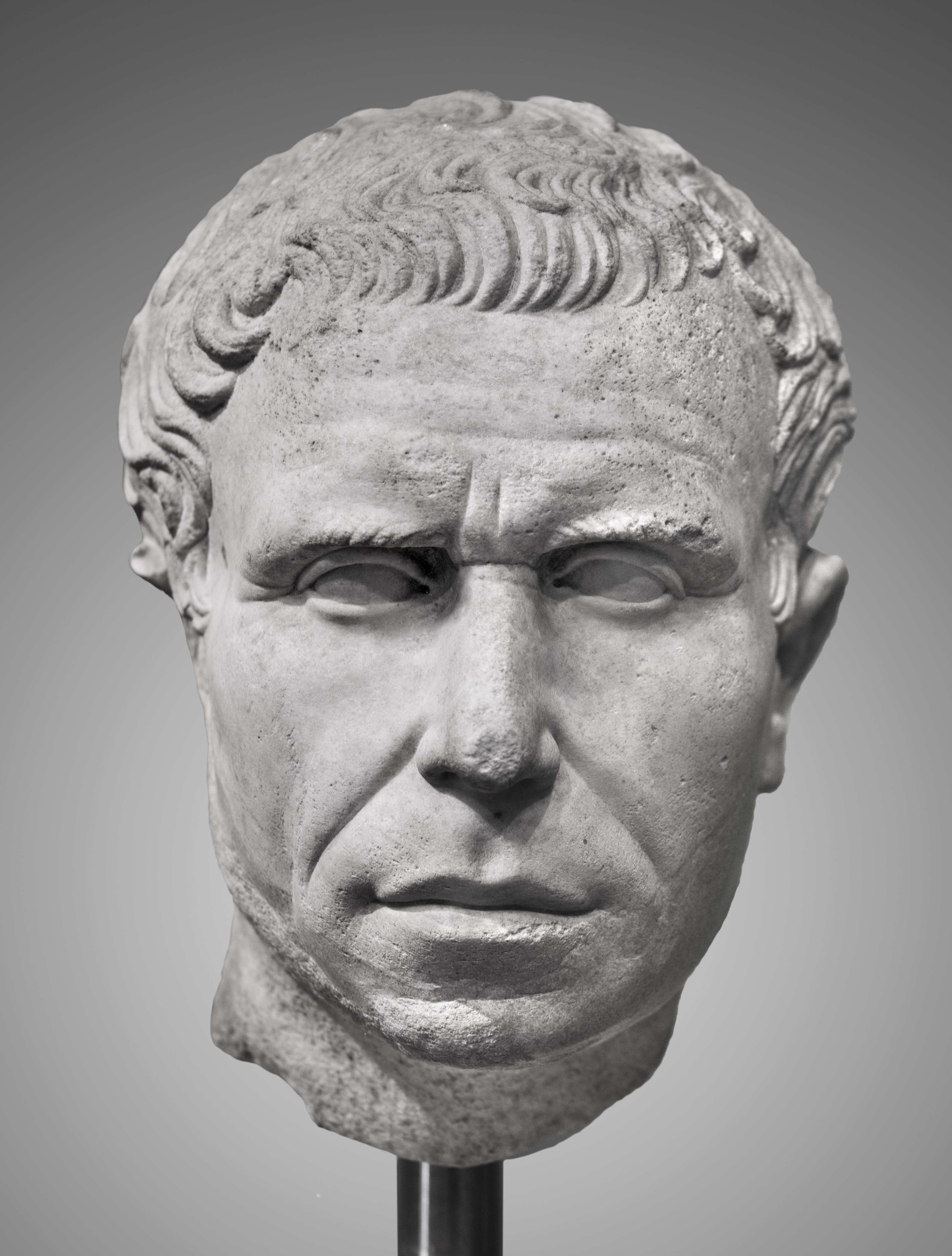
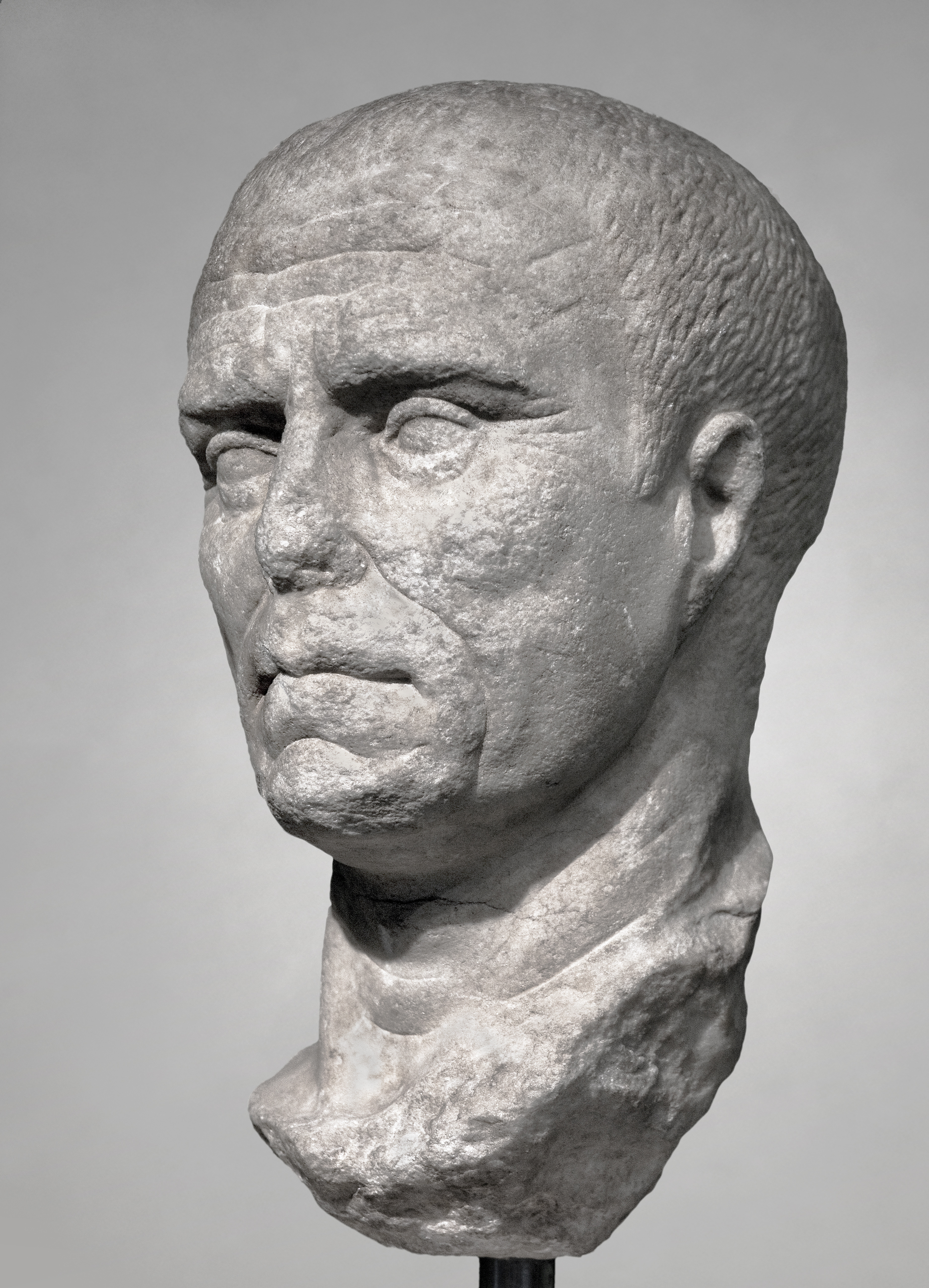
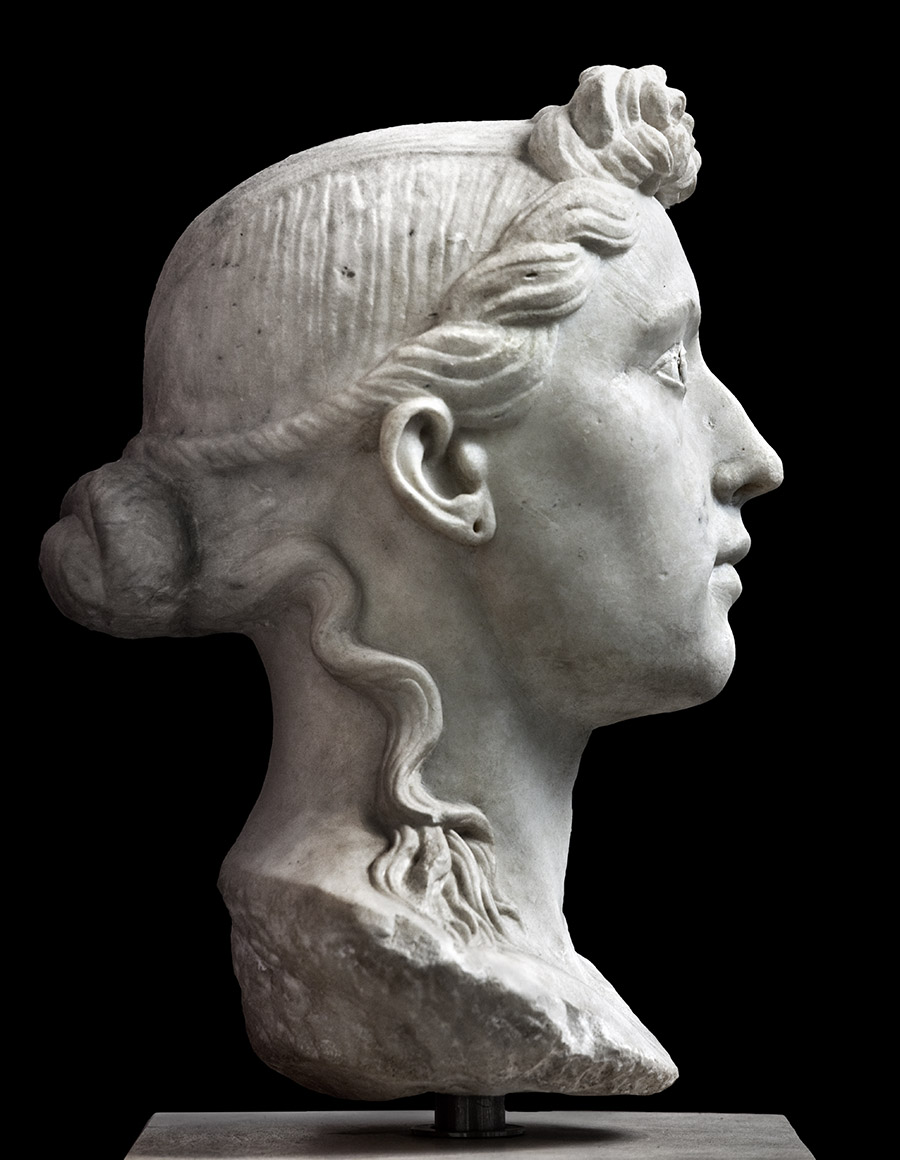
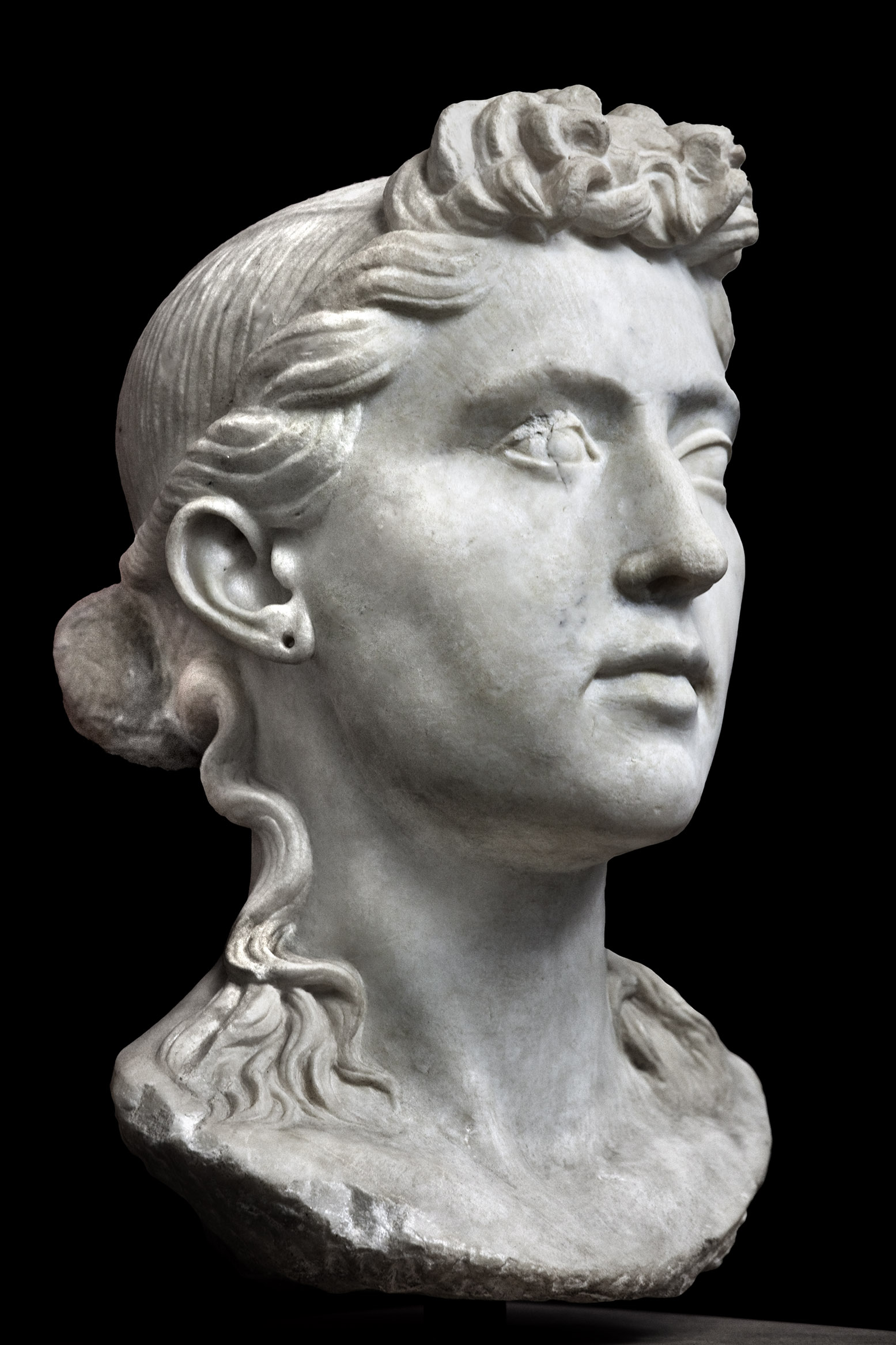
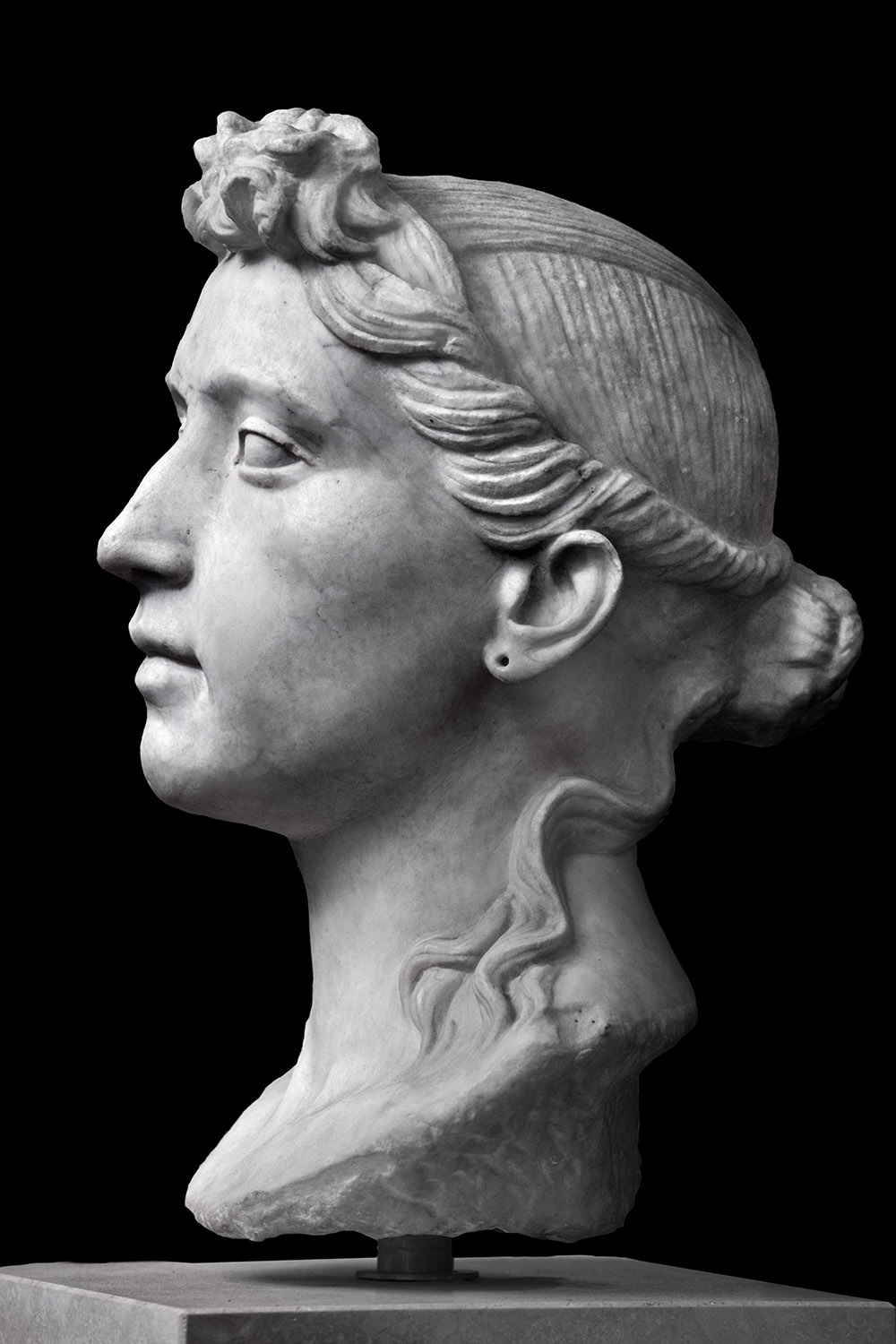
The so-called General from Tivoli (Terme inv. 106513) was found beneath the Temple of Hercules in 1925. Dating to about 70 – 90 BC, he was probably a lieutenant of Sulla. The late-Republican portrait busts (Inv. 112301 and 114759) are famous for their verism – a style emphasizing unidealized realism. Rather than the smooth, youthful perfection of Greek sculpture, Roman patrons in this period wanted faces that looked weathered and unmistakably mortal. Eyes were often sharply undercut and hollowed to give depth and intensity. Cheeks could appear gaunt, lips thin and compressed, necks stringy. The overall effect was one of disciplined austerity and civic virtue – a face hardened by service to the Republic.
The young woman’s elaborate hairstyle (inv. 125591, just above) is a social signal, suggesting she belonged to a wealthy family or wanted to look the part. The combination of a classicizing ideal face with a detailed fashionable hairstyle suggests a woman who wants to present both grace and her social status. That blend of realism and idealization is typical of the late republic.
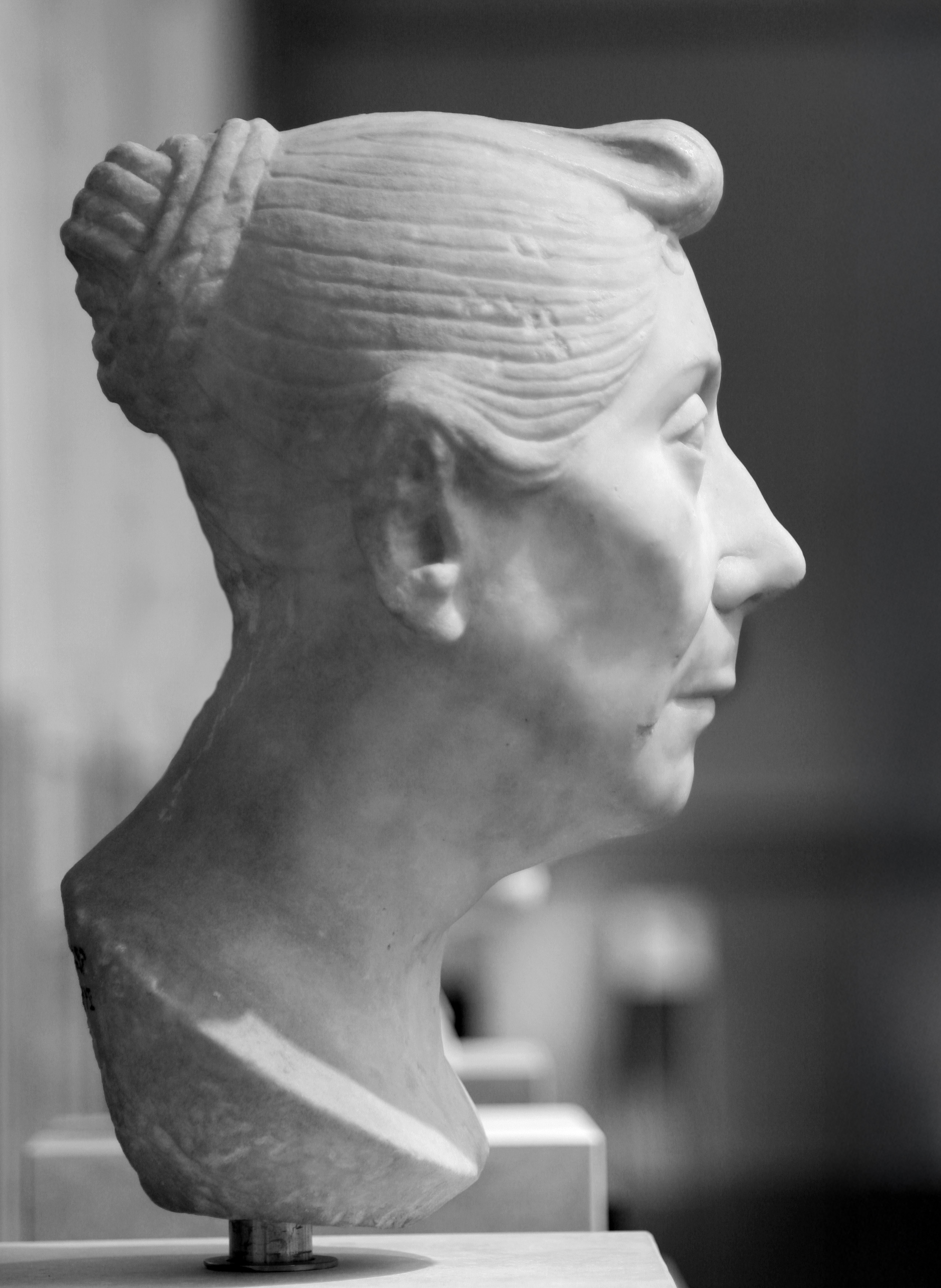
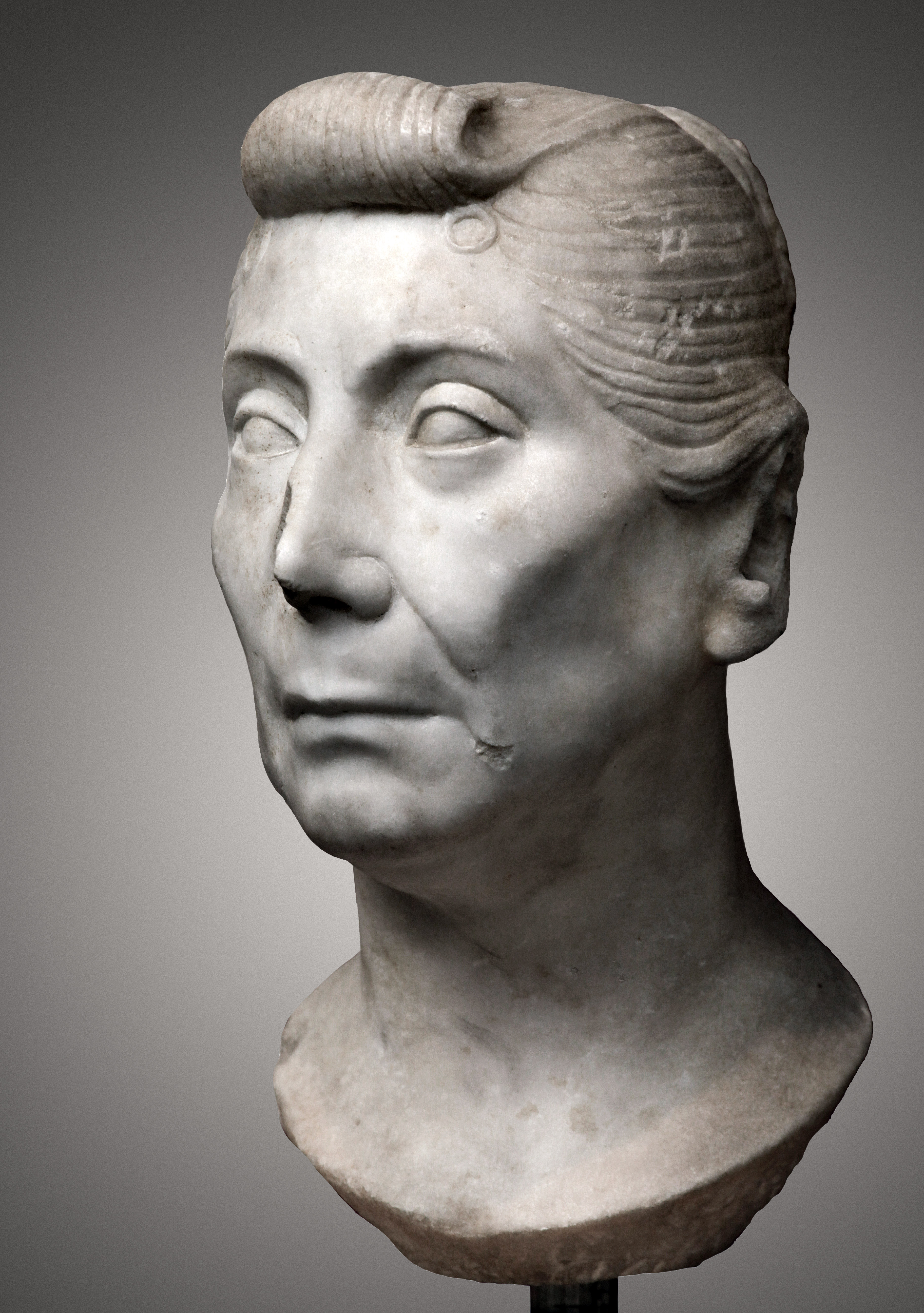
This was more selective exaggeration than realism. These men were advertising moral qualities: gravitas, virtus, fides. By the time of Caesar, you see a blending of this verism with a hint of idealization, anticipating the smooth, godlike Augustan portraits to come.
Speaking of late Republicans, this marble portrait of an elderly woman with her hair in a bun brings to mind another later Republican – Ronald Reagan.
The Sarcophagus of Marcus Claudianus
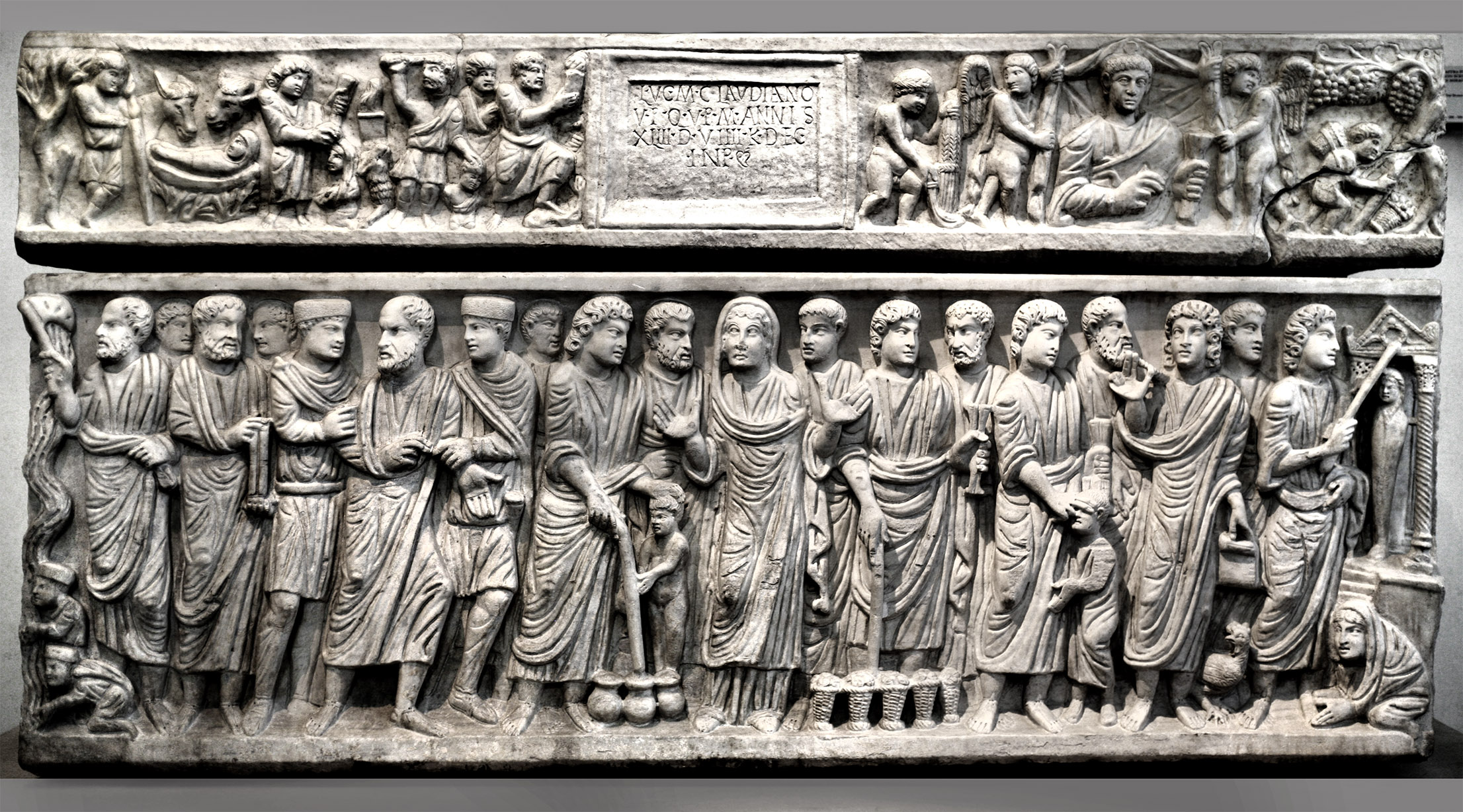
The continuous-frieze sarcophagus of Marcus Claudianus shows New Testament scenes on its front; and New and Old Testament scenes on its lid, along with pagan elements. The grape harvest imagery on the lid is ambiguous; it appears on pagan and Christian sarcophagi with identical elements. From left to right on the lid: Jesus nativity scene, sacrifice of Isaac, inscription naming the deceased, image of the deceased as scholar, grape harvest scene.
Carvings on the front of the sarcophagus: Arrest of Peter (Acts 12:3), miracle of water and wine (with possible baptism reference, John 2:1), orant figure, miracle of loaves (Mark 6:30–44, Matt 14:13–21, Luke 9:10–17, John 6:1–14), healing a man born blind (John 9:1), prediction of Peter’s denial (Mark 14:27–31, Matt 26:30–35, Luke 22:31–34, John 13:36–38), resurrection of Lazarus (John 11:1), and supplication of Lazarus’s sister (John 11:32).
The scenes on this sarcophagus include several apparent departures from scriptural miracle stories. Jesus appears in three places as magician, using a wand to perform miracles. He stands above five baskets of bread, a number consistent with most sarcophagi of its age but inconsistent with either of the loaves-and-fish scriptural pairs, where the remaining baskets number seven and twelve (Matthew 4:17, Matthew 15:34). This could have been a choice made by the sculptor for purely artistic reasons. The orant figure in the center is similar to those seen on earlier gravestones, and does not seem to be a scriptural reference. This posture is similar to that of the three youths in the furnace and the common sarcophagus scene of Jesus passing the new law to Peter and Paul (non-scriptural).
The Marcus Claudianus sarcophagus stands out for the prominence of Johannine-only imagery – Lazarus, the man born blind, Cana – scenes that are either uniquely Johannine or given distinct theological weight in that gospel. I don’t think you’ll hear this from anyone but me. I love this sarc for this reason. Compared to the sarcophagi from the Vatican necropolis, whose iconography often centers on synoptic or composite miracle cycles (feeding, healing, Jonah, Daniel, Good Shepherd), this sarc shows a notable shift toward Christological revelation rather than simple miracle narrative.
That shift says to me: mid-4th-century context, when Johannine motifs had become the backbone of Christian funerary theology. By that time, art was turning from generic symbols of deliverance to narratives that expressed Christ as Logos and life-giver, echoing themes prominent in the theological debates of the post-Nicene generation. The Lazarus scene, for example, takes on explicit resurrection connotations, and the healing of the blind man becomes an emblem of illumination through baptism – precisely the kind of allegorical reading developed in the decades after Constantine.
Earlier dating has been given by some scholars. Bunk. That impulse reflects anxiety over the scarcity of securely dated pre-Constantinian Christian monuments in Rome. Stylistically and iconographically, the Claudianus piece sits more naturally with sarcophagi of the 340s-360s: compressed compositions, monumental heads, frontal orant, and a selective, theological rather than narrative use of miracle scenes. And that’s probably more than you wanted to know about a topic I find fascinating because of what it says about modern Catholicism.
Bronze Athletes
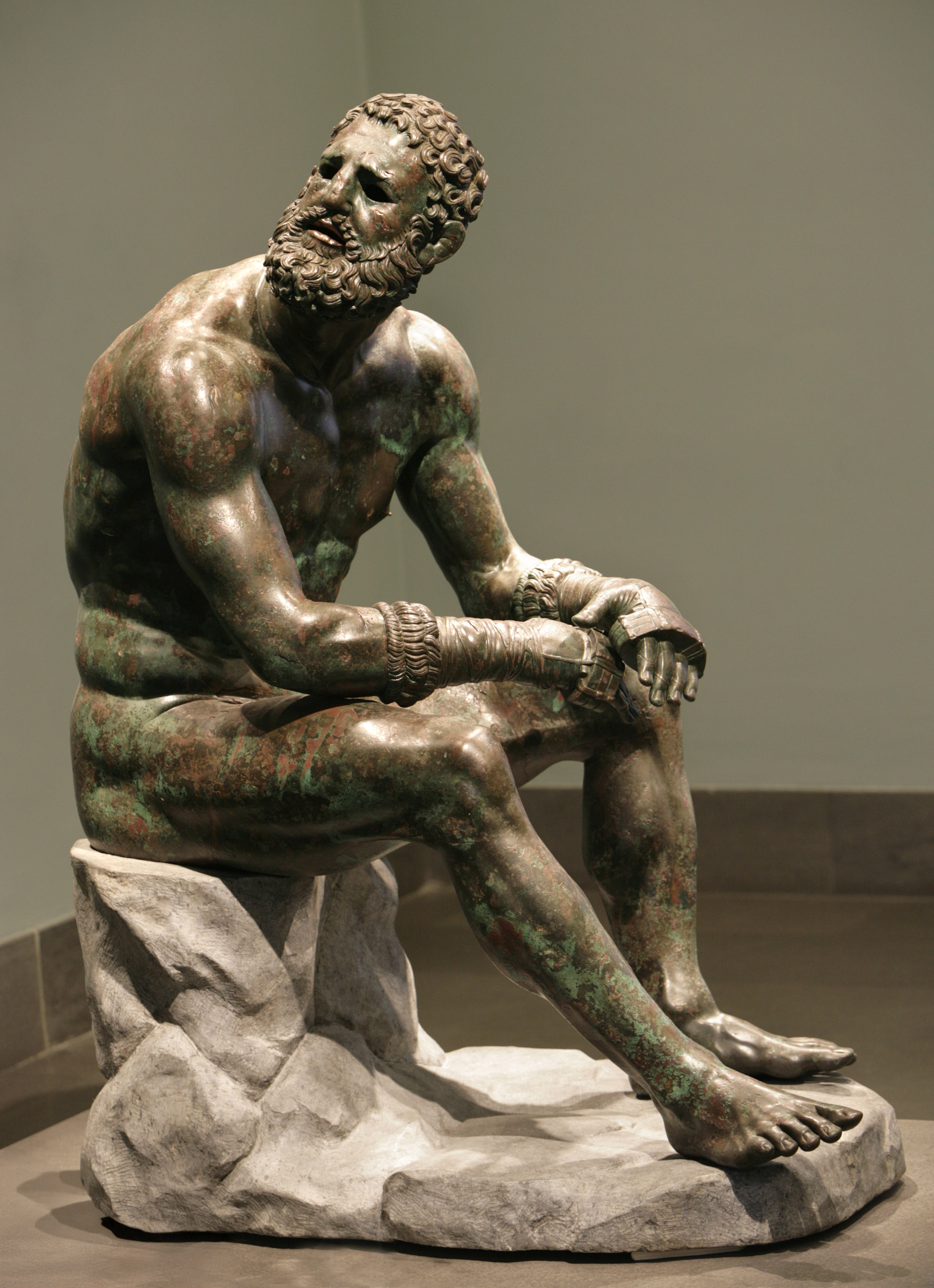
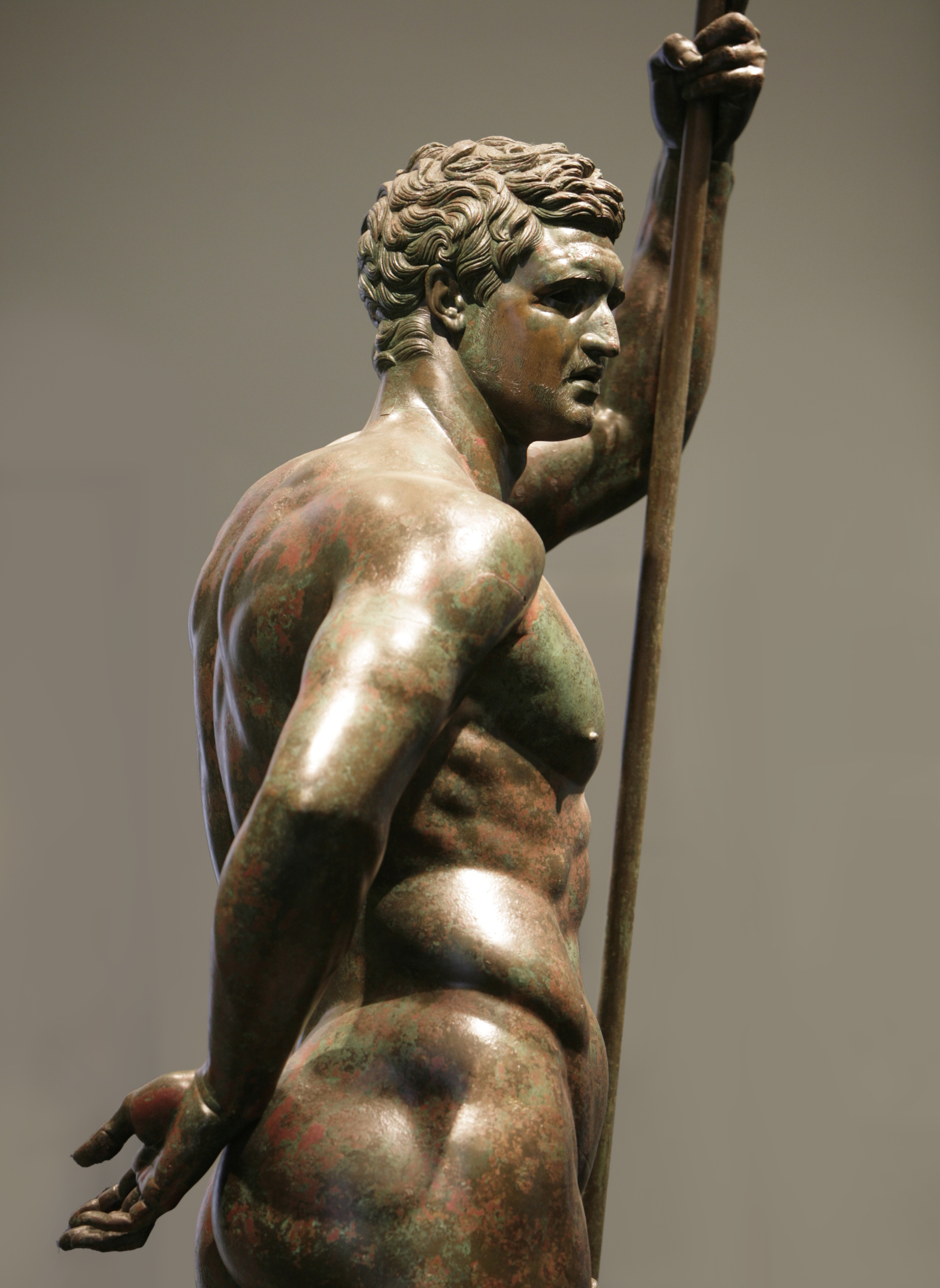
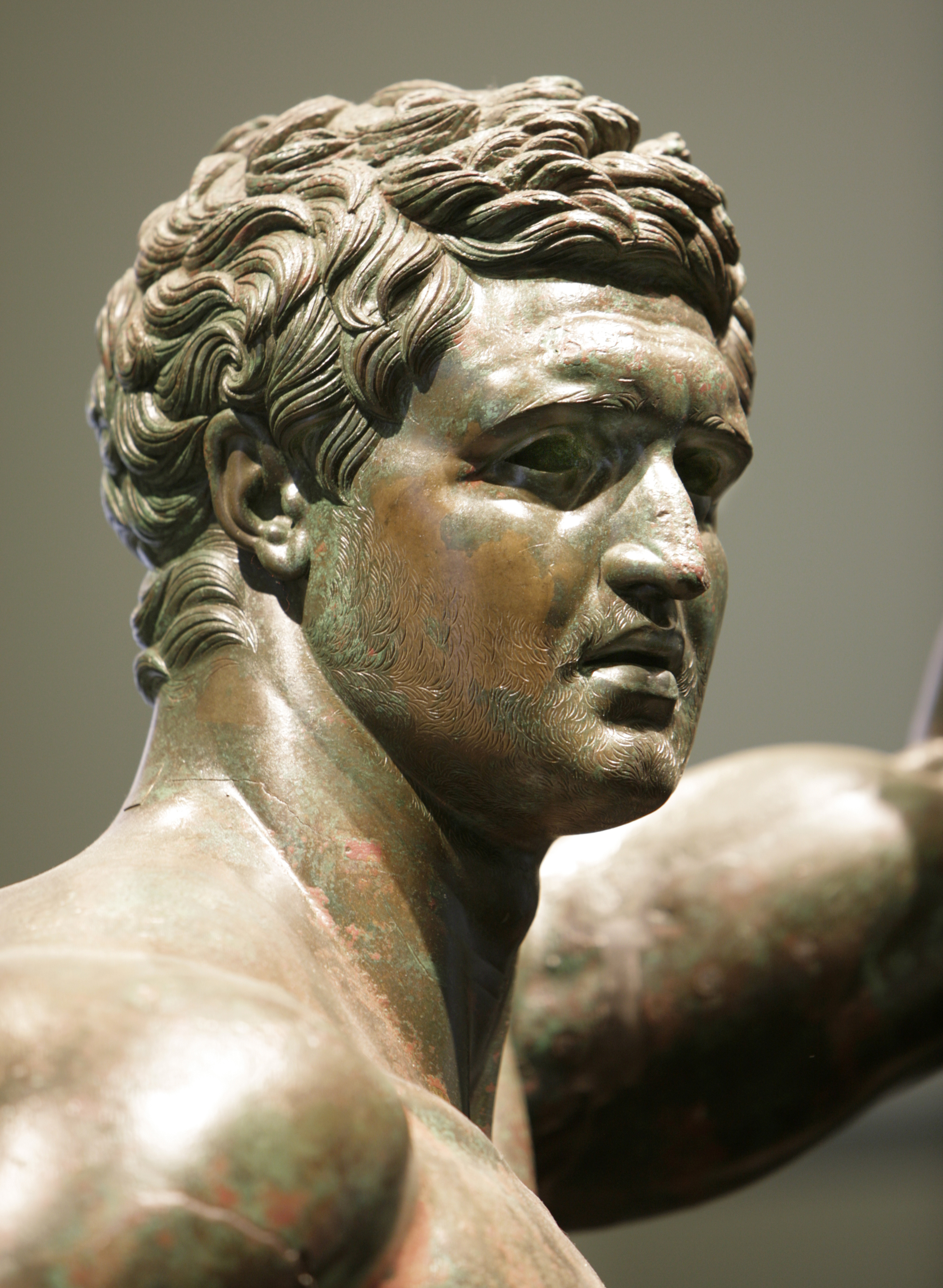
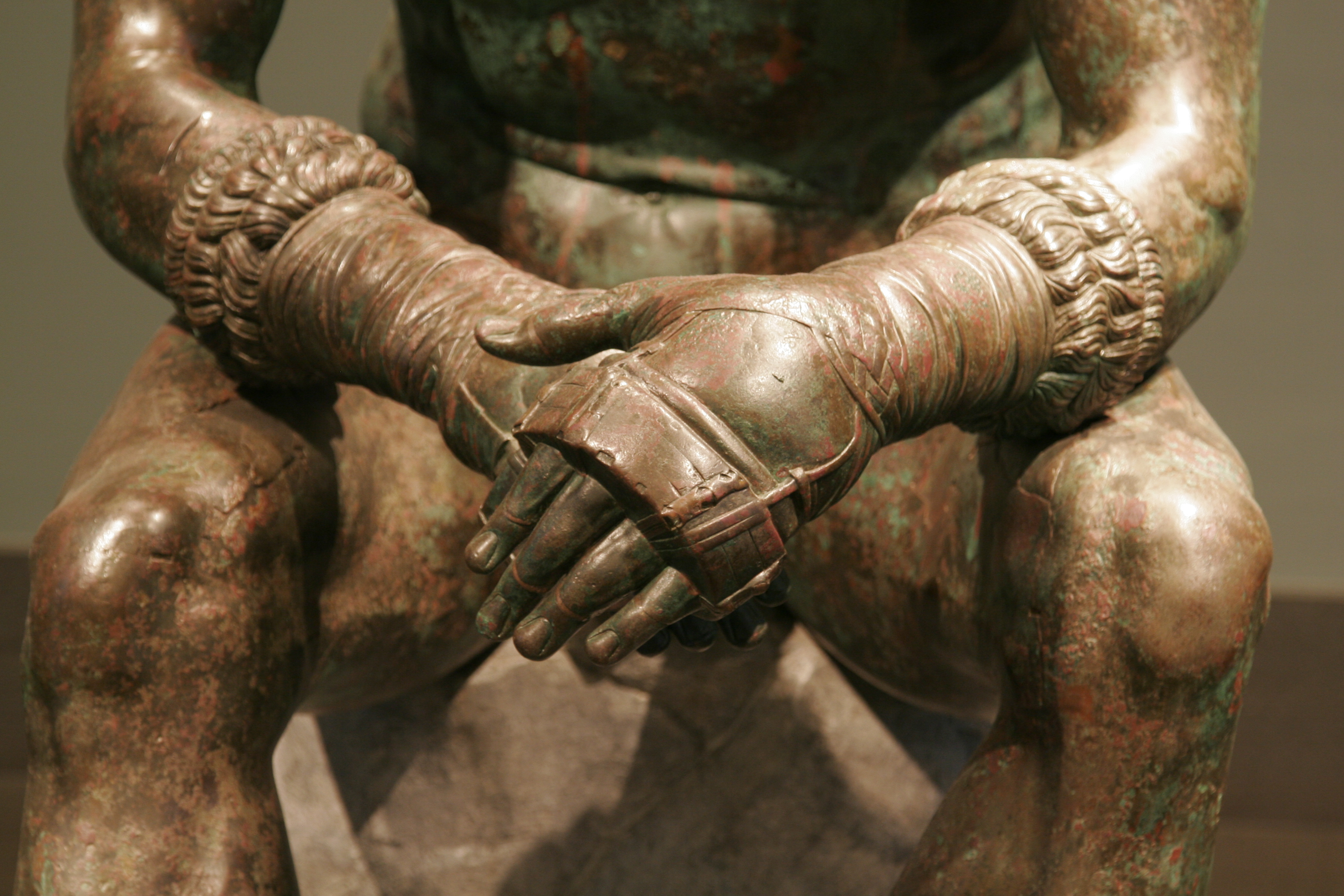
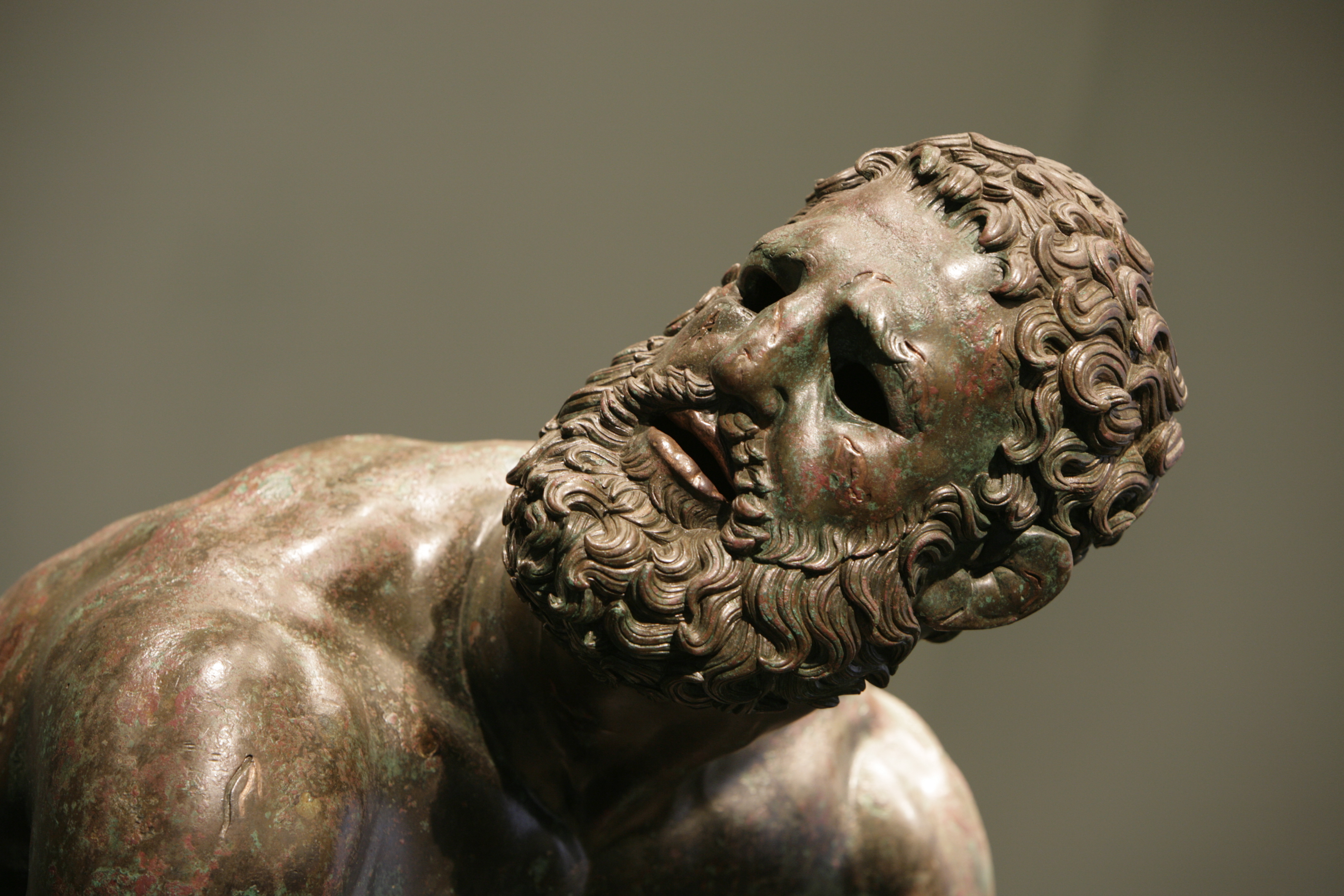
The bronze athletes date from the Hellenistic period (second to first century BCE) convey the victory, exhaustion and fleeting nature of athletic glory.
The most famous of them, the Terme Boxer, was discovered on the Quirinal Hill in 1885. He sits slumped, body still powerful but spent, his face swollen and scarred, his hands wrapped in leather thongs. The artist cast every cut and bruise in bronze, even inlaid copper to suggest blood and wounds. Yet his expression is not defeat but endurance – a man who’s given everything to the arena.
Nearby, the Hellenistic Prince (or Terme Ruler), found in the same area, stands upright and nude, the counterpart to the seated boxer. His stance is heroic but weary, his gaze detached. Together the two figures tell both a moral story and a physical one: the the beauty and cost of strength.
These bronzes were likely imported to Rome as prized Greek originals or high-quality copies for a wealthy patron’s villa. They embody the Greek ideal of athletic excellence reframed through Roman admiration for the discipline and suffering behind it.
Wall Paintings/Frescoes
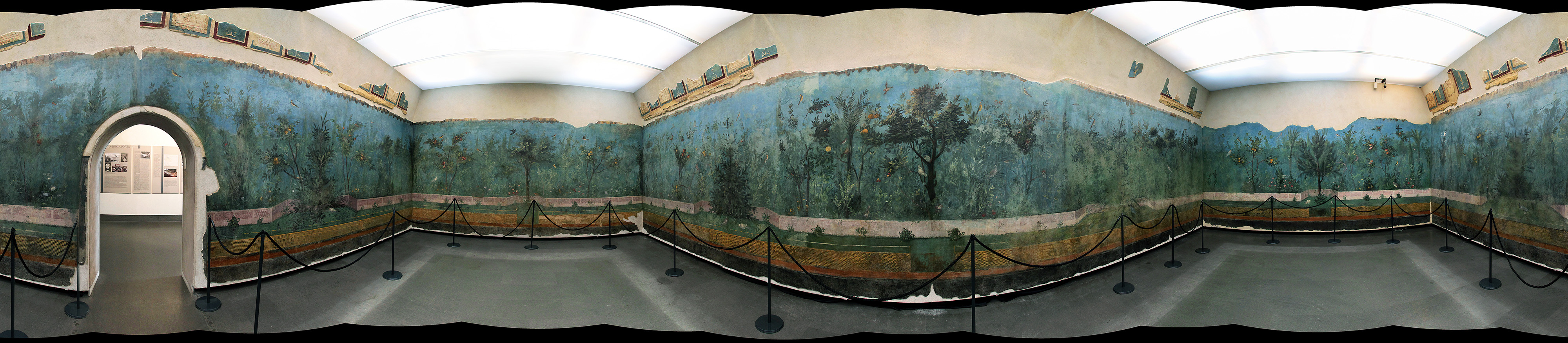
The villa wall paintings in Palazzo Massimo form one of the richest surviving narratives of Roman domestic life and taste. Most come from suburban villas around Rome, dating from the late Republic through the early Empire, and they recreate the visual world of elite Roman interiors.
The centerpiece is the set from Livia’s Villa at Prima Porta, discovered in 1863. The walls depict an illusionistic garden in full bloom – fruit trees, flowers, birds, and a soft blue sky.
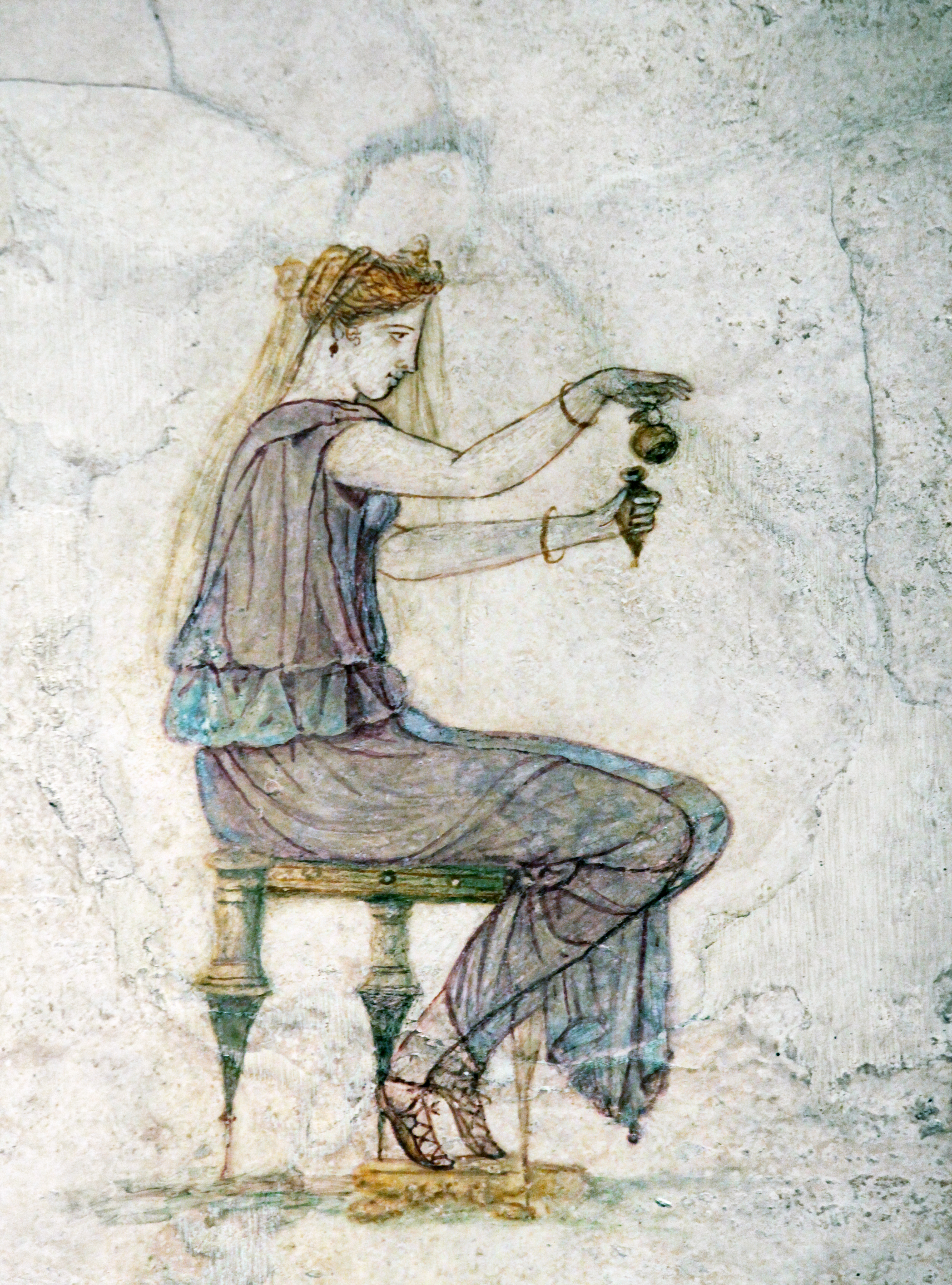
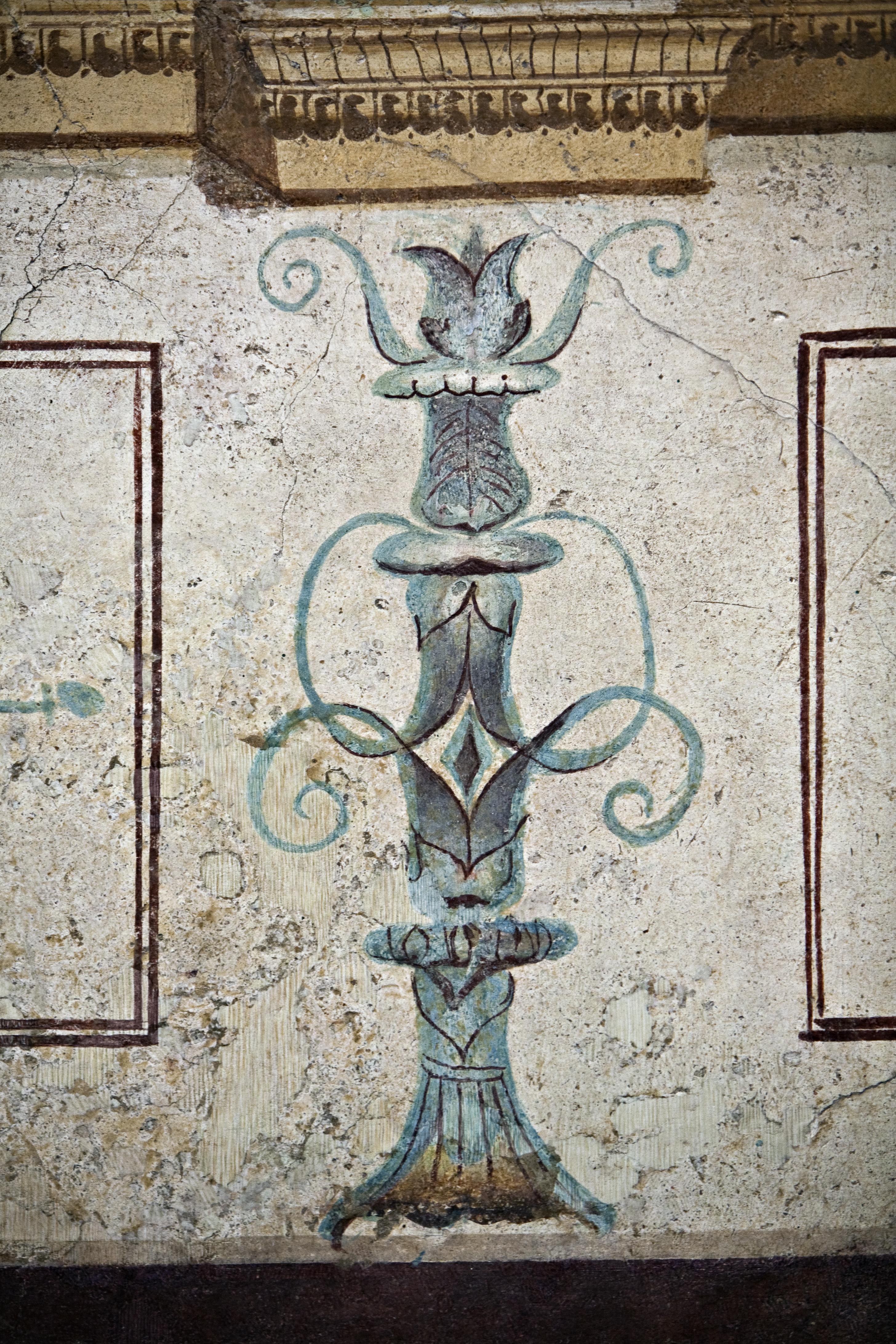
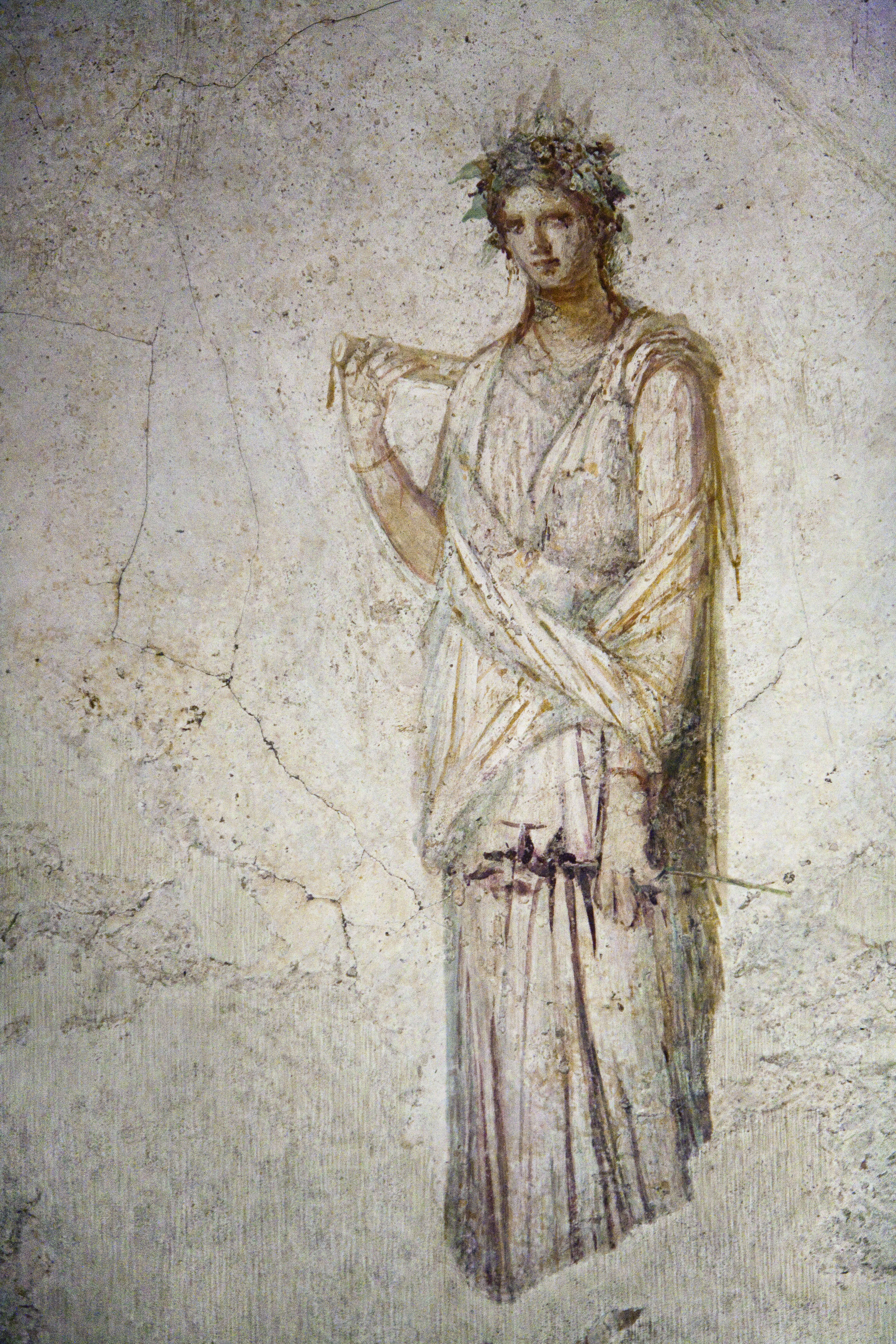
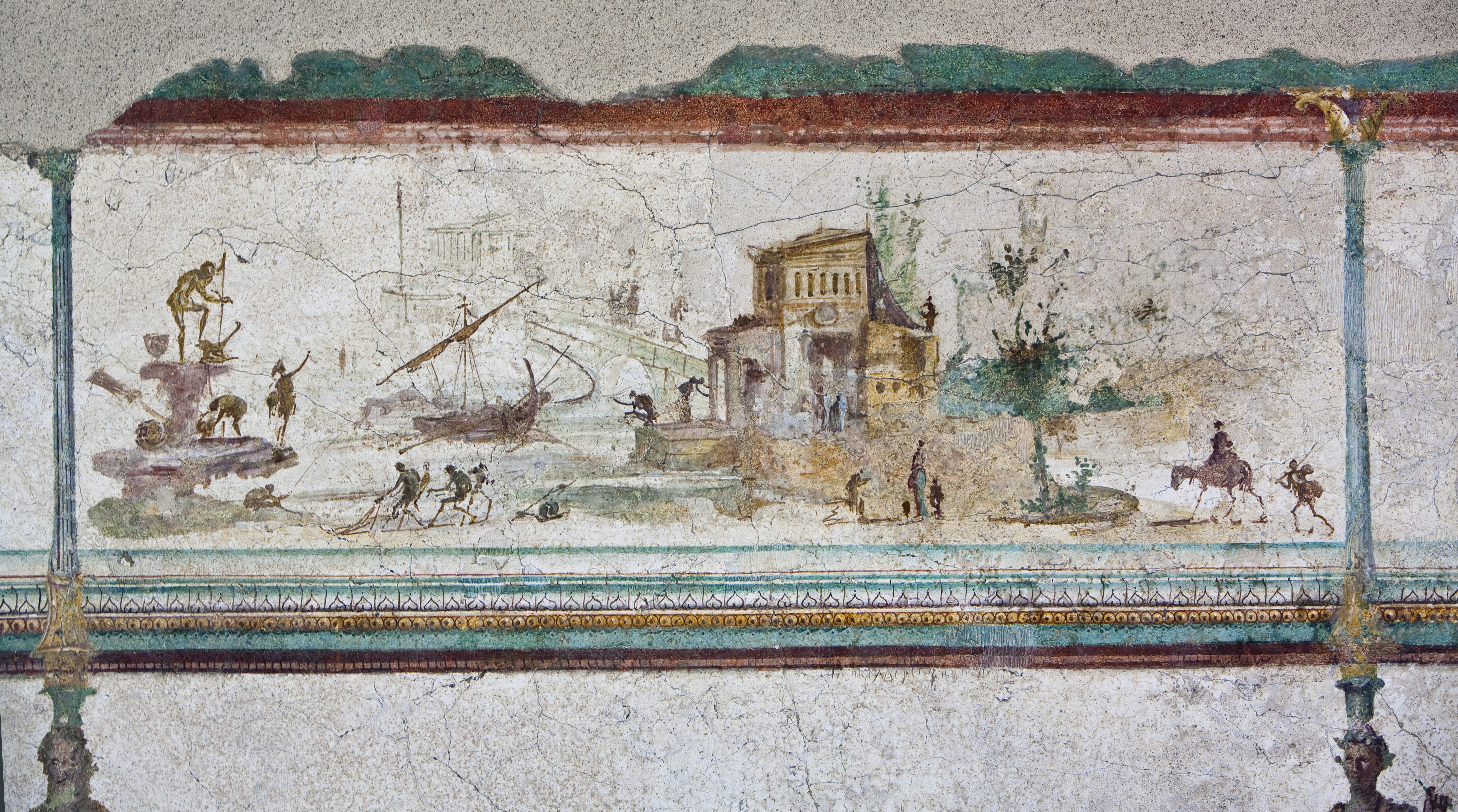
Other rooms, such as those from the Villa of Farnesina, show mythological scenes, architectural vistas, and richly colored panels framed by columns and imaginary shrines. These follow the Second and Third Styles of Roman wall painting: first creating deep, theatrical perspective, then shifting to flatter, more decorative compositions filled with miniature landscapes and floating figures.
Taken together, the frescoes chart Rome’s transition from the austere republican taste for illusionistic space and Greek motifs to the sophisticated imperial language of myth, luxury, and controlled fantasy.
Cristo Docente
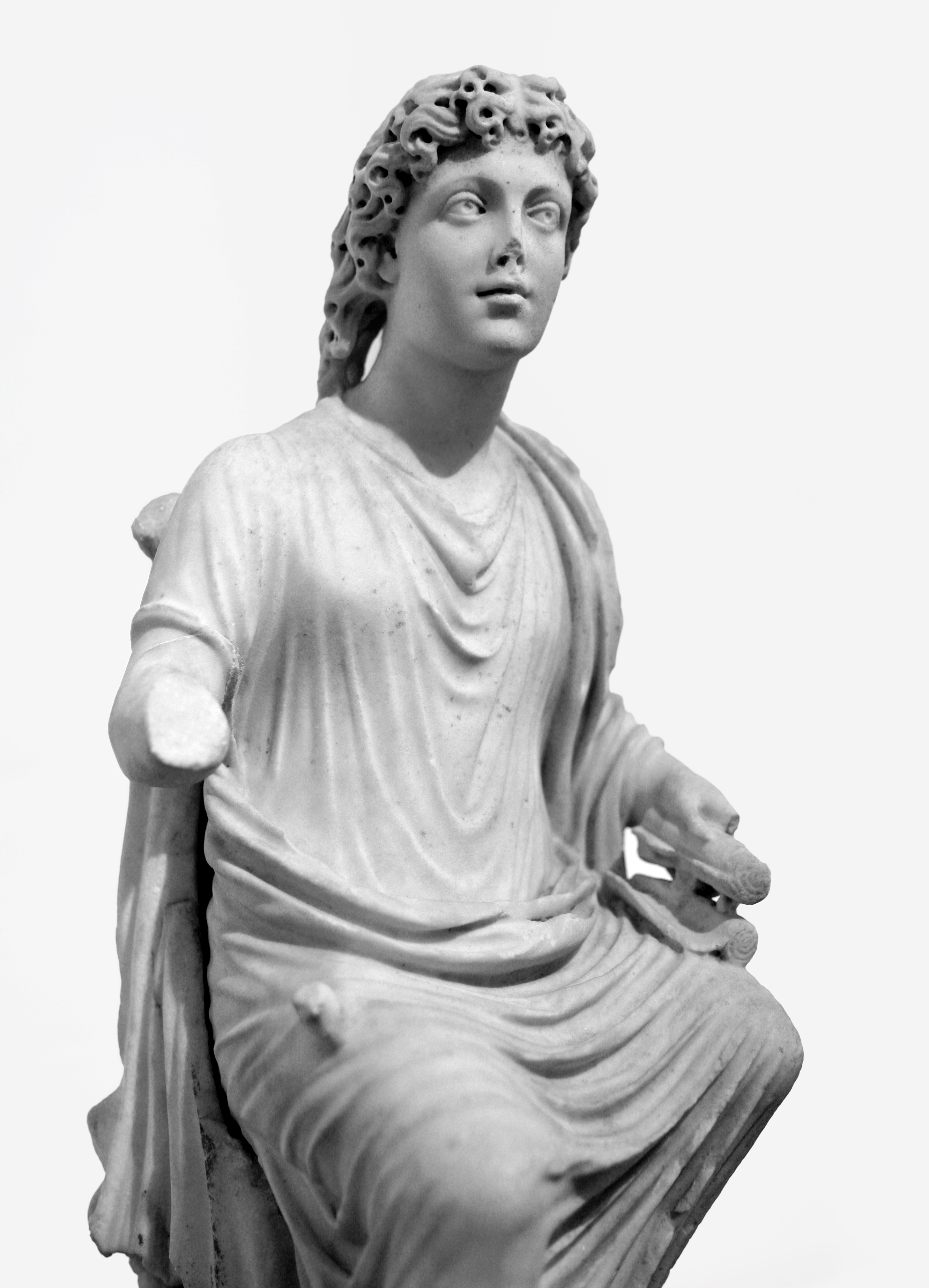
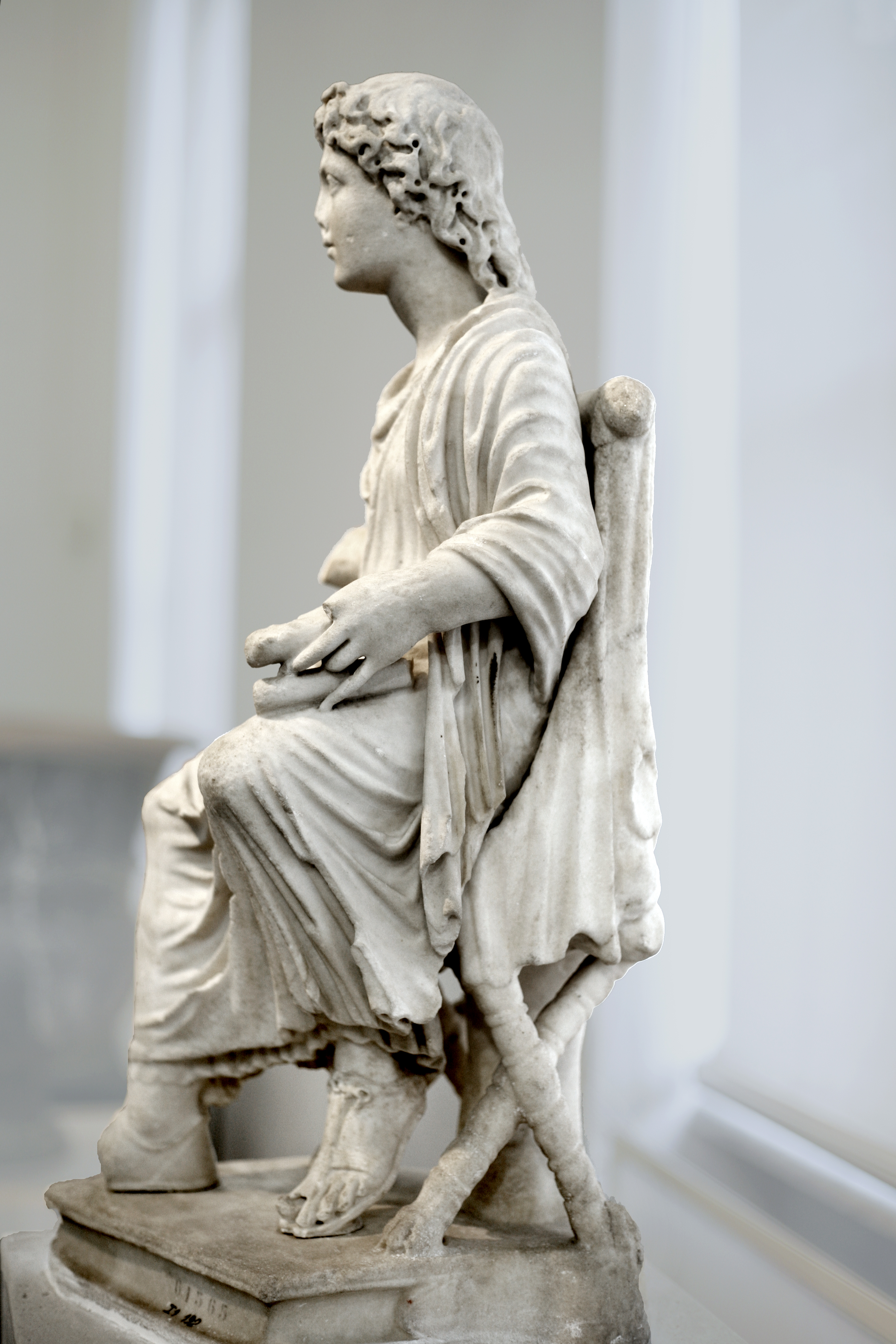
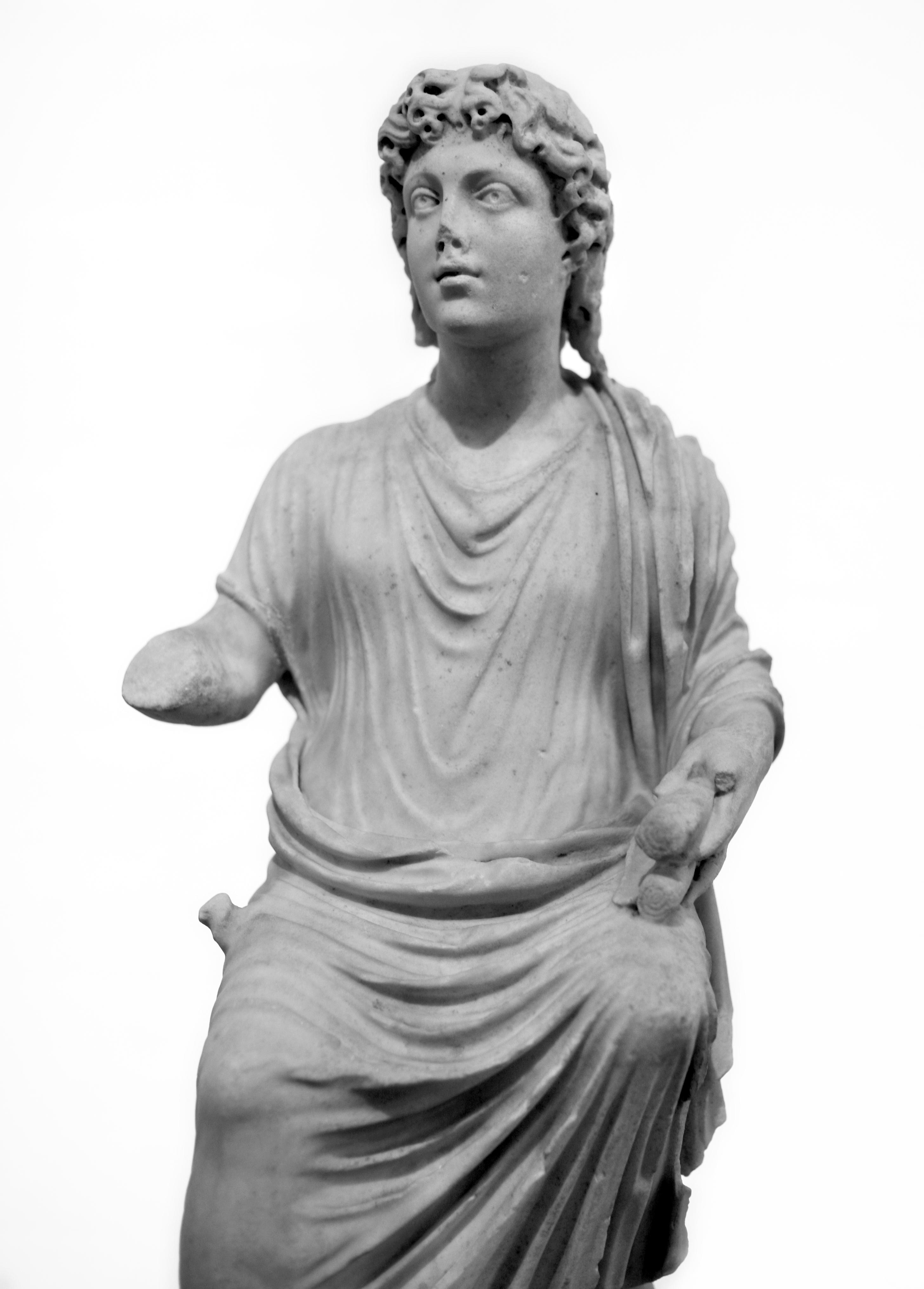
The Cristo Docente (Teaching Christ) clearly shows a youthful, androgynous body with small breasts. This is visual language flowing directly from Greco-Roman conventions of the philosopher, ephebe, or Apollo rather than an ethnographically accurate depiction of any historical Jesus. This one of the earliest depictions of Jesus, and a very rare example of Christian art not associated with burial. I wonder what the Vatican would trade for it.
Early Christian artists weren’t attempting realism; they were translating abstract theological ideas into iconic forms the viewer would recognize. The effeminate traits signal spiritual rather than biological qualities – gentleness, wisdom, eternal youth – while the frontal, often seated or teaching pose evokes authority and composure. In that cultural moment, a physically idealized, effeminate figure would convey the moral and divine authority expected of a teacher or savior without challenging Roman notions of masculinity, which were more flexible in the context of idealized youth and divinity.
The Christian anxiety that arises from this piece crack me up. Modern viewers, steeped in historical or doctrinal literalism, try to read the image literally. That’s a projection: the image is a theological construction, not an ethnographic one. Christian art critics, especially in the early 20th century, bristled at the iconography and tried to brush the thing off as a young girl posing as a scholar, rather than relaxing into the idea that early Christians weren’t like them.
The Discobulus
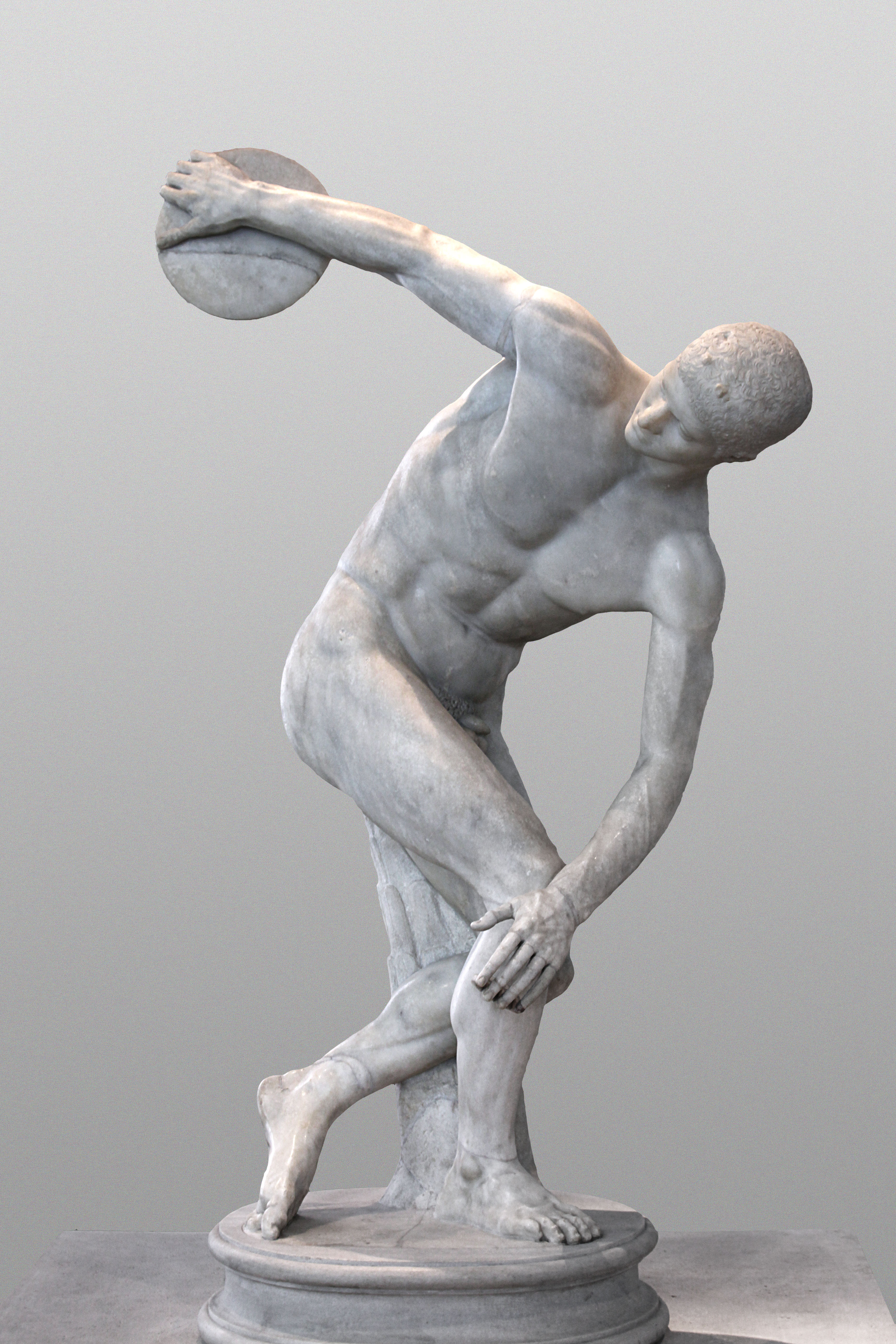
This discobolus is interesting because it’s a Roman copy of a Greek original (traditionally attributed to Myron, mid-5th century BCE) but reinterpreted in a Roman context. Several points stand out:
Roman taste for idealized athleticism – Unlike the athletes that highlight strain and fatigue, the Discobolus captures frozen, perfect form in mid-action, emphasizing harmony, proportion, and controlled energy. The figure is taut, but serene, a demonstration of mastery over both body and motion.
Technical virtuosity – The sculpture compresses a dynamic twist of the torso and rotation of limbs into a balanced composition. The Massimo copy preserves this elegance while subtly softening the muscular definition compared with Hellenistic copies that exaggerate tension.
Cultural resonance in Rome – Displaying this statue in a Roman villa or public space signaled the moral and civic ideals associated with disciplined youth, athletic virtue, and controlled action—qualities the Roman elite wanted to project.
Roman copy as a lens on reception – we see how Romans interpreted Greek originals, choosing what to preserve, emphasize, or downplay. Unlike more dramatic Hellenistic works, this Discobolus shows restraint, aligning with Roman preferences for clarity, proportion, and intelligibility over theatricality. It’s a visual bridge between Greek athletic ideal and Roman moral-aesthetic ideology.
Bronze from Caligula’s Ships
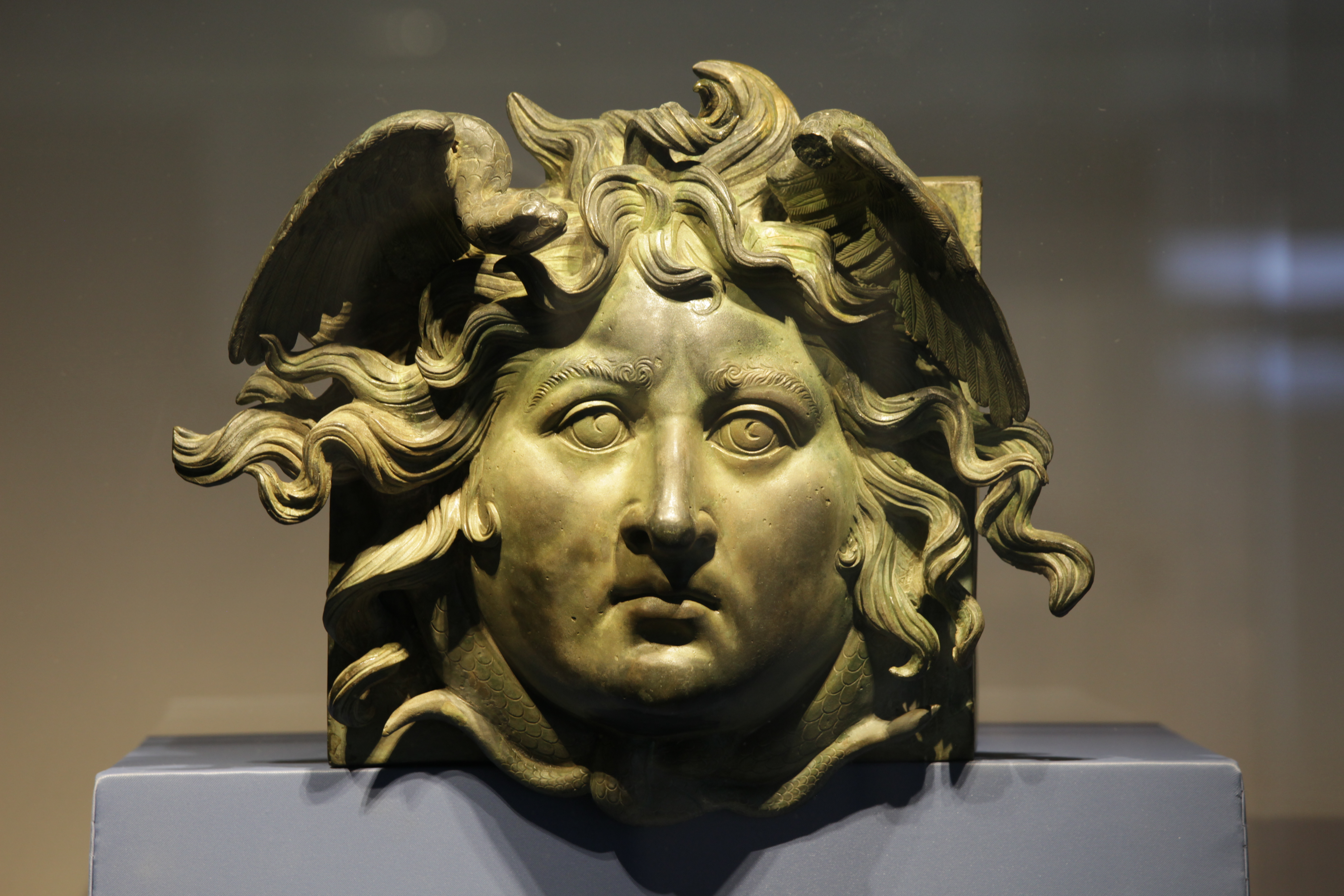
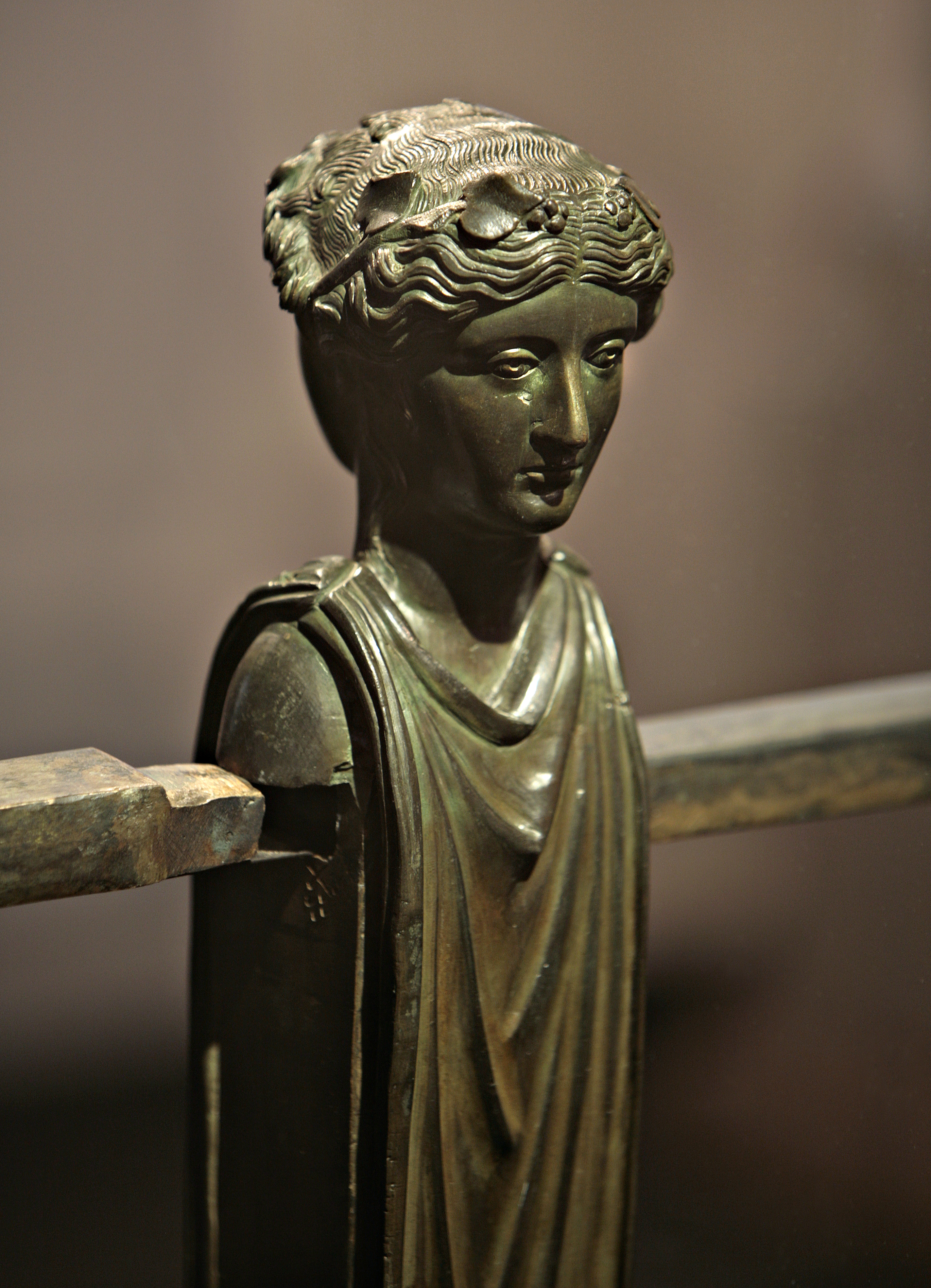
The bronze fittings come from the two grand ceremonial vessels built in the lake of Lake Nemi, ordered by Gaius Caligula around AD 37-41. By commissioning such a floating palace, Caligula aligned himself with Hellenistic kings and with the mastery of nature. The bronzes speak that language of luxury and sacerdotal authority.
The vessels and their fittings were masterpieces of maritime technology, supported by massive beams, outriggers, twin rudders, and elaborate decoration. The bronze protomes were integrated in the structural and mechanical system of the ship (rudders, beams, mooring rings). Here is the transition from Republic to Imperial ornamentation in full flourish – Roman taste for Hellenistic luxury, combined with native iconography. The bronzes bridge functional object, architectural ornament, and political symbol.
Climbing Taiwan Removable Bolts Review
Posted in Engineering & Applied Physics on November 6, 2025
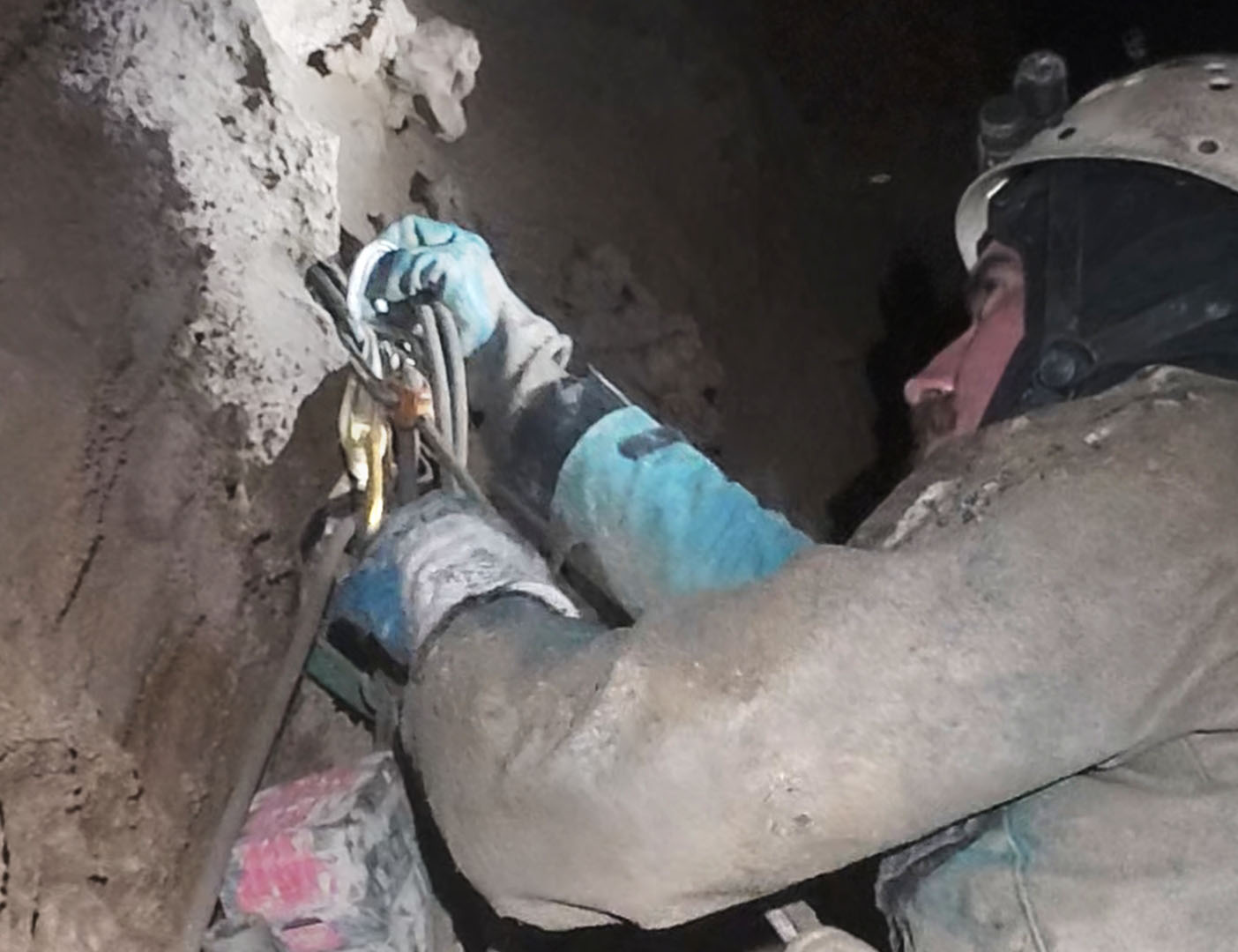
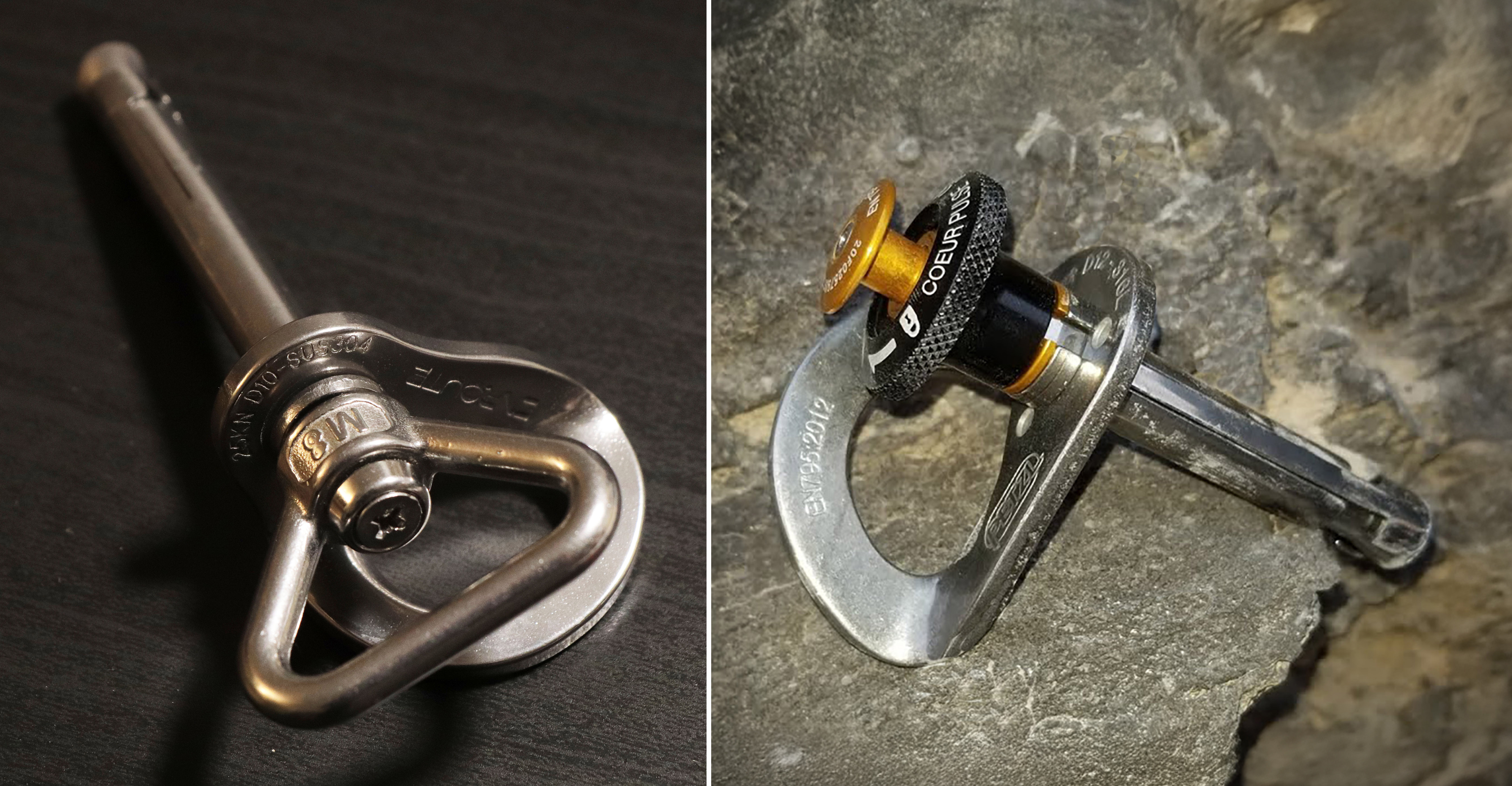
Friends and I have been experimenting with removable bolts in muddy caves, and many of us have been concerned about the robustness of the devices. I don’t mean their strength. They’re plenty strong. I mean how well do they hold up in a cave environment – and can we be ensured of a good placement. I just got some new removable bolts from Climbing Taiwan (CT). Compared to the Petzl Pulse design, which have proven to be finicky in caves, they look like they might be better suited for use in cave environments.
I don’t have a cave or a hammer drill on hand right now, so I put a 10mm masonry bit in my handheld driver and drilled holes in a concrete block to test the bolts.
For this testing I wanted to drill the hole barely long enough to fit the bolt in – against the recommendations of the manufacturer. I wanted to experiment with the consequences of crud in the bottom of the hole.
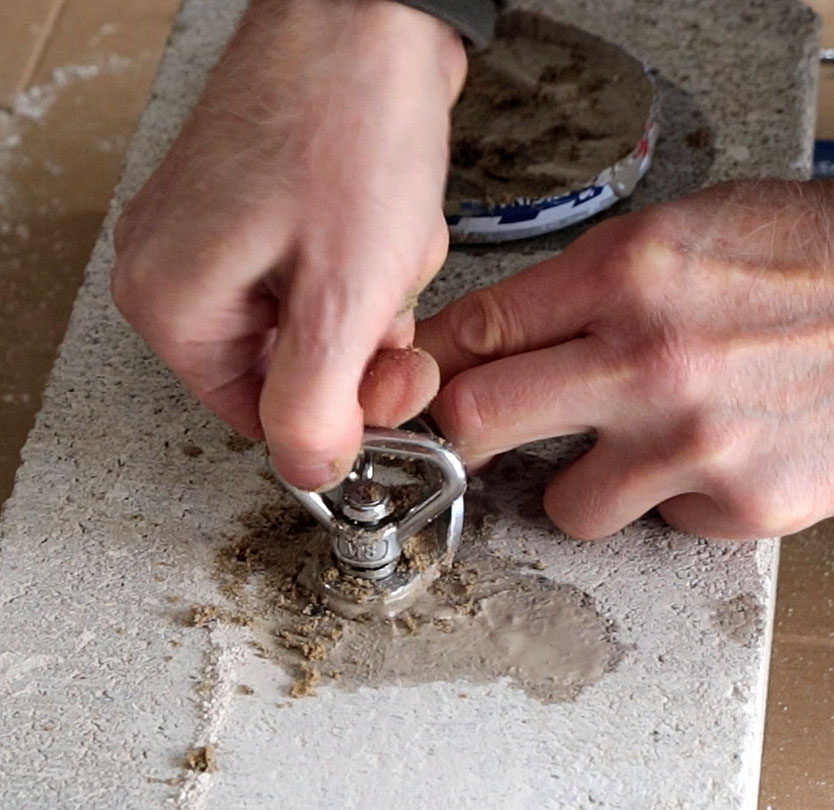
Normally, with 3/8 and 10mm bolts wedge bolts wedge bolts I don’t blow out the holes or brush them underground. I merely withdraw the drill with it rotating slightly and pull the dust out of the hole. I’ve placed hundreds of bolts and have never had a spinner. I torque my 3/8 wedge bolts to 25 foot pounds underground.
Because, for these tests, I am drilling vertically downward and I am using a masonry bit instead of a hammer drill bit, I had to brush the dust out of these holes. I did not use a blow tube. This is really bad bolting hygiene. I wanted to see if I could gum up the works. I am intentionally using these removable bolts wrong, against the advice of the manufacturer, and against good sense.
To simulate the abuse that bolts take underground, I first mixed the concrete dust with water and packed it onto the bolt mechanism. Then I poured the sludge into the hole.
Then I added sand to the mix. I packed on as much sand as I could. I also tried getting sand into the threads at the top of the hanger. This proved no problem for installation or removal. I then pushed sand into the hole to see if I could force the wedge through the sand sludge and back toward the outside of the hole.
For the next simulation of cave mud I combined honey and cornstarch. Wet corn starch is fun to use in these experiments because it is a non-euclidean fluid with some odd properties. I again added sand. I then smeared the cornstarch honey sand combination along the sleeve and the threaded region.
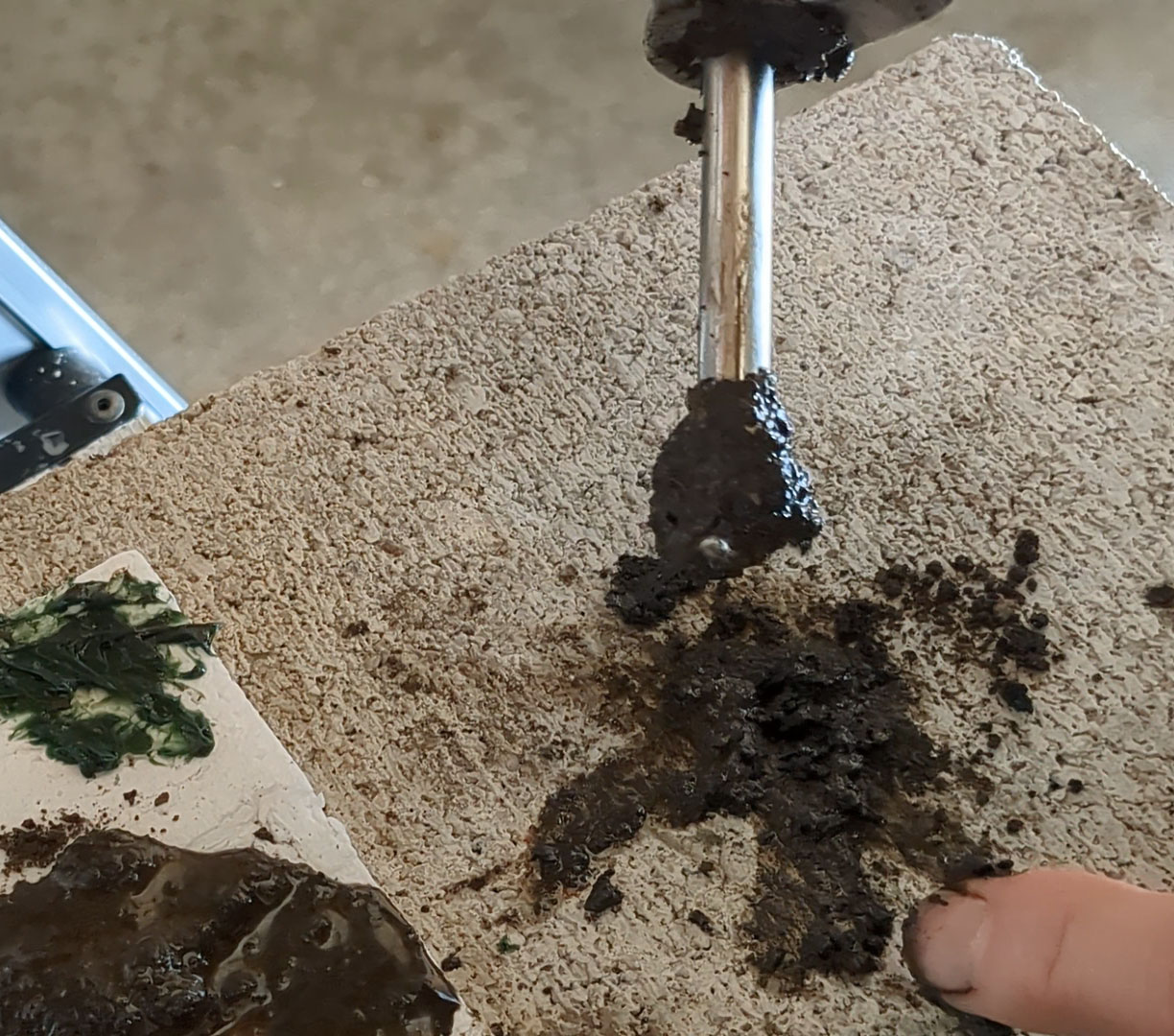
For the next test I got a fresh cylinder of clay- rich mud and added it to the mix. The bolt and the sludge clearly filled the entire hole as is visible by the overflow. I did the same with a mix of plumber’s grease and garden dirt. Again, no problem.
I used a pressure washer to clean them. I took them apart to be sure. Good as new.
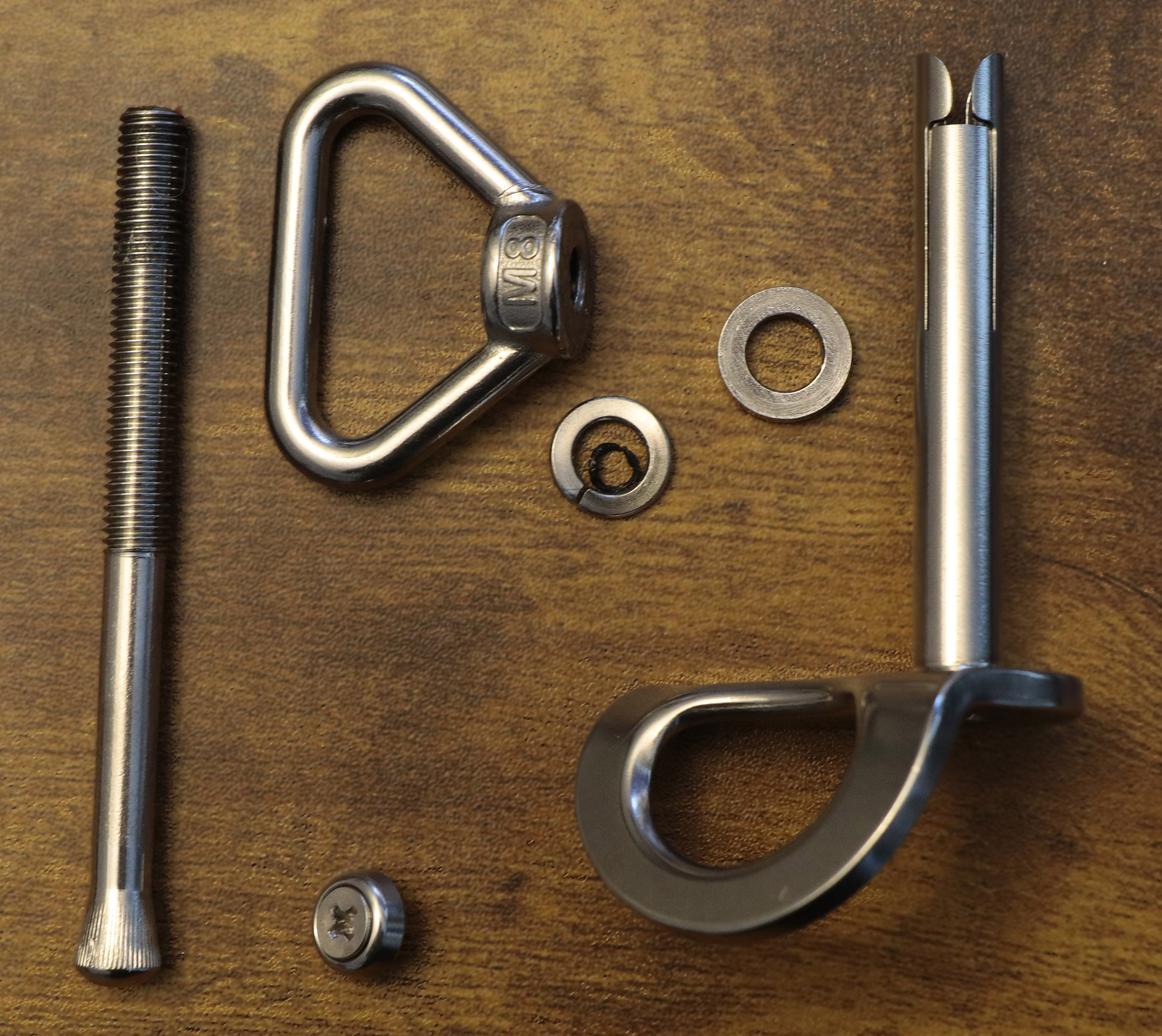
The manufacturer says they used 2205 stainless steel for the threaded shaft and 304 for everything else. These are smart choices that reflect sound engineering. 304 is very widely used. It’s machinable and has high ductility. Its ultimate strength is several times higher than its yield strength. It is extremely forgiving and has excellent corrosion resistance. Duplex 2205 is much stronger, much more expensive, and has some trade-offs (like weldability), none of which are at all relevant to this usage.
I tested the components for ferromagnetism. In theory, 304 alloy hangers should not be magnetic. OK, little bit of engineering here. 304 is austenitic; its atoms are arranged in a body-centered cubic structure. But when you cut or beat on austenitic stainless, you can cause some degree of room-temperature phase transformation. A room-temperature crystalline phase change always seemed like magic to me, but it happens. Ancient blacksmiths were similarly amazed. This cold-working causes atoms to jump into a body-centered tetragon pattern called martensite, which is magnetic. It also causes carbon atoms to bunch up a bit, and this can reduce corrosion life.
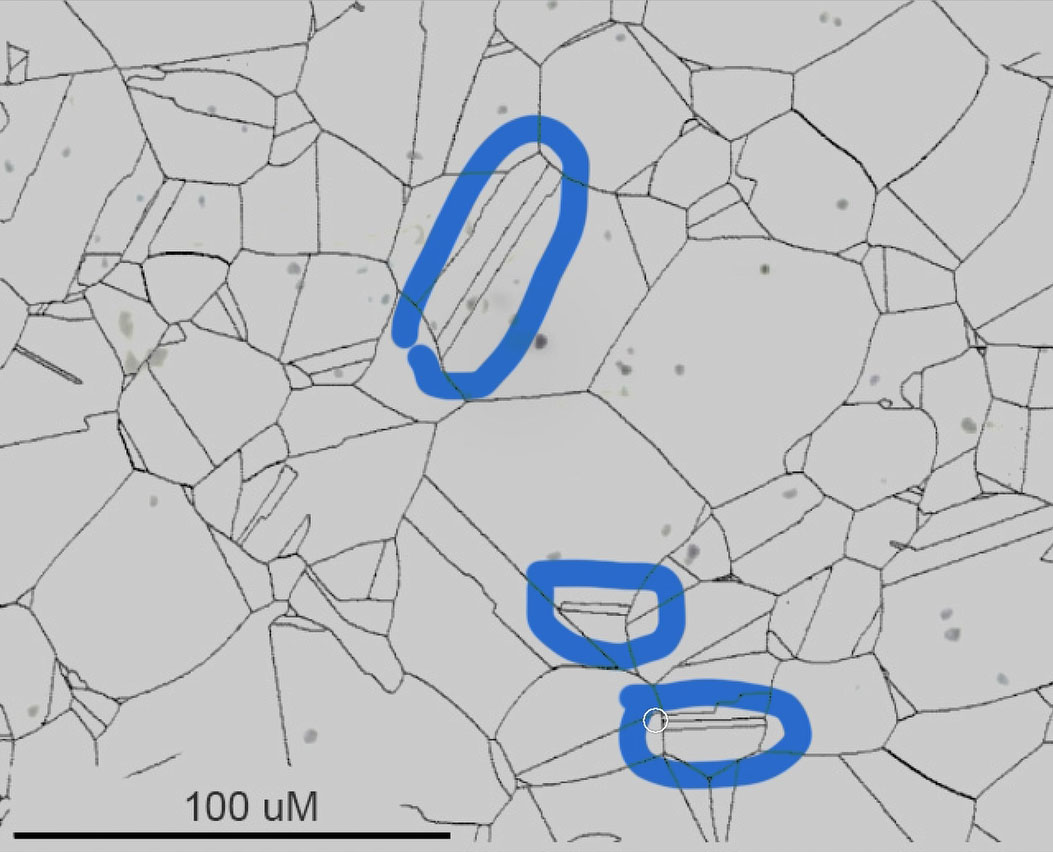
But these bolts are not intended as permanent anchors. And when I look at the hangers under a scope at 250x, I see maybe a couple of percent martensite. Rough calculation of the life of a 304 bolt in a typical Appalachian cave with no brine and low chlorides yields a range of about 1000 to 20,000 years. If we shift that bolt into its martensitic state, we’d reduce its life in a cave down to maybe 50 to 1,000 years. But that is for full martensite, and I’m seeing only a percent or two. In other words, we can ignore the fact that this hanger is slightly magnetic. The Duplex 2205 threaded shaft (“duplex” because it is part ferrite, part austenite – elongated austenite grains in a ferritic matrix, so it is magnetic), since it isn’t welded or otherwise altered, would have a corrosion life of 2 to 5 times that of 304.
I measured hardness at Rockwell C25 – around 90,000 psi – a bit higher than you’d expect for annealed 304, but consistent with the cold working that resulted in the magnetism. Totally inconsequential.
I generally don’t do destructive testing. It’s usually pointless or worse. It’s entertaining to watch gear break, but focusing on ultimate strength just encourages dangerous misconceptions. Safety in climbing gear depends on how forces are distributed, how materials deform, and, mostly, how elasticity affects the system – how energy is absorbed. The inelasticity of a static rope that’s stronger than a dynamic rope can kill you. F=ma and F=kx are not just equations – they are life-and-death considerations.
I like to look at the underlying physics, and highlight what matters in practical use. My goal is to give climbers accurate, responsible insight – not spectacle – and to counter the intuition that ‘stronger = safer.’ This approach is personal to me as well: a close friend died while aid climbing in a cave because he misunderstood these principles. We might honor his memory by helping others understand how stuff works.
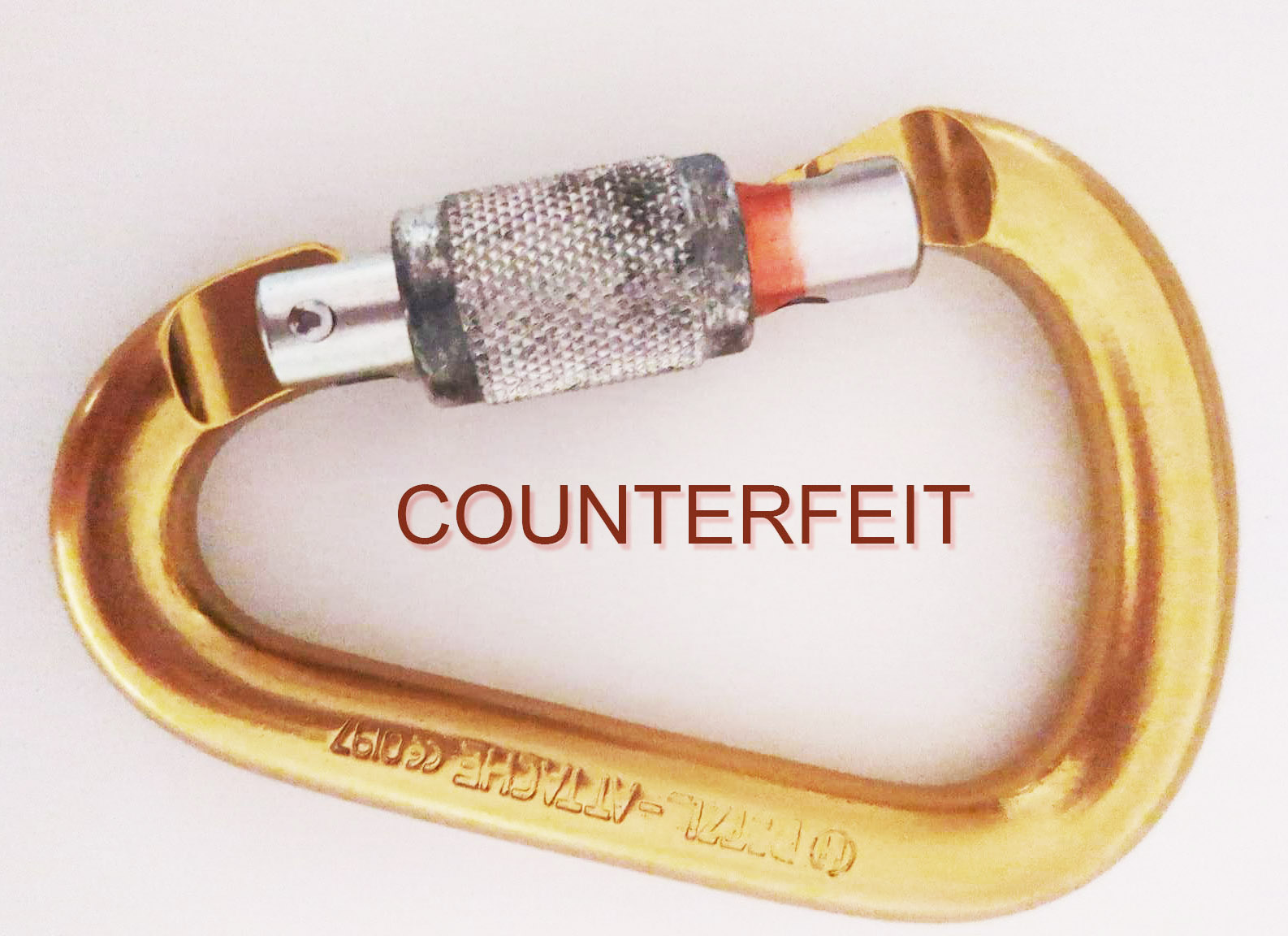
Why not break them? The removable-bolt components – bolts and hangers – are made from standard engineering materials, like 304. These materials are mass-produced in sheet and rod form, and have extremely low likelihood of defects. 304 stainless is not a cottage-industry alloy. Producing it requires integrated melt, alloying, and forging infrastructure with tight control of composition and processing. You can’t fake it cheaply. So the global quality variation for 304 is extremely narrow compared to, say, low-alloy steels, bronze, or, unfortunately for cavers, aluminum castings and forgings. Counterfeit carabiners. But that’s another article.
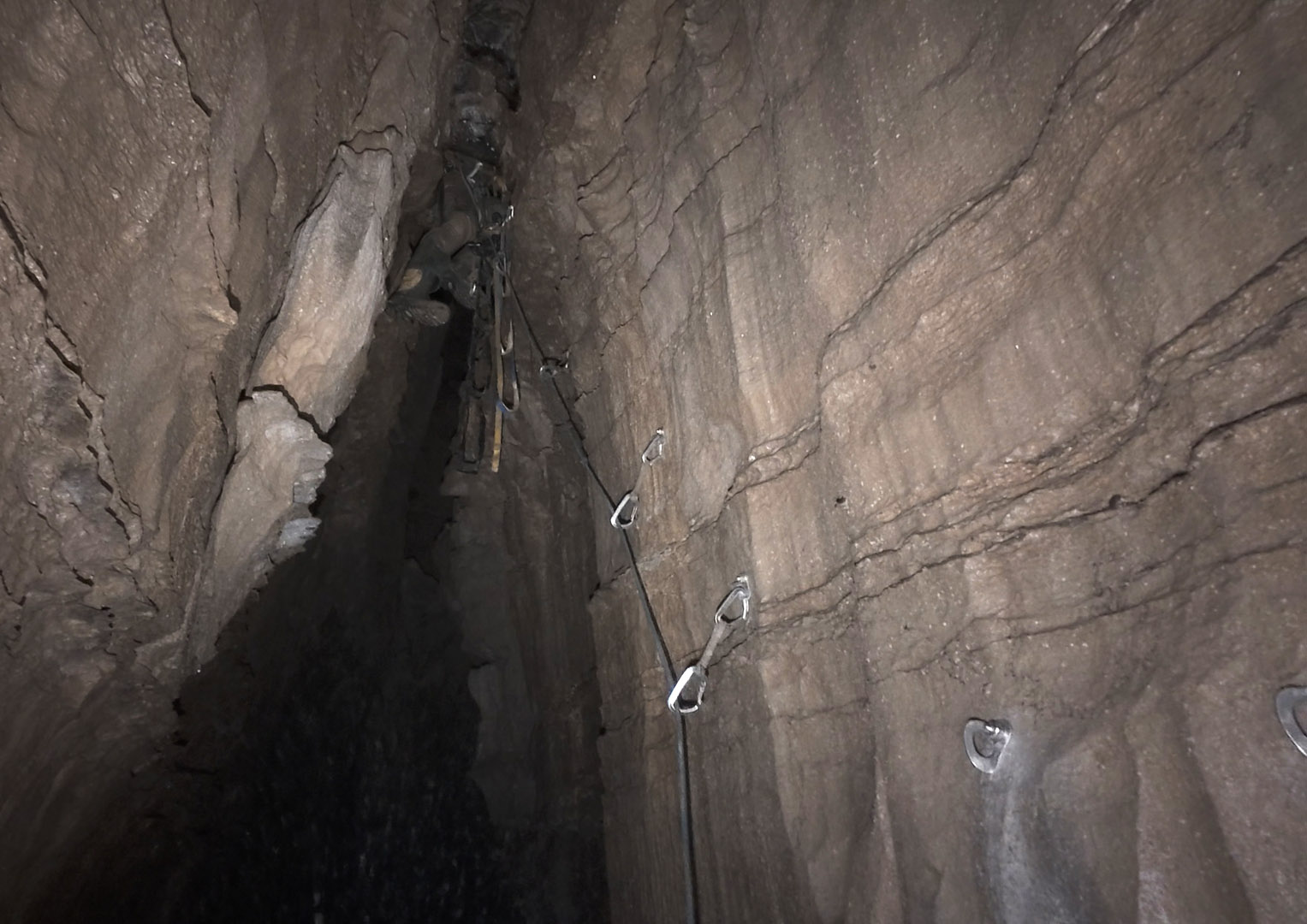
Breaking these bolts on video would add zero real information. Their strength far exceeds what a human body can impose or withstand. What actually matters – the rock quality, technique, and proper installation – is rarely tested or demonstrated on YouTube. If there is concern about a manufacturer’s integrity, destructive testing of one or two bolts is meaningless. Instead, careful microstructural examination and non-destructive testing across a larger sample set provide meaningful insight, without teaching viewers some sort of cargo-cult science. Removable bolts are intended for shear loading only. Think standard aid climbs, not ones like this:
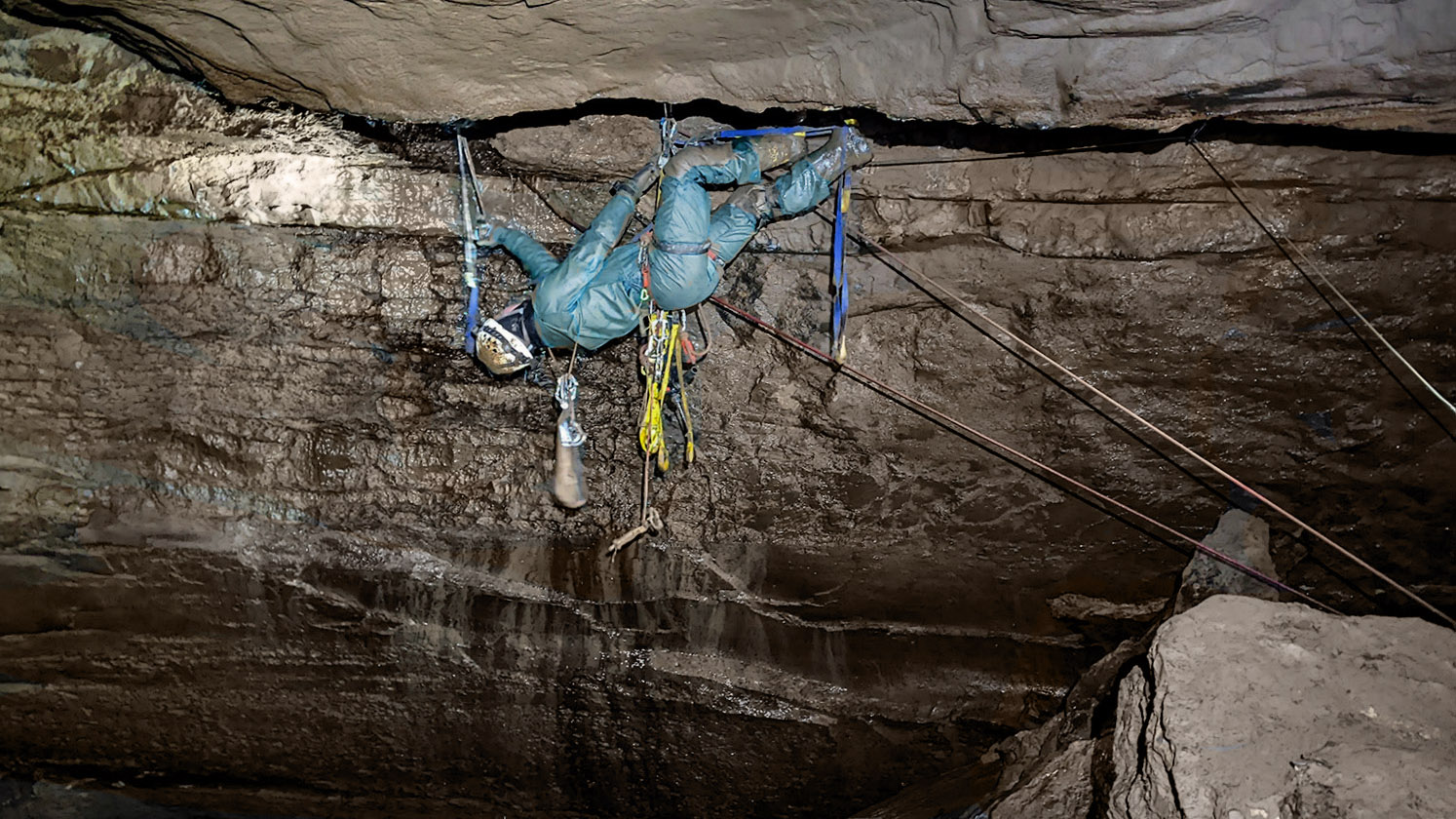
But any real-world usage involves some amount of axial load. Tests on other removable bolts show them to have very high strength in the axial direction. Usually, the rock blows out first.
The fact that the rock usually blows out first points to another advantage of these Climbing Taiwan bolts over the Petzl. In soft rock, bolt length trumps bolt diameter because rock strength dominates. The 3-inch, 10mm diameter CT bolt vs. the 2 and a quarter inch Petzl 12mm. In hard rock, bolt strength dominates, but in hard rock, the breaking strength for both 10 and 12mm far exceed survivability. This is a perfect example of where destructive testing results will lead you to the wrong conclusion.
With a few assumptions, we can easily calculate the relative performance of the Pulse and the CT bolts loaded in shear:
Sleeve / shaft sizes
- Pulse: sleeve Ø = 12.0 mm, shaft Ø = 10.0 mm, embed length = 55 mm
- CT (10 mm): sleeve Ø = 10.0 mm, shaft Ø = 8.0 mm, embed length = 77 mm.
- Material strengths (conservative working numbers)
- Sleeve material 304 stainless, UTS = 520 MPa. Shear strength = 0.6·UTS = 312 MPa.
- Shaft material 2205 duplex, UTS = 860 MPa. Shear strength = 0.6·UTS = 516 MPa.
- Use the shaft shear (2205) as the bolt shear limit.
- Two limiting modes considered, and the lower one governs:
For rock-limited shear:
Rock shear strength × lateral contact area of the sleeve (projected cylindrical area = π·d_sleeve·embed_length). This models shear/punching or interface shear of the sleeve against rock.
For bolt (shaft) shear:
Material shear strength × cross-sectional area of the shaft (π·d^2/4). This models a straight shear through the shaft.
No complex friction, bending, or stress concentrations included. This is a first-order, worst-case shear capacity comparison.
| Rock shear strength | Pulse 12 mm, embed 55 mm | CT 10 mm, embed 77 mm |
| 1000 psi | rock limit 14.30 kN (3,214 lb) bolt limit 40.53 kN (9,111 lb) | rock limit 16.68 kN (3,761 lb) bolt limit 25.94 kN (5,831 lb) |
| 2000 psi | rock limit 28.59 kN (6,428 lb) bolt limit 40.53 kN (9,111 lb) | rock limit 33.36 kN (7,523 lb) bolt limit 25.94 kN (5,831 lb) |
| 4000 psi | rock limit 57.18 kN (12,855 lb) bolt limit 40.53 kN (9,111 lb) | rock limit 66.71 kN (14,998 lb) bolt limit 25.94 kN (5,831 lb) |
To evaluate the sensitivity of this model to assumptions, we can make the following changes, aiming at higher conservatism:
- 2205 duplex shear taken as 0.5·UTS, i.e. 430 MPa.
- A conservative Rock-punching reduction factor of 0.6 applied to the nominal rock shear strength to model local failure modes, stress concentrations, and imperfect contact.
| Rock shear strength | Pulse 12 mm, embed 55 mm | CT 10 mm, embed 77 mm |
| 1000 psi | rock limit 8.58 kN (1,928 lb) bolt limit 33.77 kN (7,592 lb) | rock limit 10.01 kN (2,250 lb) bolt limit 21.61 kN (4,859 lb) |
| 2000 psi | rock limit 17.16 kN (3,857 lb) bolt limit 33.77 kN (7,592 lb) | rock limit 20.01 kN (4,499 lb)bolt limit 21.61 kN (4,859 lb) |
| 4000 psi | rock limit 34.31 kN (7,713 lb) bolt limit 33.77 kN (7,592 lb) | rock limit 40.03 kN (8,999 lb) bolt limit 21.61 kN (4,859 lb) |
This results in lower strength values for both rock and bolt, but the relationships and conclusions still stand. In weak rock, length trumps diameter; in strong rock, bolt strength dominates but both 10 and 12mm strengths are far above survivability. The below chart plots governing capacity vs nominal rock shear to show the crossover points:
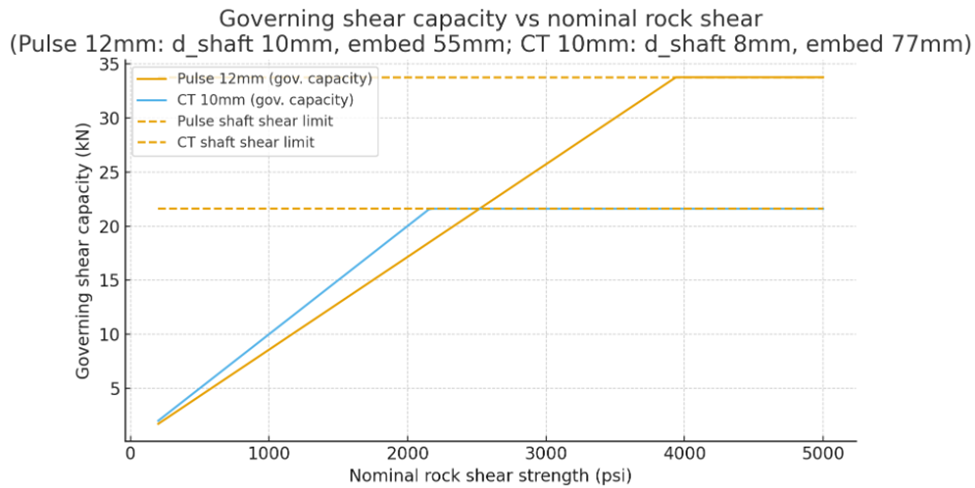
So my conclusion that the CT bolts are better designed for cave rock than the Petzl Pulses is not sensitive to assumptions about Rock-punching reduction factor or the relationship between 2205’s ultimate tensile and ultimate shear strength. The CT bolts come out looking like a better design for cave rock (and, of course, neither was designed for use in caves).
It’s also worth noting that the longer 10mm CT bolt removes 10 percent less rock than the shorter 12mm Petzl bolt. So you’re getting about 10% more bolting per battery.
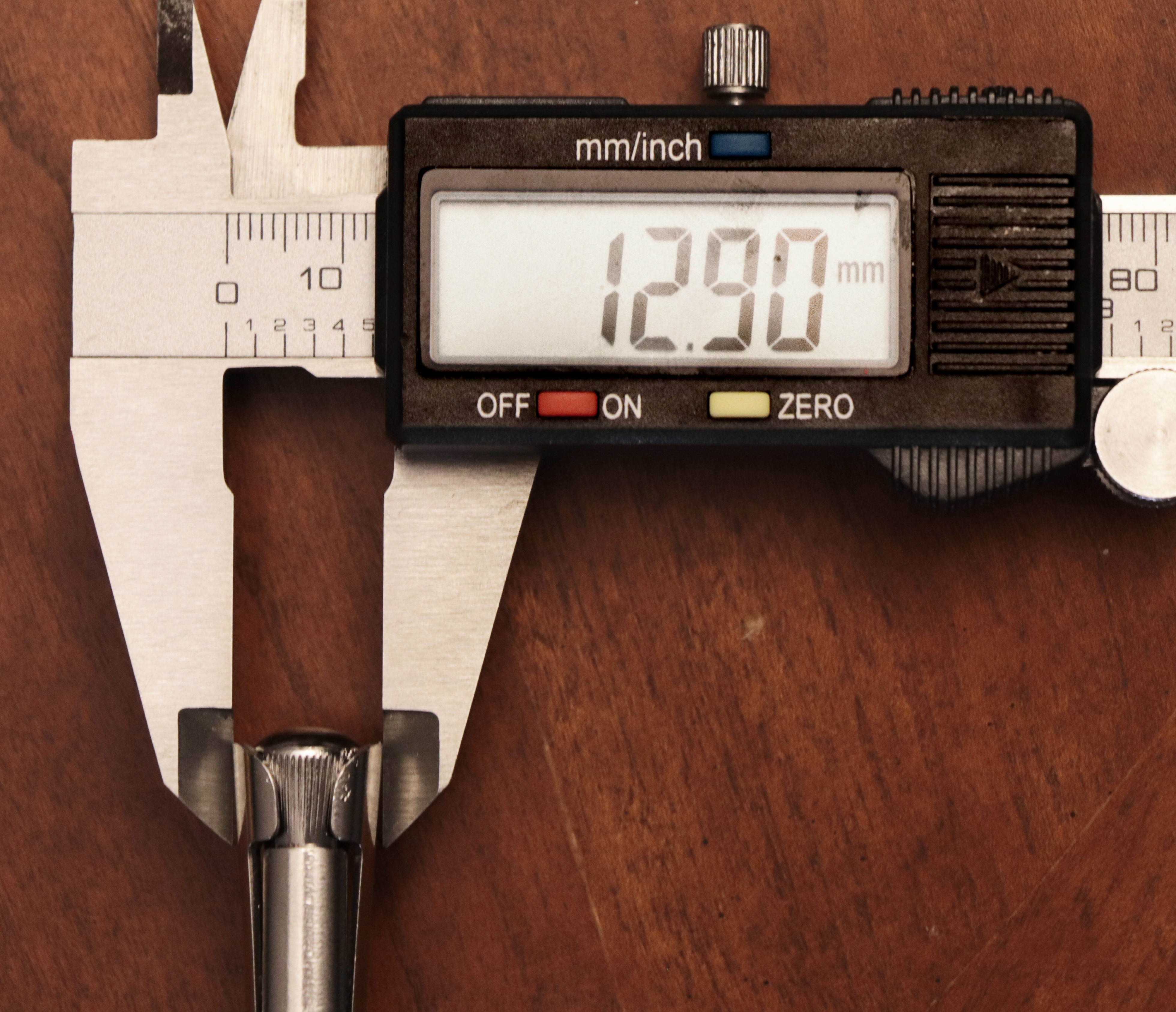
Returning to axial strength. Because the core principle at work in these bolts is lateral expansion under confinement (a radial pressure multiplier from a low-angle taper), we need to control the hole diameter to achieve the needed confinement. These Climbing Taiwan bolts allow you to torque them down – in a sense. This isn’t torquing to achieve tensile preload, as in wedge anchors. It is about mechanically setting the wedge to the local bore diameter. Think of it like calibrating the anchor to the hole. You can expand the sleeve using the handle until you feel firm engagement. That lets you tune for real-world variability in hole diameter, rock roughness, or small flares and cracks. That seems to me the big advantage of this design; it’s more tolerant of the wobbly drilling that sub-optimal cave settings often give us.
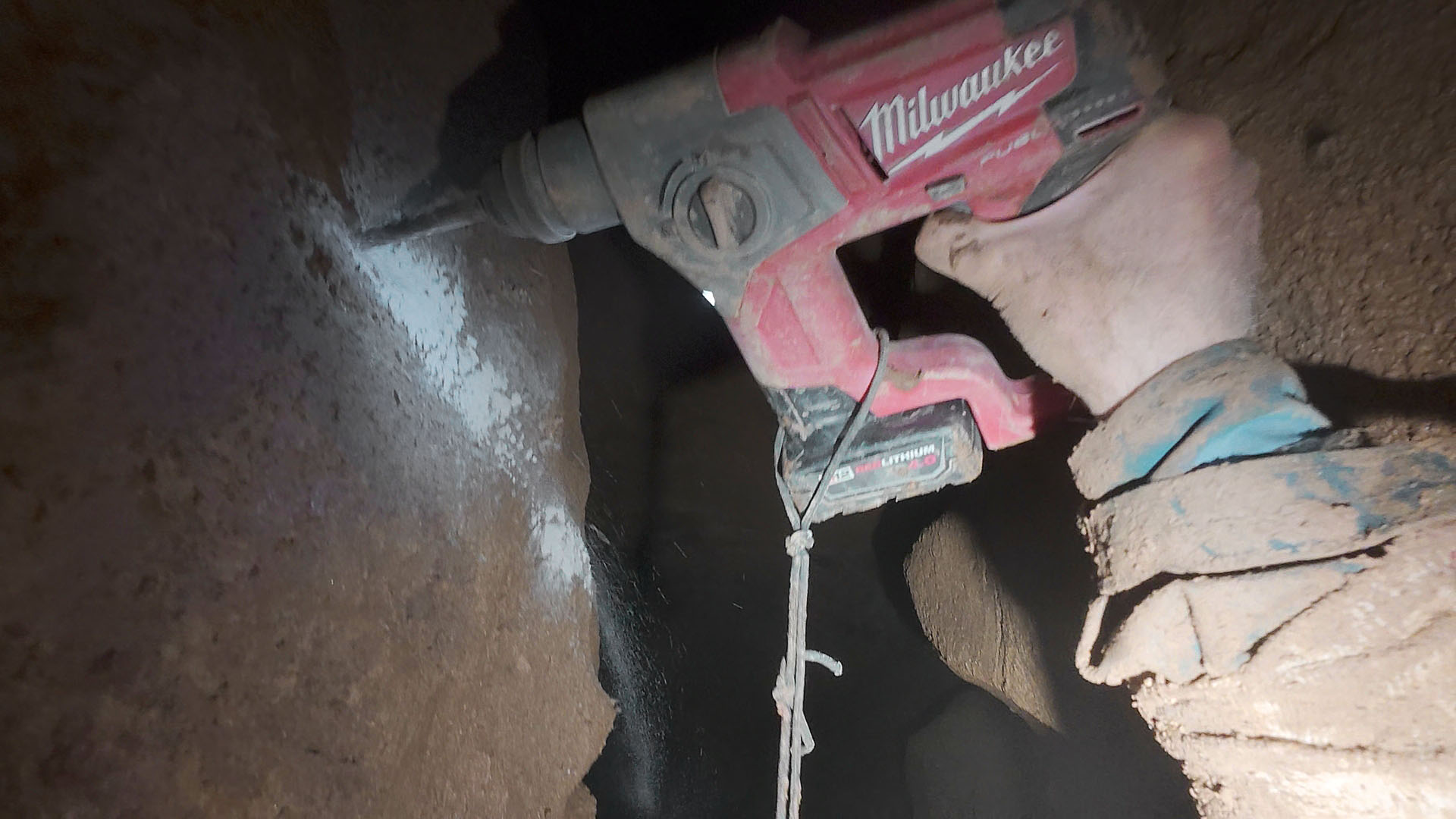
Beyond being easier to clean and having superior strength in soft rock compared to the 12mm Petzl Pulse, the cleverness here is in better decoupling hole-fit adjustment from load resistance. I was able to engage the nominally 10mm bolt in a 12mm diameter hole. I’ll still avoid drilling bad holes, but this is very good to know, especially when drilling in confined or awkward places where suddenly the little Milwaukee decides to go on a rotary rampage.
If you have experience with these underground, or have questions or comments, please feel free to add a comment below. Sometimes I miss real engineering.
The Arch of Constantine
Posted in History of Art on October 31, 2025
This is for Mike and Andrea, on their first visit to Rome.
Some people take up gardening. I dug into the Arch of Constantine. Deep. I’ll admit it, I got a little obsessed. What started as a quick look turned into a full dig through the dust of Roman politics as seen by art historians and classicists, writers with a gift for making the obvious sound profound and the profound impenetrable. Think of a collaboration between poets, lawyers, and a Latin thesaurus. One question led to another, and before I knew it, I was knee-deep in relief panels, inscriptions, and bitter academic feuds from 1903. If this teaser does anything for you, order a pizza and head over to my long version, revised today to incorporate recent scholarship, which is making great strides.
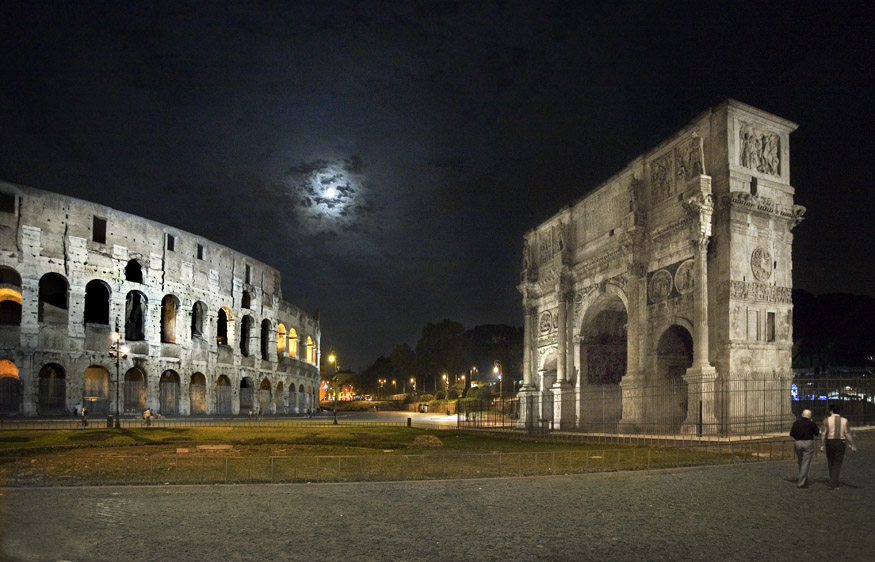
The Arch of Constantine stands just beside the Colosseum, massive and pale against the traffic. It was dedicated in 315 CE to celebrate Emperor Constantine’s victory over his rival Maxentius at the Battle of the Milvian Bridge. On paper it’s a “triumphal arch,” but that’s not quite true. Constantine never held a formal triumph, and the monument itself was assembled partly from spare parts of older imperial projects.
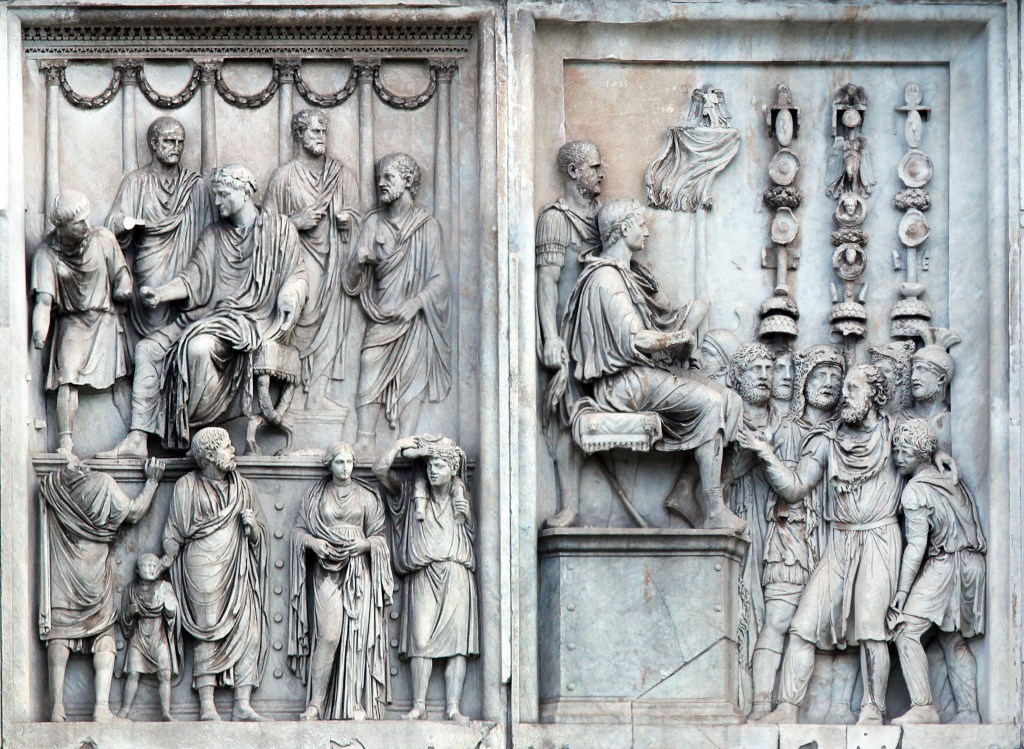
Most of what you see wasn’t made for Constantine at all. His builders raided earlier monuments – especially from the reigns of Hadrian, Trajan, and Marcus Aurelius – and grafted those sculptures onto the new structure. Look closely and you can still spot the mismatches. The heads have been recut. A scene that once showed Emperor Hadrian hunting a lion now shows Constantine doing the honors, with a few clumsy adjustments to the drapery. Other panels, taken from Marcus Aurelius’s monuments, show the emperor addressing troops or granting clemency, only now it’s Constantine’s face and Constantine’s name.
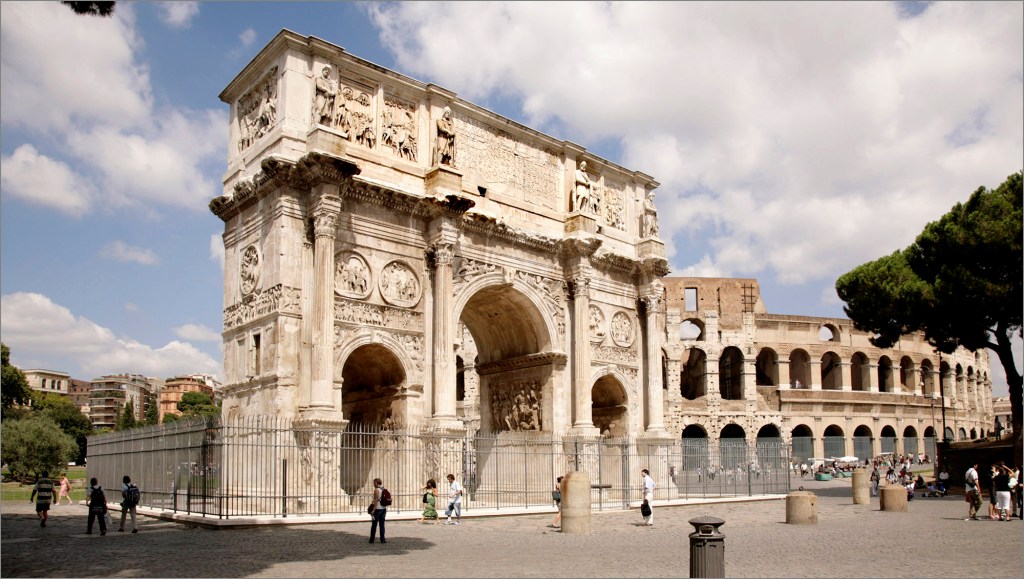
These borrowed panels aren’t just decoration. They were carefully chosen to tie Constantine to the “good emperors” of the past, especially Marcus Aurelius, the philosopher-king. By mixing their images with his own, Constantine claimed continuity with Rome’s golden age while quietly erasing the messy years between.
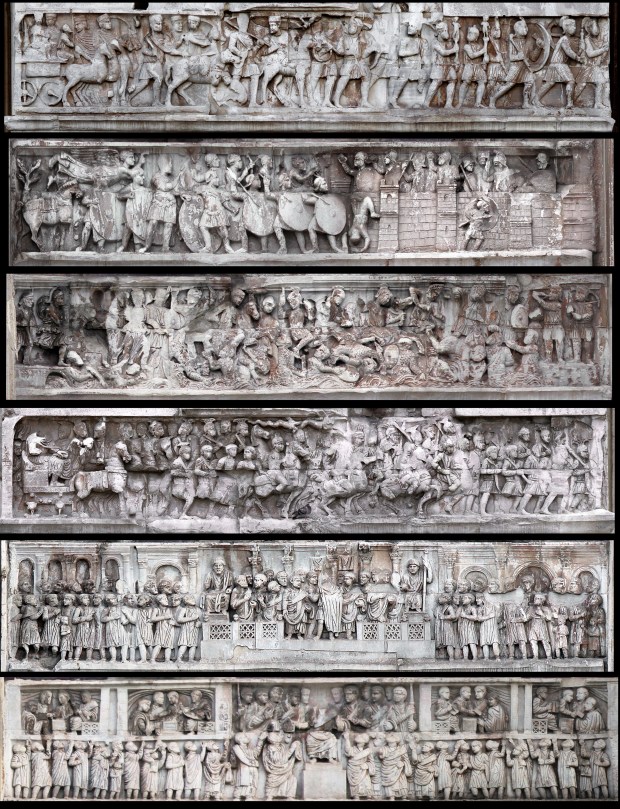
The long strip of carving that wraps around the lower part of the arch is the one section made entirely for Constantine’s time. It’s a running narrative of his civil war against Maxentius. Starting on the west side, you can see Constantine setting out from Milan, soldiers marching behind his chariot. Around the corner, he besieges a walled city – probably Verona – and towers over his men, twice their size, a new kind of emperor who commands by sheer presence. The next panel shows the chaotic battle at the Milvian Bridge, where Maxentius’s troops drown in the Tiber while Constantine’s army presses forward. The story ends with Constantine entering Rome and addressing the citizens from a raised platform, a ruler both human and divine.
The figures look stiff and simplified compared to the older reliefs above them, but that’s part of the shift the arch represents. Art was moving away from naturalism toward symbolism. Constantine isn’t shown as an individual man but as an idea: the chosen ruler, the earthly image of divine authority.
That message runs through the inscription carved across the top. It declares that Constantine won instinctu divinitatis – “by divine inspiration.” The phrase is unique; no one had used it before. It’s deliberately vague, as if leaving room for different gods to take the credit. For pagans, it could mean Apollo or Sol Invictus. For Christians, it sounded like the hand of the one God. Either way, it announced a new kind of emperor, one who ruled not just with the favor of the gods but through them.
The Arch of Constantine isn’t simply a monument to a battle. It’s a scrapbook of Rome’s artistic past and a statement of political legitimacy. Read carefully, it is an early sign that the empire was in for religion, hard times, and down-sizing.
Photos and text copyright 2025 by William K Storage
Deficient Discipleship in Environmental Science
Posted in Commentary, Philosophy of Science on October 28, 2025
Bear with me here.
Daniel Oprean’s “Portraits of Deficient Discipleship” (Kairos, 2024) argues that Gospel Matthew 8:18–27 presents three kinds of failed or immature discipleship, each corrected by Jesus’s response.
Oprean reads Matthew 19–20 as discipleship without costs. The “enthusiastic scribe” volunteers to follow Jesus but misunderstands the teacher he’s addressing. His zeal lacks awareness of cost. Jesus’s lament about having “nowhere to lay his head,” Oprean says, reveals that true discipleship entails homelessness, marginalization, and suffering.
As an instance of discipleship without commitment (vv. 21–22), a second disciple hesitates. His request to bury his father provokes Jesus’s radical command: “Follow me, and let the dead bury their own dead.” Oprean takes this as divided loyalty, a failure of commitment even among genuine followers.
Finally comes discipleship without hardships (vv. 23–27). The boat-bound disciples obey but panic in the storm. Their fear shows lack of trust. Jesus rebukes their “little faith.” His calming of the sea becomes a paradigm of faith maturing only through trial.
Across these scenes, Matthew’s Jesus confronts enthusiasm without realism, religiosity without surrender, faith without endurance. Authentic discipleship, Oprean concludes, must include cost, commitment, and hardship.
Oprean’s essay is clear and perfectly conventional evangelical exegesis. The tripartite symmetry – cost, commitment, hardship – works neatly, though it imposes a moral taxonomy on what Matthew presents as narrative tension (a pale echo of Mark’s deeper ironies). Each scene may concern not moral failure but stages of revelation: curiosity, obedience, awe. By moralizing them, Oprean flattens Matthew’s literary dynamism and theological ambiguity for devotional ends.
His dependence on the standard commentators – Gundry, Keener, Bruner – keeps him in the well-worn groove. There’s no attention to Matthew’s redactional strategy, the eschatological charge of “Son of Man” in v. 20, or the symbolic link between the sea miracle and Israel’s deliverance. The piece is descriptive, not interpretive; homiletic rather than analytic. The unsettling portrait of discipleship becomes a sermon outline about piety instead of a crisis in perception.
Fair enough, you say – there’s nothing wrong with devotional writing. True. The problem is devotional writing costumed as analysis and published as scholarship. He isn’t interrogating the text. If he were, he’d ask: Why does Matthew place these episodes together? How does “Son of Man” invoke Danielic or apocalyptic motifs? What does the sea episode reveal about Jesus’s authority over creation itself? Instead, Oprean turns inward, toward exhortation.
It’s an odd hybrid genre – half sermon, half commentary – anchored in evangelical assumptions about the text’s unity and moral purpose. Critical possibilities are excluded from the start. There’s no discussion of redactional intent, no engagement with Second-Temple expectations of the huios tou anthrōpou, no awareness that “stilling the sea” echoes both Genesis and Exodus motifs of creation and deliverance.
This is scholarship only in the confessional sense of “biblical studies,” where the aim is to explain what discipleship should mean according to current theological norms. It’s homiletics, not analysis.
But my quarrel isn’t really with Oprean. He’s the symptom, not the cause. His paper stands for a broader phenomenon – pseudonymous scholarship: writing that borrows the visual grammar of academic work (citations, subheadings, DOIs, statistical jargon) while serving ideological ends.
You can find parallels across the sciences. In the early 2000s, string theory was on the altar. Articles in Foundations of Physics or in Studies in History and Philosophy of Modern Physics carried the trappings of rigor but were effectively apologias for the “beauty” of untestable theories. “Mathematical consistency,” we were told, “is experimental evidence.” The logic matches Oprean’s: inward coherence replaces external test.
Climate science has its mirror image in policy-driven venues like Energy & Environment or think-tank white papers formatted as peer-reviewed studies. They reproduce the scaffolding of scholarship while narrowing inquiry to confirm prior skepticism.
The rhetorical pattern is the same:
- Scholarly mimicry: heavy citation and technical diction confer legitimacy.
- Rhetorical closure: conclusions are known before the analysis begins.
- Audience reassurance: readers are not challenged but comforted.
- Boundary play: the work hovers between analysis and advocacy, critique and catechism.
This month’s Sage journal offers a case that makes Oprean look like Richard Feynman. “Dynamic Effect of Green Financing, Economic Development, Renewable Energy and Trade Facilitation on Environmental Sustainability in Developing and Developed Countries” by Usman Ali et al. exhibits the same performative scholarship. The surface polish of method and technical vocabulary hides an absence of real inquiry.
Written in the formal cadence of econometrics – Dynamic Fixed Effects, GEE, co-integration, Sargan tests – it brandishes its methods as credentials rather than arguments. No model specifications, variable definitions, or theoretical tensions appear. “Dynamic” and “robustness” are prestige words, not analytic ones.
Ali’s paper deploys three grand frameworks – Sustainable Development Theory, Innovation Theory, and the Environmental Kuznets Curve – as if piling them together produced insight. But these models conflict! The EKC’s inverted-U relationship between income and pollution is empirically shaky, and no attempt is made to reconcile contradictions. The gesture is interdisciplinary theater: breadth without synthesis.
At least Oprean’s homiletics are harmless. Ali’s conclusion doubles as policy: developed countries must integrate renewables – “science says so.” It’s a sermon in technocratic garb.
Across these domains, and unfortunately many others, we see the creeping genre of methodological theater: environmental-finance papers that treat regressions as theology; equations and robustness tests as icons of faith. The altar may change – from Galilee to global sustainability – but the liturgy is the same.
“The separation of state and church must be complemented by the separation of state and science, that most recent, most aggressive, and most dogmatic religious institution.” Paul Feyerabend, Against Method, 1975

The End of Science Again
Posted in History of Science, Philosophy of Science on October 24, 2025
Dad says enough of this biblical exegesis and hermeneutics nonsense. He wants more science and history of science for iconoclasts and Kuhnians. I said that if prophetic exegesis was good enough for Isaac Newton – who spent most of his writing life on it – it’s good enough for me. But to keep the family together around the spectroscope, here’s another look at what’s gone terribly wrong with institutional science.
It’s been thirty years since John Horgan wrote The End of Science, arguing that fundamental discovery was nearing its end. He may have overstated the case, but his diagnosis of scientific fatigue struck a nerve. Horgan claimed that major insights – quantum mechanics, relativity, the big bang, evolution, the double helix – had already given us a comprehensive map of reality unlikely to change much. Science, he said, had become a victim of its own success, entering a phase of permanent normality, to borrow Thomas Kuhn’s term. Future research, in his view, would merely refine existing paradigms, pose unanswerable questions, or spin speculative theories with no empirical anchor.
Horgan still stands by that thesis. He notes the absence of paradigm-shifting revolutions and a decline in disruptive research. A 2023 Nature study analyzed forty-five million papers and nearly four million patents, finding a sharp drop in genuinely groundbreaking work since the mid-twentieth century. Research increasingly consolidates what’s known rather than breaking new ground. Horgan also raises the philosophical point that some puzzles may simply exceed our cognitive reach – a concern with deep historical roots. Consider consciousness, quantum interpretation, or other problems that might mark the brain’s limits. Perhaps AI will push those limits outward.
Students of History of Science will think of Auguste Comte’s famous claim that we’d never know the composition of the stars. He wasn’t stupid, just cautious. Epistemic humility. He knew collecting samples was impossible. What he couldn’t foresee was spectrometry, where the wavelengths of light a star emits reveal the quantum behavior of its electrons. Comte and his peers could never have imagined that; it was data that forced quantum mechanics upon us.
The same confidence of finality carried into the next generation of physics. In 1874, Philipp von Jolly reportedly advised young Max Planck not to pursue physics, since it was “virtually a finished subject,” with only small refinements left in measurement. That position was understandable: Maxwell’s equations unified electromagnetism, thermodynamics was triumphant, and the Newtonian worldview seemed complete. Only a few inconvenient anomalies remained.
Albert Michelson, in 1894, echoed the sentiment. “Most of the grand underlying principles have been firmly established,” he said. Physics had unified light, electricity, magnetism, and heat; the periodic table was filled in; the atom looked tidy. The remaining puzzles – Mercury’s orbit, blackbody radiation – seemed minor, the way dark matter does to some of us now. He was right in one sense: he had interpreted his world as coherently as possible with the evidence he had. Or had he?
Michelson’s remark came after his own 1887 experiment with Morley – the one that failed to detect Earth’s motion through the ether and, in hindsight, cracked the door to relativity. The irony is enormous. He had already performed the experiment that revealed something was deeply wrong, yet he didn’t see it that way. The null result struck him as a puzzle within the old paradigm, not a death blow to it. The idea that the speed of light might be constant for all observers, or that time and space themselves might bend, was too far outside the late-Victorian imagination. Lorentz, FitzGerald, and others kept right on patching the luminiferous ether.
Logicians will recognize the case for pessimistic meta-induction here: past prognosticators have always been wrong about the future, and inductive reasoning says they will be wrong again. Horgan may think his case is different, but I can’t see it. He was partially right, but overconfident about completeness – treating current theories as final, just as Comte, von Jolly, and Michelson once did.
Where Horgan was most right – territory he barely touched – is in seeing that institutions now ensure his prediction. Science stagnates not for lack of mystery but because its structures reward safety over risk. Peer review, grant culture, and the fetish for incrementalism make Kuhnian normal science permanent. Scientific American canned Horgan soon after The End of Science appeared. By the mid-90s, the magazine had already crossed the event horizon of integrity.
While researching his book, Horgan interviewed Edward Witten, already the central figure in the string-theory marketing machine. Witten rejected Kuhn’s model of revolutions, preferring a vision of seamless theoretical progress. No surprise. Horgan seemed wary of Witten’s confidence. He sensed that Witten’s serene belief in an ever-tightening net of theory was itself a symptom of closure.
From a Feyerabendian perspective, the irony is perfect. Paul Feyerabend would say that when a scientific culture begins to prize formal coherence, elegance, and mathematical completeness over empirical confrontation, it stops being revolutionary. In that sense, the Witten attitude itself initiates the decline of discovery.
String theory is the perfect case study: an extraordinary mathematical construct that’s absorbed immense intellectual capital without yielding a falsifiable prediction. To a cynic (or realist), it looks like a priesthood refining its liturgy. The Feyerabendian critique would be that modern science has been rationalized to death, more concerned with internal consistency and social prestige than with the rude encounter between theory and world. Witten’s world has continually expanded a body of coherent claims – they hold together, internally consistent. But science does not run on a coherence model of truth. It demands correspondence. (Coherence vs. correspondence models of truth was a big topic in analytic philosophy in the last century.) By correspondence theory of truth, we mean that theories must survive the test against nature. The creation of coherent ideas means nothing without it. Experience trumps theory, always – the scientific revolution in a nutshell.
Horgan didn’t say – though he should have – that Witten’s aesthetic of mathematical beauty has institutionalized epistemic stasis. The problem isn’t that science has run out of mysteries, as Horgan proposed, but that its practitioners have become too self-conscious, too invested in their architectures to risk tearing them down. Galileo rolls over.
Horgan sensed the paradox but never made it central. His End of Science was sociological and cognitive; a Feyerabendian would call it ideological. Science has become the very orthodoxy it once subverted.
 The Multidisciplinarian
Lawlessness Is a Choice, Bugliosi Style
Posted in Commentary on December 8, 2025
Sloppiness is a choice. Miranda Devine’s essay, Lawlessness Is a Choice, in the October Imprimis is a furious and wordy indictment of progressive criminal-justice policies. Its central claim is valid enough: rising crime in Democratic cities is a deliberate ideological choice. Her piece has two fatal defects, at least from the perspective of a class I’m taking on on persuasive writing. Her piece is argued badly, written worse. Vincent Bugliosi, who prosecuted Charles Manson, comes to mind – specifically, the point made in Outrage, his book about the OJ Simpson trial. Throwing 100 points at the wall dares your opponent to knock down the three weakest, handing them an apparent victory over the entire case.
Devine repeats “lawlessness is a choice” until it sounds like a car alarm. She careens from New York bail reform to Venezuelan gangs to Antifa assassination. Anecdotes are piled on statistics piled on sarcasm until you’re buried under heap of steaming right-wing indignation.
Opponents are “nutty,” “deranged,” “unhinged,” or “turkeys who voted for Thanksgiving.” 20 to 25 million “imported criminals.” Marijuana is the harbinger of civilizational collapse. Blue-city prosecutors personally orchestrate subway assaults. Devine violates Bugliosi’s dictum throughout.
Easily shredded claims:
A competent MSNBC segment producer – there may be one for all I know – could demolish the above in five minutes and then declare Devine’s whole law-and-order critique “conspiracy theory.” The stronger arguments – recidivism under New York’s bail reform, collapse of subway policing after 2020, the chilling effect of the Daniel Penny prosecution, the measurable crime drop after Trump’s 2025 D.C. National Guard deployment – are drowned in the noise.
The tragedy is that Devine is mostly right. Progressive reforms since 2020 (no-cash bail with no risk assessment, de facto decriminalization of shoplifting under $950, deliberate non-enforcement of quality-of-life offenses) have produced predictable disorder. The refusal of elite progressive voices to acknowledge personal agency is corrosive.
Bugliosi would choose his ground and his numbers carefully, conceding obvious points (red states have violent crime too), He wouldn’t be temped to merge every culture-war grievance. Devine chose poorly, and will persuade no one who matters. Now if Bugliosi had written it…
Ladies and gentlemen of the jury, the defense will tell you that crime spikes in American cities are complicated – poverty, guns, COVID, racism, underfunding. I lay out five undisputed facts, that in the years 2020–2024 major Democratic cities deliberately chose policies that produced disorder. They were warned. When the predicted outcome happened, they denied responsibility. That is not complexity but choice.
Count 1 – New York’s bail reform (2019–2020): The law eliminated cash bail for most misdemeanors and non-violent felonies, and required judges to release defendants with the “least restrictive” conditions. Funding was unchanged. Result: 2020-2023 saw over 10,000 rearrests of people released under the new law for new felonies while awaiting. In 2022 alone, at least 107 people released under bail reform were rearrested for murder or attempted murder. The legislature was warned. They passed it anyway. Choice.
Count 2 – Subway policing collapse: In January 2020 the NYPD had 2,500 uniformed officers assigned to the subway system. By late 2022 it was under 1,000. Felony assaults in the subway system rose 53 % from 2019 to 2023. This was deliberate de-policing ordered by City Hall and the Manhattan DA. Choice.
Count 3 – San Francisco’s Prop 47 and the $950 rule: California reclassified theft under $950 as a misdemeanor. Shoplifting reports in San Francisco rose 300%. Chain pharmacies closed 20 stores, citing unsustainable theft. The legislature refused every attempt to raise the threshold or mandate prosecution. Choice.
Count 4 – The Daniel Penny prosecution: Marine veteran Daniel Penny restrains a man who was screaming threats on a subway car. The man dies. Manhattan DA Alvin Bragg charges Penny with manslaughter. After two years of trial and massive expense, a jury acquits on the top count and deadlocks on the lesser; Bragg drops the case. Message sent: if you intervene to protect others, you roll the dice on court and possible prison. That chilling effect was the entire point of the prosecution. Choice.
Count 5 – The 2025 Washington, D.C. experiment: President Trump federalizes the D.C. National Guard and surges 3,000 troops plus federal agents into high-crime areas. Result in first 100 days: carjackings down 82%, homicides down 41%, robberies down 31% No gun buybacks – just enforcement. When the policy is reversed by court order, the numbers rose again within weeks. Enforcement works; the absence of enforcement is a choice.
Five exhibits, all public record. No unsourced 25-million-migrant claims, no Antifa conspiracy theories, nothing about Colorado potheads. Five policy decisions, five warnings ignored, five measurable explosions in disorder, and one rapid reversal when enforcement returned.
The defense will now tell you all about root causes. But I remind you that no city was forced to remove all consequences for criminal behavior. They were warned. They chose. They own the results. Lawlessness is a choice.
crime, history, libtards, partisan-politics, right-wing, writing
3 Comments