Bill Storage

This user hasn't shared any biographical information
My Grandfather’s Science
Posted in History of Science on May 31, 2016
 The pace of technology is breathtaking. For that reason we’re tempted to believe our own time to be the best of times, the worst, the most wise and most foolish, most hopeful and most desperate, etc. And so we insist that our own science and technology be received, for better or worse, in the superlative degree of comparison only. For technology this may be valid. For science, technology’s foundation, perhaps not. Some perspective is humbling.
This may not be your grandfather’s Buick – or his science. It contemplates my grandfather’s science – the mind-blowing range of scientific progress during his life. It may dwarf the scientific progress of the next century. In terms of altering the way we view ourselves and our relationship to the world, the first half of the 20th century dramatically outpaced the second half.
My grandfather was born in 1898 and lived through nine decades of the 20th century. That is, he saw the first manned airplane flight and the first man on the moon. He also witnessed scientific discoveries that literally changed worldviews.
My grandfather was fascinated by the Mount Wilson observatory. The reason was the role it had played in one of the several scientific discoveries of his youth that rocked not only scientist’s view of nature but everyone’s view of themselves and of reality. These were cosmological blockbusters with metaphysical side effects.
When my grandfather was a teen, the universe was the Milky Way. The Milky Way was all the stars we could see; and it included some cloudy areas called nebulae. Edwin Hubble studied these nebulae when he arrived at Mount Wilson in 1919. Using the brand new Hooker Telescope at Mt. Wilson, Hubble located Cepheid variables in several nebulae. Cepheids are the “standard candle” stars that allow astronomers to measure their distance from earth. Hubble studied the Andromeda Nebula, as it was then known. He concluded that this nebula was not glowing gas in the Milky Way, but was a separate galaxy far away. Really far.
In one leap, the universe grew from our little galaxy to about 100,000,000 light years across. That huge number had been previously argued but was ruled out in the “Great Debate” between Shapley and Curtis in April 1920. To earlier arguments that Andromeda was a galaxy, Harvard University’s Harlow Shapley had convinced most scientists that Andromeda was just some glowing gas. Assuming galaxies of the same size, Shapley noted that Andromeda would have to be 100 million light years away to occupy the angular distance we observe. Most scientists simply could not fathom a universe that big. By 1925 Hubble and his telescope on Mt. Wilson had fixed all that.
Over the next few decades Hubble’s observations showed galaxies far more distant than Andromeda – millions of them. Stranger yet, they showed that the universe was expanding, something that even Albert Einstein did not want to accept.
The big expanding universe so impressed my grandfather that he put Mt. Wilson on his bucket list. His first trip to California in 1981 included a visit there. Nothing known to us today comes close to the cosmological, philosophical and psychological weight of learning, as a steady-state Milky Way believer, that there was a beginning of time and that space is stretching. Well, nothing except the chaotic inflation theory also proposed during my grandfather’s life. The Hubble-era universe grew by three orders of magnitude. Inflation theory asks us to accept hundreds of orders of magnitude more. Popular media doesn’t push chaotic inflation, despite its mind-blowing implications. This could stem from our lacking the high school math necessary to grasp inflation theory’s staggering numbers. The Big Bang and Cosmic Inflation will be tough acts for the 21st century to follow.
Another conceptual hurdle for the early 20th century was evolution. Yes, everyone knows that Darwin wrote in the mid-1800s; but many are unaware of the low status the theory of evolution had in biology at the turn of the century. Biologists accepted that life derived from a common origin, but the mechanism Darwin proposed was impossible. In the late 1800’s the thermodynamic calculations of Lord Kelvin (William Thomson, an old-earth creationist) conflicted with Darwin’s model of the emergence of biological diversity. Thomson’s 50-million year old earth couldn’t begin to accommodate prokaryotes, velociraptors and hominids. Additionally, Darwin didn’t have a discreet (Mendelian) theory of inheritance to allow retention of advantageous traits. The “blending theory of inheritance” then in vogue let such features regress toward the previous mean.
Darwinian evolution was rescued in the early 1900s by the discovery of radioactive decay. In 1913 Arthur Holmes, using radioactive decay as a marker, showed that certain rocks on earth were two billion years old. Evolution now had time to work. At about the same time, Mendel’s 1865 paper was rediscovered. Following Mendel, William Bateson proposed the term genetics in 1903 and the word gene in 1909 to describe the mechanism of inheritance. By 1920, Darwinian evolution and the genetic theory were two sides of the same coin. In just over a decade, 20th century thinkers let scientific knowledge change their self-image and their relationship to the world. The universe was big, the earth was old, and apes were our cousins.
Another “quantum leap” our recent ancestors had to make was quantum physics. It’s odd that we say “quantum leap” to mean a big jump. Quanta are extremely small, as are the quantum jumps of electrons. Max Planck kicked off the concept of quanta in 1900. It got a big boost in 1905 from Einstein. Everyone knows that Einstein revolutionized science with the idea of relativity in 1905. But that same year – in his spare time – he also published papers on Brownian motion and the photoelectric effect (illuminated metals give off electrons). In explaining Brownian motion, Einstein argued that atoms are real, not just a convenient model for chemistry calculations as was commonly held. In some ways the last topic, photoelectric effect, was the most profound. Like many had done with atoms Planck considered quanta as a convenient fiction. Einstein’s work on the photoelectric effect, for which he later got the Nobel Prize, made quanta real. This was the start of quantum physics.
Relativity told us that light bends and that matter warps space. This was weird stuff, but at least it spared most of the previous century’s theories – things like the atomic theory of matter and electromagnetism. Quantum physics uprooted everything. It overturned the conceptual framework of previous science and even took a bite out of basic rationality. It told us that reality at small scales is nothing like what we perceive. It said that everything, including light perhaps even time and space – is ultimately discreet, not continuous; nature is digital. Future events can affect the past and the ball can pass through the wall. Beyond the weird stuff, quantum physics makes accurate and practical predictions. It also makes your iPhone work. My grandfather didn’t have one, but his transistor radio was quantum-powered.
Technology’s current heyday is built on the science breakthroughs of a century earlier. If that seems like a stretch consider the following. Planck invented the quantum in 1900, Einstein the photon in 1903, and Von Lieben the vacuum tube in 1906. Schwarzschild predicted black holes in 1916, a few years before Hubble found foreign galaxies. Georges Lemaitre proposed a Big Bang in 1927, Dirac antimatter in 1928, and Chadwick the atomic nucleus in 1932. Ruska invented the electron microscope the following year, two years before plastic was invented. In 1942 Fermi tested controlled nuclear reactions. Avery identified DNA as the carrier of genes in 1944; Crick and Watson found the double helix in 1953. In 1958 Kilby invented the integrated circuit. Two years later Maiman had a working laser, just before the Soviets put a man in orbit. Gell-Man invented quarks in 1964. Recombinant DNA, neutron stars, and interplanetary probes soon followed. My grandfather, born in the 1800s, lived to see all of this, along with personal computers, cell phones and GPS. He liked science and so should you, your kids and your school board.
While recent decades have seen marvelous inventions and cool gadgets, conceptual breakthroughs like those my grandfather witnessed are increasingly rare. It’s time to pay the fiddler. Science education is in crisis. Less than half of New York City’s high schools offer a class in physics and only a third of US high school students take a physics class. Women, African Americans and Latinos are grossly underrepresented in the hard sciences.
Political and social science don’t count. Learn physics, kids. Then teach it to your parents.
The Road to Holacracy
Posted in Innovation management on May 12, 2016
In 1960 South Korea’s GDP per capita was at the level of the poorest of African and Asian nations. Four decades later, Korea ranked high in the G-20 major economies. Many factors including a US-assisted education system and a carefully-planned export-oriented economic strategy made this possible. By some accounts the influence of Peter Drucker also played a key role, as attested by the prominent Korean businessman who changed his first name to “Mr. Drucker.” Unlike General Motors in the US, South Korean businesses embraced Drucker’s concept of the self-governing organization.
Drucker proposed this concept in The Future of Industrial Man and further developed it in his 1946 Concept of the Corporation, which GM’s CEO Alfred Sloan, despite Drucker’s general praise of GM, saw as a betrayal. Sloan would hear nothing flattened hierarchies and decentralization.
Drucker was shocked by Sloan’s reaction to his book. With the emergence of large corporations, Drucker saw autonomous teams and empowered employees who would assume managerial responsibilities as the ultimate efficiency booster. He sought to establish trust and “create meaning” for employees, seeing this as key to what we now call “engagement.”
In the 1960’s, Douglas McGregor of MIT used the term, Theory Y, to label the contrarian notion that democracy in the work force encourages workers to approach tasks without direct supervision, again leading to fuller engagement and higher productivity.
Neither GM nor any other big US firm welcomed self-management for the rest of the 20th century. It’s ideals may have sounded overly socialistic to CEOs of the cold war era. A few consultancies promoted related concepts like shop-floor autonomy, skepticism of bureaucracy, and focus on intrinsic employee rewards in the 1980’s, e.g., Peters and Waterman’s In Search of Excellence. Later poor performance by firms celebrated in Excellence (e.g. Wang and NCR) may have further discredited concepts like worker autonomy.
Recently, Daniel Pink’s popular Drive argued that self-management and worker autonomy lead to a sense of purpose and engagement, which motivate more than rank in a hierarchy and higher wages. Despite the cases made by these champions of flatter organizations, the approach that helped Korea become an economic power got few followers in the west.
In 2014 Zappos adopted holacracy, an organizational structure promoted by Brian J. Robertson, which is often called a flat organization. Following a big increase in turnover rate at Zappos, many concluded that holacracy left workers confused and, with no ladder to climb, flatly unmotivated. Tony Hsieh, Zappos’s CEO, denies that holacracy was the cause. Hsieh implemented holacracy because in his view, self-managed structures promote innovation while hierarchies stifle it; large companies tend to stagnate.
There’s a great deal of confusion about holacracy, and whether it in fact can accurately be called a flat structure. A closer look at holacracy helps clear this up.
To begin, note that holacracy.org itself states that work “is more structured with Holacracy than [with] conventional management.” Holacracy does not advocate a flat structure or a simple democracy. Authority, instead of being delegated, is instead granted to roles, potentially ephemeral, which are tied to specific tasks.
Much of the confusion around holacracy likely stems from Robertson’s articulation of its purpose and usage. His 2015 book, Holacracy: The New Management System for a Rapidly Changing World, is wordy and abstruse to the point of self-obfuscation. Its use of metaphors drawn from biology and natural processes suggest an envy for scientific status. There’s plenty of theory, with little evidential support. Robertson never mentions Drucker’s work on self-governance or his concept of management by objective. He never references Theory Y or John Case’s open-book management concept, Evan’s lattice structure, or any other relevant precedent for holacracy. Nor does he address any pre-existing argument against holacracy, e.g., Contingency Theory. But, a weak book doesn’t mean a weak concept.
Holacracry.org’s statement of principles is crisp, and will surely appeal to anyone who has done time in the lower tiers of a corporate hierarchy. Its envisions a corporate republic, rather than a pure democracy. I.e., authority is distributed across teams, and decisions are made locally at the lowest level possible. More importantly, the governance is based on a constitution, through which holacracy aims to curb tyranny of the majority and factionalism, and to ensure that everyone is bound to the same rule set.
Unfortunately, Holacracy’s constitution is bloated, arcane, and far too brittle to support the weight of a large corporation. Several times longer than the US constitution and laden with idiosyncratic usage of common terms, it reads like a California tax code authored by L Ron Hubbard. It also seems to be the work of a single author rather than a constitutional congress. But again, a weak implementation does not impugn the underlying principles. Further, we cannot blame the concept for its mischaracterization by an unmindful tech press as being a flat and structureless process.
Holacracy is right about the perils of both flat structures (inability to allocate resources, solve disputes, and formation of factions) and the faults of silos (demotivation, principal-agent problem, and oppressive managers). But with a dense and rigid constitution and a purely inward focus (no attention to customers) it is a flawed version 1.0 product. It, or something like it – perhaps without the superfluous neologism – will be needed to handle imminent workforce changes. We are facing an engagement crisis, with 80% of the millennial workforce reporting a sense of disengagement and inability to exploit their skills at work. Millennials, says the Pew Research Center, resist paying dues, expect more autonomy while being comfortable in teams, resent taking orders, and expect to make an impact. With productivity tied to worker engagement, and millennial engagement hinging on autonomy, empowerment and trust, some of the silos need to come down. A constitutional system embodying self-governance seems like a good place to start.

Multidisciplinary
Posted in Innovation management on May 6, 2016
In college, fellow cave explorer Ron Simmons found that the harnesses made for rock climbing performed very poorly underground. The cave environment shredded the seams of the harnesses from which we hung hundreds of feet off the ground in the underworld of remote southern Mexico. The conflicting goals of minimizing equipment expenses and avoiding death from equipment failure awakened our innovative spirit.

We wondered if we could build a better caving harness ourselves. Having access to UVA’s Instron testing machine Ron hand-stitched some webbing junctions to compare the tensile characteristics of nylon and polyester topstitching thread. His experiments showed too much variation from irregularities in his stitching, so he bought a Singer industrial sewing machine. At that time Ron had no idea how sew. But he mastered the machine and built fabulous caving harnesses. Ron later developed and manufactured hardware for ropework and specialized gear for cave diving. Curiosity about earth’s last great exploration frontier propelled our cross-disciplinary innovation. Curiosity, imagination and restlessness drive multidisciplinarity.
Soon we all owned sewing machines, making not only harnesses but wetsuits and nylon clothing. We wrote mapping programs to reduce our survey data and invented loop-closure algorithms to optimally distribute errors across a 40-mile cave survey. We learned geomorphology to predict the locations of yet undiscovered caves. Ron was unhappy with the flimsy commercial photo strobe equipment we used underground so he learned metalworking and the electrical circuitry needed to develop the indestructible strobe equipment with which he shot the above photo of me.
Fellow caver Bill Stone pushed multidisciplinarity further. Unhappy with conventional scuba gear for underwater caving, Bill invented a multiple-redundant-processor, gas-scrubbing rebreather apparatus that allowed 12-hour dives on a tiny “pony tank” oxygen cylinder. This device evolved into the Cis-Lunar Primary Life Support System later praised by the Apollo 11 crew. Bill’s firm, Stone Aerospace, later developed autonomous underwater vehicles under NASA Astrobiology contracts, for which I conducted probabilistic risk analyses. If there is life beneath the ice of Jupiter’s moon Europa, we’ll need robots like this to find it.

My years as a cave explorer and a decade as a systems engineer in aerospace left me comfortable crossing disciplinary boundaries. I enjoy testing the tools of one domain on the problems of another. The Multidisciplinarian is a hobby blog where I experiment with that approach. I’ve tried to use the perspective of History of Science on current issues in Technology (e.g.) and the tools of Science and Philosophy on Business Management and Politics (e.g.).
Terms like interdisciplinary and multidisciplinary get a fair bit of press in tech circles. Their usage speaks to the realization that while intense specialization and deep expertize are essential for research, they are the wrong tools for product design, knowledge transfer, addressing customer needs, and everything else related to society’s consumption of the fruits of research and invention.
These terms are generally shunned by academia for several reasons. One reason is the abuse of the terms in fringe social sciences of the 80s and 90s. Another is that the university system, since the time of Aristotle’s Lyceum, has consisted of silos in which specialists compete for top position. Academic status derives from research, and research usually means specialization. Academic turf protection and the research grant system also contribute. As Gina Kolata noted in a recent NY Times piece, the reward system of funding agencies discourages dialog between disciplines. Disappointing results in cancer research are often cited as an example of sectoral research silos impeding integrative problem solving.
Beside the many examples of silo inefficiencies, we have a long history of breakthroughs made possible by individuals who mastered several skills and integrated them. Galileo, Gutenberg, Franklin and Watt were not mere polymaths. They were polymaths who did something more powerful than putting specialists together in a room. They put ideas together in a mind.
On this view, specialization may be necessary to implement a solution but is insufficient for conceiving of that solution. Lockheed Martin does not design aircraft by putting aerodynamicists, propulsion experts, and stress analysts together in a think tank. It puts them together, along with countless other specialists, and a cadre of integrators, i.e., systems engineers, for whom excessive disciplinary specialization would be an obstacle. Bill Stone has deep knowledge in several sciences, but his ARTEMIS project, a prototype of a vehicle that could one day discover life beneath an ice-covered moon of Jupiter, succeeded because of his having learned to integrate and synthesize.
A famous example from another field is the case of the derivation of the double-helix model of DNA by Watson and Crick. Their advantage in the field, mostly regarded as a weakness before their discovery, was their failure – unlike all their rivals – to specialize in a discipline. This lack of specialization allowed them to move conceptually between disciplines, fusing separate ideas from Avery, Chargaff and Wilkins, thereby scooping front runner Linus Pauling.
Dev Patnaik, leader of Jump Associates, is a strong advocate of the conscious blending of different domains to discover opportunities that can’t be seen through a single lens. When I spoke with Dev at a recent innovation competition our conversation somehow drifted from refrigeration in Nairobi to Ludwig Wittgenstein. Realizing that, we shared a good laugh. Dev expresses pride for having hired MBA-sculptors, psychologist-filmmakers and the like. In a Fast Company piece, Dev suggested that beyond multidisciplinary teams, we need multidisciplinary people.
The silos that stifle innovation come in many forms, including company departments, academic disciplines, government agencies, and social institutions. The smarts needed to solve a problem are often at a great distance from the problem itself. Successful integration requires breaking down both institutional and epistemological barriers.
I recently overheard professor Olaf Groth speaking to a group of MBA students at Hult International Business School. Discussing the Internet of Things, Olaf told the group, “remember – innovation doesn’t go up, it goes across.” I’m not sure what context he had in mind, but it’s a great point regardless. The statement applies equally well to cognitive divides, academic disciplinary boundaries, and corporate silos.
Olaf’s statement reminded me of a very concrete example of a missed opportunity for cross-discipline, cross-division action at Gillette. Gillette acquired both Oral-B, the old-school toothbrush maker, and Braun, the electric appliance maker, in 1984. Gillette then acquired Duracell in 1996. But five years later, Gillette had not found a way into the lucrative battery-powered electric toothbrush market – despite having all the relevant technologies in house, but in different silos. They finally released the CrossAction (ironic name) brush in 2002; but it was inferior to well-established Colgate and P&G products. Innovation initiatives at Gillette were stymied by the usual suspects – principal-agent, misuse of financial tools in evaluating new product lines, misuse of platform-based planning, and holding new products to the same metrics as established ones. All that plus the fact that the divisions weren’t encouraged to look across. The three units were adjacent in a list of divisions and product lines in Gillette’s Strategic Report.
Multidisciplinarity (or interdisciplinarity, if you prefer) clearly requires more than a simple combination of academic knowledge and professional skills. Innovation and solving new problems require integrating and synthesizing different repositories of knowledge to frame problems in a real-world context rather than through the lens of a single discipline. This shouldn’t be so hard. After all, we entered the world free of disciplinary boundaries, and we know that fervent curiosity can dissolve them.
……
The average student emerges at the end of the Ph.D. program, already middle-aged, overspecialized, poorly prepared for the world outside, and almost unemployable except in a narrow area of specialization. Large numbers of students for whom the program is inappropriate are trapped in it, because the Ph.D. has become a union card required for entry into the scientific job market. – Freeman Dyson
Science is the organized skepticism in the reliability of expert opinion. – Richard Feynman
Curiosity is one of the permanent and certain characteristics of a vigorous intellect. – Samuel Johnson
The exhortation to defer to experts is underpinned by the premise that their specialist knowledge entitles them to a higher moral status than the rest of us. – Frank Furedi
It is a miracle that curiosity survives formal education. – Albert Einstein
An expert is one who knows more and more about less and less until he knows absolutely everything about nothing. – Nicholas Murray Butler
A specialist is someone who does everything else worse. – Ruggiero Ricci

Ron Simmons, 1954-2007
Leaders and Managers in Startups
Posted in Innovation management on April 10, 2016
 The distinction between leaders and managers has been worn to the bone in popular press, though with little agreement on what leadership is and whether leaders can be managers or vice versa. Further, a cult of leadership seems to exalt the most sadistic behaviors of charismatic leaders with no attention on key characteristics ascribed to leaders in most leader-manager dichotomies. Despite imprecision and ambiguity, a coarse distinction between leadership and management sheds powerful light on the needs of startups, as well as giving some advice and cautions about the composition of founder teams in startups.
Common distinctions between managers and leaders include a mix of behaviors and traits, e.g.:
Managers
- Process and execution-oriented
- Risk averse
- Allocates resources
- Bottom-line focus
- Command and control
- Schedule-driven
Leaders
- Risk tolerant
- Innovative
- Visionary
- Thinks long-term
- Charismatic
- Intuitive
The cult of leadership often also paints some leaders as dictatorial, authoritative and inflexible, seeing these characteristics as an acceptable price for innovative vision. Likewise, the startup culture often views management as being wholly irrelevant to startups. Warren Bennis, in Learning to Lead, gives neither concept priority, but holds that they are profoundly different. For Bennis, managers do things right and leaders do the right thing. Peter Drucker, from 1946 on, saw leadership mostly as another attribute of good management but acknowledged a difference. He characterized good managers as leaders and bad managers as functionaries. Drucker saw a common problem in large corporations; they’re over-managed and under-led. He defined leader simply as someone with followers. He thought trust was the only means by which people chose to follow a leader.
Accepting that the above distinctions are useful for discussion, it’s arguable that in early-stage startups leadership would trump management, simply because at that stage startups require innovation and risk tolerance to get off the ground. Any schedules or bottom-line considerations in the early days of a startup rely only on rough approximations. That said, for startups targeting more serious industry sectors – financial and healthcare, for example – the domain knowledge and organizational maturity of experienced managers could be paramount.
Over the past 15 years I’ve watched a handful of startups face the challenges and benefits of functional, experience, and cognitive diversity. Some of this was firsthand – once as a board director, once on an advisory board, and twice as an owner. I also have close friends with direct experience in founding teams composed partly of tech innovators and partly of early-retired managers from large firms. My thoughts below flow from observing these startups.
Failure is an option. Perfect is a verb.
Silicon Valley’s “fail early, fail often” mantra is misunderstood and misused. For some it is an excuse for recklessness with investors’ money. Others chant the mantra with bad counter-inductive logic; i.e., believing that exhausting all routes to failure will necessarily result in success. Despite the hype, the fail-early perspective has value that experienced managers often miss. A look at the experience profile of corporate managers shows why.
Managers are used to having things go according to plan. That doesn’t happen in startups. Managers in startups are vulnerable to committing to an initial plan. The leader/manager distinction has some power here. You cannot manage an army into battle; you can only lead one. Yes, startups are in battle.
For a manager, planning, scheduling, estimating and budgeting traditionally involve a great deal of historical data with low variability. This is more true in the design/manufacture world than for managers who oversee product development (see Donald Reinertsen’s works for more on this distinction). But startups are much more like product development or R&D than they are like manufacturing. In manufacturing, spreadsheets and projections tend to be mostly right. In startups they are today’s best guess, which must be continually revised. Discovery-driven planning, as promoted by MacMillan and McGrath, might be a good starting point. If “fail early” rubs you the wrong way, understand it to mean disproving erroneous assumptions early, before you cast them in stone, only to have the market point them out to you.
Managers, having joined a startup, may tend to treat wild guesses, once entered into a spreadsheet, as facts, or may be overly confident in predictions derived from them. This is particularly critical for startups with complex enterprise products – just the kind of startup where corporate experience is most likely to be attractive. Such startups are prone to high costs and long development cycles. The financing Valley of Death claims many victims who budget against an optimistic release schedule and revenue forecast. It’s a reckless move with few possible escape routes, often resulting in desperate attempts to create a veneer of success on which to base another seed round.
In startups, planning must be more about prioritizing than about scheduling. Startups must treat development plans as a hypotheses to be continually refined. As various generals have said, essential as battle plans are, none has ever survived contact with the enemy. The Lean Startup’s build-measure-learn concept – which is just an abbreviated statement of the hypothetico-deductive interpretation of scientific method – is a good guide; but one that may require a mindset shift for most managers.
Zero defects
For Philip Crosby, Zero Defects was not a motivational program. It was to be taken literally. It meant everyone should do things right the first time. That mindset, better embodied in William Deming’s statistical process control methodology, is great for manufacturing, as is obvious from results of his work with Japanese industries in the 1950s. Whether that mindset was useful to white collar workers in America, in the form of the Deming System and later Six Sigma, (e.g., Motorola, GE, and Ford) is hotly debated. Qualpro, which authored a competing quality program, reported a while back that 91% of large firms with Six Sigma programs have trailed the S&P 500 after implementing them. Some say the program was effective for its initial purpose, but doesn’t scale to today’s needs.
Whatever its efficacy, most experienced managers have been schooled in Zero Defects or something similar. Its focus on process excellence emphasizing precision, consistency, and detailed analysis seems at odds with the innovation, adaptability, and accommodation of failure we see in successful startups.
Focus on doing it right the first time in a startup will lead to excessively detailed plans containing unreliable estimates and a tendency toward unwarranted confidence in those estimates.
Motivation and hierarchy
Corporate managers are used to having clearly defined goals and plenty of resources. Startups have neither. This impacts team dynamics.
Successful startup members, biographers tell us, are self-motivated. They share a vision and are closely aligned; their personal goals match the startup’s goals. In most corporations, managers control, direct, and supervise employees whose interests are not closely aligned with those of the corporation. Corporate motivational tools, applied to startups, reek of insincerity and demotivate teams. Uncritical enthusiasm is dangerous in a startup, especially for the enthusiasts. It can blind crusaders to fatal flaws in a product, business model, marketing plan or strategy. Aspirational faith is essential, but hope is not a strategy.
An ex-manager in a CEO leadership role might also unduly don the cloak of management by viewing a small startup team of investing founders as employees. It leads to factions, resentment, and distraction from the shared objective.
Startup teamwork requires clear communications and transparency. Clinkle’s Lucas Duplan notwithstanding, I think former corporate managers are far more likely to try to filter and control communications in a startup than those without that experience. Managing communications and information flow maintains order in a corporation; it creates distrust in a startup. Leading requires followers who trust you, says Drucker.
High degrees of autonomy and responsibility in startups invariably lead to disagreements. Some organizational psychologists say conflict is a tool. While that may be pushing it, most would agree that conflict is an indication of an opportunity to work swiftly toward a more common understanding of problem definition and solutions. In the traditional manager/leader distinction, leaders put conflict front and center, seeing it as a valuable indicator of an unmet organizational need. Managers, using a corporate approach, may try to take care of things behind the scene or one-on-one, thereby preventing loss of productivity in those least engaged in the conflict. Neutralizing dissenting voices in the name of alignment likely suppresses exactly the conversation that needs to occur. Make conflict constructive rather than suppressing it.
Strategy
I’m wary of ascribing wisdom to hoodie-wearing Ferrari drivers, nevertheless I’ve cringed to see mature businessmen make strategic blunders that no hipster CEO would make. This says nothing about intellect or maturity, but much about experience and skills acquired through immersion in startupland. I’ll give a few examples.
Believing that seed funding increases your chance of an A round: Most young leaders of startups know that while the amount of seed funding has steadily and dramatically in recent years, the number of A rounds has not. By some measures it has decreased.
Accepting VC money in a seed round: This is a risky move with almost no upside. It broadcasts a message of lukewarm interest by a high-profile investor. When it’s time for an A round, every other potential investor will be asking why the VC who gave you seed money has not invested further. Even if the VC who supplied seed funding entertains an A round, this will likely result in a lower valuation than would result from a competitive process.
Looking like a manager, not a leader: Especially when seeking funding, touting your Six Sigma or process improvement training, a focus on organizational design, or your supervisory skills will raise a big red flag.
Overspending too early: Managers are used to having resources. They often spend too early and give away too much equity for minor early contributions.
Lack of focus/no target customer: Thinking you can be all things to all customers in all markets if you just add more features and relationships is a mistake few hackers would make. Again, former executives are used to having resources and living in a world where cost overruns aren’t fatal.
“Selling” to investors: VCs are highly skilled at detecting hype. Good ones bet more on the jockey than the horse. You want them as a partner, not a customer; so don’t treat them like one.
___
Stop Orbit Change Denial Now
Posted in History of Science on March 31, 2016
April 1, 2016.
Just like you, I grew up knowing that, unless we destroy it, the earth would be around for another five billion years. At least I thought I knew we had a comfortable window to find a new home. That’s what the astronomical establishment led us to believe. Well it’s not true. There is a very real possibility that long before the sun goes red giant on us, instability of the multi-body gravitational dynamics at work in the solar system will wreak havoc. Some computer models show such deadly dynamism in as short as a few hundred millions years.
One outcome is that Jupiter will pull Mercury off course so that it will cross Venus’s orbit and collide with the earth. “To call this catastrophic is a gross understatement,” says Berkeley astronomer Ken Croswell. Gravitational instability might also hurl Mars from the solar system, thereby warping Earth’s orbit so badly that our planet will be ripped to shreds. If you can imagine nothing worse, hang on to your helmet. In another model, the earth itself is heaved out of orbit and we’re on a cosmic one-way journey into the blackness of interstellar space for eternity. Hasta la vista, baby.
Knowledge of the risk of orbit change isn’t new; awareness is another story. The knowledge goes right back to Isaac Newton. In 1687 Newton concluded that in a two-body system, each body attracts the other with a force (which we do not understand, but call gravity) that is proportional to the product of their masses and inversely proportional to the square of the distance between them. That is, he gave a mathematical justification for what Keppler had merely inferred from observing the movement of planets. Newton then proposed that every body in the universe attracts every other body according to the same rule. He called it the universal law of gravitation. Newton’s law predicted how bodies would behave if only gravitational forces acted upon them. This cannot be tested in the real world, as there are no such bodies. Bodies in the universe are also affected by electromagnetism and the nuclear forces. Thus no one can test Newton’s theory precisely.
Ignoring the other forces of nature, Newton’s law plus simple math allows us to predict the future position of a two-body system given their properties at a specific time. Newton also noted, in Book 3 of his Principia, that predicting the future of a three body system was an entirely different problem. Many set out solve the so-called three-body (or generalized n-body) problem. Finally, over two hundred years later, Henri Poincaré, after first wrongly believing he had worked it out – and forfeiting the prize offered by King Oscar of Sweden for a solution – gave mathematical evidence that there can be no analytical solution to the n-body problem. The problem is in the realm of what today is called chaos theory. Even with powerful computers, rounding errors in the numbers used to calculate future paths of planets prevent conclusive results. The butterfly effect takes hold. In a computer planetary model, changing the mass of Mercury by a billionth of a percent might mean the difference between it ultimately being pulled into the sun and it’s colliding with Venus.
Too many mainstream astronomers are utterly silent on the issue of potential earth orbit change. Given that the issue of instability has been known since Poincaré, why is academia silent on the matter. Even Carl Sagan, whom I trusted in my youth, seems party to the conspiracy. In Episode 9 of Cosmos, he told us:
“Some 5 billion years from now, there will be a last perfect day on Earth. Then the sun will slowly change and the earth will die. There is only so much hydrogen fuel in the sun, and when it’s almost all converted to helium the solar interior will continue its original collapse… life will be extinguished, the oceans will evaporate and boil, and gush away to space. The sun will become a bloated red giant star filling the sky, enveloping and devouring the planets Mercury and Venus, and probably the earth as well. The inner planets will be inside the sun. But perhaps by then our descendants will have ventured somewhere else.”
He goes on to explain that we are built of star stuff, dodging the whole matter of orbital instability. But there is simply no mechanistic predictability in the solar system to ensure the earth will still be orbiting when the sun goes red-giant. As astronomer Caleb Scharf says, “the notion of the clockwork nature of the heavens now counts as one of the greatest illusions of science.” Scharf is one of the bold scientists who’s broken with the military-industrial-astronomical complex to spread the truth about earth orbit change.
But for most astronomers, there is a clear denial of the potential of earth orbit change and the resulting doomsday; and this has to stop. Let’s stand with science. It’s time to expose orbit change deniers. Add your name to the list, and join the team to call them out, one by one.
Can Science Survive?
Posted in History of Science, Philosophy of Science on February 16, 2016

In my last post I ended with the question of whether science in the pure sense can withstand science in the corporate, institutional, and academic senses. Here’s a bit more on the matter.
Ronald Reagan, pandering to a church group in Dallas, famously said about evolution, “Well, it is a theory. It is a scientific theory only.” (George Bush, often “quoted” as saying this, did not.) Reagan was likely ignorant of the distinction between two uses of the word, theory. On the street, “theory” means an unsettled conjecture. In science a theory – gravitation for example – is a body of ideas that explains observations and makes predictions. Reagan’s statement fueled years of appeals to teach creationism in public schools, using titles like creation science and intelligent design. While the push for creation science is usually pinned on southern evangelicals, it was UC Berkeley law professor Phillip E Johnson who brought us intelligent design.
Arkansas was a forerunner in mandating equal time for creation science. But its Act 590 of 1981 (Balanced Treatment for Creation-Science and Evolution-Science Act) was shut down a year later by McLean v. Arkansas Board of Education. Judge William Overton made philosophy of science proud with his set of demarcation criteria. Science, said Overton:
- is guided by natural law
- is explanatory by reference to natural law
- is testable against the empirical world
- holds tentative conclusions
- is falsifiable
For earlier thoughts on each of Overton’s five points, see, respectively, Isaac Newton, Adelard of Bath, Francis Bacon, Thomas Huxley, and Karl Popper.
In the late 20th century, religious fundamentalists were just one facet of hostility toward science. Science was also under attack on the political and social fronts, as well an intellectual or epistemic front.
President Eisenhower, on leaving office in 1960, gave his famous “military industrial complex” speech warning of the “danger that public policy could itself become the captive of a scientific technological elite.” At about the same time the growing anti-establishment movements – perhaps centered around Vietnam war protests – vilified science for selling out to corrupt politicians, military leaders and corporations. The ethics of science and scientists were under attack.
Also at the same time, independently, an intellectual critique of science emerged claiming that scientific knowledge necessarily contained hidden values and judgments not based in either objective observation (see Francis Bacon) or logical deduction (See Rene Descartes). French philosophers and literary critics Michel Foucault and Jacques Derrida argued – nontrivially in my view – that objectivity and value-neutrality simply cannot exist; all knowledge has embedded ideology and cultural bias. Sociologists of science ( the “strong program”) were quick to agree.
This intellectual opposition to the methodological validity of science, spurred by the political hostility to the content of science, ultimately erupted as the science wars of the 1990s. To many observers, two battles yielded a decisive victory for science against its critics. The first was publication of Higher Superstition by Gross and Levitt in 1994. The second was a hoax in which Alan Sokal submitted a paper claiming that quantum gravity was a social construct along with other postmodern nonsense to a journal of cultural studies. After it was accepted and published, Sokal revealed the hoax and wrote a book denouncing sociology of science and postmodernism.
Sadly, Sokal’s book, while full of entertaining examples of the worst of postmodern critique of science, really defeats only the most feeble of science’s enemies, revealing a poor grasp of some of the subtler and more valid criticism of science. For example, the postmodernists’ point that experimentation is not exactly the same thing as observation has real consequences, something that many earlier scientists themselves – like Robert Boyle and John Herschel – had wrestled with. Likewise, Higher Superstition, in my view, falls far below what we expect from Gross and Levitt. They deal Bruno Latour a well-deserved thrashing for claiming that science is a completely irrational process, and for the metaphysical conceit of holding that his own ideas on scientific behavior are fact while scientists’ claims about nature are not. But beyond that, Gross and Levitt reveal surprisingly poor knowledge of history and philosophy of science. They think Feyerabend is anti-science, they grossly misread Rorty, and waste time on a lot of strawmen.
Following closely on the postmodern critique of science were the sociologists pursuing the social science of science. Their findings: it is not objectivity or method that delivers the outcome of science. In fact it is the interests of all scientists except social scientists that govern the output of scientific inquiry. This branch of Science and Technology Studies (STS), led by David Bloor at Edinburgh in the late 70s, overplayed both the underdetermination of theory by evidence and the concept of value-laden theories. These scientists also failed to see the irony of claiming a privileged position on the untenability of privileged positions in science. I.e., it is an absolute truth that there are no absolute truths.
While postmodern critique of science and facile politics in STC studies seem to be having a minor revival, the threats to real science from sociology, literary criticism and anthropology (I don’t mean that all sociology and anthropology are non-scientific) are small. But more subtle and possibly more ruinous threats to science may exist; and they come partly from within.
Modern threats to science seem more related to Eisenhower’s concerns than to the postmodernists. While Ike worried about the influence the US military had over corporations and universities (see the highly nuanced history of James Conant, Harvard President and chair of the National Defense Research Committee), Eisenhower’s concern dealt not with the validity of scientific knowledge but with the influence of values and biases on both the subjects of research and on the conclusions reached therein. Science, when biased enough, becomes bad science, even when scientists don’t fudge the data.
Pharmaceutical research is the present poster child of biased science. Accusations take the form of claims that GlaxoSmithKline knew that Helicobacter pylori caused ulcers – not stress and spicy food – but concealed that knowledge to preserve sales of the blockbuster drugs, Zantac and Tagamet. Analysis of those claims over the past twenty years shows them to be largely unsupported. But it seems naïve to deny that years of pharmaceutical companies’ mailings may have contributed to the premature dismissal by MDs and researchers of the possibility that bacteria could in fact thrive in the stomach’s acid environment. But while Big Pharma may have some tidying up to do, its opponents need to learn what a virus is and how vaccines work.
Pharmaceutical firms generally admit that bias, unconscious and of the selection and confirmation sort – motivated reasoning – is a problem. Amgen scientists recently tried to reproduce results considered landmarks in basic cancer research to study why clinical trials in oncology have such high failure rate. They reported in Nature that they were able to reproduce the original results in only six of 53 studies. A similar team at Bayer reported that only about 25% of published preclinical studies could be reproduced. That the big players publish analyses of bias in their own field suggests that the concept of self-correction in science is at least somewhat valid, even in cut-throat corporate science.
Some see another source of bad pharmaceutical science as the almost religious adherence to the 5% (+- 1.96 sigma) definition of statistical significance, probably traceable to RA Fisher’s 1926 The Arrangement of Field Experiments. The 5% false-positive probability criterion is arbitrary, but is institutionalized. It can be seen as a classic case of subjectivity being perceived as objectivity because of arbitrary precision. Repeat any experiment long enough and you’ll get statistically significant results within that experiment. Pharma firms now aim to prevent such bias by participating in a registration process that requires researchers to publish findings, good, bad or inconclusive.
Academic research should take note. As is often reported, the dependence of publishing on tenure and academic prestige has taken a toll (“publish or perish”). Publishers like dramatic and conclusive findings, so there’s a strong incentive to publish impressive results – too strong. Competitive pressure on 2nd tier publishers leads to their publishing poor or even fraudulent study results. Those publishers select lax reviewers, incapable of or unwilling to dispute authors. Karl Popper’s falsification model of scientific behavior, in this scenario, is a poor match for actual behavior in science. The situation has led to hoaxes like Sokal’s, but within – rather than across – disciplines. Publication of the nonsensical “Fuzzy”, Homogeneous Configurations by Marge Simpson and Edna Krabappel (cartoon character names) by the Journal of Computational Intelligence and Electronic Systems in 2014 is a popular example. Following Alan Sokal’s line of argument, should we declare the discipline of computational intelligence to be pseudoscience on this evidence?
Note that here we’re really using Bruno Latour’s definition of science – what scientists and related parties do with a body of knowledge in a network, rather than simply the body of knowledge. Should scientists be held responsible for what corporations and politicians do with their knowledge? It’s complicated. When does flawed science become bad science. It’s hard to draw the line; but does that mean no line needs to be drawn?
Environmental science, I would argue, is some of the worst science passing for genuine these days. Most of it exists to fill political and ideological roles. The Bush administration pressured scientists to suppress communications on climate change and to remove the terms “global warming” and “climate change” from publications. In 2005 Rick Piltz resigned from the U.S. Climate Change Science Program claiming that Bush appointee Philip Cooney had personally altered US climate change documents to lessen the strength of their conclusions. In a later congressional hearing, Cooney confirmed having done this. Was this bad science, or just bad politics? Was it bad science for those whose conclusions had been altered not to blow the whistle?
The science of climate advocacy looks equally bad. Lack of scientific rigor in the IPCC is appalling – for reasons far deeper than the hockey stick debate. Given that the IPCC started with the assertion that climate change is anthropogenic and then sought confirming evidence, it is not surprising that the evidence it has accumulated supports the assertion. Compelling climate models, like that of Rick Muller at UC Berkeley, have since given strong support for anthropogenic warming. That gives great support for the anthropogenic warming hypothesis; but gives no support for the IPCC’s scientific practices. Unjustified belief, true or false, is not science.
Climate change advocates, many of whom are credentialed scientists, are particularly prone to a mixing bad science with bad philosophy, as when evidence for anthropogenic warming is presented as confirming the hypothesis that wind and solar power will reverse global warming. Stanford’s Mark Jacobson, a pernicious proponent of such activism, does immeasurable damage to his own stated cause with his descent into the renewables fantasy.
Finally, both major climate factions stoop to tying their entire positions to the proposition that climate change has been measured (or not). That is, both sides are in implicit agreement that if no climate change has occurred, then the whole matter of anthropogenic climate-change risk can be put to bed. As a risk man observing the risk vector’s probability/severity axes – and as someone who buys fire insurance though he has a brick house – I think our science dollars might be better spent on mitigation efforts that stand a chance of being effective rather than on 1) winning a debate about temperature change in recent years, or 2) appeasing romantic ideologues with “alternative” energy schemes.
Science survived Abe Lincoln (rain follows the plow), Ronald Reagan (evolution just a theory) and George Bush (coercion of scientists). It will survive Barack Obama (persecution of deniers) and Jerry Brown and Al Gore (science vs. pronouncements). It will survive big pharma, cold fusion, superluminal neutrinos, Mark Jacobson, Brian Greene, and the Stanford propaganda machine. Science will survive bad science because bad science is part of science, and always has been. As Paul Feyerabend noted, Galileo routinely used propaganda, unfair rhetoric, and arguments he knew were invalid to advance his worldview.
Theory on which no evidence can bear is religion. Theory that is indifferent to evidence is often politics. Granting Bloor, for sake of argument, that all theory is value-laden, and granting Kuhn, for sake of argument, that all observation is theory-laden, science still seems to have an uncanny knack for getting the world right. Planes fly, quantum tunneling makes DVD players work, and vaccines prevent polio. The self-corrective nature of science appears to withstand cranks, frauds, presidents, CEOs, generals and professors. As Carl Sagan Often said, science should withstand vigorous skepticism. Further, science requires skepticism and should welcome it, both from within and from irksome sociologists.
.
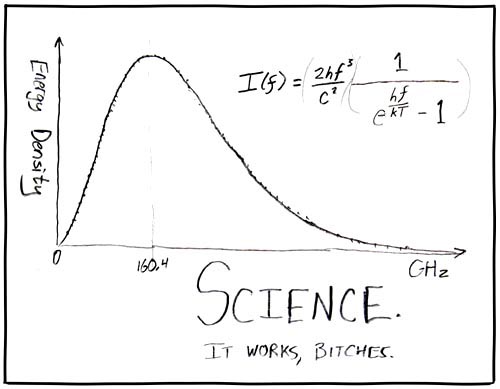
.
XKCD cartoon courtesy of xkcd.com
My Trouble with Bayes
Posted in Philosophy of Science, Probability and Risk, Uncategorized on January 21, 2016
 In past consulting work I’ve wrestled with subjective probability values derived from expert opinion. Subjective probability is an interpretation of probability based on a degree of belief (i.e., hypothetical willingness to bet on a position) as opposed a value derived from measured frequencies of occurrences (related posts: Belief in Probability, More Philosophy for Engineers). Subjective probability is of interest when failure data is sparse or nonexistent, as was the data on catastrophic loss of a space shuttle due to seal failure. Bayesianism is one form of inductive logic aimed at refining subjective beliefs based on Bayes Theorem and the idea of rational coherence of beliefs. A NASA handbook explains Bayesian inference as the process of obtaining a conclusion based on evidence, “Information about a hypothesis beyond the observable empirical data about that hypothesis is included in the inference.” Easier said than done, for reasons listed below.
Bayes Theorem itself is uncontroversial. It is a mathematical expression relating the probability of A given that B is true to the probability of B given that A is true and the individual probabilities of A and B:
P(A|B) = P(B|A) x P(A) / P(B)
If we’re trying to confirm a hypothesis (H) based on evidence (E), we can substitute H and E for A and B:
P(H|E) = P(E|H) x P(H) / P(E)
To be rationally coherent, you’re not allowed to believe the probability of heads to be .6 while believing the probability of tails to be .5; the sum of chances of all possible outcomes must sum to exactly one. Further, for Bayesians, the logical coherence just mentioned (i.e., avoidance of Dutch book arguments) must hold across time (synchronic coherence) such that once new evidence E on a hypothesis H is found, your believed probability for H given E should equal your prior conditional probability for H given E.
Plenty of good sources explain Bayesian epistemology and practice far better than I could do here. Bayesianism is controversial in science and engineering circles, for some good reasons. Bayesianism’s critics refer to it as a religion. This is unfair. Bayesianism is, however, like most religions, a belief system. My concern for this post is the problems with Bayesianism that I personally encounter in risk analyses. Adherents might rightly claim that problems I encounter with Bayes stem from poor implementation rather than from flaws in the underlying program. Good horse, bad jockey? Perhaps.
Problem 1. Subjectively objective
Bayesianism is an interesting mix of subjectivity and objectivity. It imposes no constraints on the subject of belief and very few constraints on the prior probability values. Hypothesis confirmation, for a Bayesian, is inherently quantitative, but initial hypotheses probabilities and the evaluation of evidence is purely subjective. For Bayesians, evidence E confirms or disconfirms hypothesis H only after we establish how probable H was in the first place. That is, we start with a prior probability for H. After the evidence, confirmation has occurred if the probability of H given E is higher than the prior probability of H, i.e., P(H|E) > P(H). Conversely, E disconfirms H when P(H|E) < P(H). These equations and their math leave business executives impressed with the rigor of objective calculation while directing their attention away from the subjectivity of both the hypothesis and its initial prior.
2. Rational formulation of the prior
Problem 2 follows from the above. Paranoid, crackpot hypotheses can still maintain perfect probabilistic coherence. Excluding crackpots, rational thinkers – more accurately, those with whom we agree – still may have an extremely difficult time distilling their beliefs, observations and observed facts of the world into a prior.
3. Conditionalization and old evidence
This is on everyone’s short list of problems with Bayes. In the simplest interpretation of Bayes, old evidence has zero confirming power. If evidence E was on the books long ago and it suddenly comes to light that H entails E, no change in the value of H follows. This seems odd – to most outsiders anyway. This problem gives rise to the game where we are expected to pretend we never knew about E and then judge how surprising (confirming) E would have been to H had we not know about it. As with the general matter of maintaining logical coherence required for the Bayesian program, it is extremely difficult to detach your knowledge of E from the rest of your knowing about the world. In engineering problem solving, discovering that H implies E is very common.
4. Equating increased probability with hypothesis confirmation.
My having once met Hillary Clinton arguably increases the probability that I may someday be her running mate; but few would agree that it is confirming evidence that I will do so. See Hempel’s raven paradox.
5. Stubborn stains in the priors
Bayesians, often citing success in the business of establishing and adjusting insurance premiums, report that the initial subjectivity (discussed in 1, above) fades away as evidence accumulates. They call this washing-out of priors. The frequentist might respond that with sufficient evidence your belief becomes irrelevant. With historical data (i.e., abundant evidence) they can calculate P of an unwanted event in a frequentist way: P = 1-e to the power -RT, roughly, P=RT for small products of exposure time T and failure rate R (exponential distribution). When our ability to find new evidence is limited, i.e., for modeling unprecedented failures, the prior does not get washed out.
6. The catch-all hypothesis
The denominator of Bayes Theorem, P(E), in practice, must be calculated as the sum of the probability of the evidence given the hypothesis plus the probability of the evidence given not the hypothesis:
P(E) = [P(E|H) x p(H)] + [P(E|~H) x P(~H)]
But ~H (“not H”) is not itself a valid hypothesis. It is a family of hypotheses likely containing what Donald Rumsfeld famously called unknown unknowns. Thus calculating the denominator P(E) forces you to pretend you’ve considered all contributors to ~H. So Bayesians can be lured into a state of false choice. The famous example of such a false choice in the history of science is Newton’s particle theory of light vs. Huygens’ wave theory of light. Hint: they are both wrong.
7. Deference to the loudmouth
This problem is related to no. 1 above, but has a much more corporate, organizational component. It can’t be blamed on Bayesianism but nevertheless plagues Bayesian implementations within teams. In the group formulation of any subjective probability, normal corporate dynamics govern the outcome. The most senior or deepest-voiced actor in the room drives all assignments of subjective probability. Social influence rules and the wisdom of the crowd succumbs to a consensus building exercise, precisely where consensus is unwanted. Seidenfeld, Kadane and Schervish begin “On the Shared Preferences of Two Bayesian Decision Makers” with the scholarly observation that an outstanding challenge for Bayesian decision theory is to extend its norms of rationality from individuals to groups. Their paper might have been illustrated with the famous photo of the exploding Challenger space shuttle. Bayesianism’s tolerance of subjective probabilities combined with organizational dynamics and the shyness of engineers can be a recipe for disaster of the Challenger sort.
All opinions welcome.
Science, God, and the White House
Posted in Philosophy of Science on January 9, 2016
Back in the 80s I stumbled upon the book, Scientific Proof of the Existence of God Will Soon Be Announced by the White House!, by Franklin Jones, aka Frederick Jenkins, later Da Free John, later Adi Da Samraj. I bought it on the spot. Likely a typical 70s mystic charlatan, Jones nonetheless saw clearly our poor grasp of tools for seeking truth and saw how deep and misguided is our deference to authority. At least that’s how I took it.
Who’d expect a hippie mystic to be a keen philosopher of science. The book’s title, connecting science, church and state, shrewdly wraps four challenging ideas:
- That there can be such a thing as scientific proof of anything
- That there could be new findings about the existence of God
- That evidence for God could be in the realm of science
- That government should or could accredit a scientific theory
On the first point, few but the uneducated, TIME magazine, and the FDA think that proof is in the domain of science. Proof is deductive. It belongs to math, logic and analytic philosophy. Science uses evidence and induction to make inferences to the best explanation.
Accepting that strong evidence would suffice as proof, point number 2 is a bit trickier. Evidence of God’s existence can’t be ruled out a priori. God could be observable or detectable; we might see him or his consequences. An almighty god could easily have chosen to regularly show himself or to present unambiguous evidence. But Yahweh, at least in modern times, doesn’t play like that (A wicked and adulterous generation demands a sign but none will be given – Matthew 16:4). While believers often say no evidence would satisfy the atheist, I think a focused team could come up with rules for a demonstration that at least some nonbelievers would accept as sufficient evidence.
Barring any new observations that would constitute evidence, point number 3 is tough to tackle without wading deep into philosophy of science. To see why, consider the theory that God exists. Is it even a candidate for a scientific theory, as one WSJ writer thinks (Science Increasingly Makes the Case for God)? I.e., is it the content of a theory or the way it is handled by its advocates that makes the theory scientific? If the latter, it can be surprisingly hard to draw the line between scientific investigations and philosophical ones. Few scientists admit this line is so blurred, but how do string theorists, who make no confirmable or falsifiable predictions, defend that they are scientists? Their fondness for non-empirical theory confirmation puts them squarely in the ranks of the enlightenment empiricist, Bishop Berkeley of Cloyne (namesake of our fair university) who maintained that matter does not exist. Further, do social scientists make falsifiable predictions, or do they just continually adjust their theory to accommodate disconfirming evidence?
That aside, those who work in the God-theory space somehow just don’t seem to qualify as scientific – even the young-earth creationists trained in biology and geology. Their primary theory doesn’t seem to generate research and secondary theories to confirm or falsify. Their papers are aimed at the public, not peers – and mainly aim at disproving evolution. Can a scientific theory be primarily negative? Could plate-tectonics-is-wrong count as a proper scientific endeavor?
Gould held that God was simply outside the realm of science. But if we accept that the existence of God could be a valid topic of science, is it a good theory? Following Karl Popper, a scientific theory can withstand only a few false predictions. On that view the repeated failures of end-of-days predictions by Harold Camping and Herbert Armstrong might be sufficient to kill the theory of God’s existence. Or does their predictive failures simply exclude them from the community of competent practitioners?
Would NASA engineer, Edgar Whisenant be more credible at making predictions based on the theory of God’s existence? All his predictions of rapture also failed. He was accepted by the relevant community (“…in paradigm choice there is no standard higher than the assent of the relevant community” – Thomas Kuhn) since the Trinity Broadcast Network interrupted its normal programming to help watchers prepare. If a NASA engineer has insufficient scientific clout, how about our first scientist? Isaac Newton predicted, in Observations upon the Prophecies of Daniel and the Apocalypse of St. John, that the end would come in 2000 CE. Maybe Newton’s calculator had the millennium bug.
If we can’t reject the theory for any number of wrong predictions, might there be another basis for rejecting it? Some say absence of a clear mechanism is a good reason to reject theories. In the God theory, no one seems to have proposed a mechanism by which such a God could have arisen. Aquinas’s tortured teleology and Anselm’s ontological arguments still fail on this count. But it seems unfair to dismiss the theory of God’s existence on grounds of no clear mechanism, because we have long tolerated other theories deemed scientific with the same weakness. Gravity, for example.
Does assent of the relevant community grant scientific status to a theory, as Kuhn would have it? If so, who decides which community is the right one? Theologians spend far more time on Armageddon than do biologists and astrophysicists – and theologians are credentialed by their institutions. So why should Hawking and Dawkins get much air time on the matter? Once we’ve identified a relevant community, who gets to participate in its consensus?
This draws in point number 4, above. Should government or the White House have any more claim to a scientific pronouncement than the Council of Bishops? If not, what are we to think of the pronouncements by Al Gore and Jerry Brown that the science of climate is settled? Should they have more clout on the matter than Pope Francis (who, interestingly, has now made similar pronouncements)?
If God is outside the realm of science, should science be outside the jurisdiction of government? What do we make of President Obama’s endorsement of “calling out climate change deniers, one by one”? You don’t have to be Franklin Jones or Da Free John to see signs here of government using the tools of religion (persecution, systematic effort to censure and alienate dissenters) in the name of science. Is it a stretch to see a connection to Jean Bodin, late 16th century French jurist, who argued that only witches deny the existence of witches?
Can you make a meaningful distinction between our government’s pronouncements on the truth or settledness of the climate theory (as opposed to government’s role in addressing it) and the Kremlin’s 1948 pronouncement that only Lamarckian inheritance would be taught, and their call for all geneticists to denounce Mendelian inheritance? Is it scientific behavior for a majority in a relevant community to coerce dissenters?
In trying to draw a distinction between UN and US coercion on climate science and Lysenkoism, some might offer that we (we moderns or we Americans) are somehow different – that only under regimes like Lenin’s and Hitler’s does science get so distorted. In thinking this, it’s probably good to remember that Hitler’s eugenics was born right here, and flourished in the 20th century. It had nearly full academic support in America, including Stanford and Harvard. That is, to use Al Gore’s words, the science was settled. California, always a trendsetter, by the early 1920s, claimed 80% of America’s forced sterilizations. Charles Goethe, founder of Sacramento State University, after visiting Hitler’s Germany in 1934 bragged to a fellow California eugenicist about their program’s influence on Hitler.
If the era of eugenics seems too distant to be relevant to the issue of climate science/politics, consider that living Stanford scientist, Paul Ehrlich, who endorsed compulsory abortion in the 70s, has had a foot in both camps.
As crackpots go, Da Free John was rather harmless.
________
“Indeed, it has been concluded that compulsory population-control laws, even including laws requiring compulsory abortion, could be sustained under the existing Constitution if the population crisis became sufficiently severe to endanger the society.” – Ehrlich, Holdren and Ehrlich, EcoScience, 3rd edn, 1977, p. 837
“You will be interested to know that your work has played a powerful part in shaping the opinions of the group of intellectuals who are behind Hitler in this epoch-making program.” – Charles Goethe, letter to Edwin Black, 1934
Fine Tuned Fibs for the Cause
Posted in Philosophy of Science on January 7, 2016
In my last post I compared our self-policing of facts that might chip away at our beliefs about environmental religion to lying for God in medieval and ancient times – something the writer of the epistles seems to boast of doing. Lying for God, on matters of science, may still be with us today.
William Lane Craig argues, in a line of thinking he calls reasonable faith (see his video), that the apparent fine tuning of the universe allowing life in it to exist can only be explained as the work a designer. For Craig that designer happens to be the God of evangelical Protestantism.
Fine tuning has two different but related meanings in physics. The first deals mainly with theory, the second mainly with observation – something for Descartes, and something for Bacon.
In theory selection, fine tuning refers to how the details of a theory might need to be tweaked to make them fit observations. For example, in Ptolemaic astronomy, as used prior to Copernicus, the model only matched measurements if the planets’ epicycles stayed put in comparison to the straight line connecting the earth and sun and if the periods of the epicycles were exactly one year. Given those restrictions, the Ptolemaic model made good predictions. But why would those particular quantities have such relations? No reason could be found other than that they needed to be that way for the model to work. In Ptolemy’s defense, he did not believe the model represented reality; it merely gave right predictions. But the church believed it; and they forbade the teaching of the Copernican model. Copernicus’s model gave no better predictions; and it didn’t explain the lack of parallax in star positions or why a rotating earth didn’t suffer from great winds. But, Copernicus didn’t rely on fine tuning of his theory. What criterion is most important in theory selection – absence of fine tuning, predictive success, or explanatory power? That’s a topic for another time I guess. Read Paul Feyerabend on the matter if it grabs you.
In modern physics, fine tuning more commonly refers to our observation that many of the measured values that are, to our knowledge, constant across the universe have values that, were they even slightly different, would prevent life from being possible anywhere. Martin Rees, perhaps the first scientist to delve deep into the matter, identified six dimensionless constants (ratios of things we measure in physics, basically) on which life as we know it depends. These include the ratio of electromagnetic strength to the strength of gravity, the ratio of the mass density of the universe to the density required to halt expansion, and the so-called cosmological constant, the ratio of dark energy density in the universe to the density that would be needed to halt its expansion.
Popular examples of such fine tuning include the claim that if the electromagnetism/gravity ratio differed by an almost infinitesimal amount – say 1 part in 10 to the 40th power (1E-40) – things would be very quiet indeed. With a bit more gravity, stars would be too small and would burn out far too fast. Tweaking the other constants makes things even worse. Adjusting the cosmological constant to a few parts in ten to the 120 in either direction would make the universe either expand too fast for galaxies and stars to form or to collapse upon itself just after the big bang. These are unimaginably large/small numbers. A few scientists argue that our thinking is wrong here – again a topic for later. If interested, see Why the Universe Is Not Designed for Us by Victor J. Stenger.
William Lane Craig accepts that fine tuning exists, giving three possible explanations: physical necessity, chance, or design. Craig rules out necessity because a life-prohibiting universe is easily imaginable. He notes that the probabilities for these incredibly fine-tuned values to occur by chance is ridiculously remote, thus leaving design as the only alternative.
Now I can’t know Craig’s motives or his state of mind, but his argument here is consistent with someone who knows more than he’s telling. That is, Craig is clearly highly intelligent; he has command of analytic philosophy, mathematics and at least a decent knowledge of physics. Yet he starts his fine tuning evangel with an egregious example of privileged hypothesis on top of false choice – just to start. Is he sure the given alternatives are the only live options? And can chance be ruled out in a multiverse model? I.e., in a model with 10 to the 500 instances of what we call our universe, you’re pretty much bound to get a few that look like ours with randomized values for the physical constants.
But we need not start with an exotic option. Did Craig rule out combinations of necessity and chance? Did he challenge the problem statement from the beginning? Many other have – questioning the notion that these measure values aren’t environmental constants at all; perhaps we’ve misconceived an underlying relationship that ties the values together in the same way pi is tied to 3.141592. Part of Stenger’s work is along these lines.
Having given his rationale for preferring the designer hypothesis to an artificially restricted set of alternatives, Craig then takes the leap from designer to the God of evangelical Christianity. That is, Krishna, Zeus, Ahura Mazda and the spaghetti monster are off the table. Craig holds that a being with unlimited cosmic power – who could construct any universe of his choosing – used his infinite powers to fine tune that universe to the precise values of constants that would allow that universe to support galaxies, stars and life. It’s hard for me to believe Craig doesn’t see the contradiction in an argument involving a God of ultimate power being bound by laws of physics. That is, Craig’s God is praiseworthy for essentially outwitting – by a tiny margin – physical laws that are nearly out of his control. This seems a better argument for the religion of the Assyrians than for evangelical Christianity; it recalls Marduk’s narrow defeat over Tiamat.
In Reasonable Faith, Craig deals often with the concept of insincere arguments. Do his religious convictions cause him to be blind to elementary fallacies and contradictions in his own doctrine? Or is he simply lying for the cause?
“…unbelief is at root a spiritual, not an intellectual, problem.” – William Lane Craig, Reasonable Faith: Christian Truth and Apologetics, 3rd edn., p.59
But You Need the Data
Posted in Multidisciplinarians on January 4, 2016
In my last post, But We Need the Rain, I suggested that environmentalist animism in San Francisco may fill the role once filled by religious belief, and may suffuse daily life as Christian belief did in medieval Europe. As the phrase “God be with ye” once reminded countrymen of correct thinking, so too might acknowledgment that we need the rain.
Medieval institutions – social and governmental – exerted constant pressure steering people away from wrong thinking; and the church dissuaded its flock from asking the wrong questions. Telling a lie to save a soul was OK; deceiving heathens into Christianity was just fine. I wonder if a weaker form of this sentiment remains in my fair city – in the form of failing to mention relevant facts about an issue and through the use of deceptive and selective truths. As theologian Thomas Burnet put it in the early 18th century, too much light is hurtful to weak eyes.
The San Francisco Chronicle, according to Google data, has published over 50 articles in the last two years mentioning the Shasta and Oroville reservoirs in connection with California’s four-year-old drought. Many of these pieces call attention to low levels of these reservoirs, e.g., Shasta was at 53% of normal level in January 2014.
None mention that Shasta and Oroville were, despite the drought, at 108% and 101% of normal level in April 2013, two years into the drought. Climate is mentioned in nearly all sfgate.com articles on the drought, but mismanagement of water resources by governments is mentioned in only one. Digging a bit deeper – with other sources – you’ll find bitter disputes between farmers saying water is wasted on environmental restoration and environmentalists asking why desert farmers want to grow thirsty crops like rice and cotton. I’d think Northern California citizens, asked by the governor to bathe less, might be interested in why so much of the Shasta and Oroville water left the reservoirs – whether they want to blame Sacramento, farmers, or environmentalists – and in the details of the dispute.
Is the Chronicle part of a conspiracy to get liberals in power by linking the water shortage to climate change rather than poor governance? I doubt it. There are no conservatives to displace. More likely, it seems to me, the Chronicle simply mirrors the values and beliefs held by its readers, an unusually monolithic community with a strong uniformity of views. The sense of identification with a community here somewhat resembles that of a religious group, where there’s a tendency for beliefs to be held as true by individuals because they are widely believed by the group – and to select or reject evidence based on whether it supports a preexisting belief.
“Being crafty, I caught you with guile.” – 2 Corinthians, 12:16
 The Multidisciplinarian